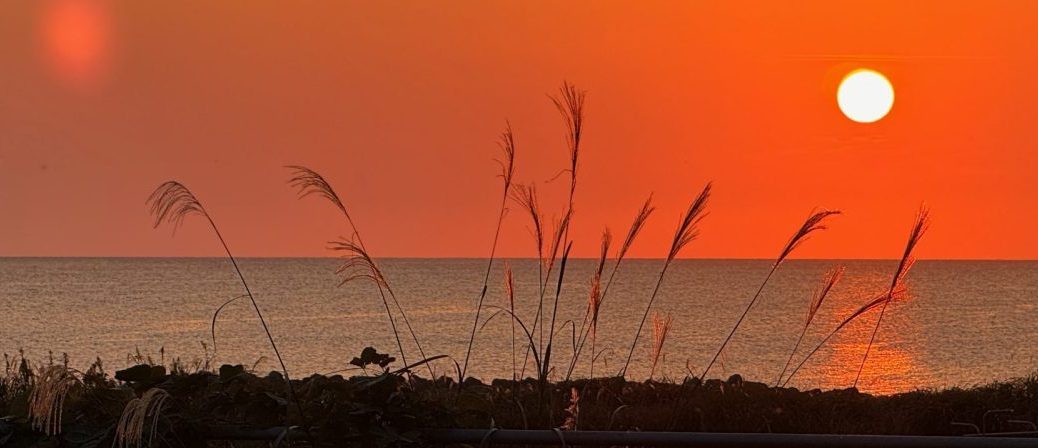
Three Nights on Sado Island
Sado Island lies 20mi/32km off the west coast of Japan. With the shape of a slanted figure “S” it has a coastline of 163mi/267km and a population of around 55,000. With its dramatic mountains, lush forests and temperate climate, Sado Island is an enticing retreat. In medieval times it was a place of exile for those who fell out of favour, notably aristocrats and artists, with the rulers of the day. Today the eclectic population and cultural riches are attributed to the presence of these early exiles. It has moved from being an isolated penal colony to an island of artistic types. It is now home to the world-renowned Kodo Taiko Drumming troupe. This was the aspect that spiked our interest in visiting. After a high-speed ferry ride, we rented a car and had two full days absorbing the rural setting and natural surroundings.
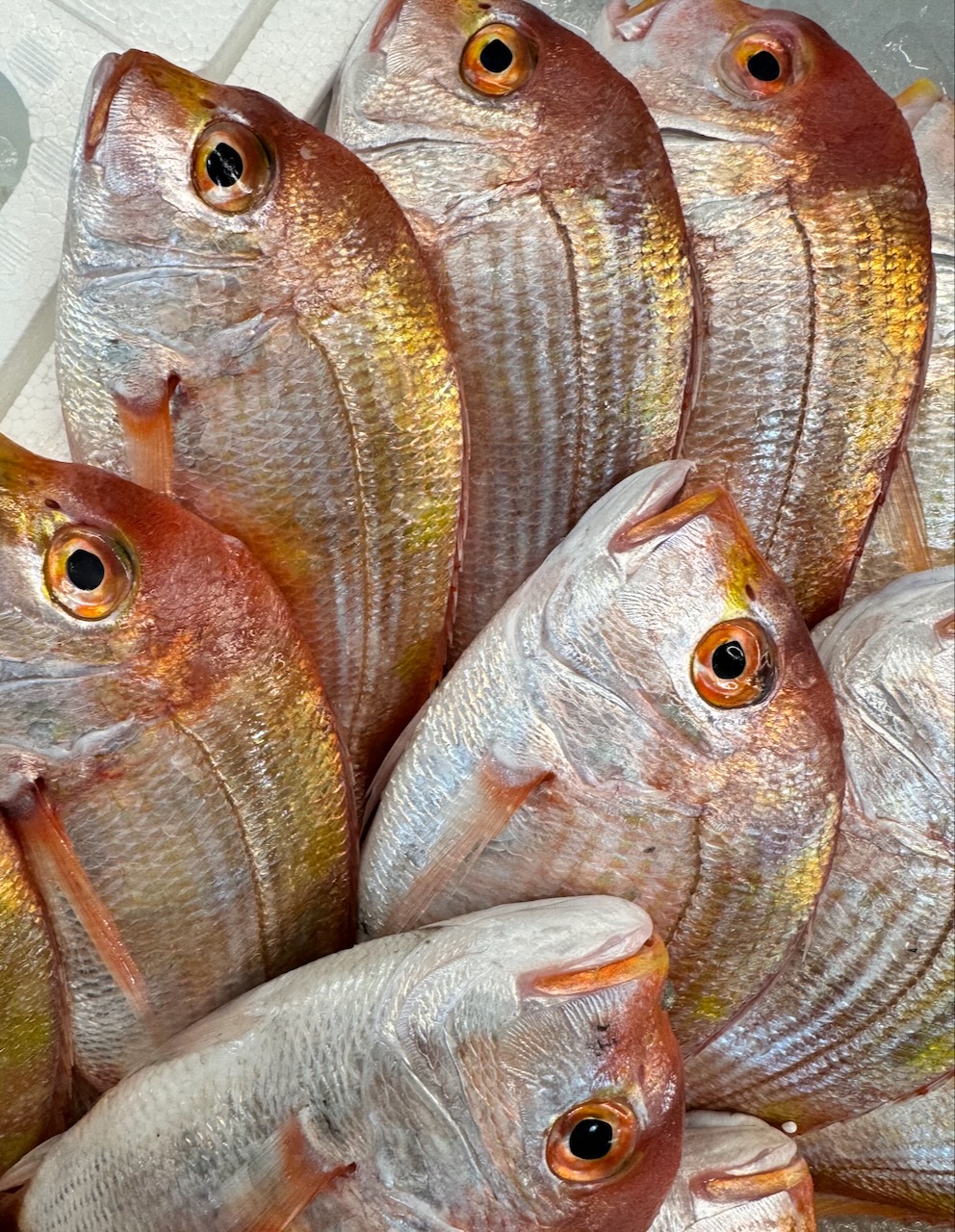
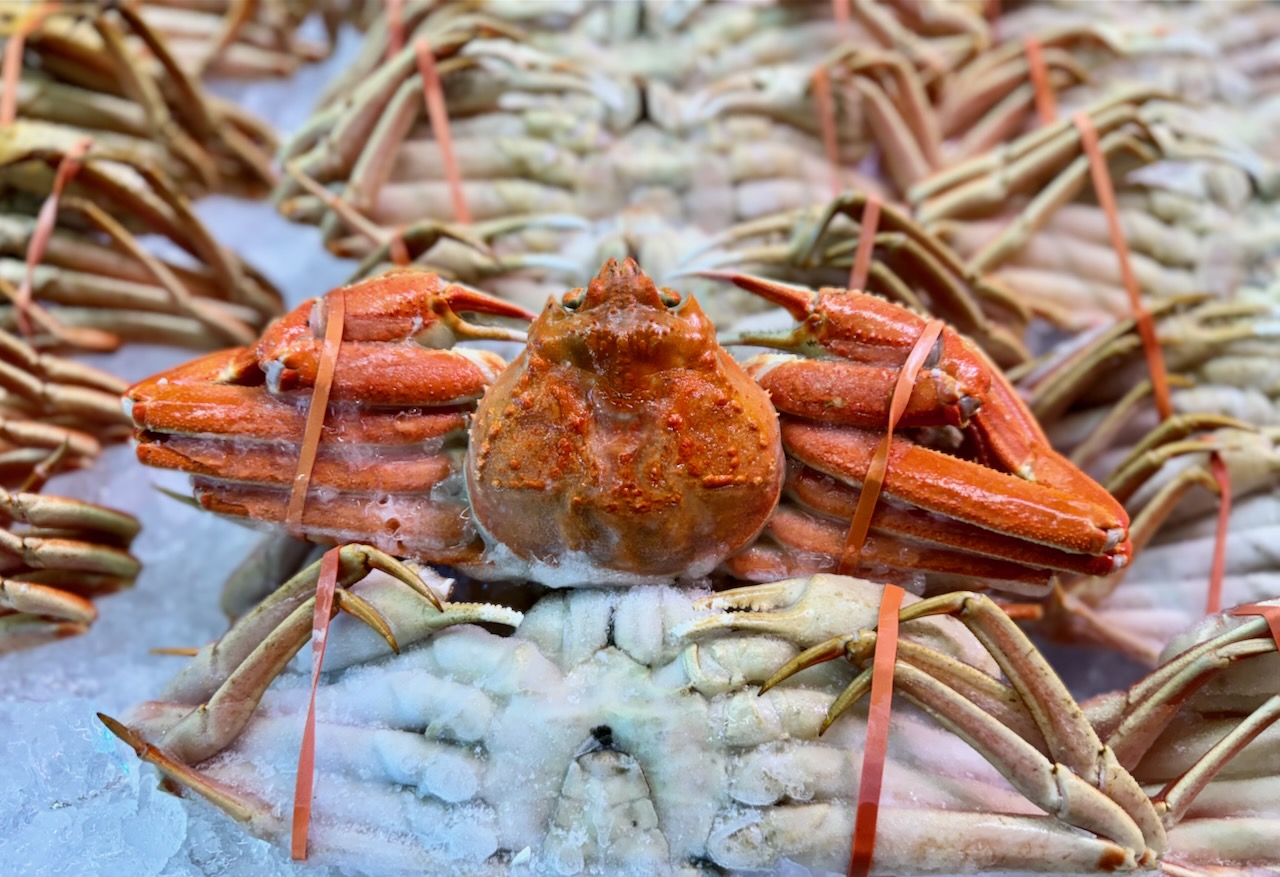
Our first bullet train was bound for the west coast city of Niigata where we would catch the ferry to Sado Island. We had a layover of over two hours so we did a city bus tour which stopped at the Pier with a great fish market where we were able to take photos. After a high-speed ferry ride, we rented a car and had two full days absorbing the rural setting and natural surroundings.
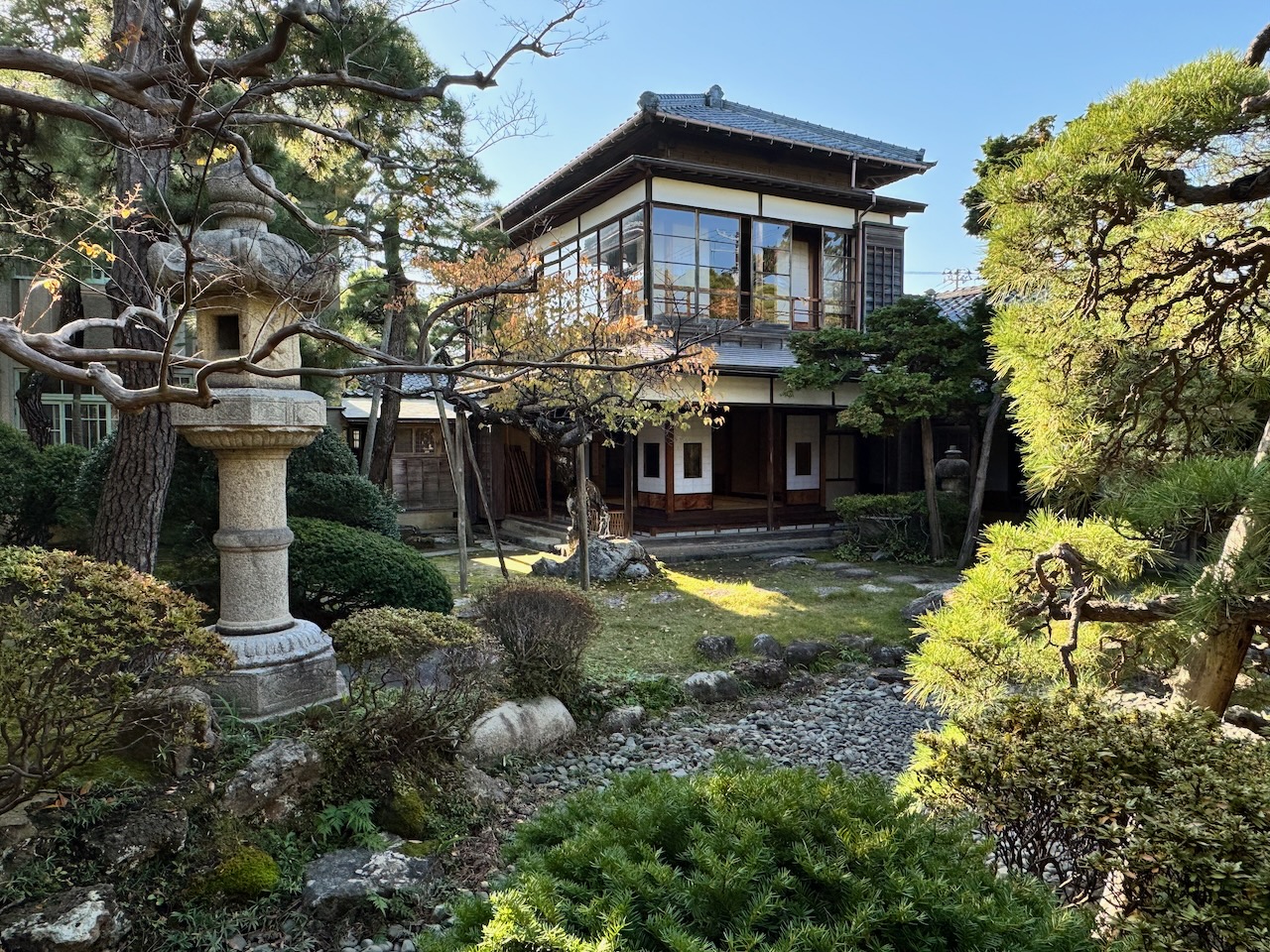
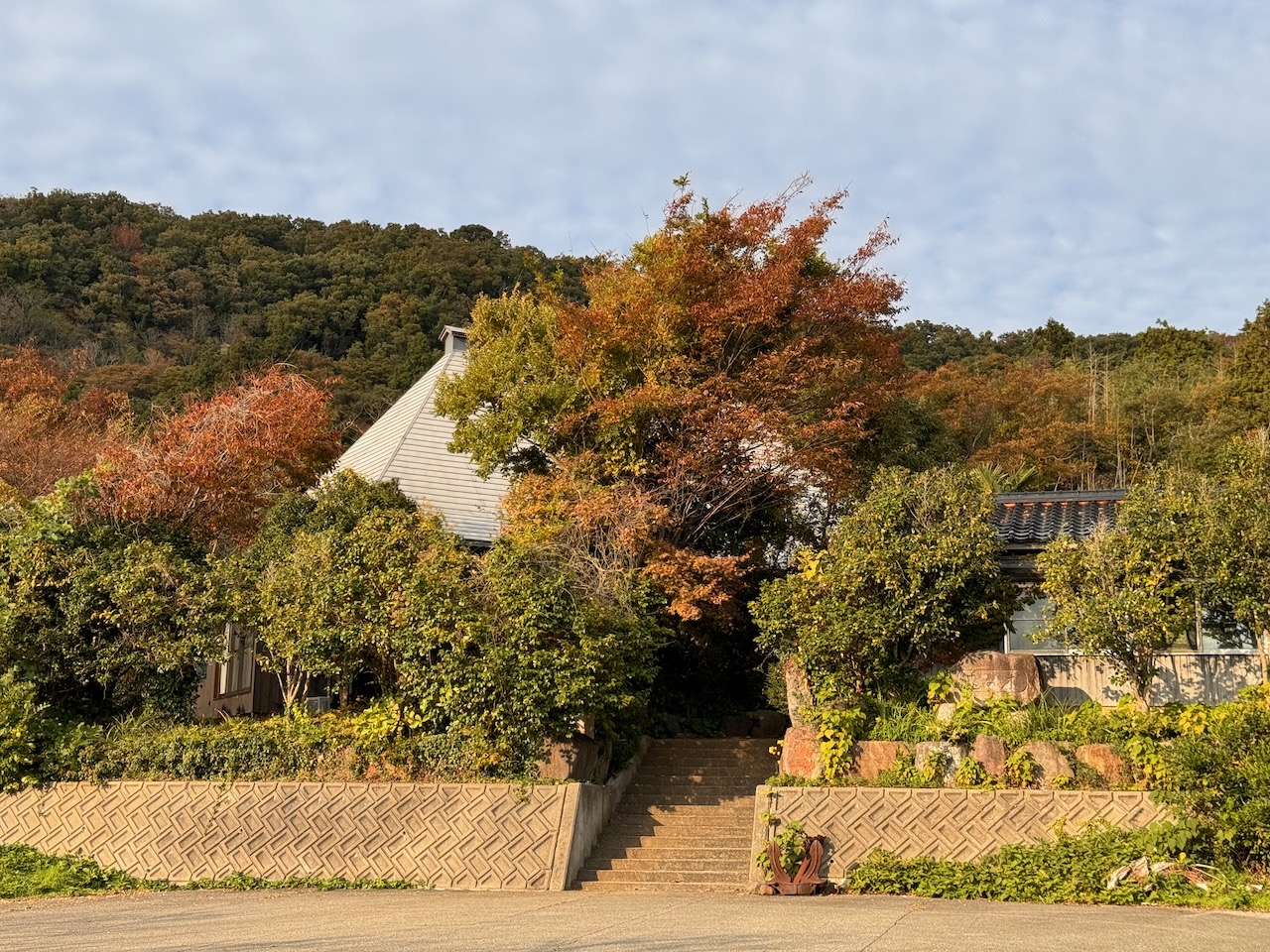
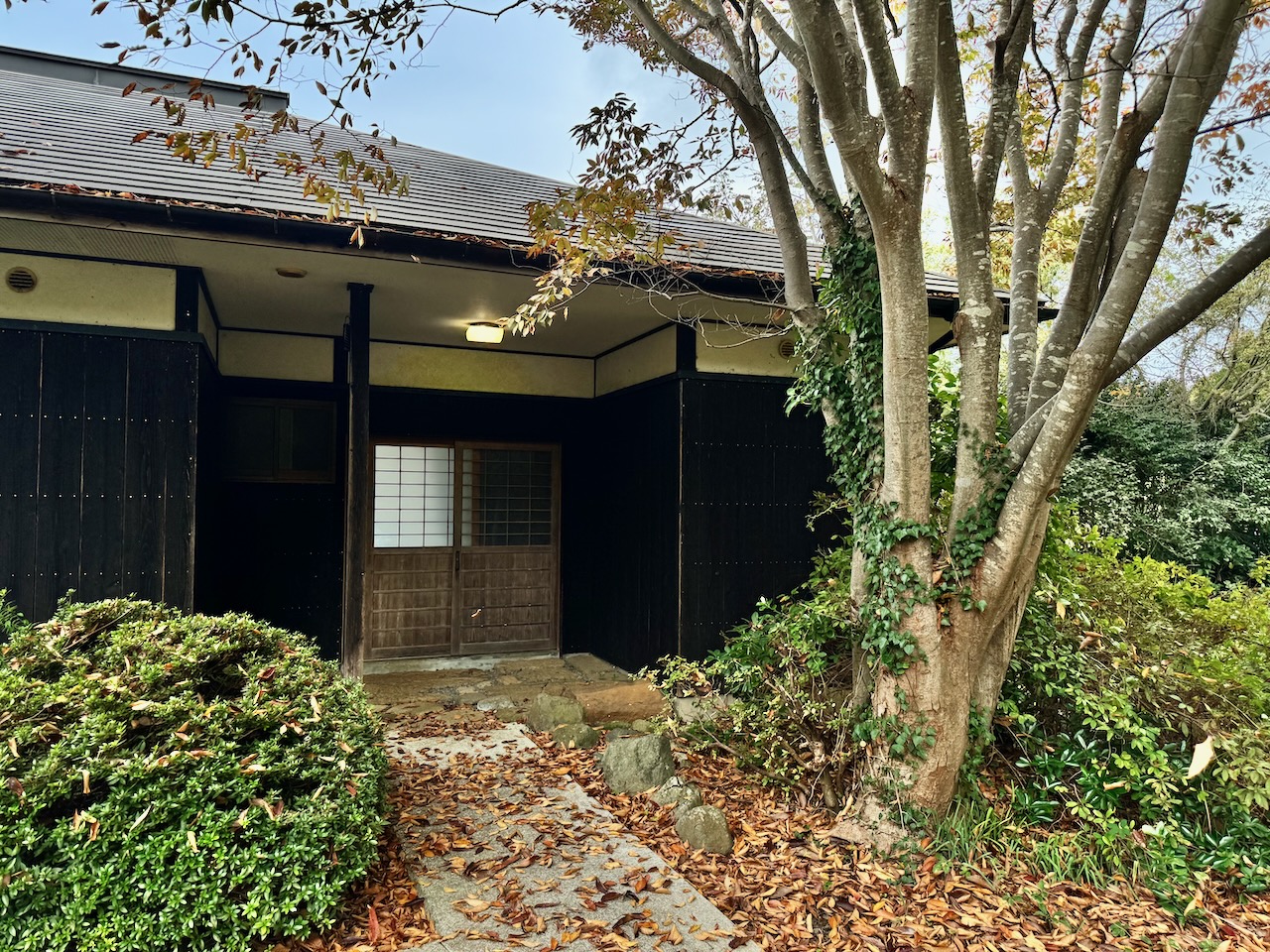
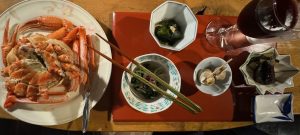
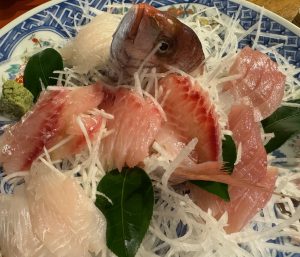
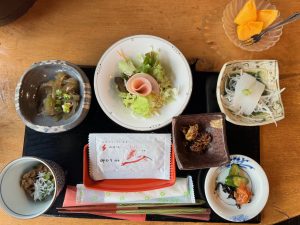
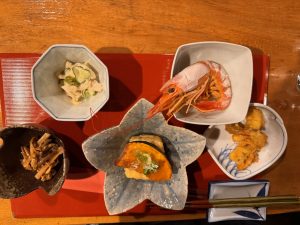
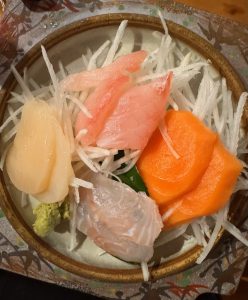
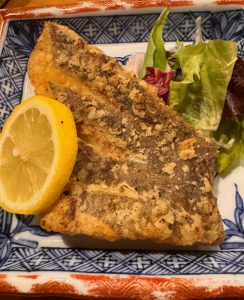
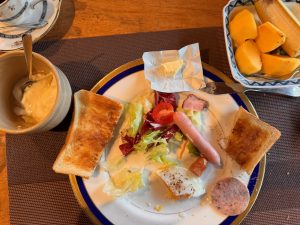
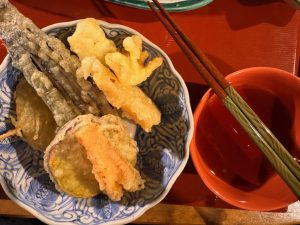
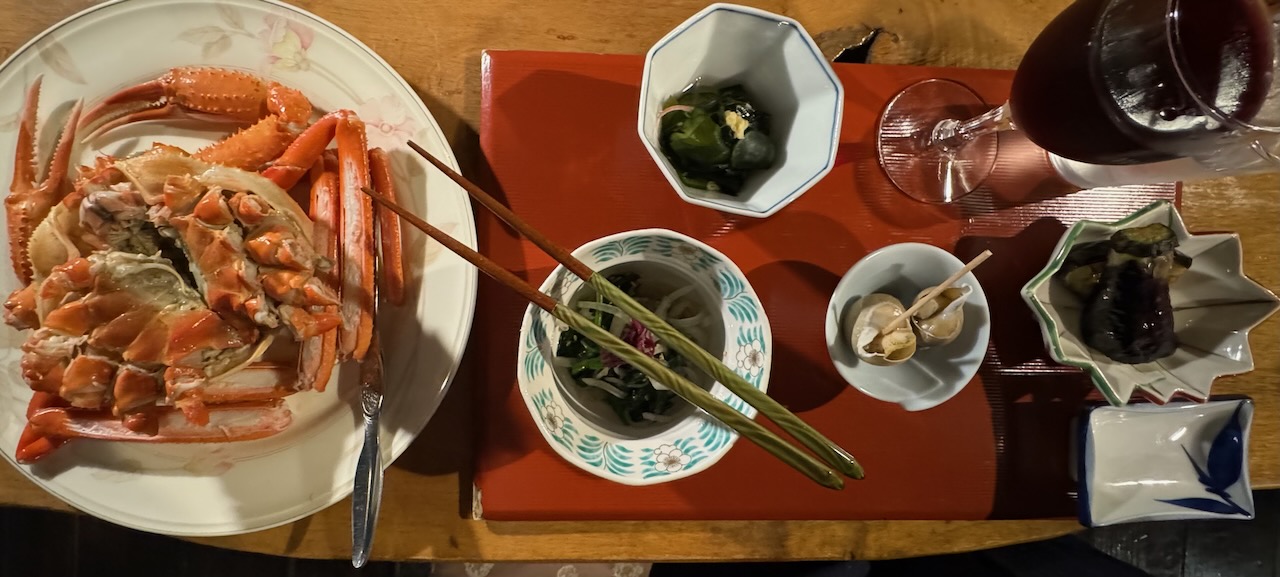
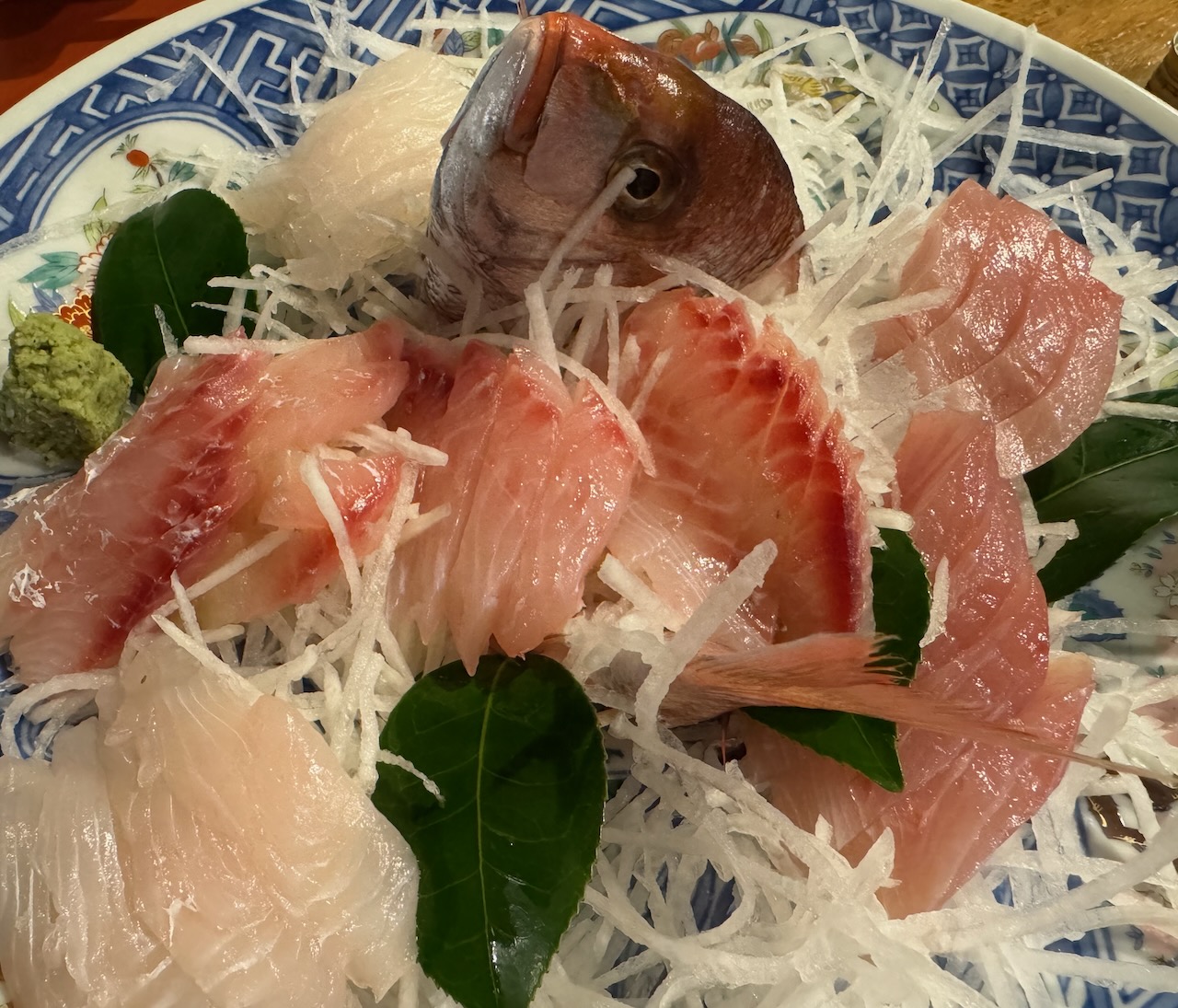
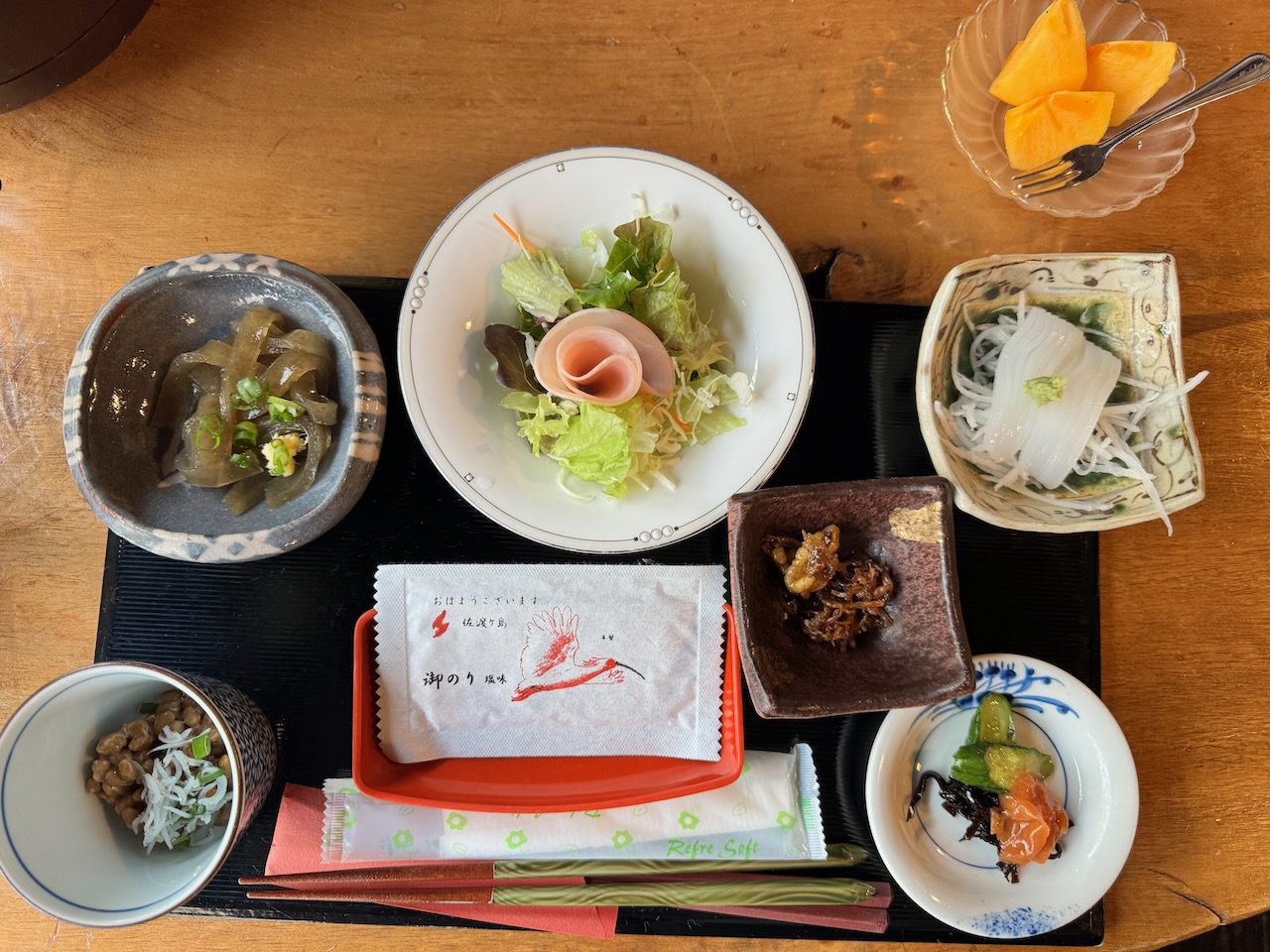
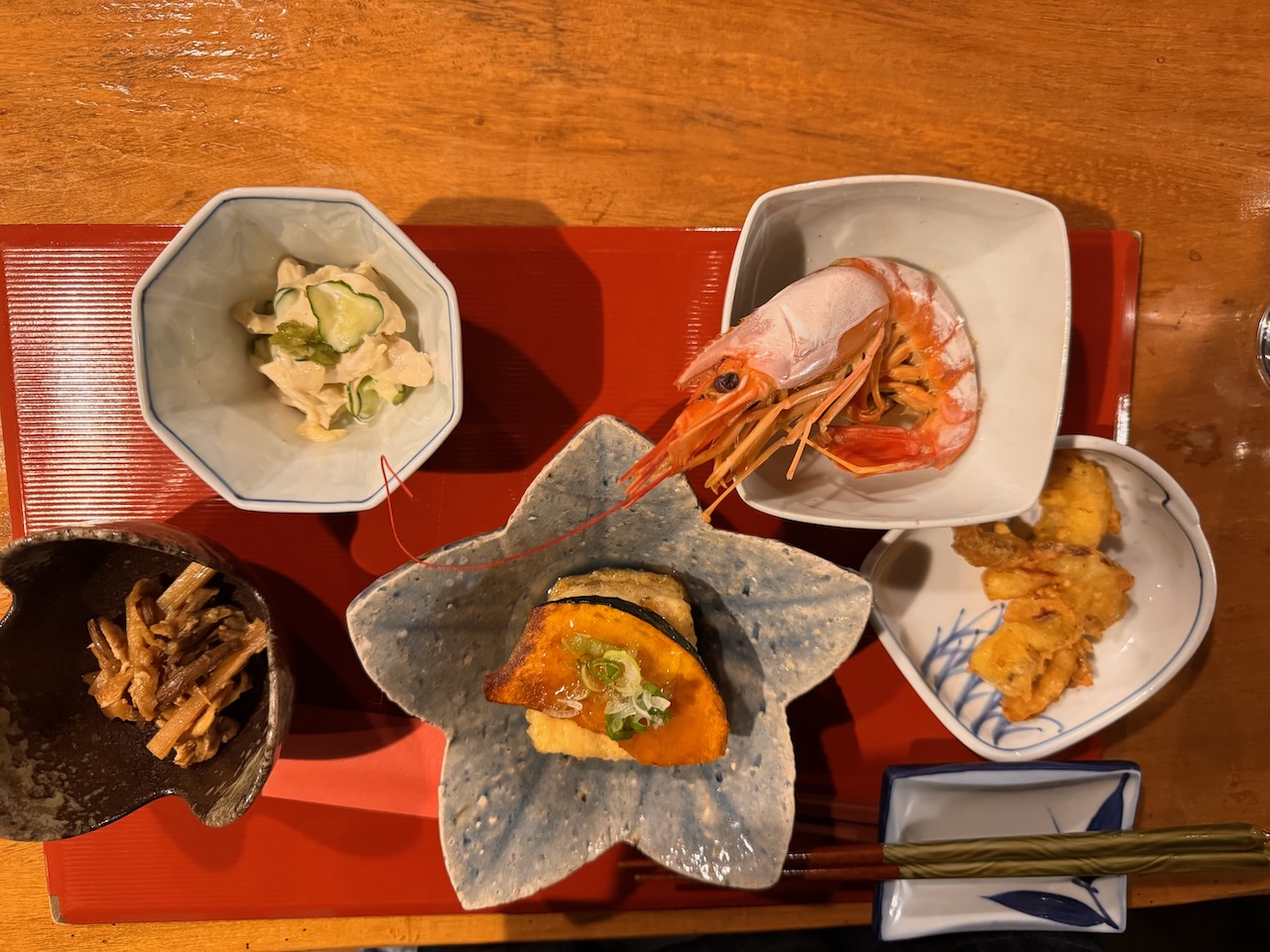
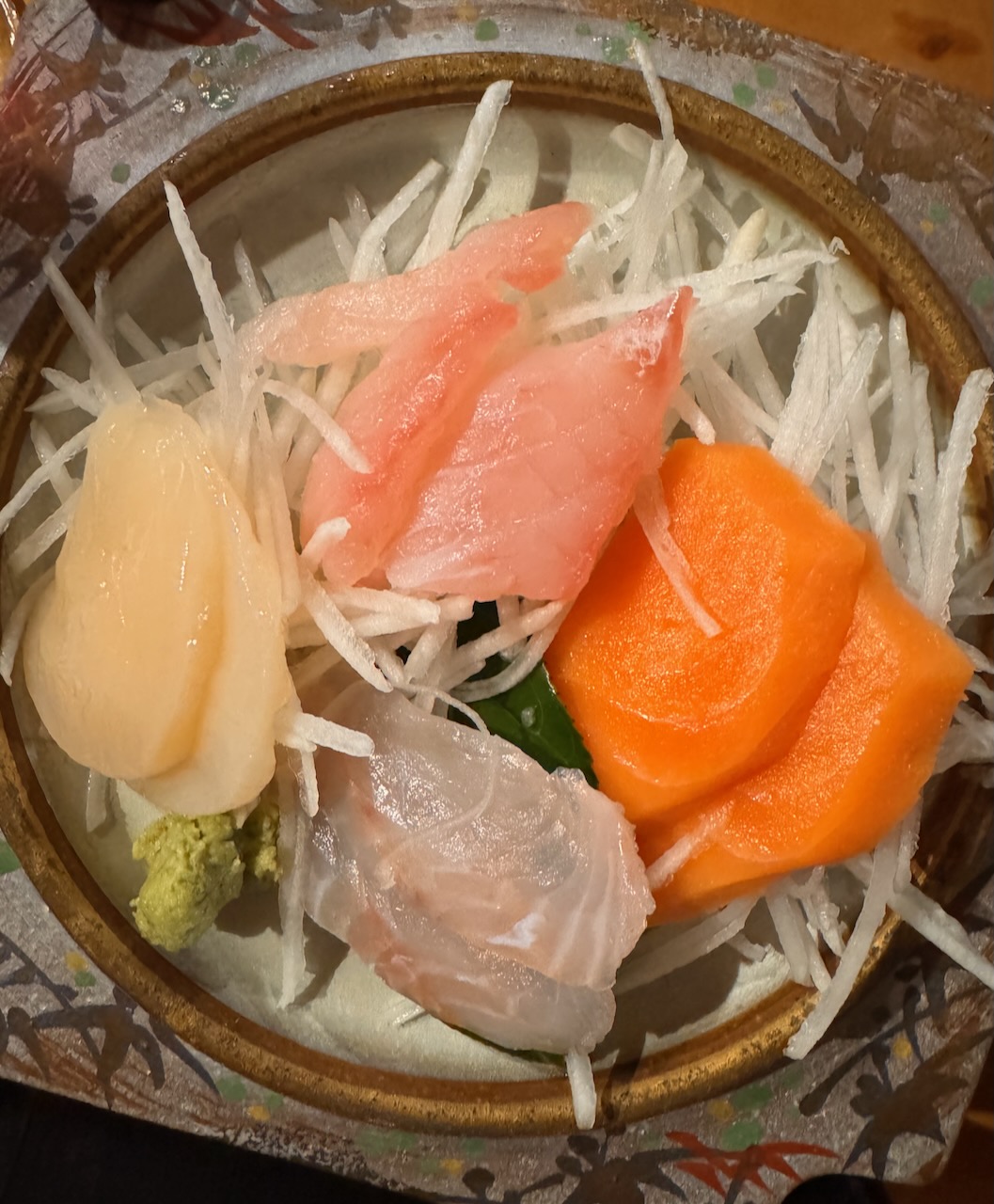
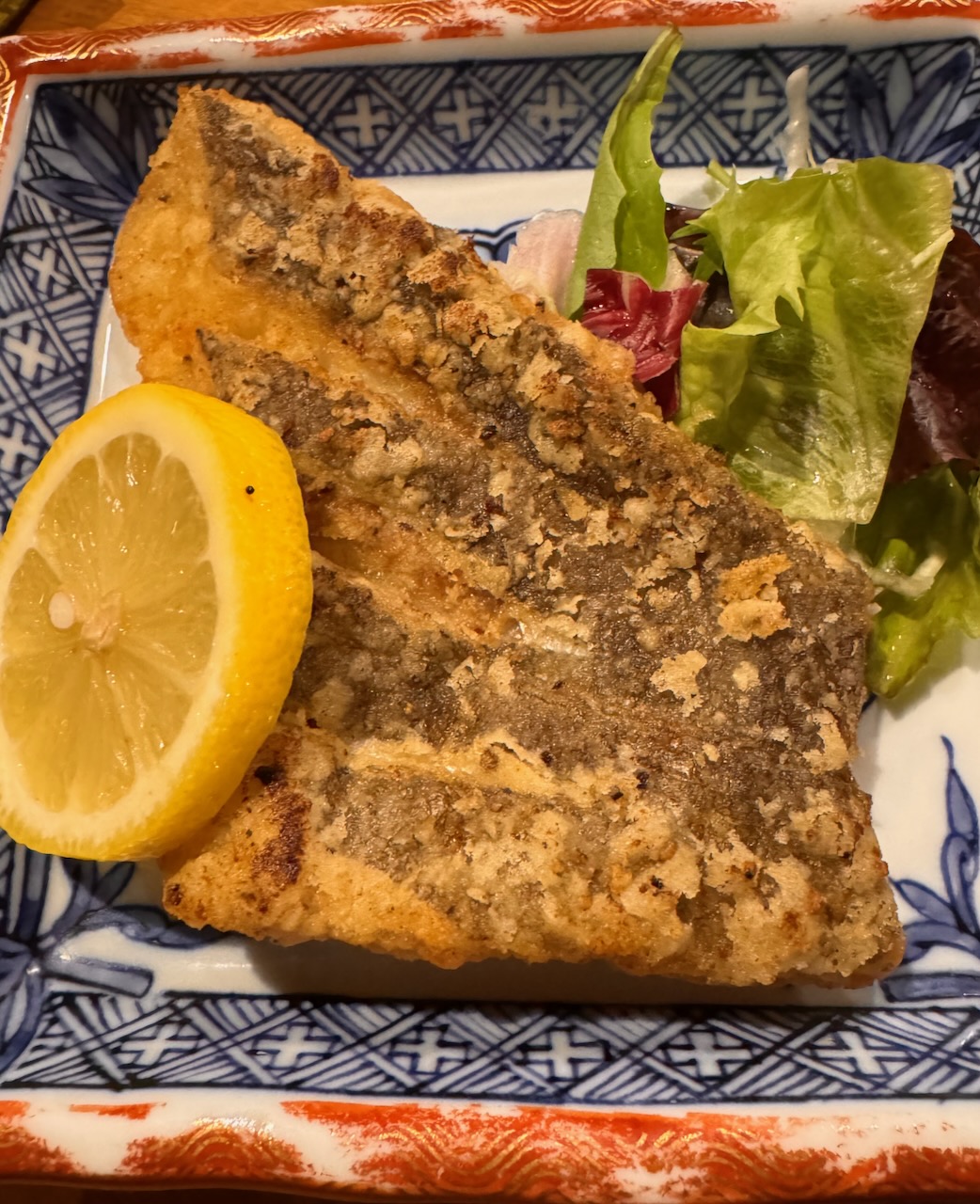
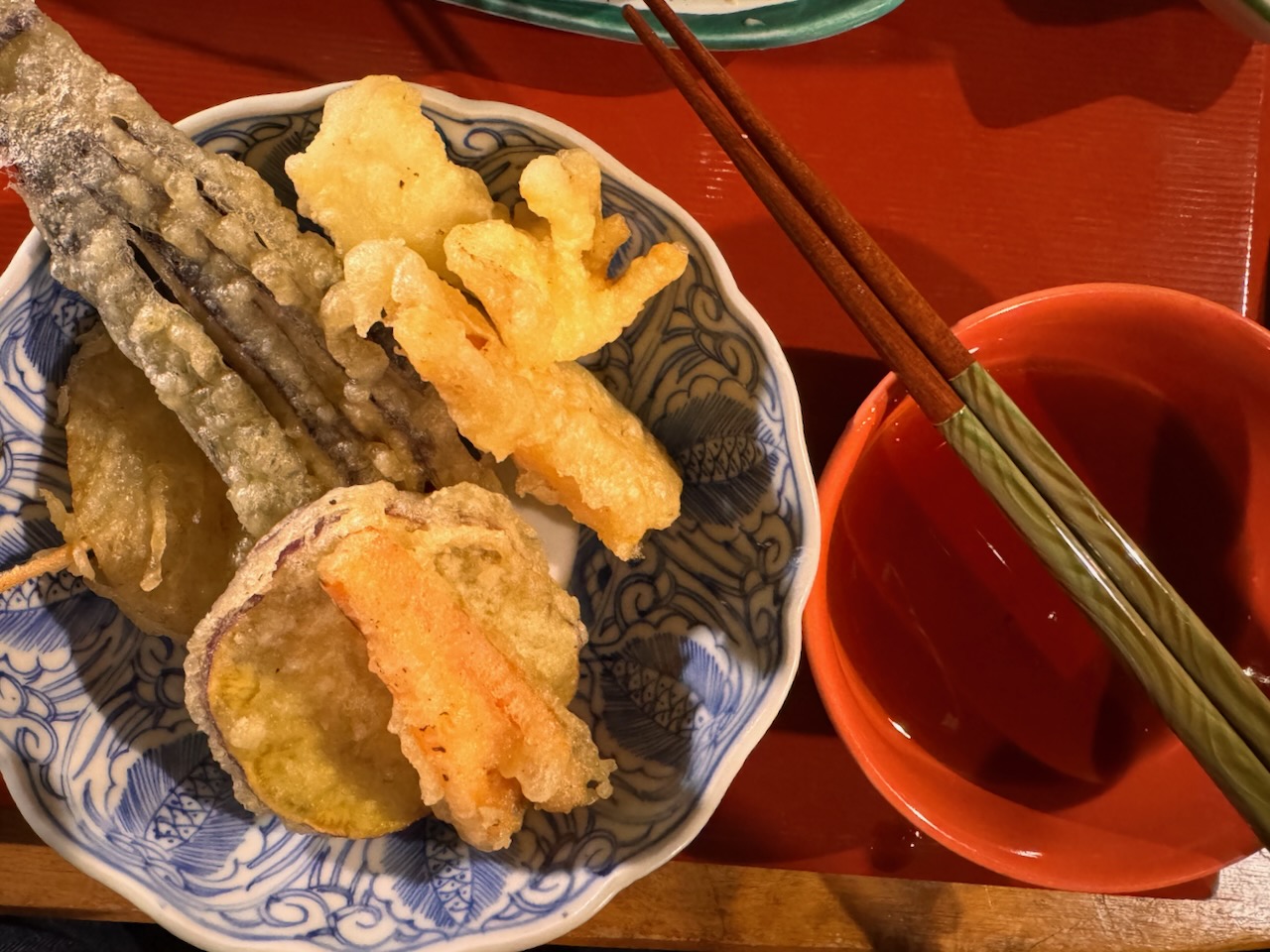
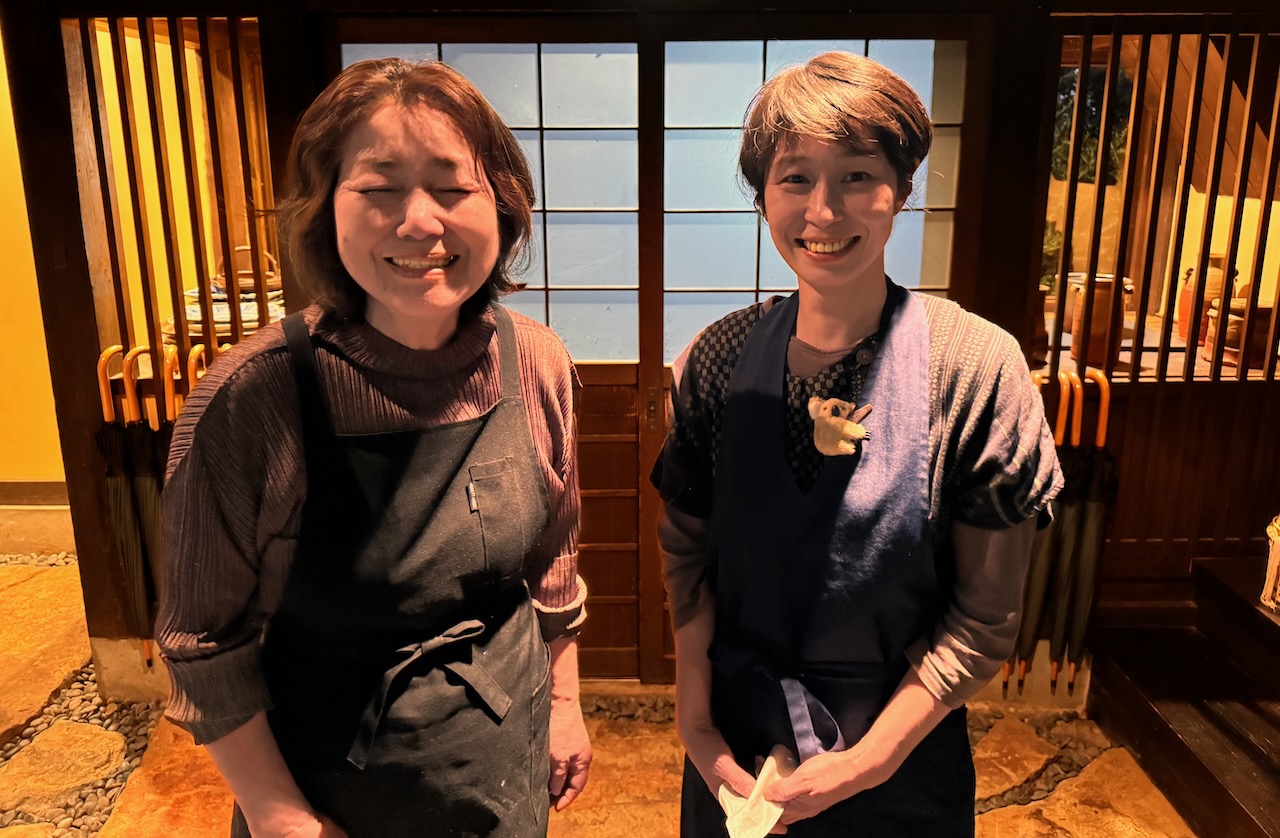
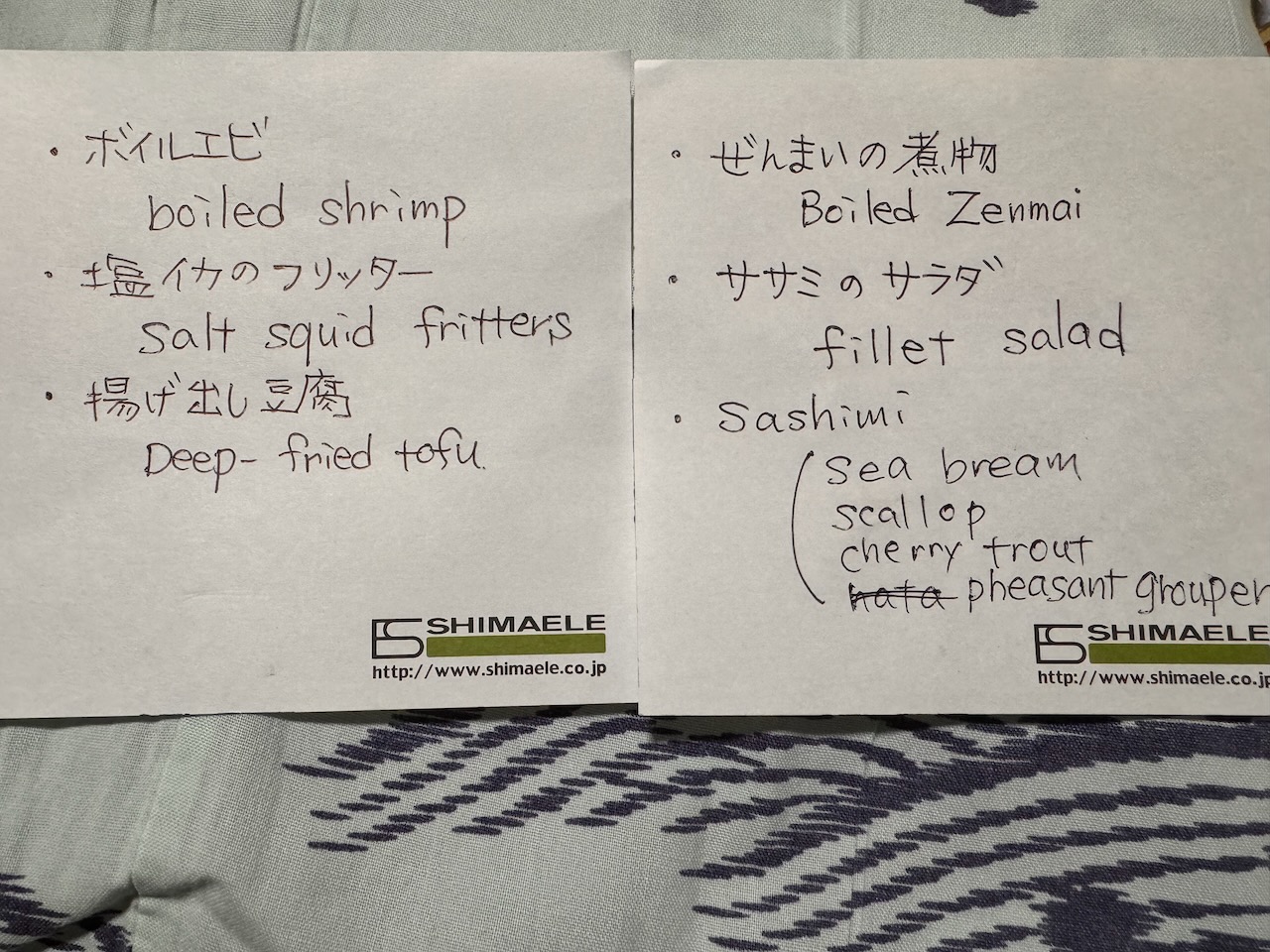
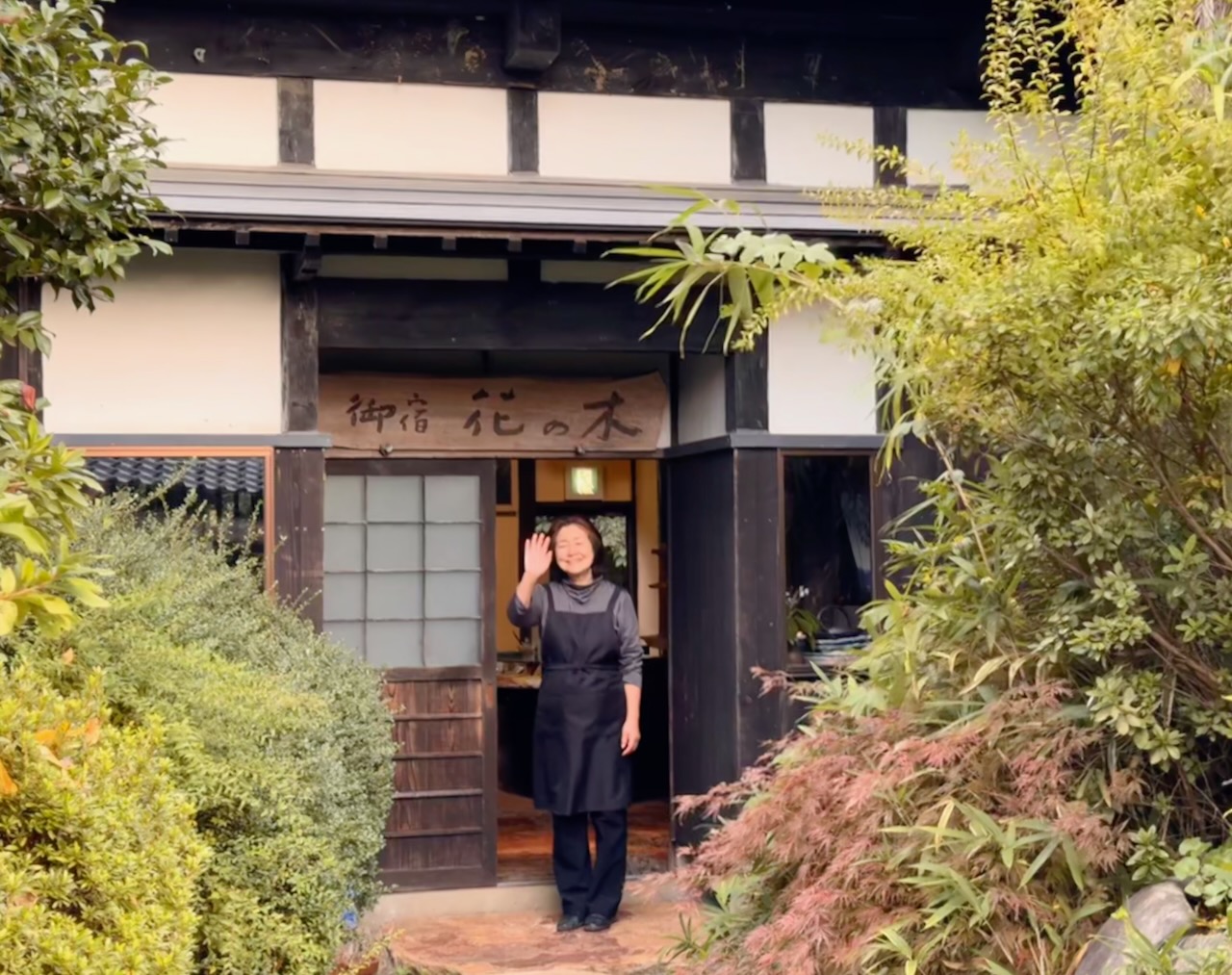
On the island we were based in the south near Ogi Town at our first traditional Japanese inn (ryokan) with only five rooms. Hananoki Ryokan was easy to miss from the road at 6pm in the dark. With no English signage, we drove past it three times. The highlights at this inn were our hosts and the two kaiseki meals per day. Kaiseki dining includes an appetizer, sashimi, a simmered dish, a grilled dish and a steamed course. These are small dishes but there are several of each, as you will soon see. We dined in a beautiful room with long carved and polished wood tables, and a few delicate Japanese tchotchkes. We were the rare guests that spent three nights, and each evening we were served one of these superb kaiseki meals, which consisted of delicate dishes of fish, vegetables, varied forms of tofu and salads. Other guests were all Japanese but several attempted to communicate with us which was surprising and fun in the attempt.
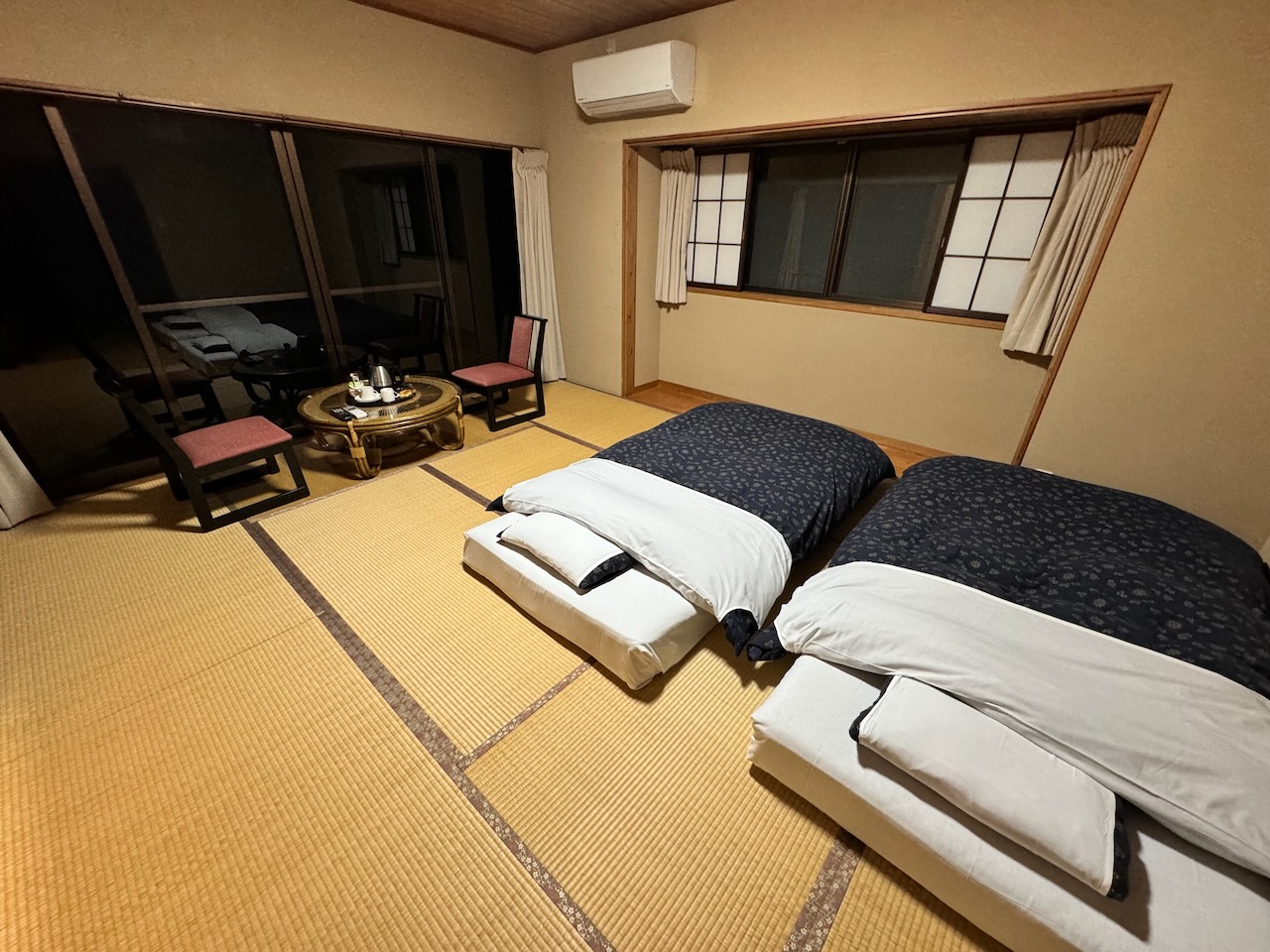
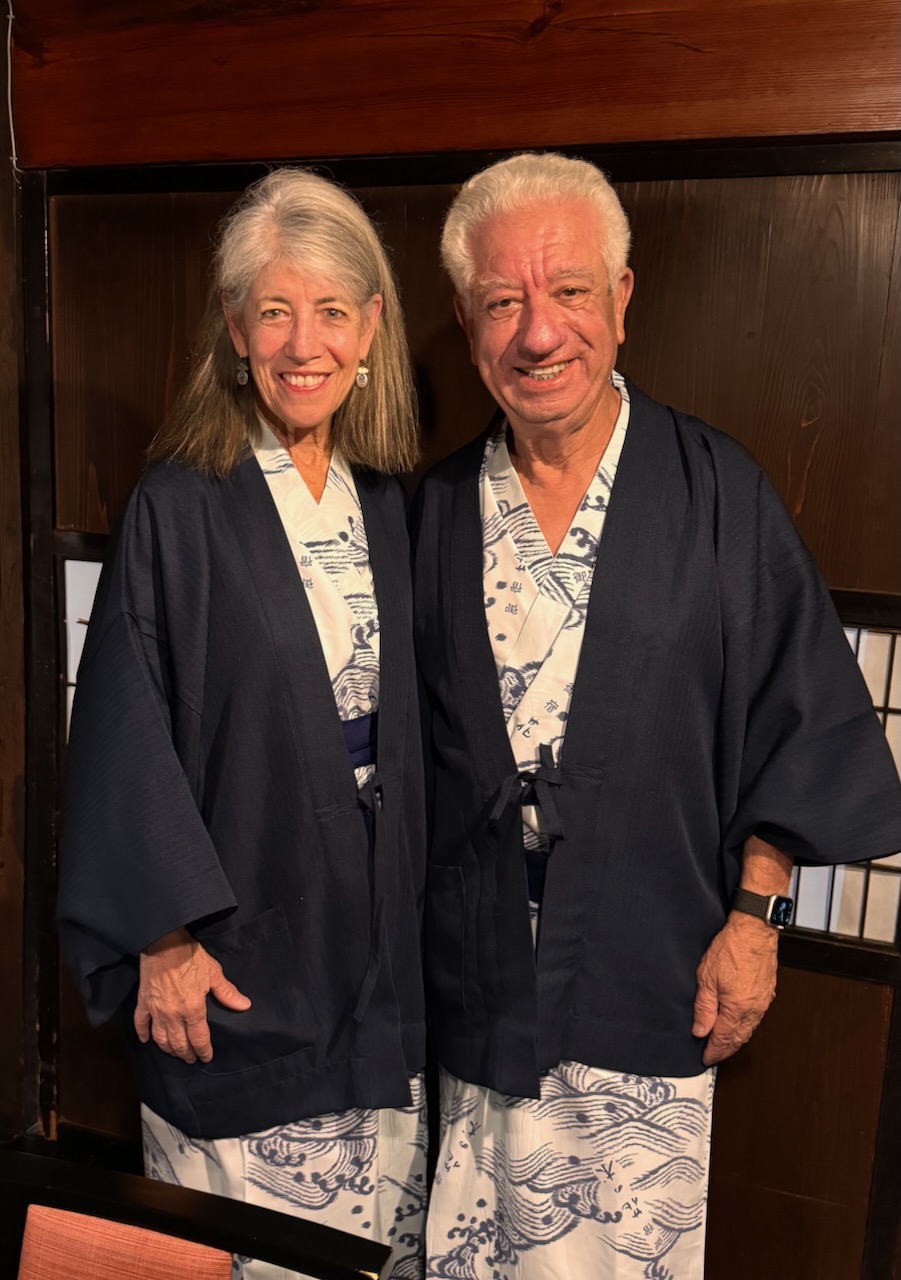
We dressed for dinner in our yukata, similar to a bathrobe with a jacket, and ‘inside’ shoes, worn to protect the delicate tatami mats. The shoes routine was confusing at first – wherever they expect you to remove your shoes, they offer ‘inside’ shoes, usually a slipper style. Joe couldn’t fit into the ones here, his feet are too wide. It made us all laugh to see him clomping around with them half on.
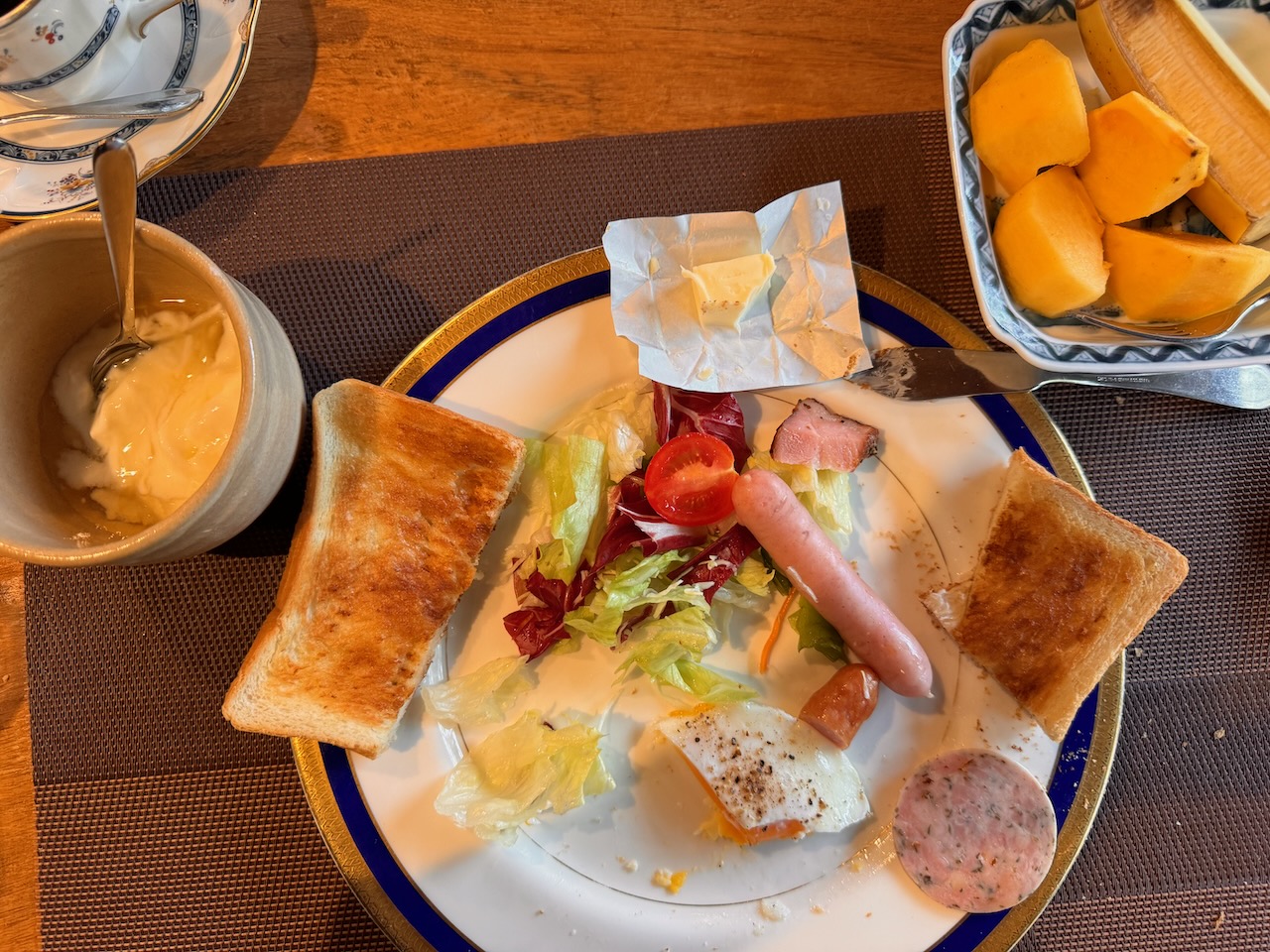
Sample of some kaiseki dishes at Hananoki Ryokan (click on photo for full description and image)
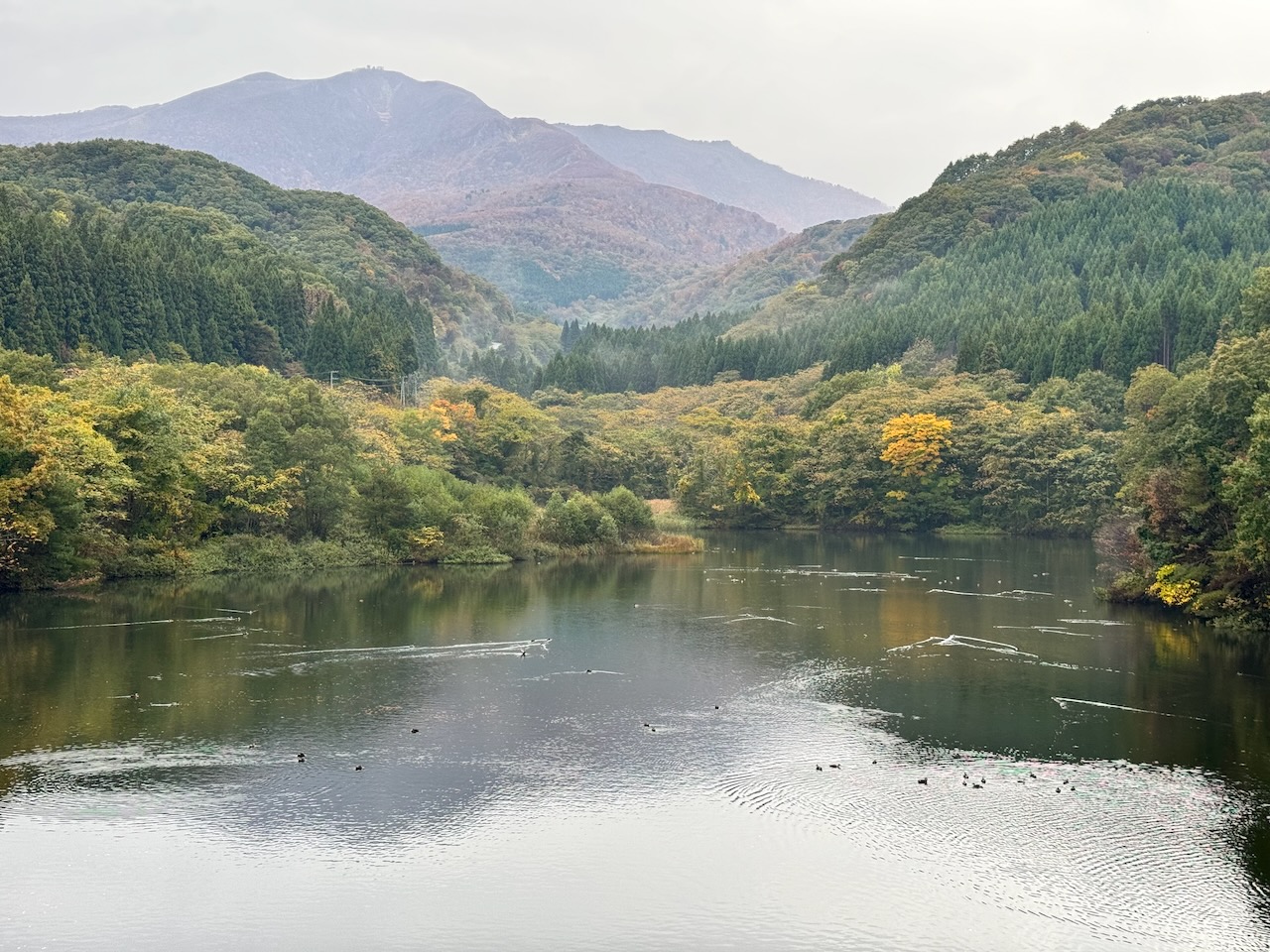
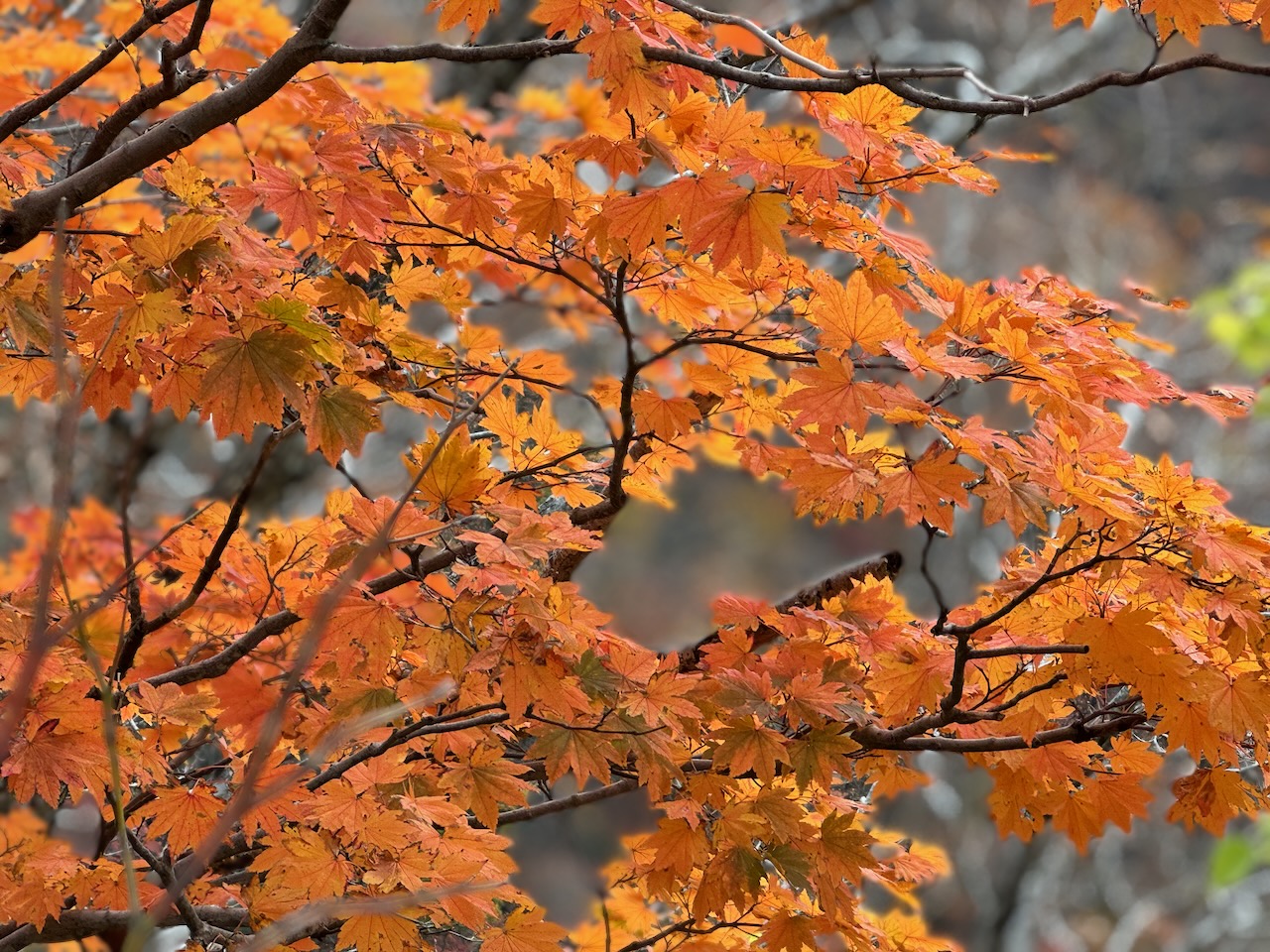
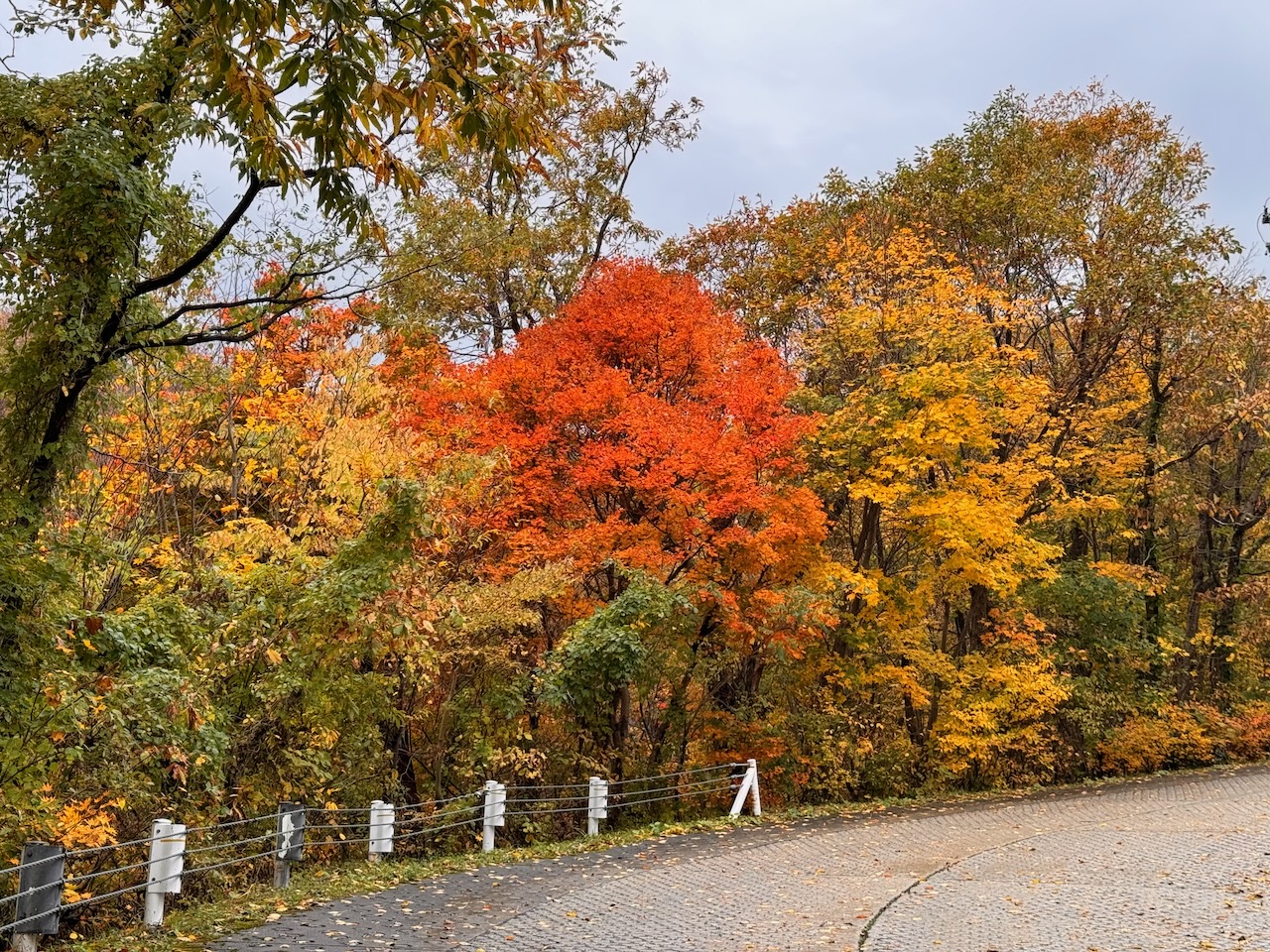
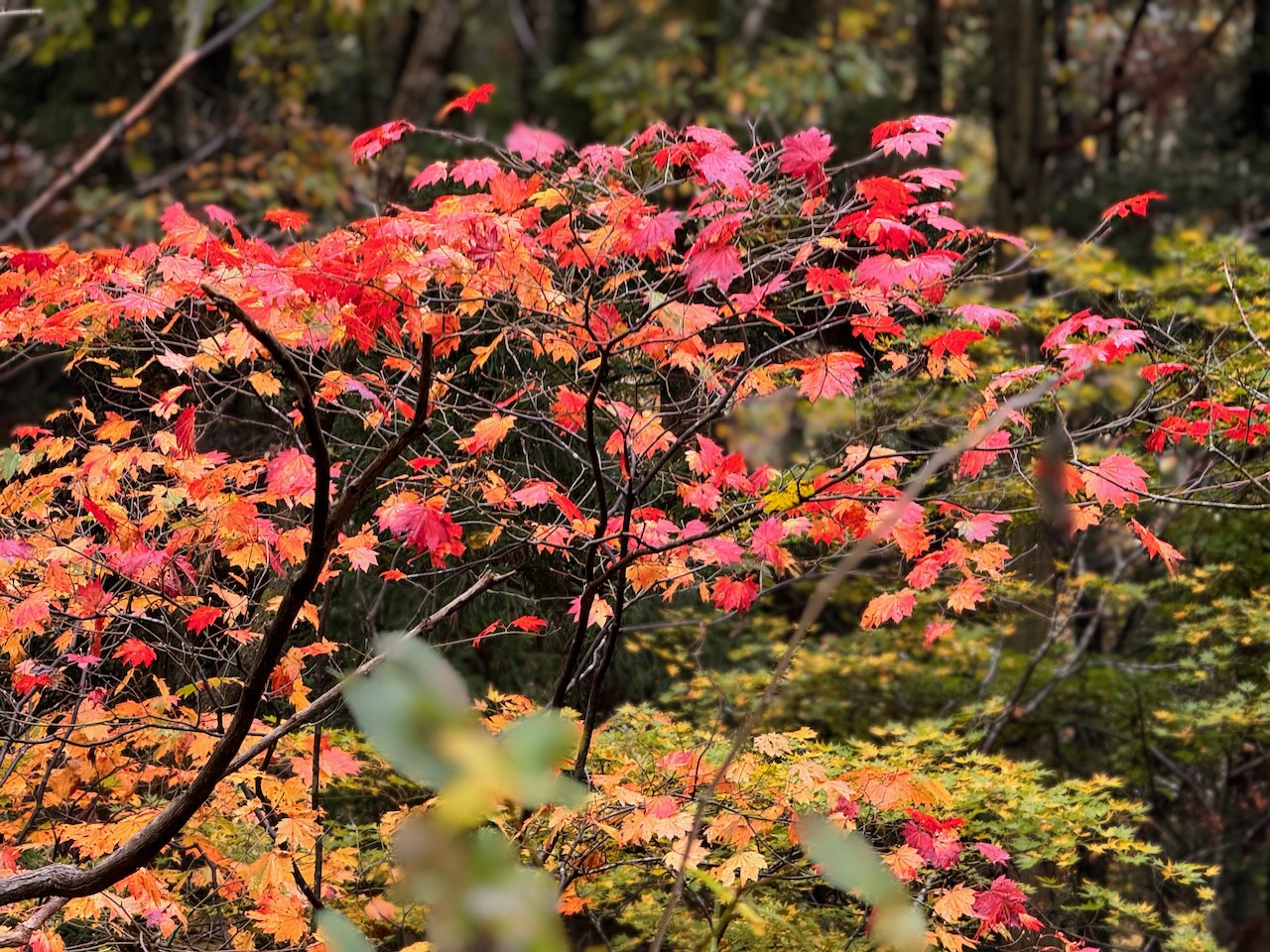
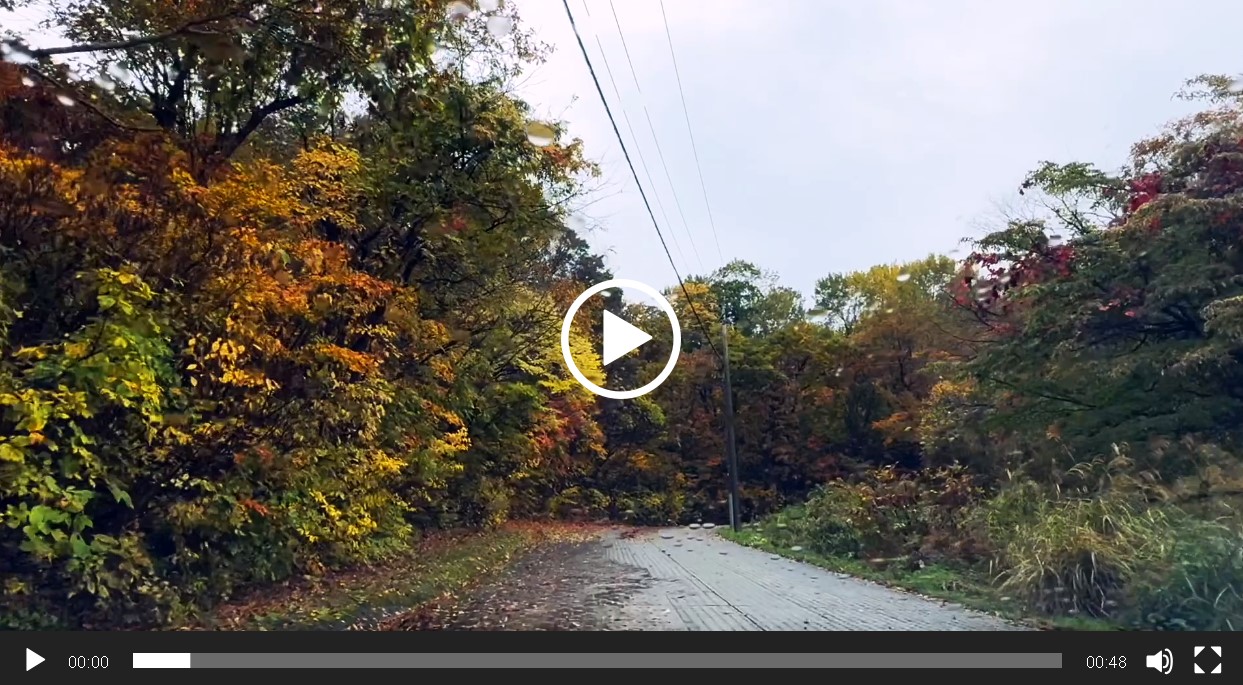
A taste of the drive up Skyline Drive
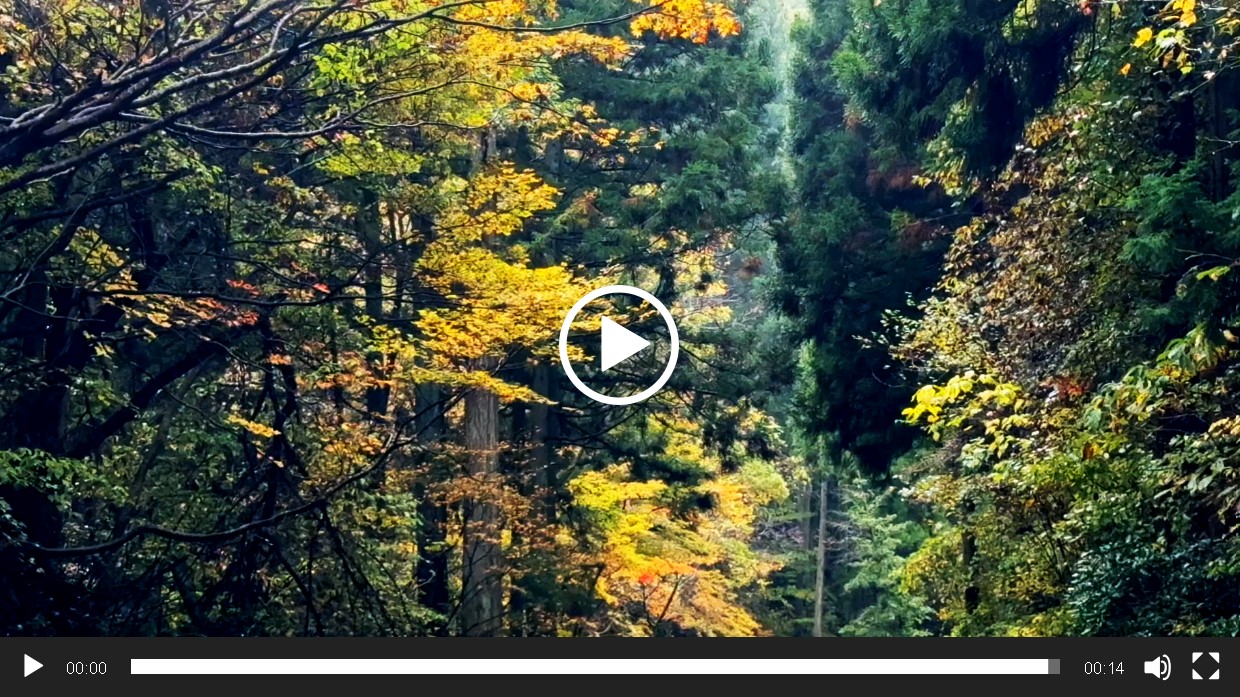
A taste of drive down Skyline Drive
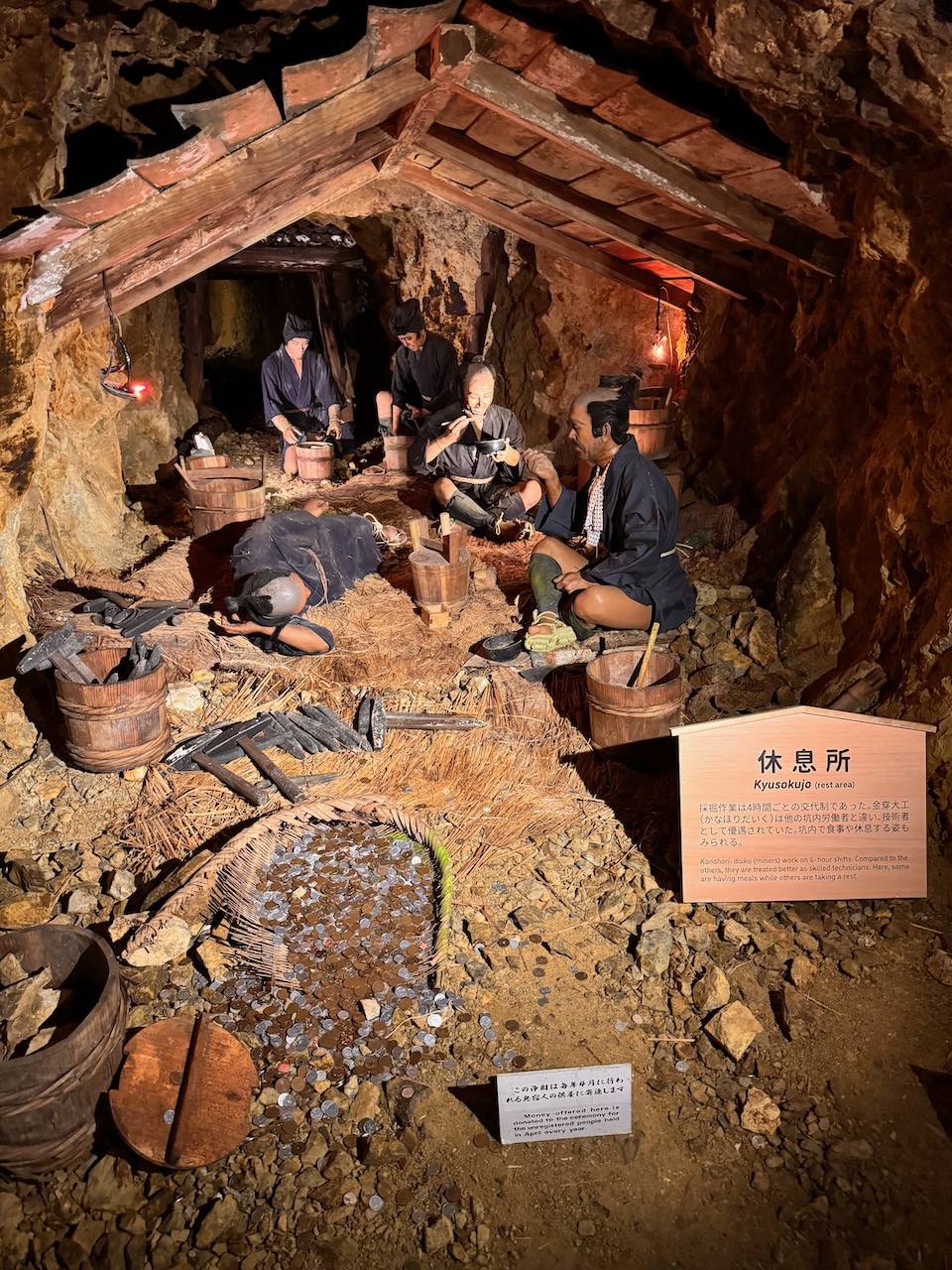
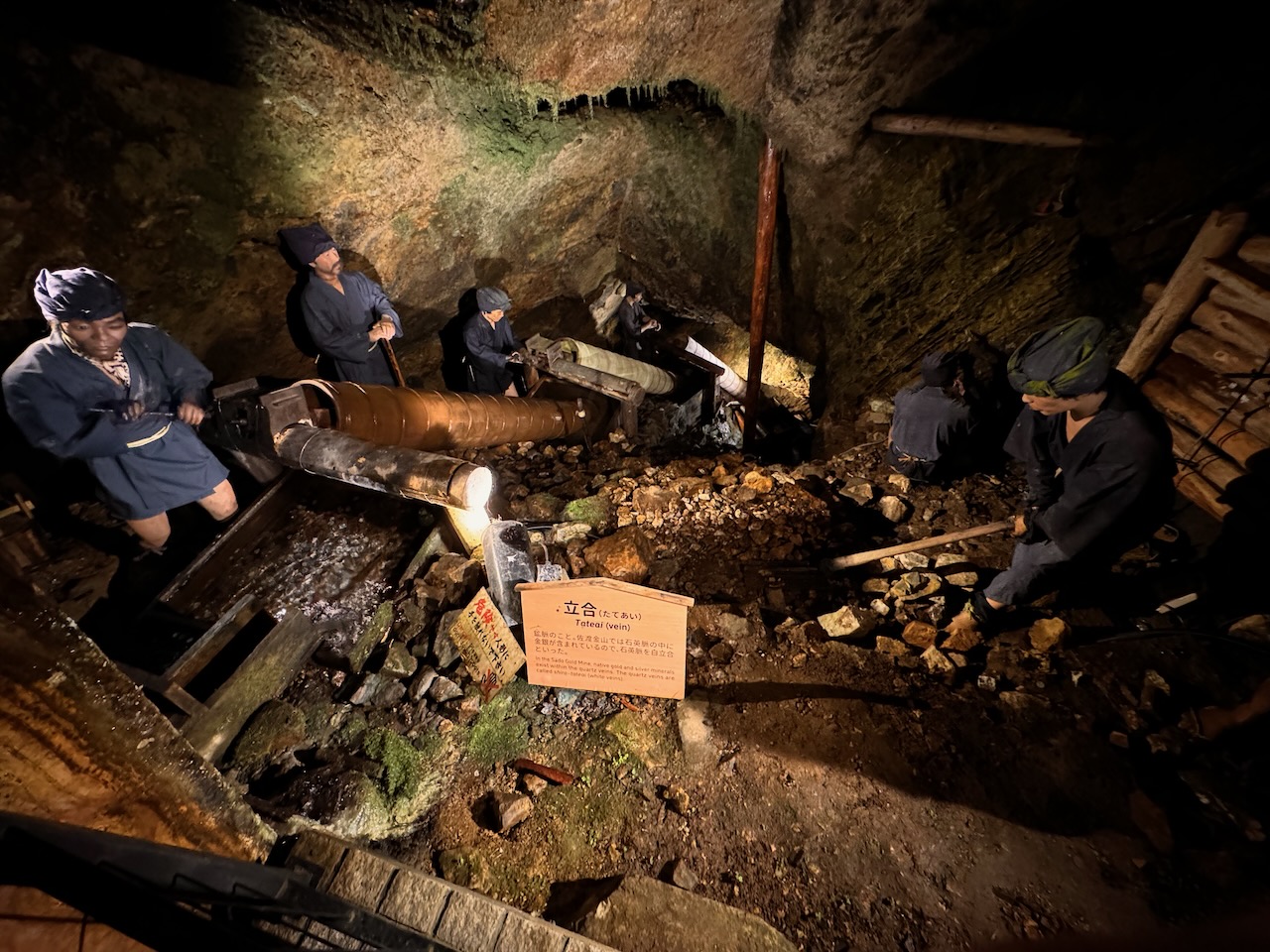
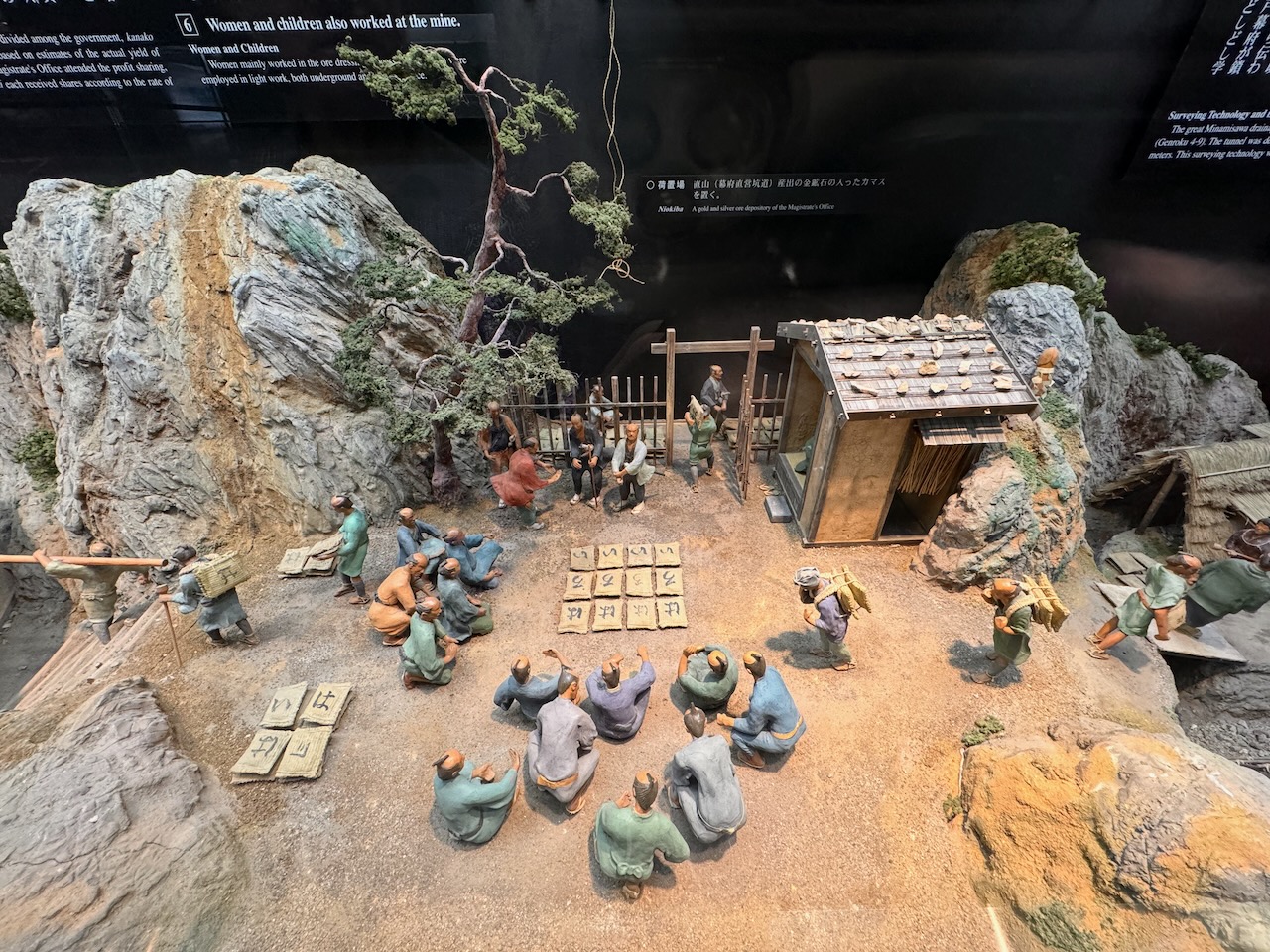
Along Skyline Drive, we encountered the Sado Gold Mine. Activity at the mining operation ceased in 1989 after 400 years of production.
On the way home after our first day we stopped at the Hananoki “sister inn” to experience the onsen that was shared by both. The serene beauty of Japan is a perfect setting for the therapeutic and relaxing qualities of these hot springs. The staff were very pleased to see us since few foreigners visit this part of Japan, and visibly delighted to be our very first onsen experience. We had read a lot about onsen culture and etiquette and we were both a bit anxious about the proper use of the natural hot springs. Women and men bathe separately and clothing is verbotin in the water. The onsen is often a household’s only bathing facility and people take no notice of the other bathers. In my case, I secretly observed the proper procedure, which included a sit-down shower before, but the process was really not at all challenging. My standout moment from this first visit was the child of about seven years who bowed to me several times as we passed each other in the nude! The waters of the onsen are really hot so neither Joe or I stayed in very long. This, our first, was an indoor version which doesn’t strike me as desirable as an outdoor onsen.
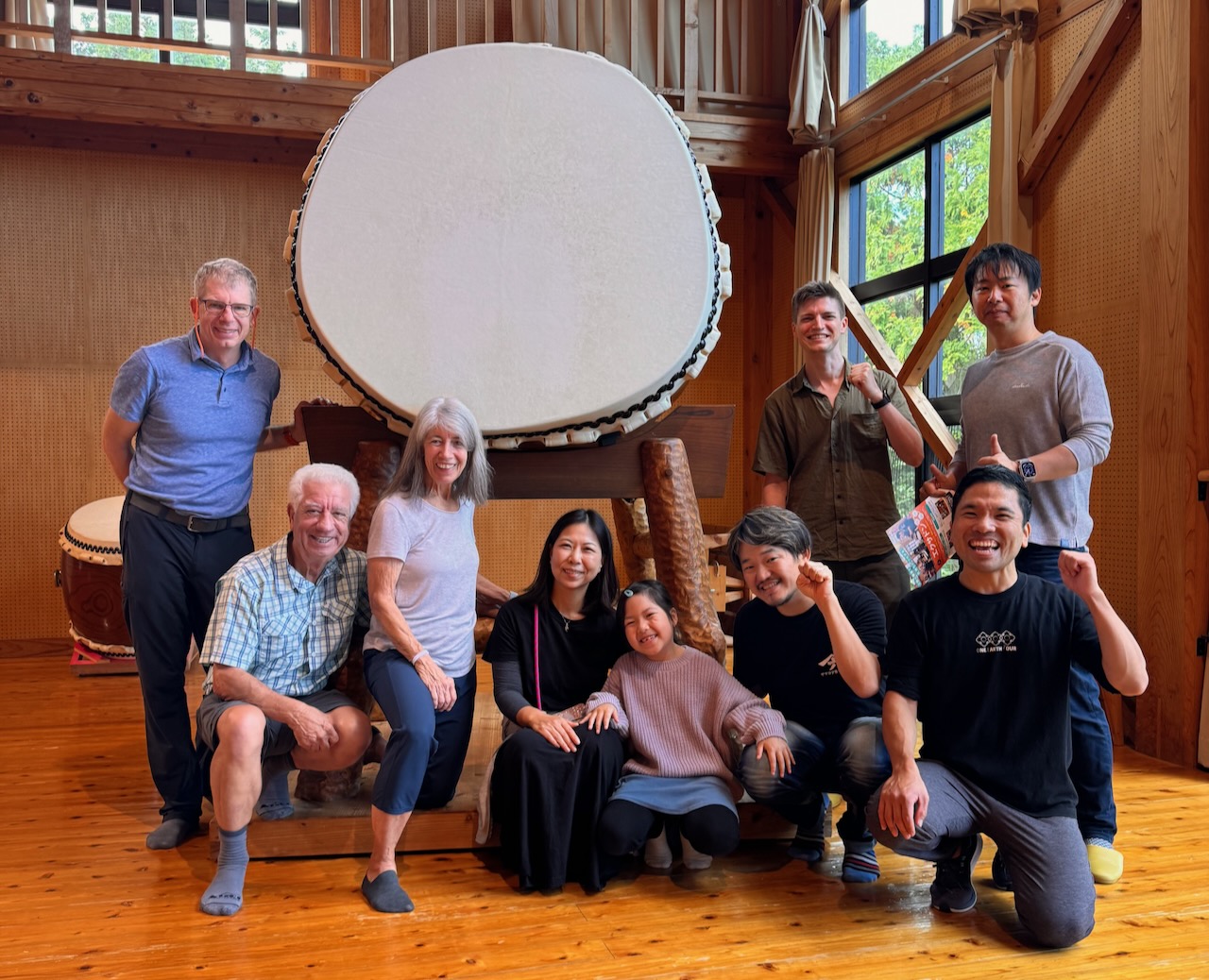
One of the main reasons to go to Sado Island was to visit the Taiko Drumming Center and have the experience of beating these massive drums. The largest one, pictured left, is nicknamed Mr. Potato.
This was a memorable experience that more than met our expectations.
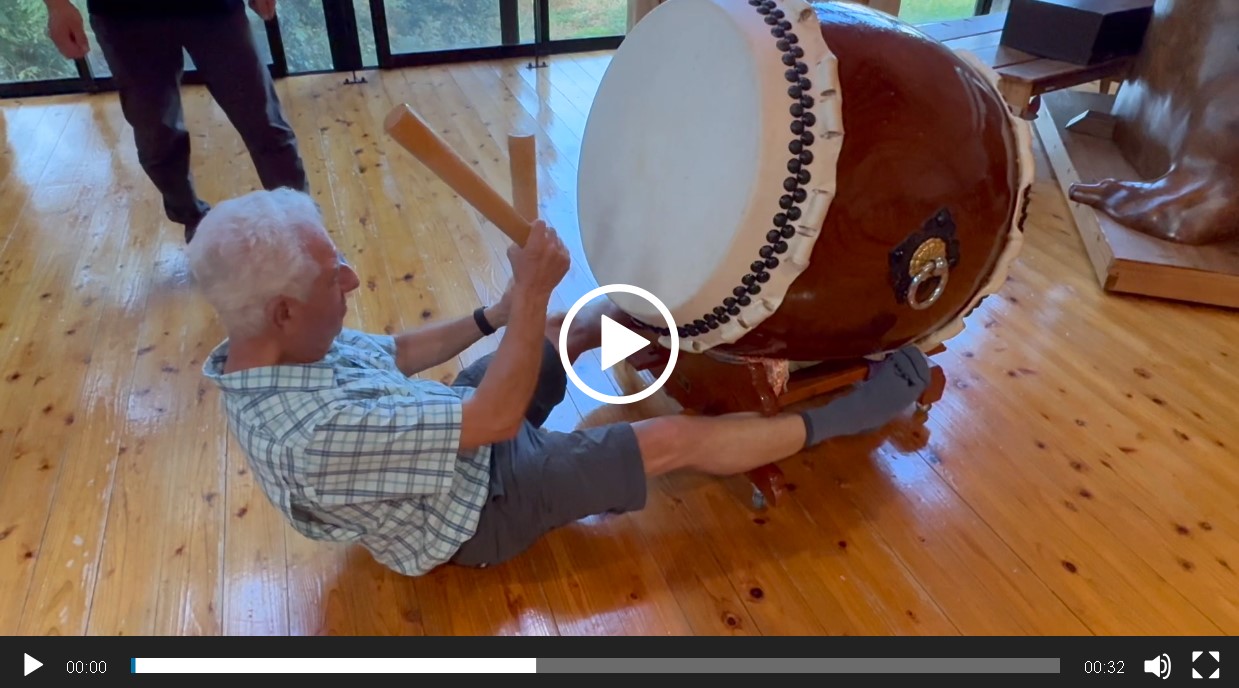
Joe’s exhibits his Taiko
drumming talents.
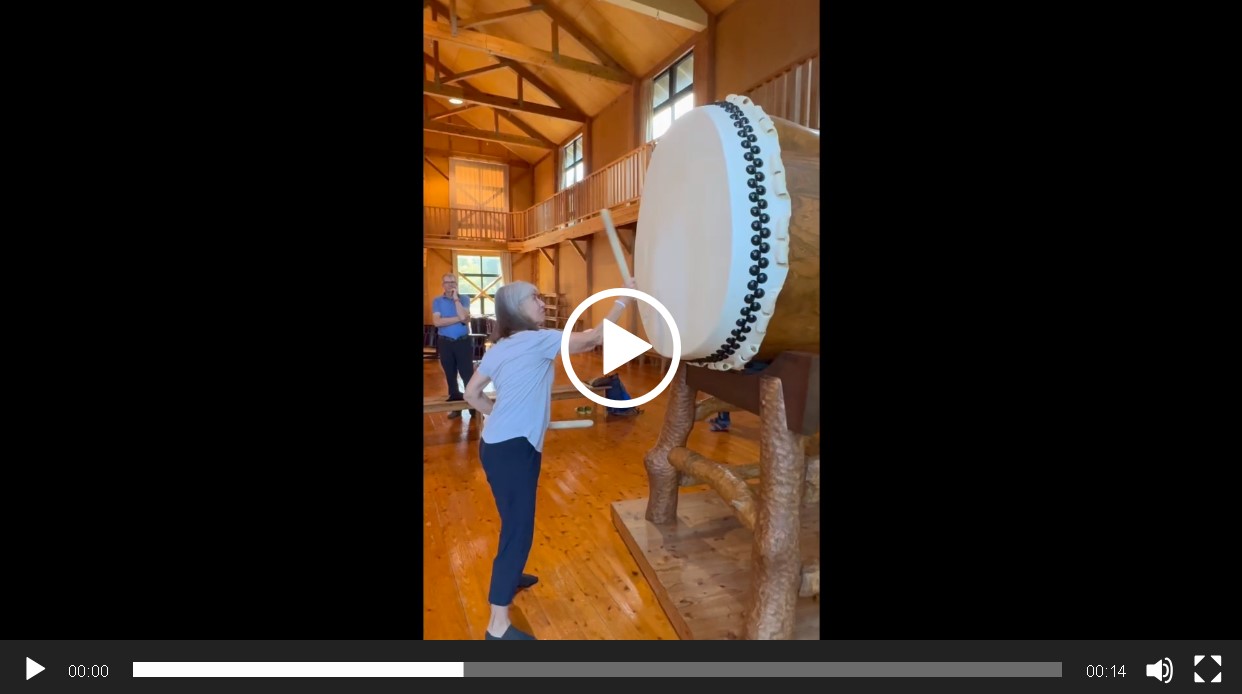
Mary’s take on Taiko drumming.
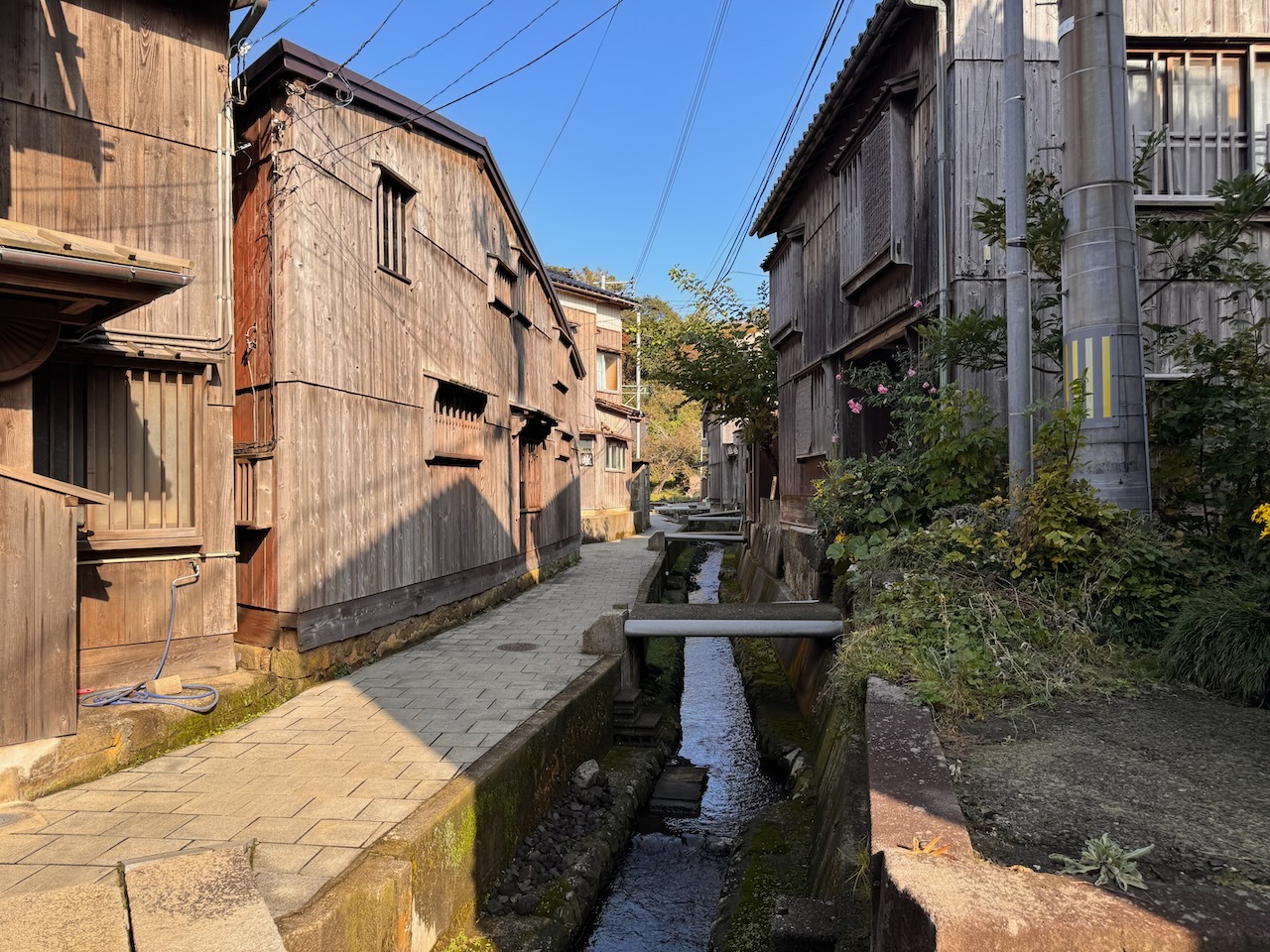
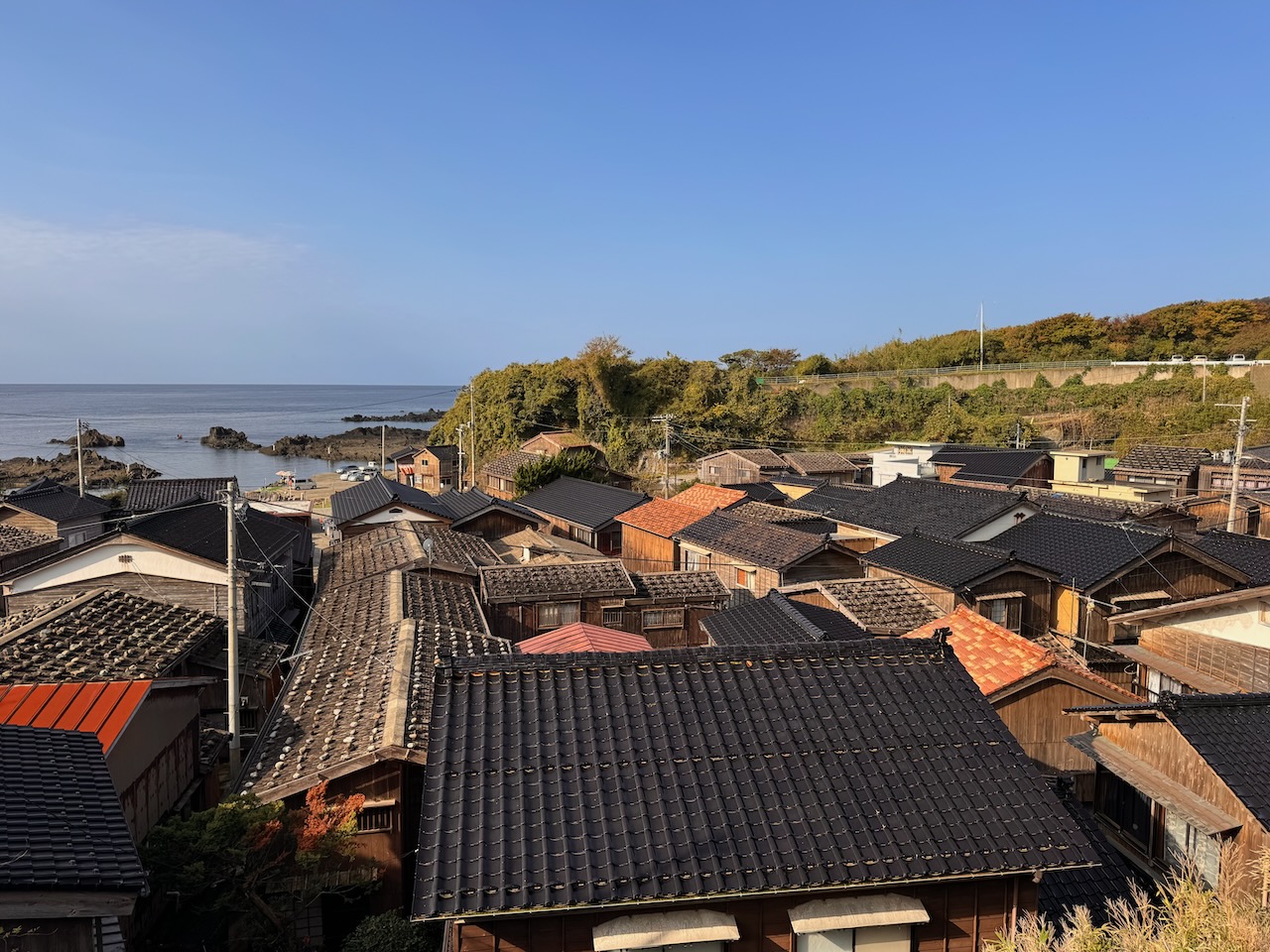
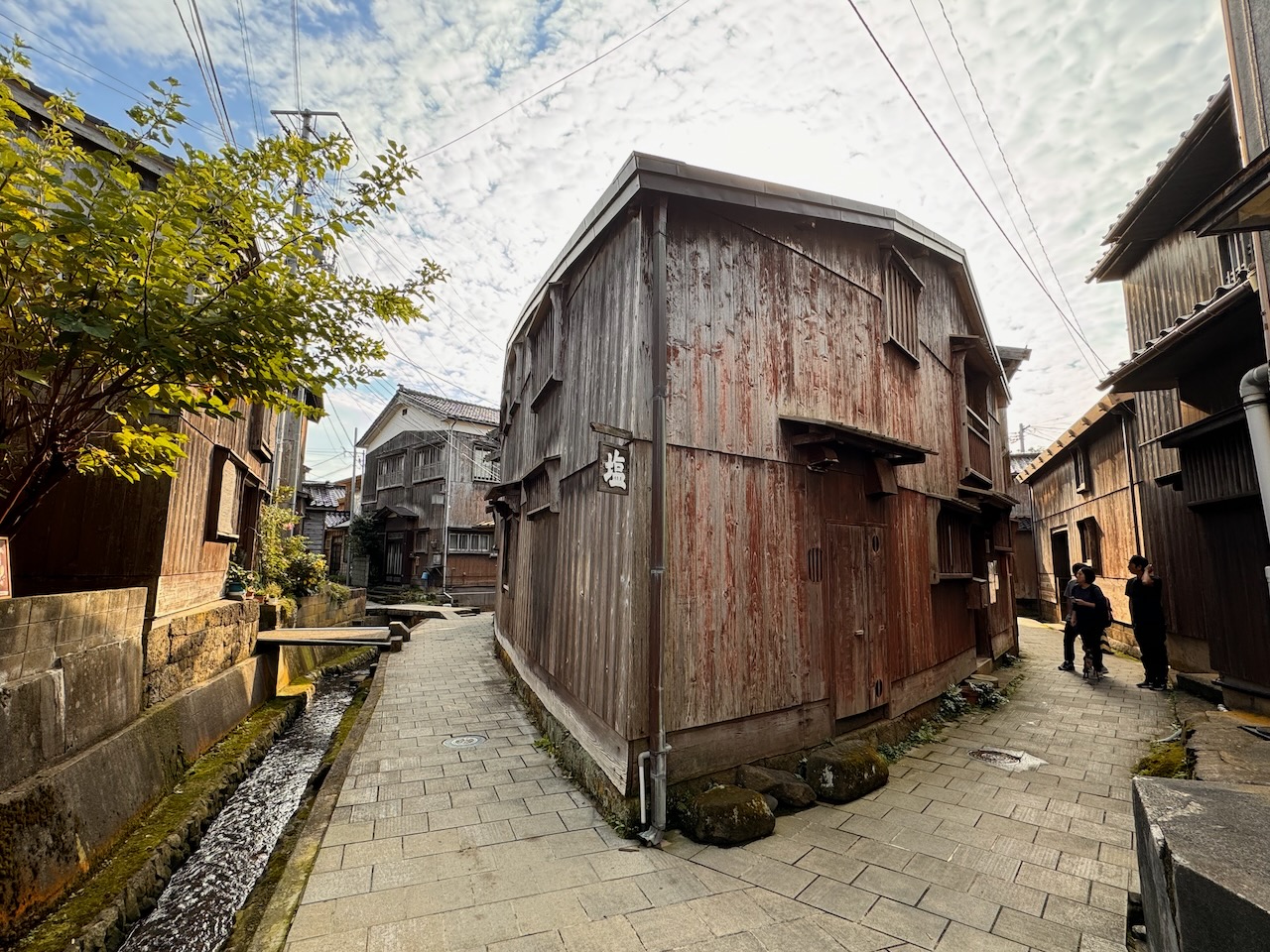
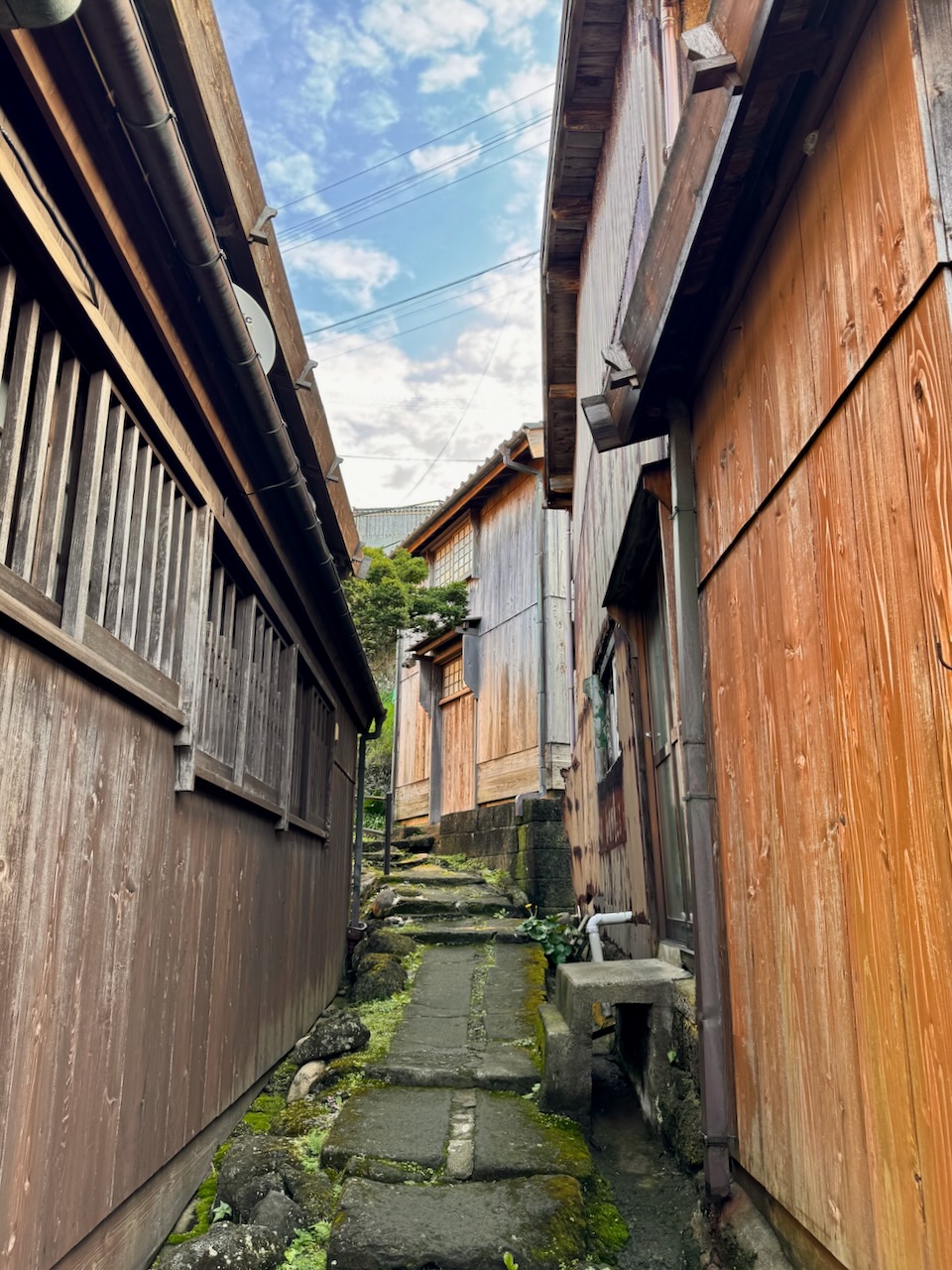
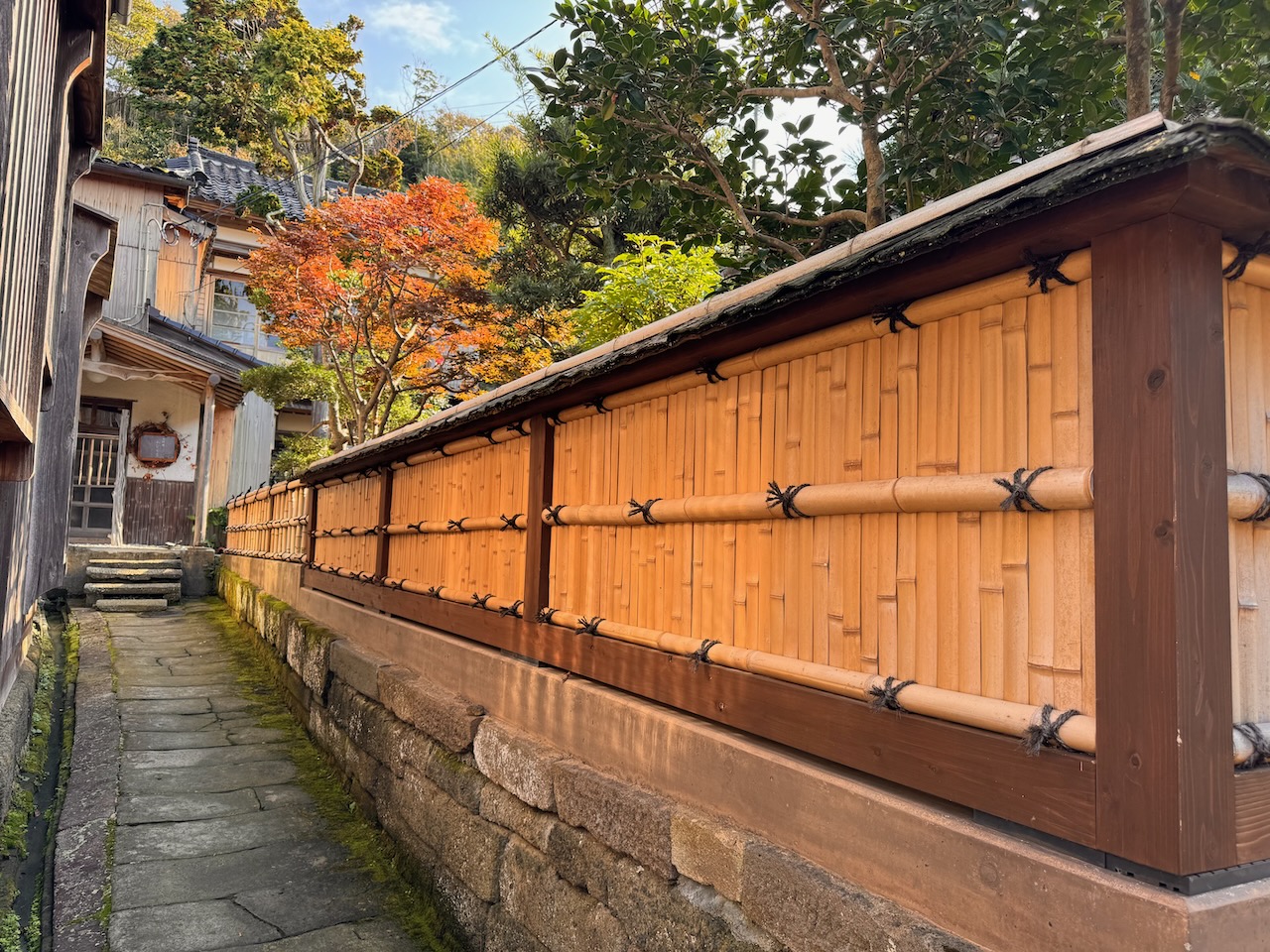
Below, photos of the charming village of Shukunegi, the historic seaside home of former shipwrights.
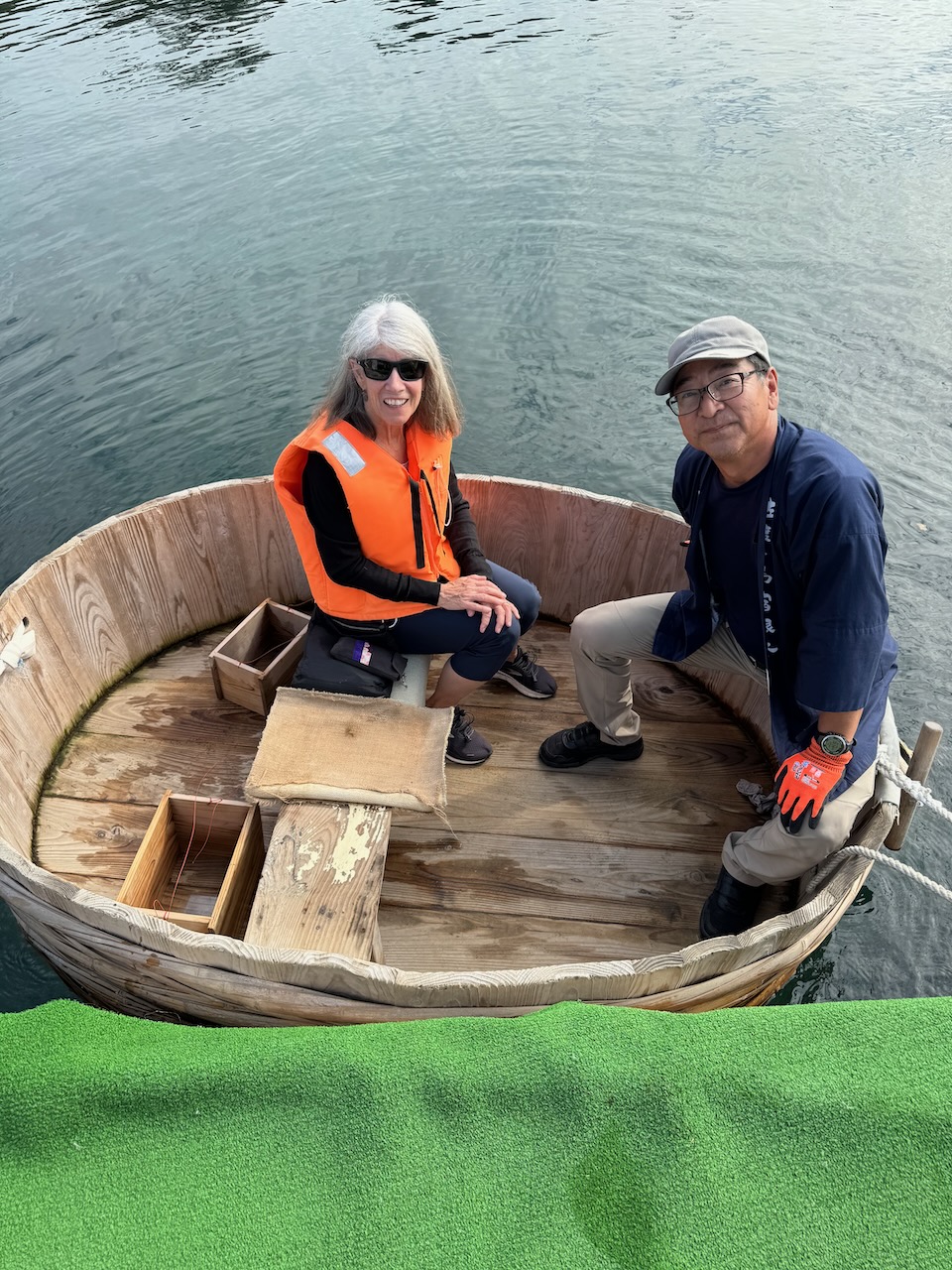
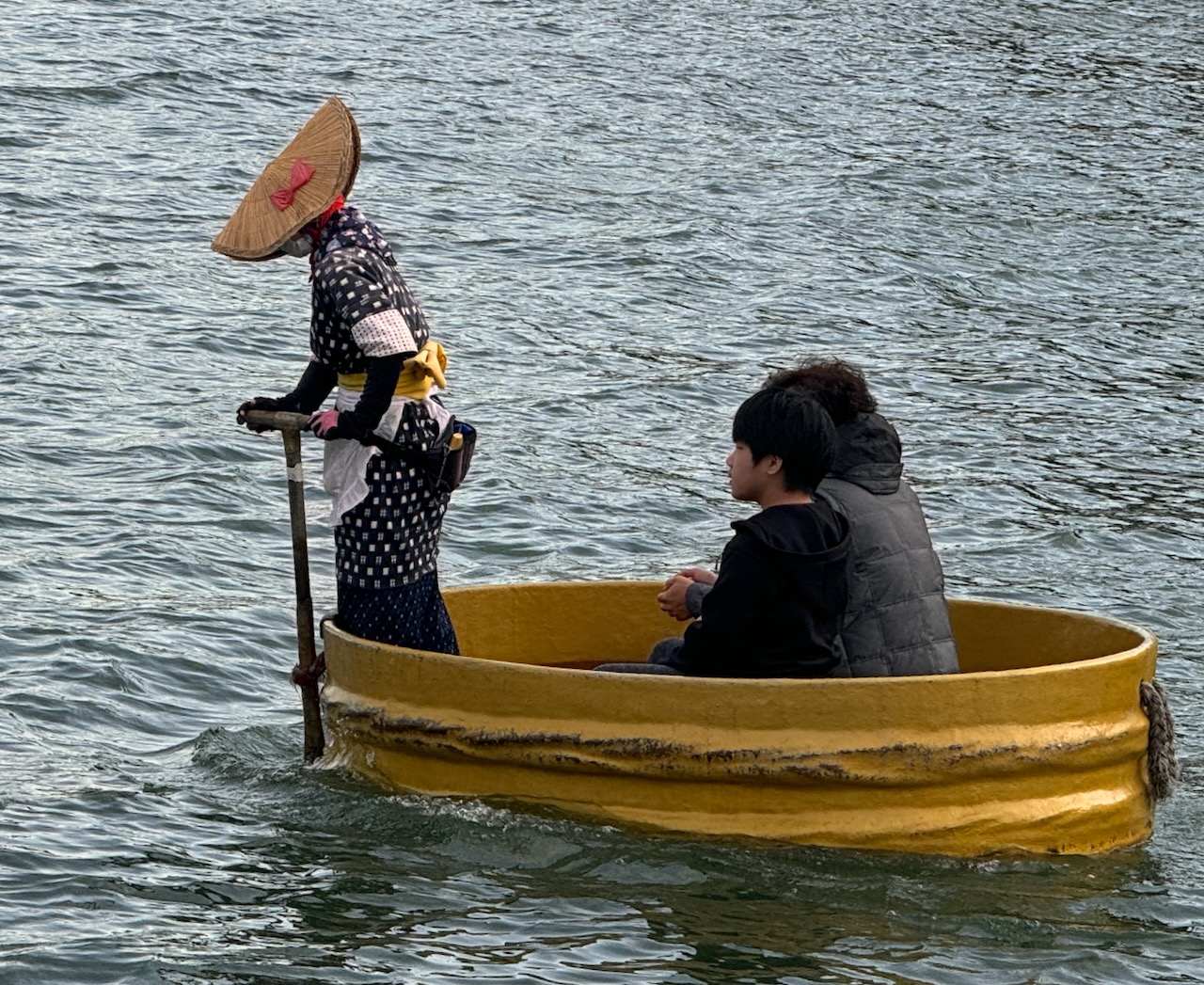
Tub boat in action.
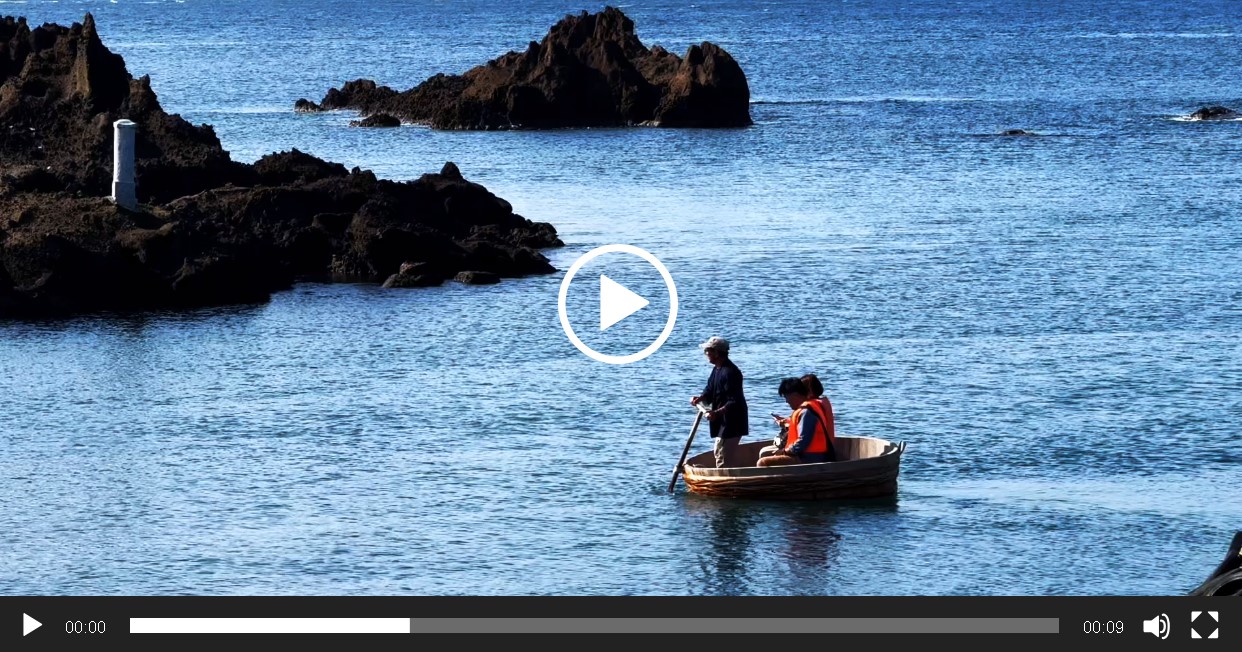
Tub boat in action.
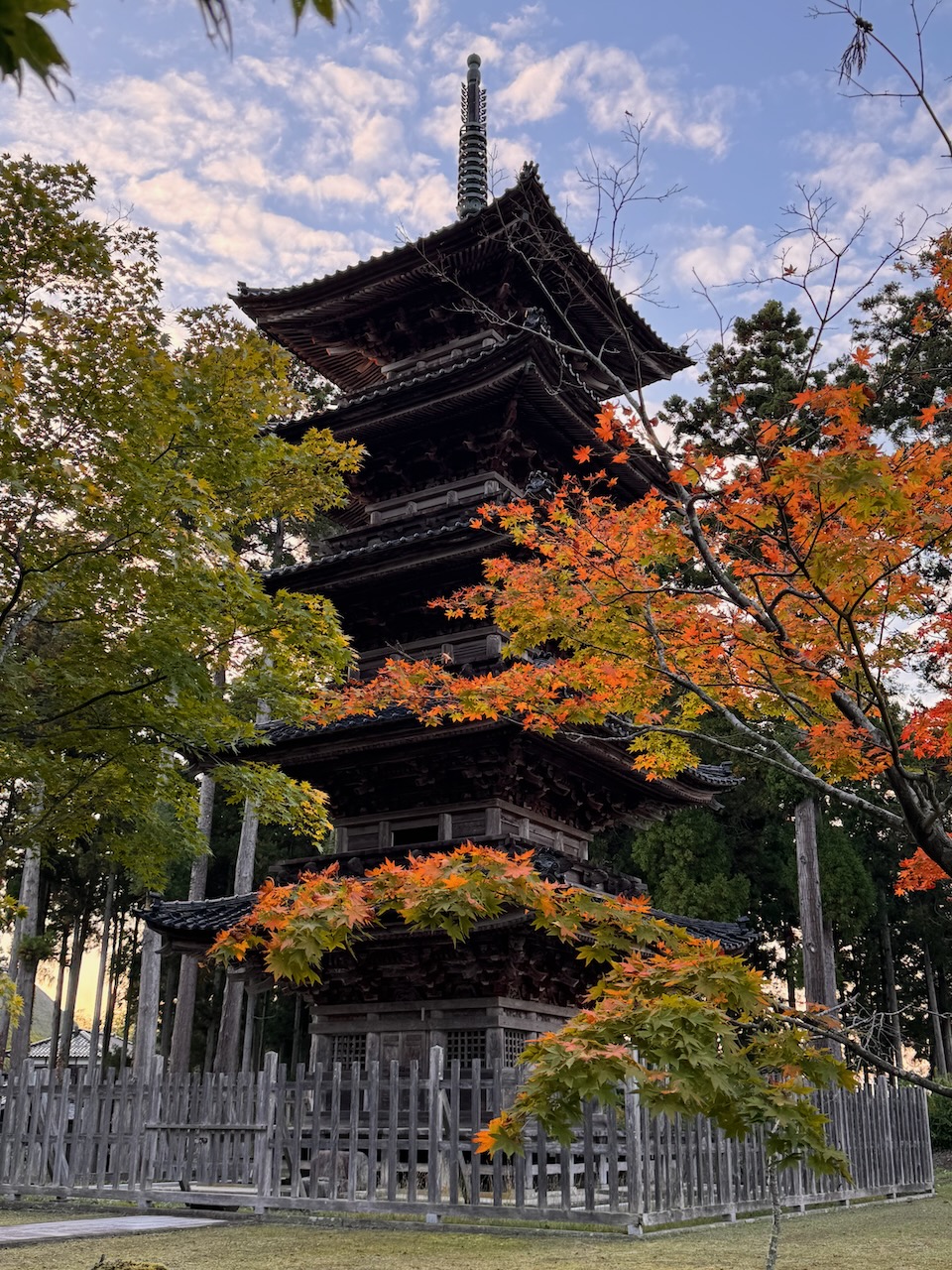
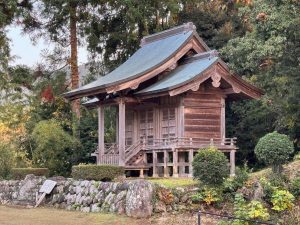
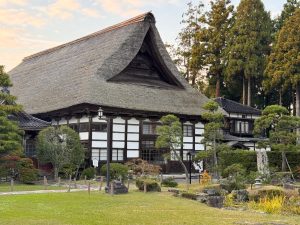
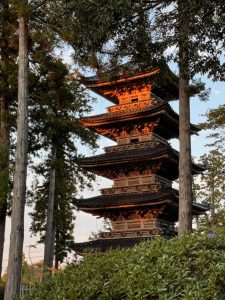
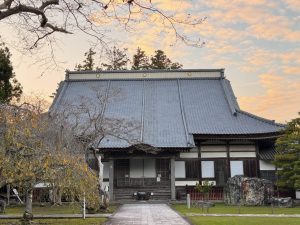
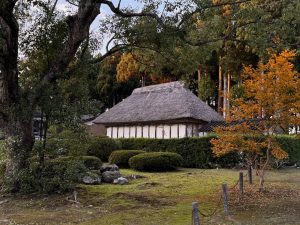
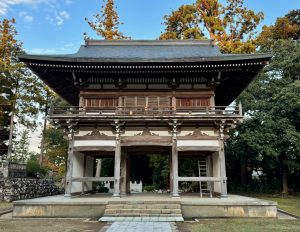
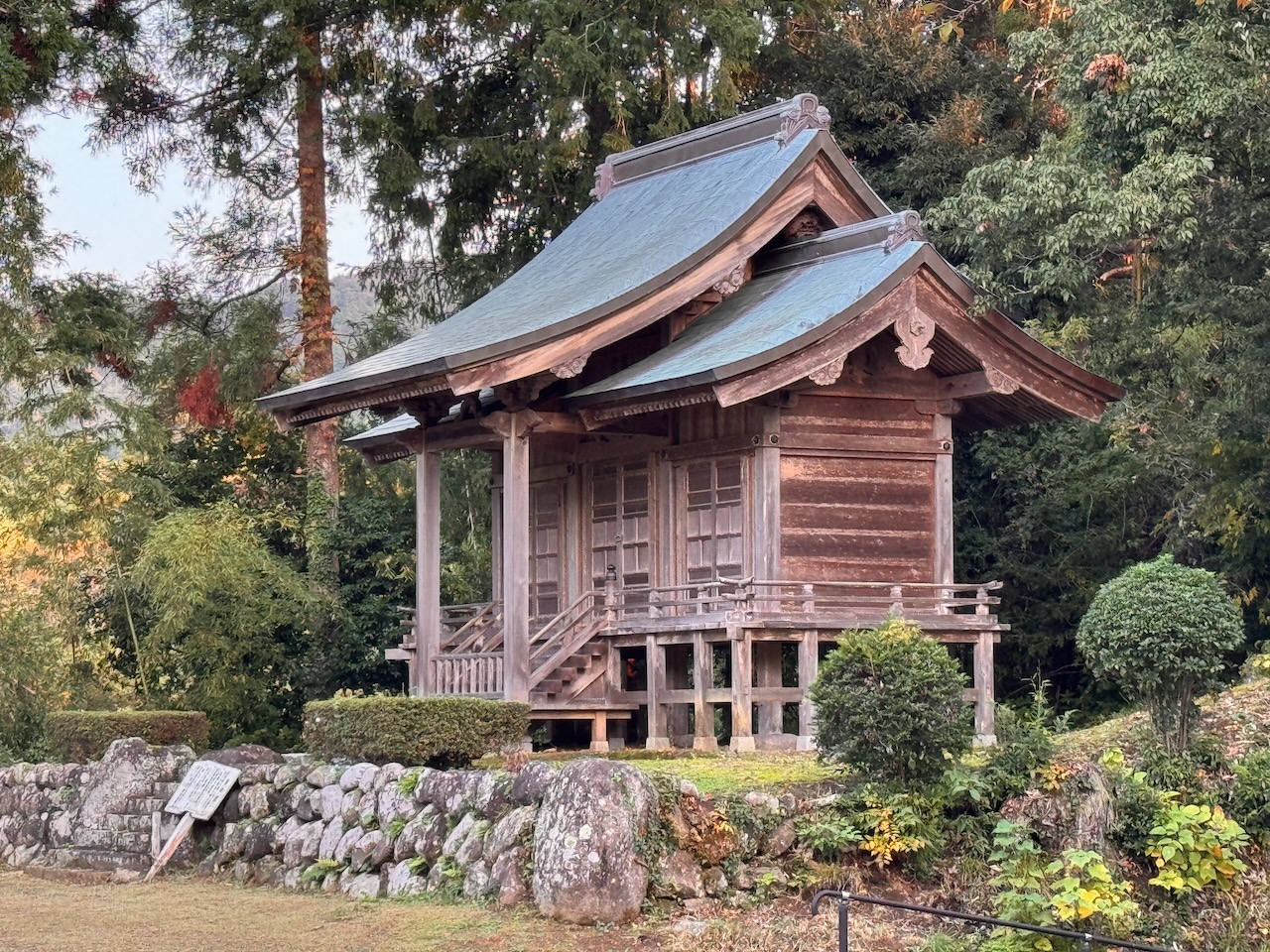
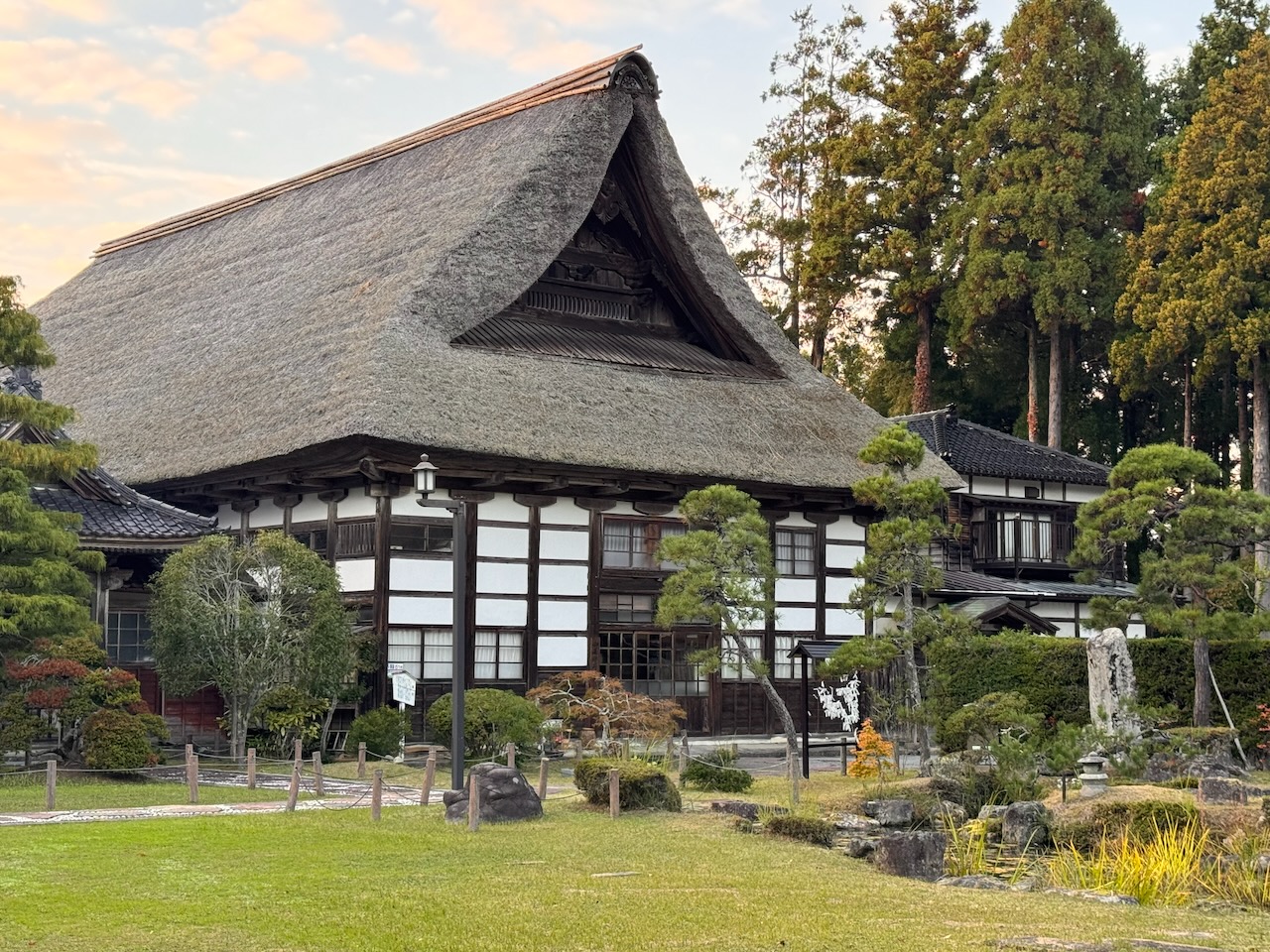
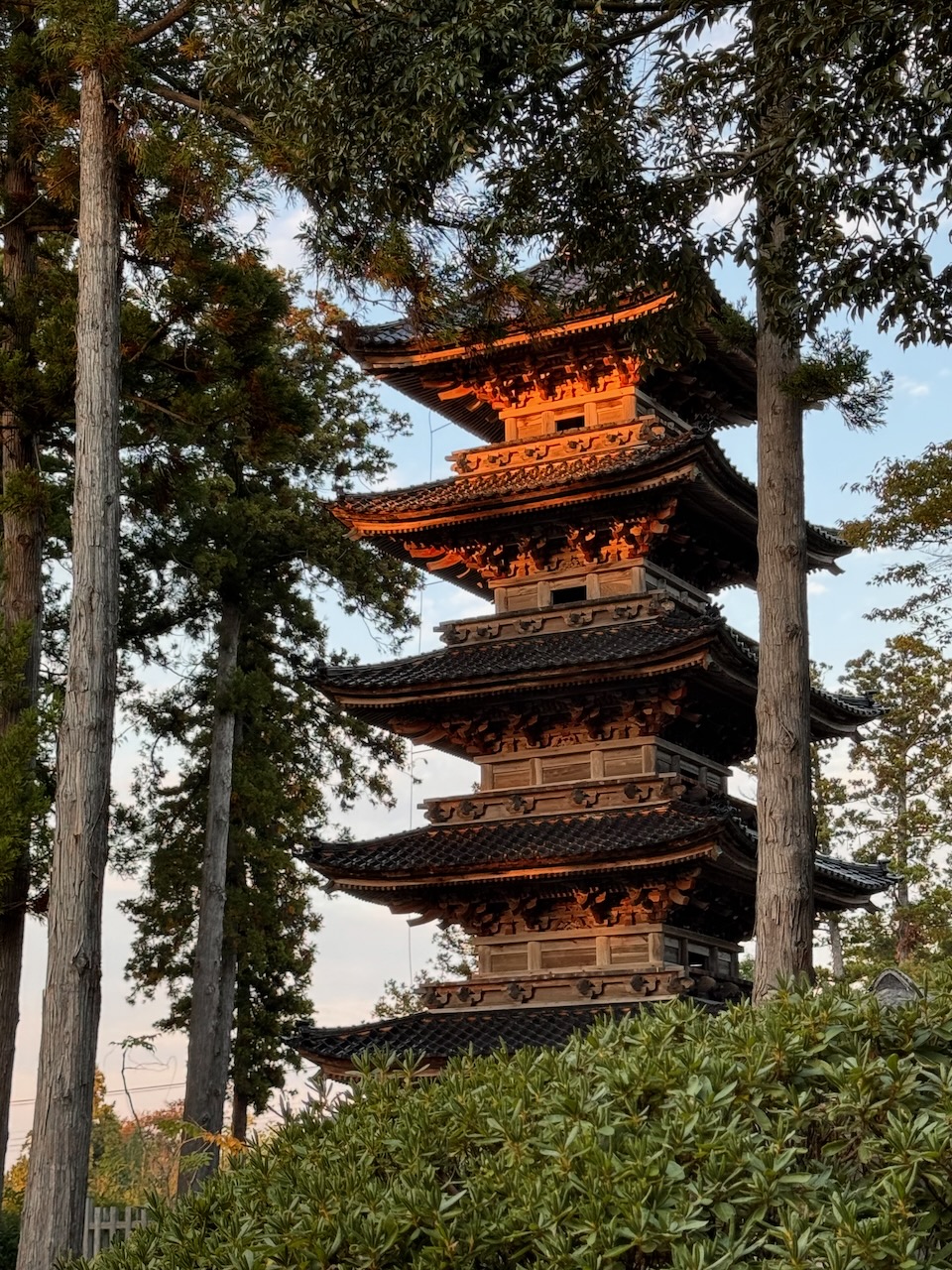
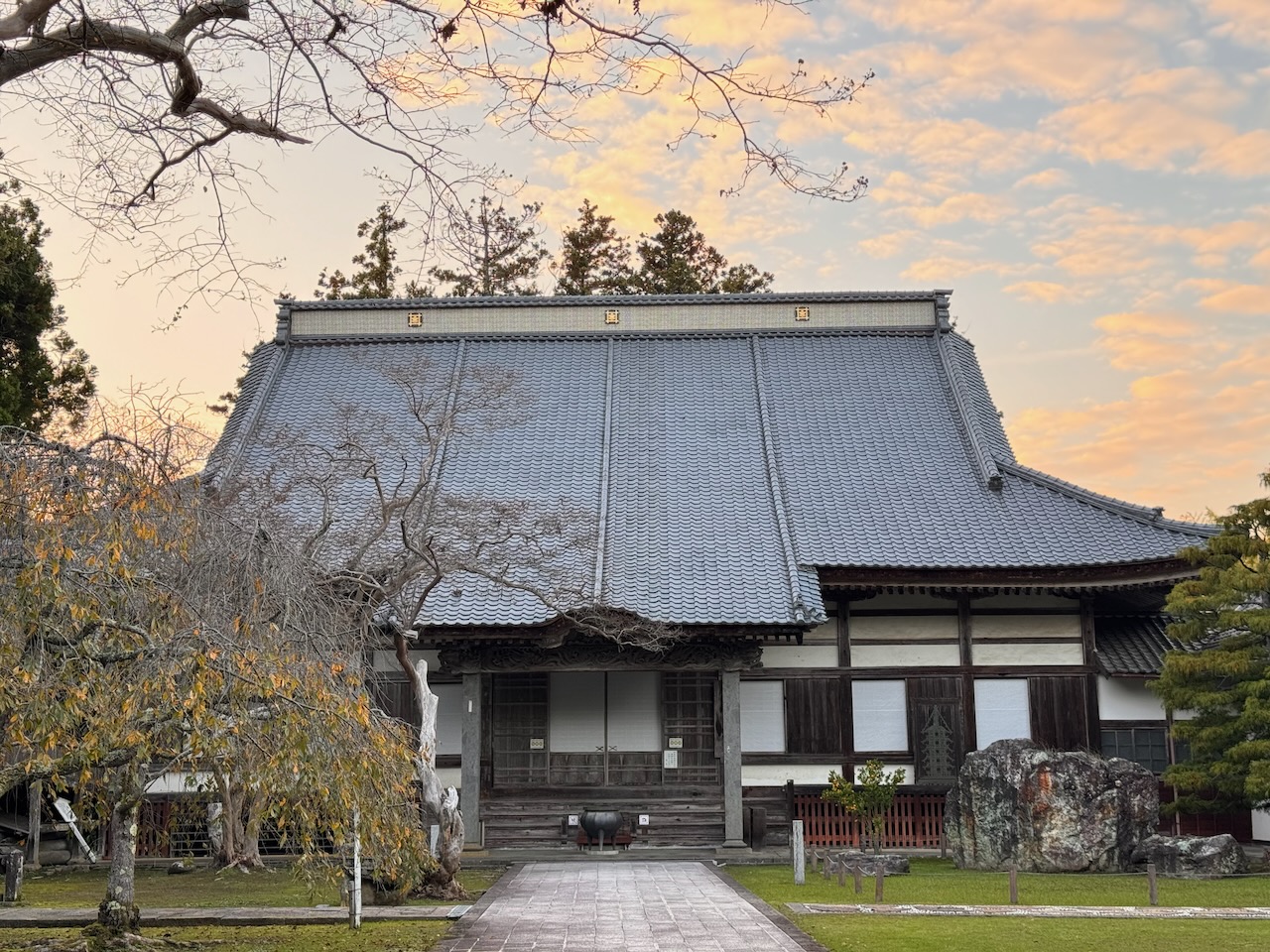
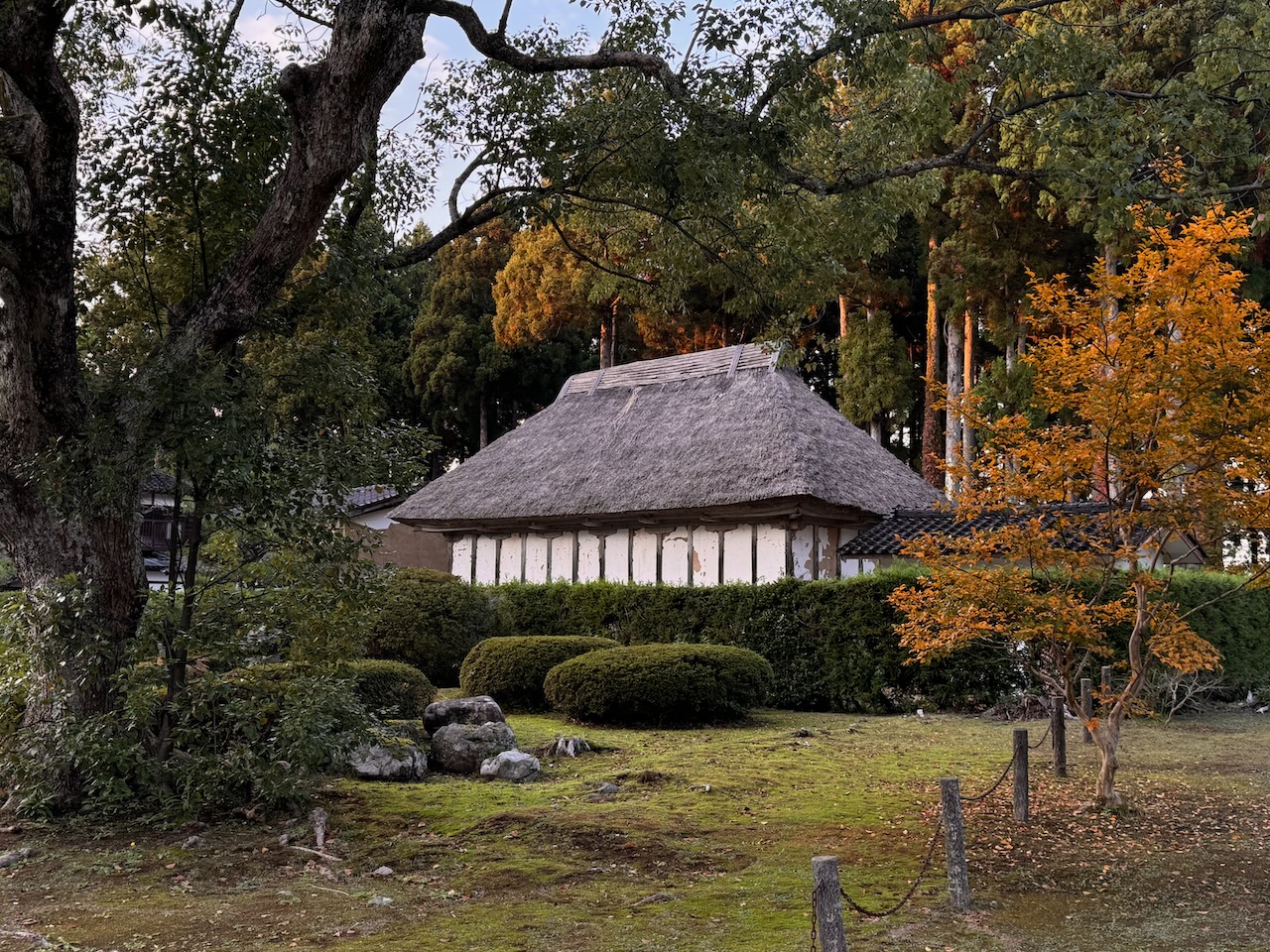
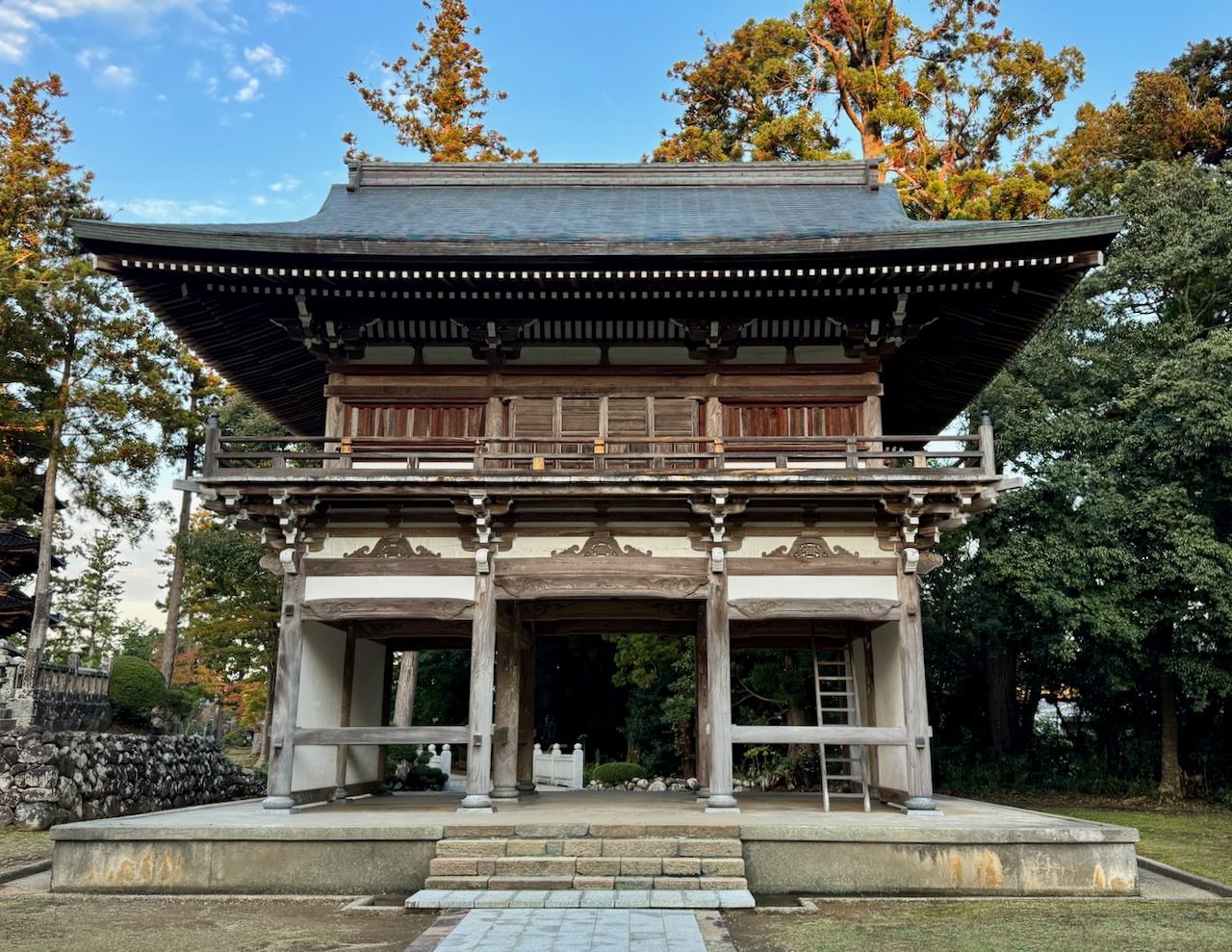
Myosenji Temple includes a 5-storied pagoda and numerous other temple buildings, five also pictured below. This was one of our favorite temples. The setting sun and the utter peace of the solitude may have been contributing factors.
15 thoughts on “Three Nights on Sado Island”
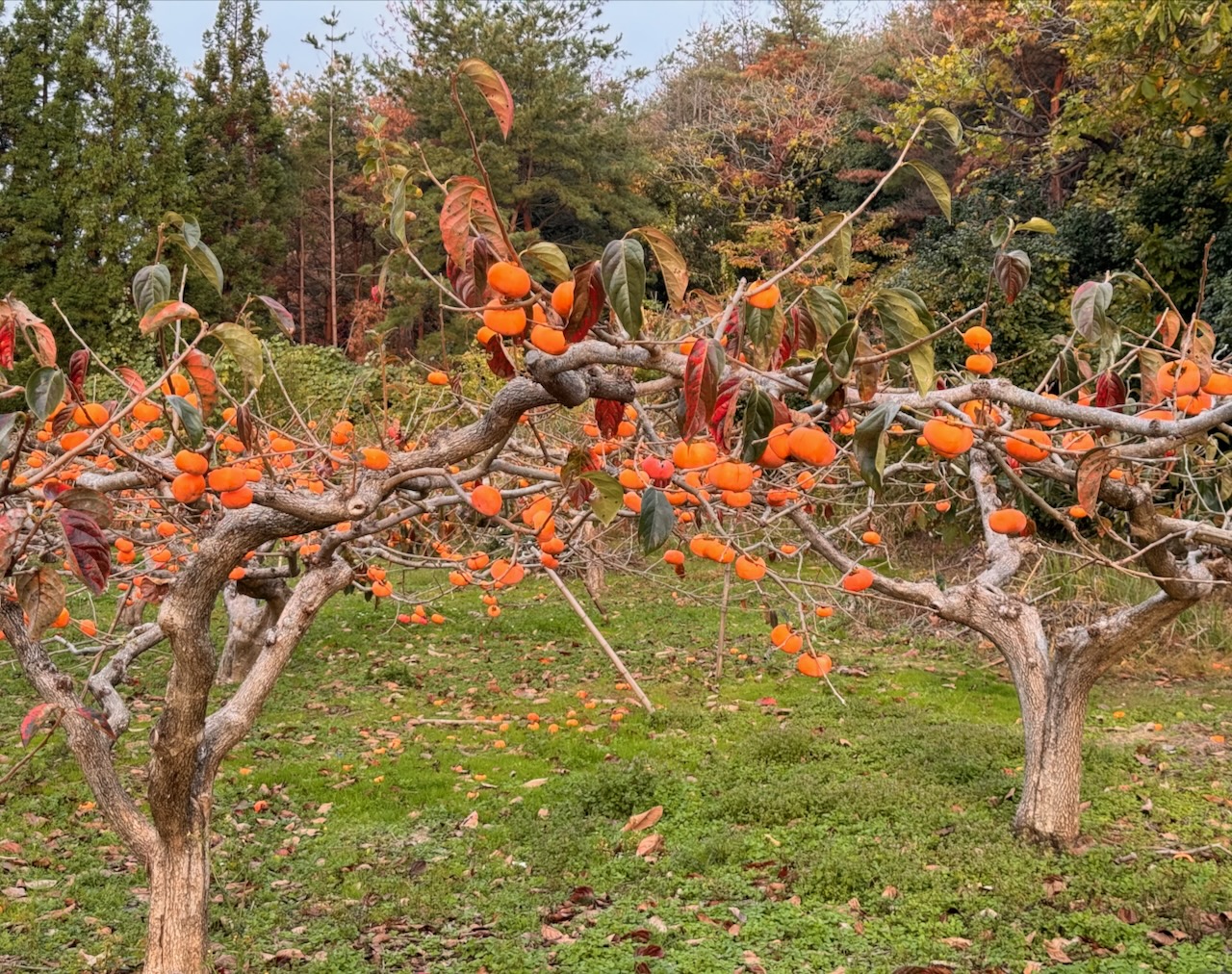
I love how you immerse yourself in local culture and experiences! Beautiful foliage on Skyline drive!
Fabulous coverage of a beautiful place on earth
Beautiful place that I’d never heard of before. Congrats.
Well! You dare devils you!
This just goes to show that if you’re prepared to be a bit adventurous the rewards make it worth the effort.
What a beautiful place Sado Island turned out to be!
Loved the look of the food at Hananoki and top marks to you for managing the communication there.
The road trip through that glorious ‘fall’ foliage looked amazing. Loved the carpet of fallen leaves and the Vie En Rose audio accompaniment!
It is definitely off the beaten path! A few more days would have been nice, I think. We didn’t even circumnavigate the island and after-the-fact, I see there is more to it than what we saw.
Fabulous pictures (as usual!) – love the drumming videos! Next you will both be on stage!
Such a charming, magical island escape. Kudos to you both for venturing off the beaten path! I, too, loved the fall colors on the Skyline tour … Mary, at first I thought that was you singing La Vie en Rose! 🙂 Joe, you showed quite some talent on the Taiko drums. Mary, were you beating poor Mr. Potato? Such an interesting technique for propelling the tub boats forward, leave it to the ingenuity of the Japanese. Thanks for sharing yet another wonderful adventure!
😆
Wow, these are some beautiful pictures!
Japan…. Serenity and Old Wisdom. Thank you for sharing.
What an exotic place to visit! The videos add greatly to the beautiful photos and interesting captions.
Nice places, and for the fish only it was worth it.
Proset Joe kemm tinqala bit tnabar. Meta tigi semmalna wahda 😉.
All our love
Xxxx
You are challenging our Maltese, Christabel! I guess we need to get back there to get fluent again…especially me (Mary)😆😆
Such an adventure 🤩
Fabulous descriptions, Mary, and really loved the photos The videos were fantastic. A great feature to add.