Hiking the Kumano-Kodo
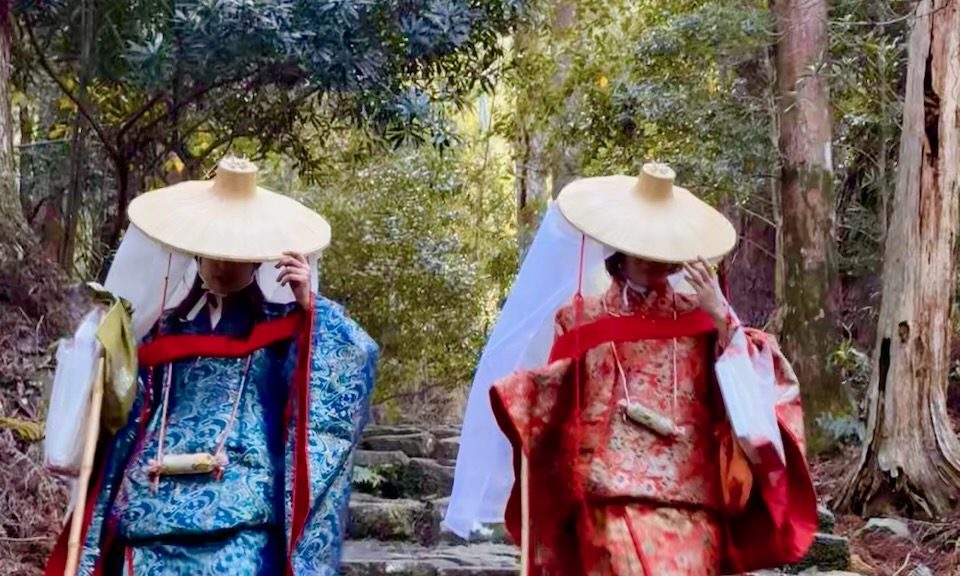
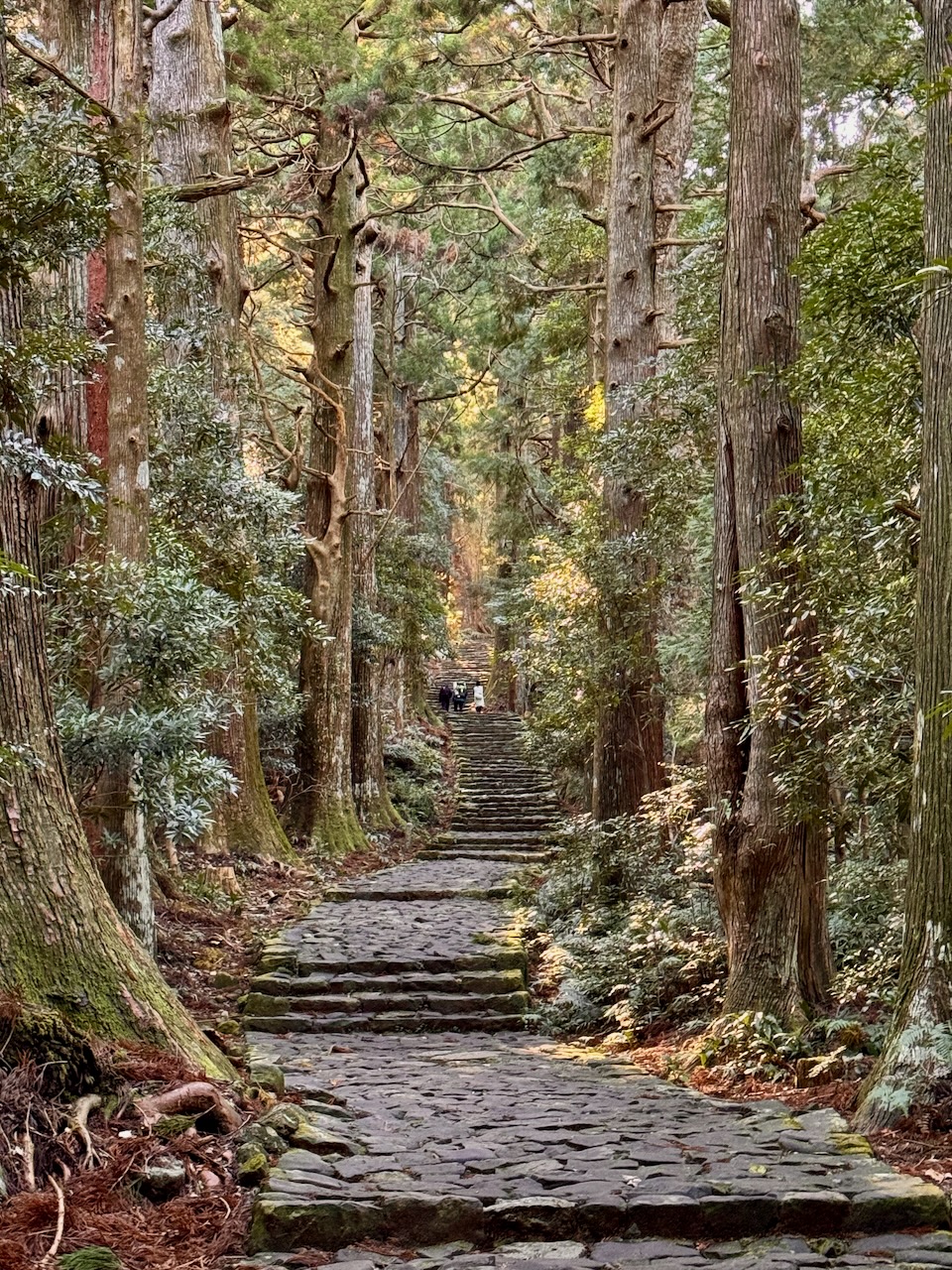
One of the many highlights of our month in Japan was a 3-day hike along a part of the ancient Kumano Kodo route which stretches across the mountainous Kii peninsula. For over 1000 years people have made this arduous pilgrimage. Walking even a small part of it is an immersive Japanese experience which includes three exceptional sacred sites of worship, the Grand Shrines: Kumano Hongu Taisha, Kumano Hayatama Taisha, and Kumano Nachi Taisha.
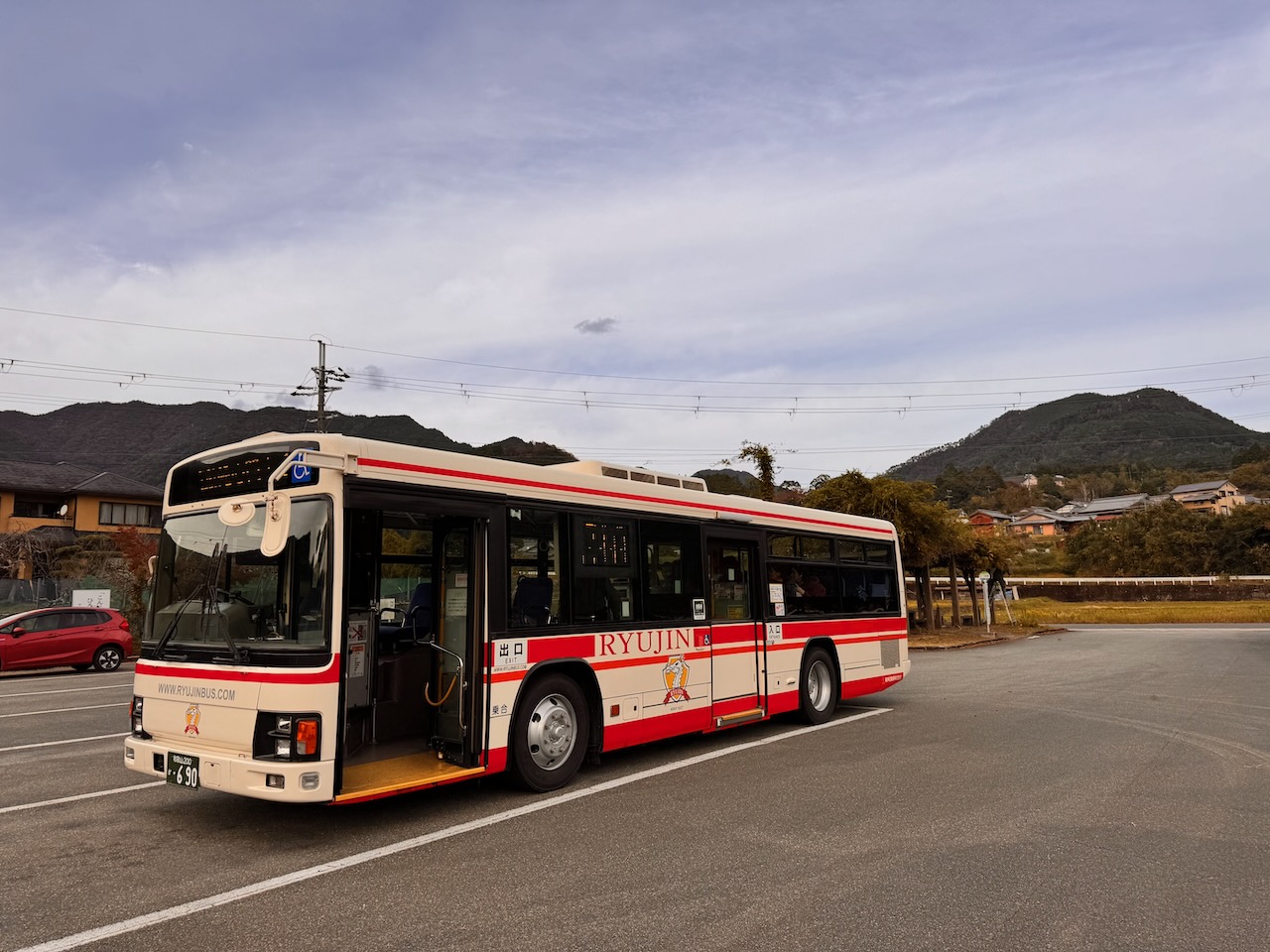
We left Kyoto by train and transferred in Osaka to a regional train bound for Kii-Tanabe. After nearly 3 hours we arrived on time for our scheduled Kumano Kodo orientation at the tourist info centre. A staff person was familiar with our itinerary and in 30 minutes talked us through the route we would follow to be sure we were comfortable about the walking ahead. By the end of the meeting we were loaded with relevant maps and up-to-date info regarding the weather and hiking conditions. When we left we felt a bit overwhelmed, but we still had a two-hour bus ride to review all the information.
Doing a hike along the Kumano Kodo is not a journey you can take without advance planning. Lodgings are few and far between and not terribly large. Most bookings must be made through Kumano Travel which was the group that gave us the maps and all the details. A woman we met on the train proudly said she was going to wing it, just hit the trail and hope for the best. But she was informed at the info center this wasn’t possible and was sent packing, back to Osaka I presume. As it turned out Inside Japan had done the right thing sub-contracting our three night visit out to the Kumano experts.
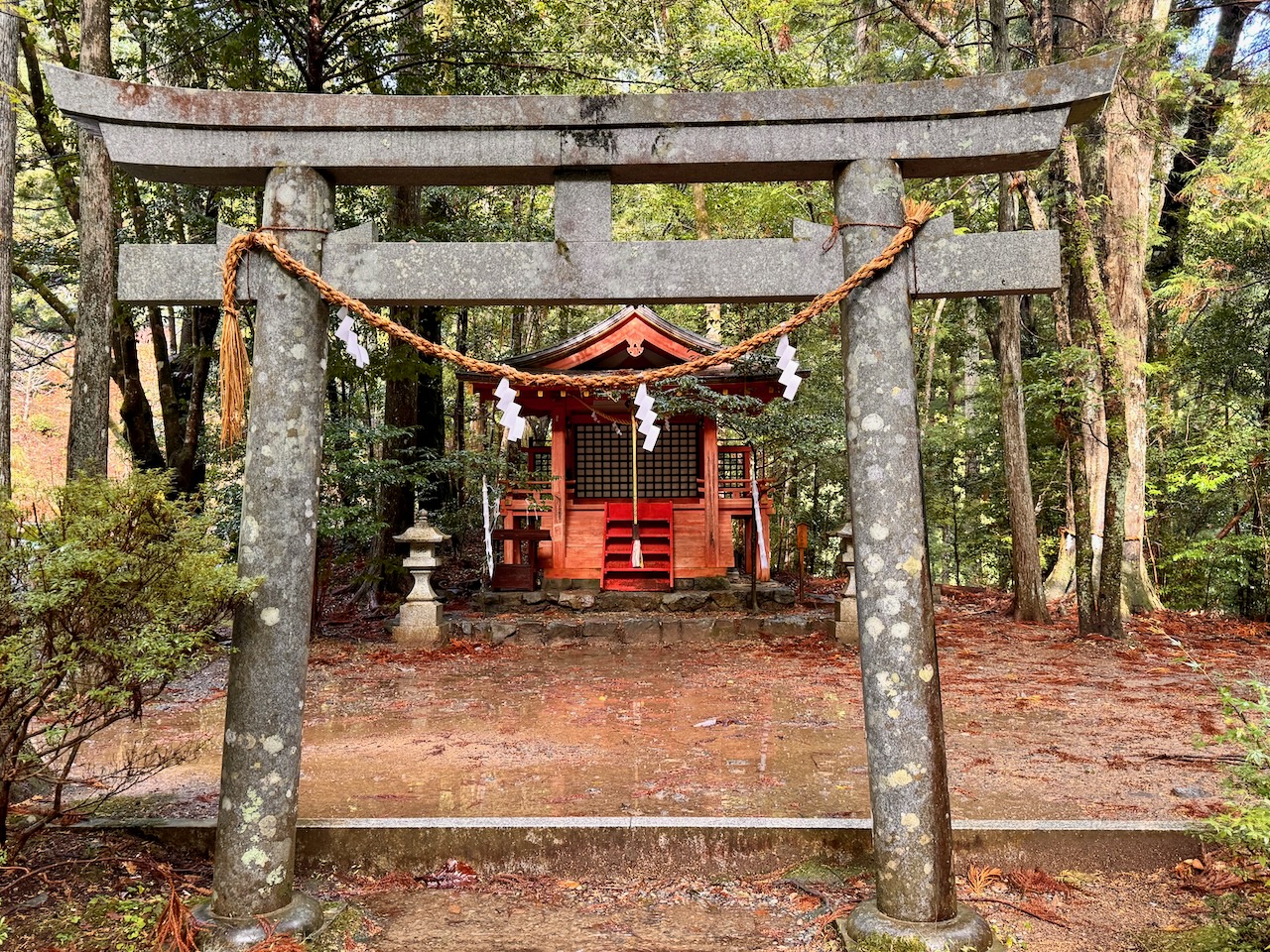
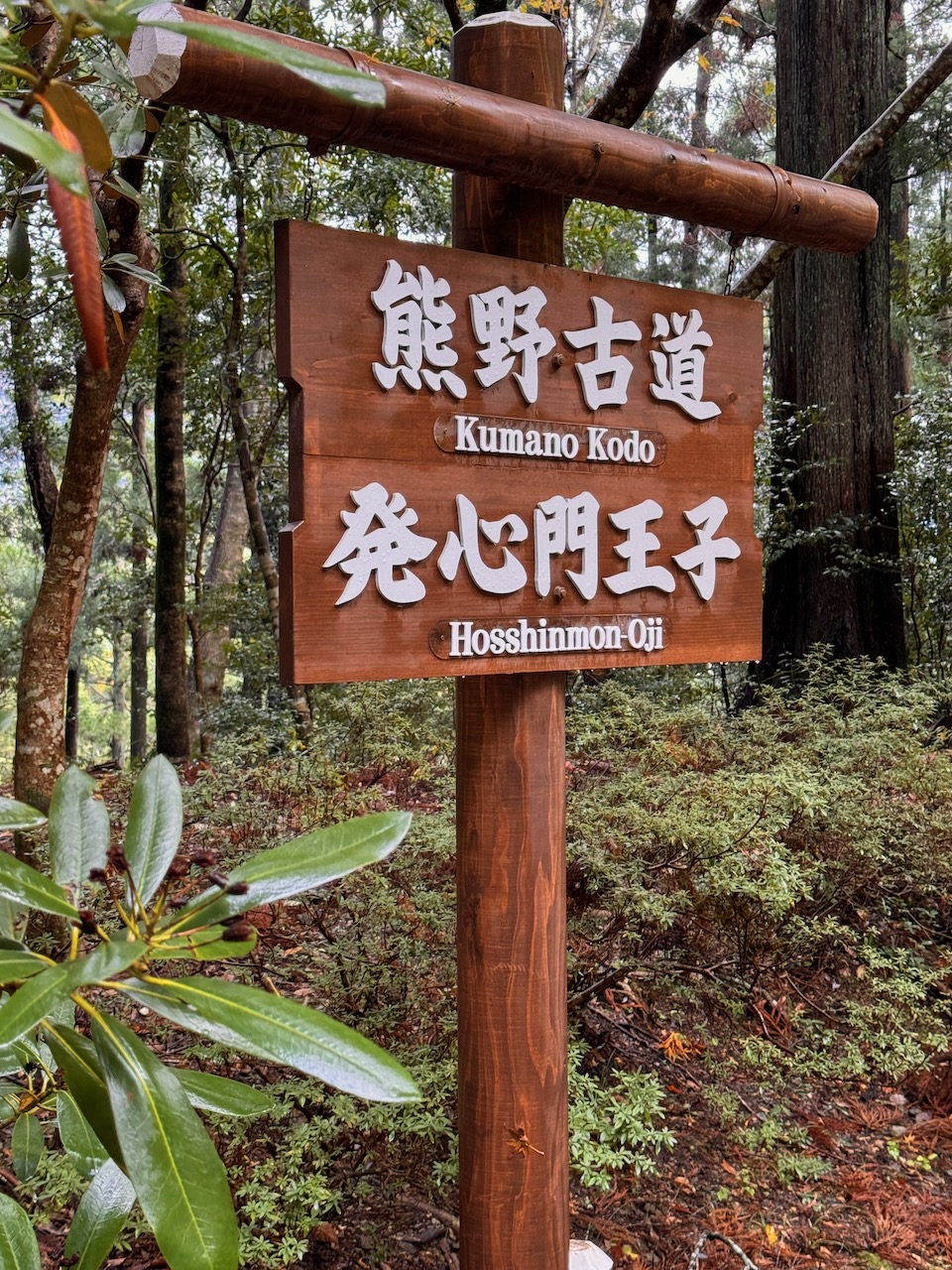
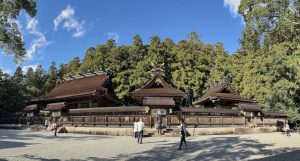
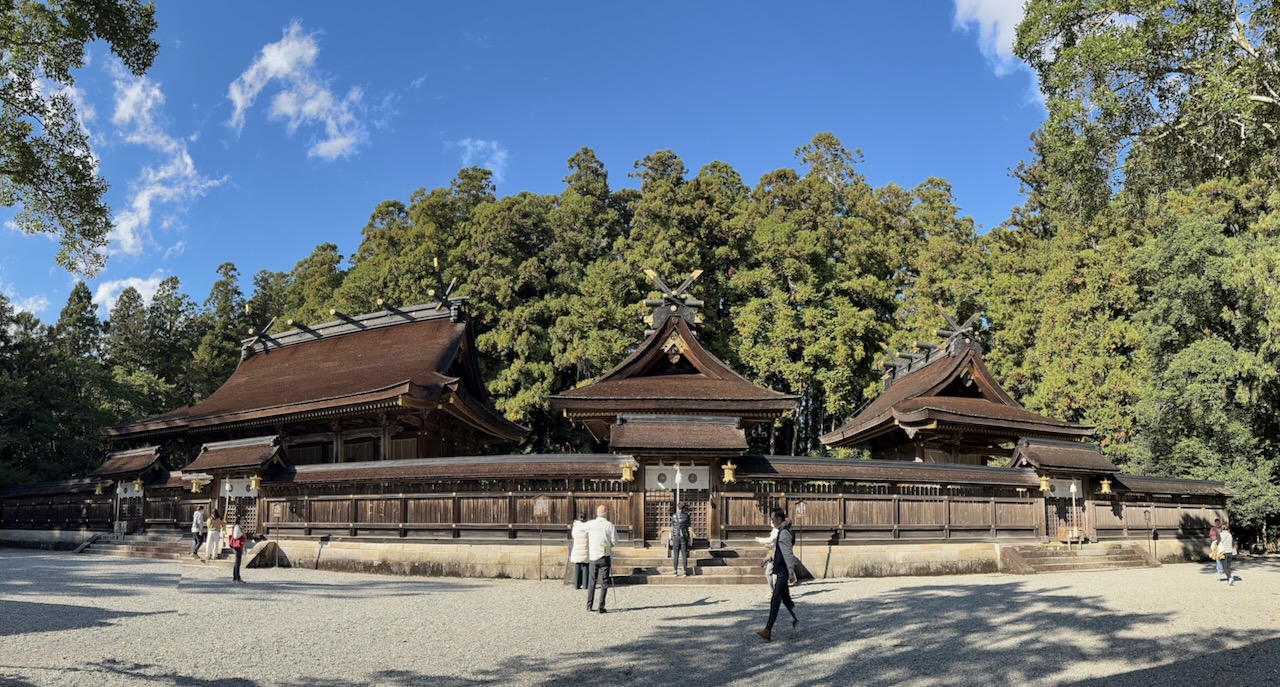
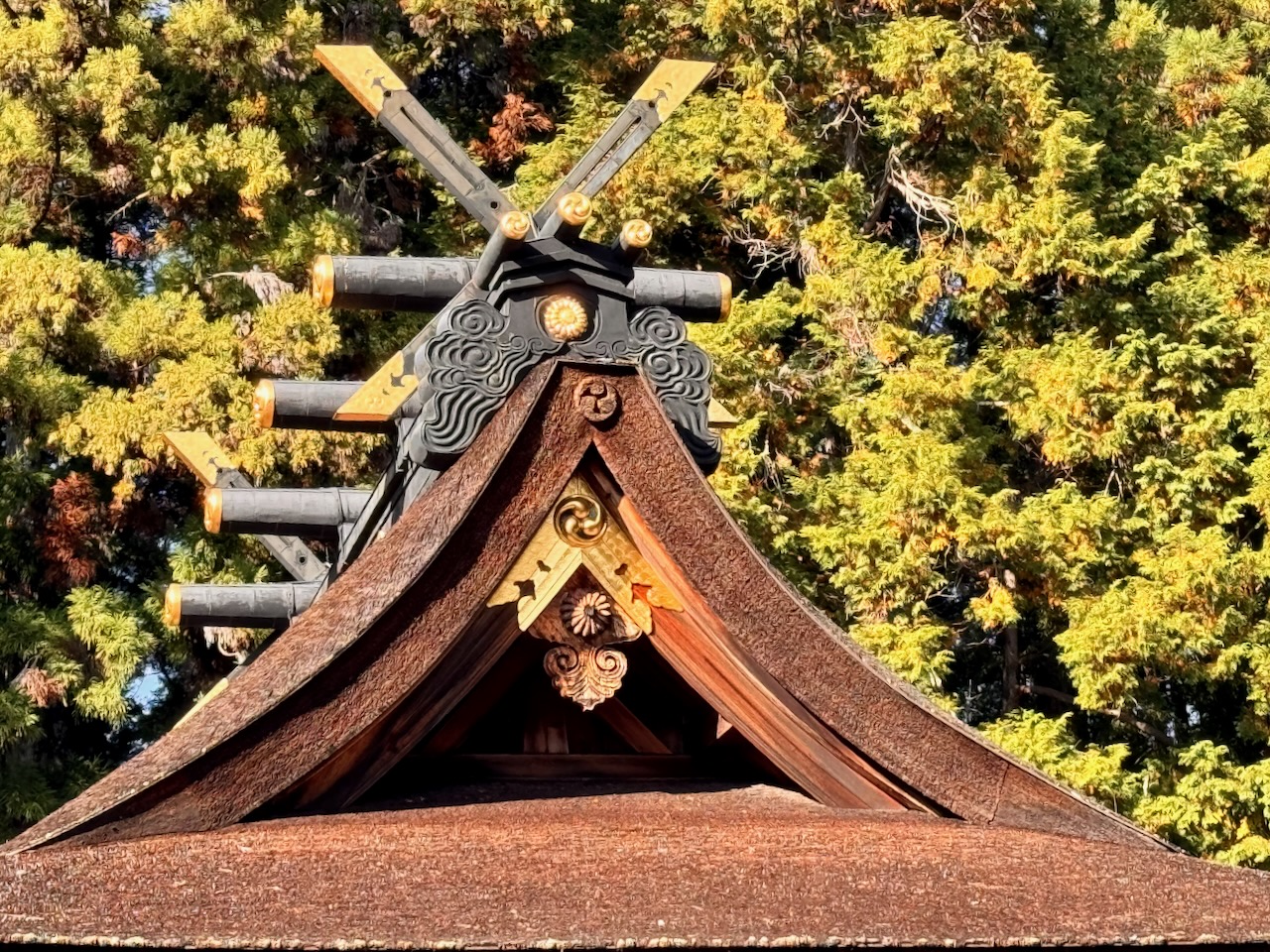
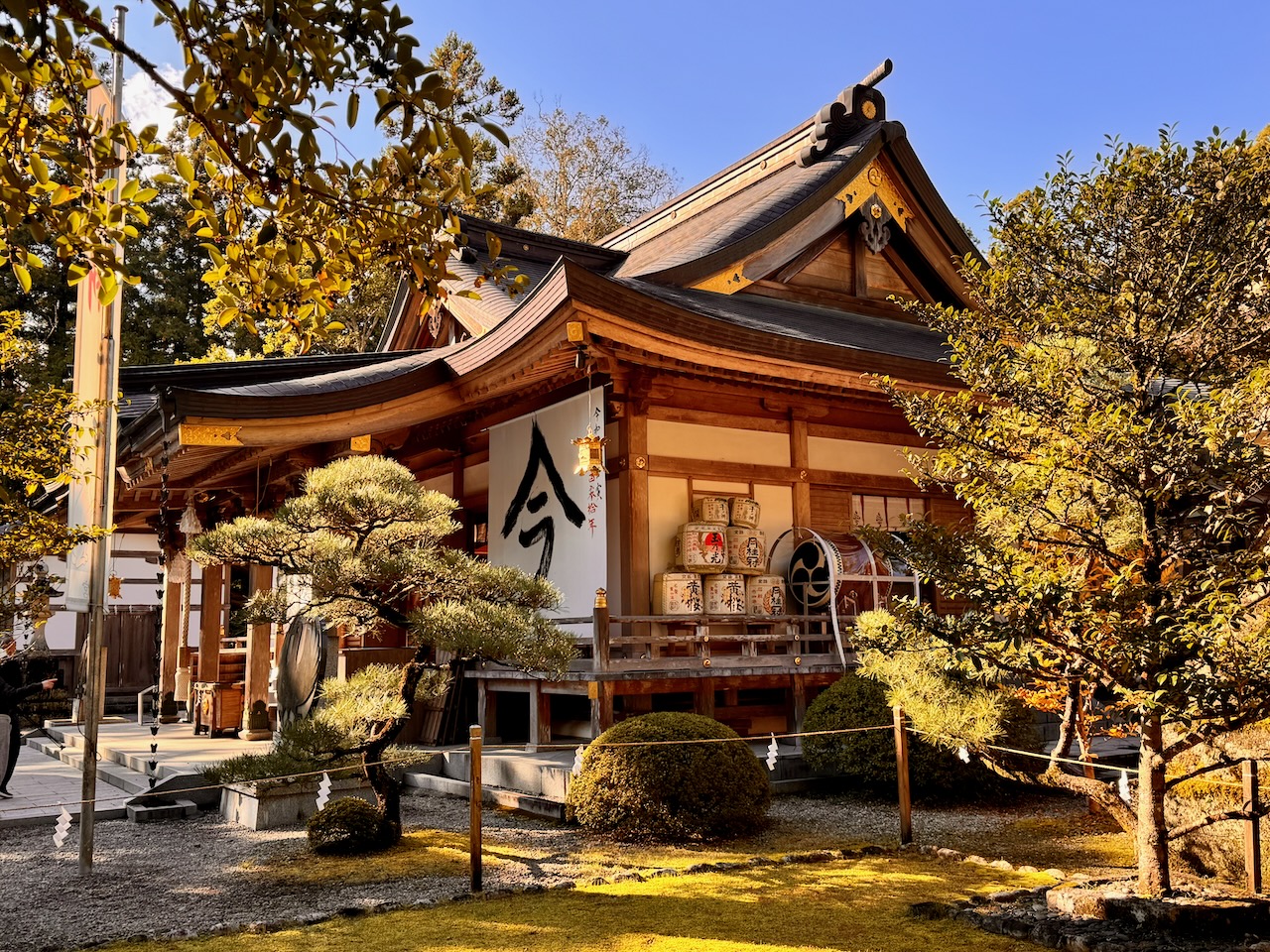
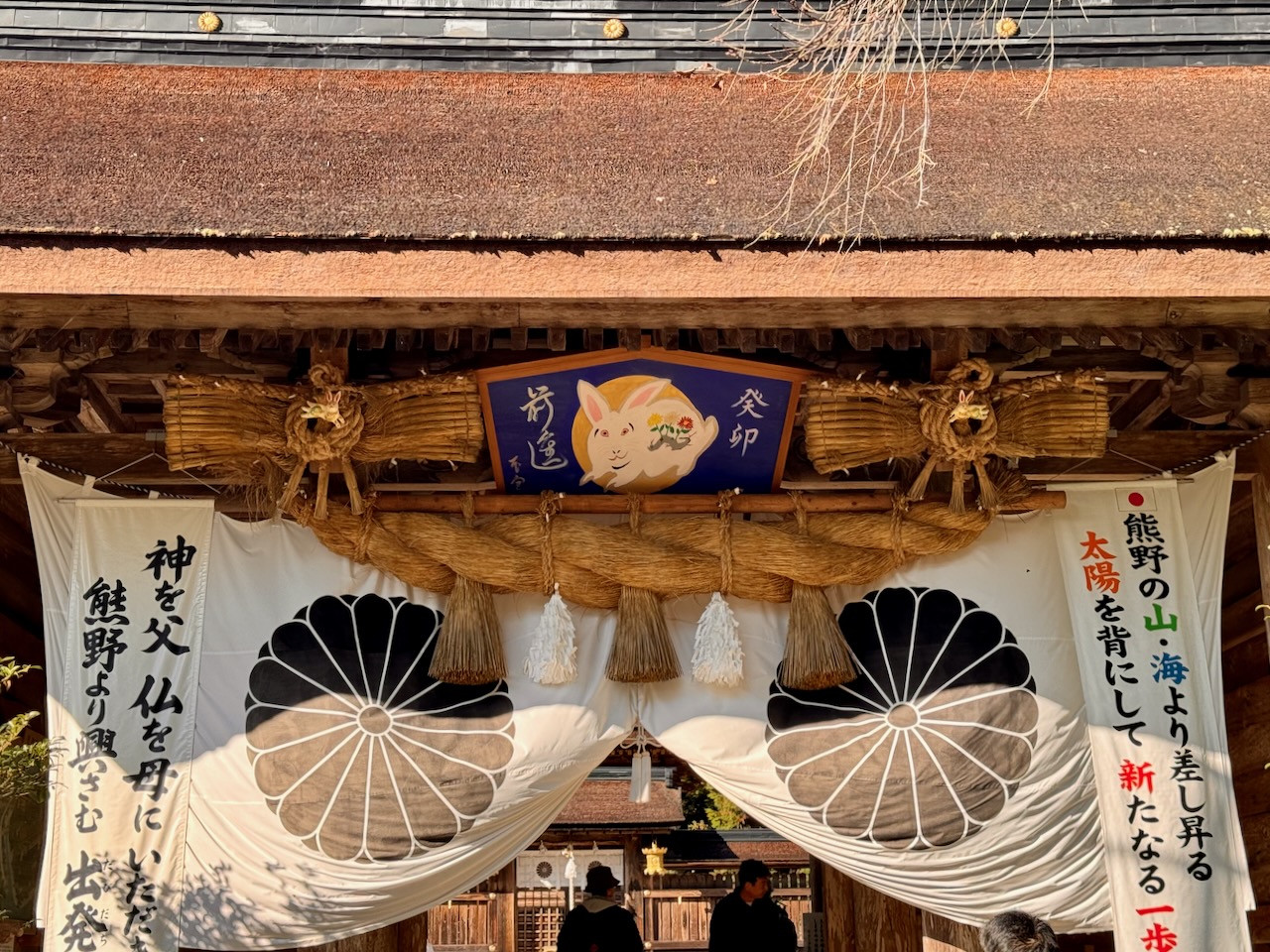
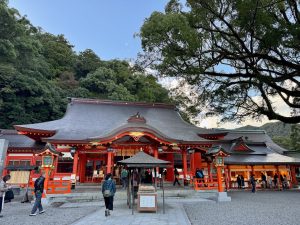
Next stop was the austere Kumano Hongu Taisha main temple exhibiting natural unfinished materials, allowing it to blend effortlessly into the natural environment. No nails are used in the construction, instead they rely on intricate joint and peg work that also helps buildings survive earthquakes.
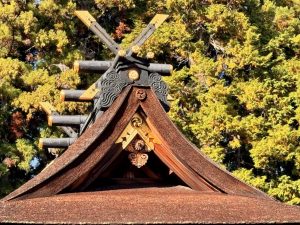
The bronze ornaments on the roof top are characteristic features of shrine architecture. The X-shaped crosspieces that pierce the sky are called Chigi and the log like beams that are laid horizontally along and perpendicular to the ridge line are called Katsuogi. The bronze ornaments on the roof top are characteristic features of shrine architecture.
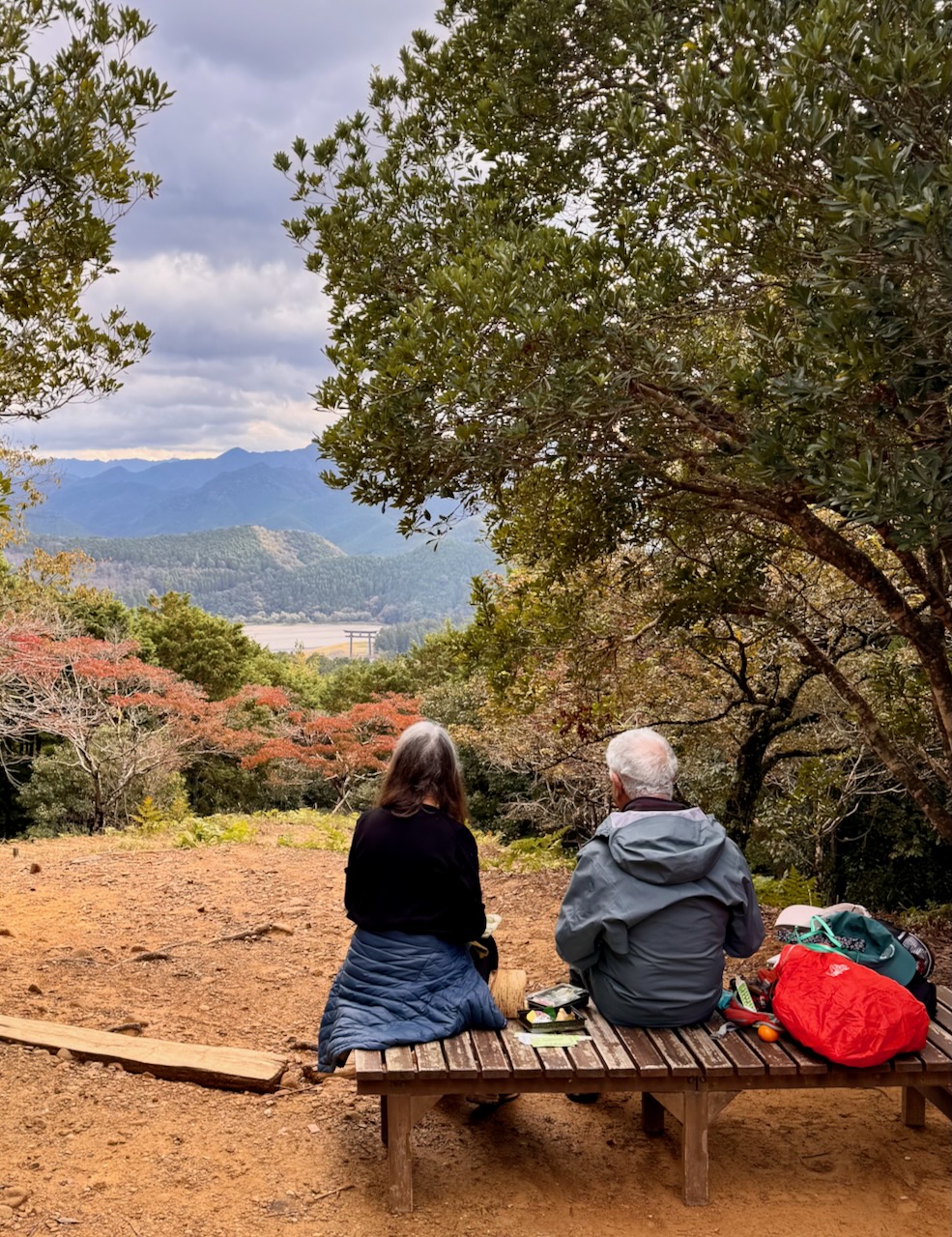
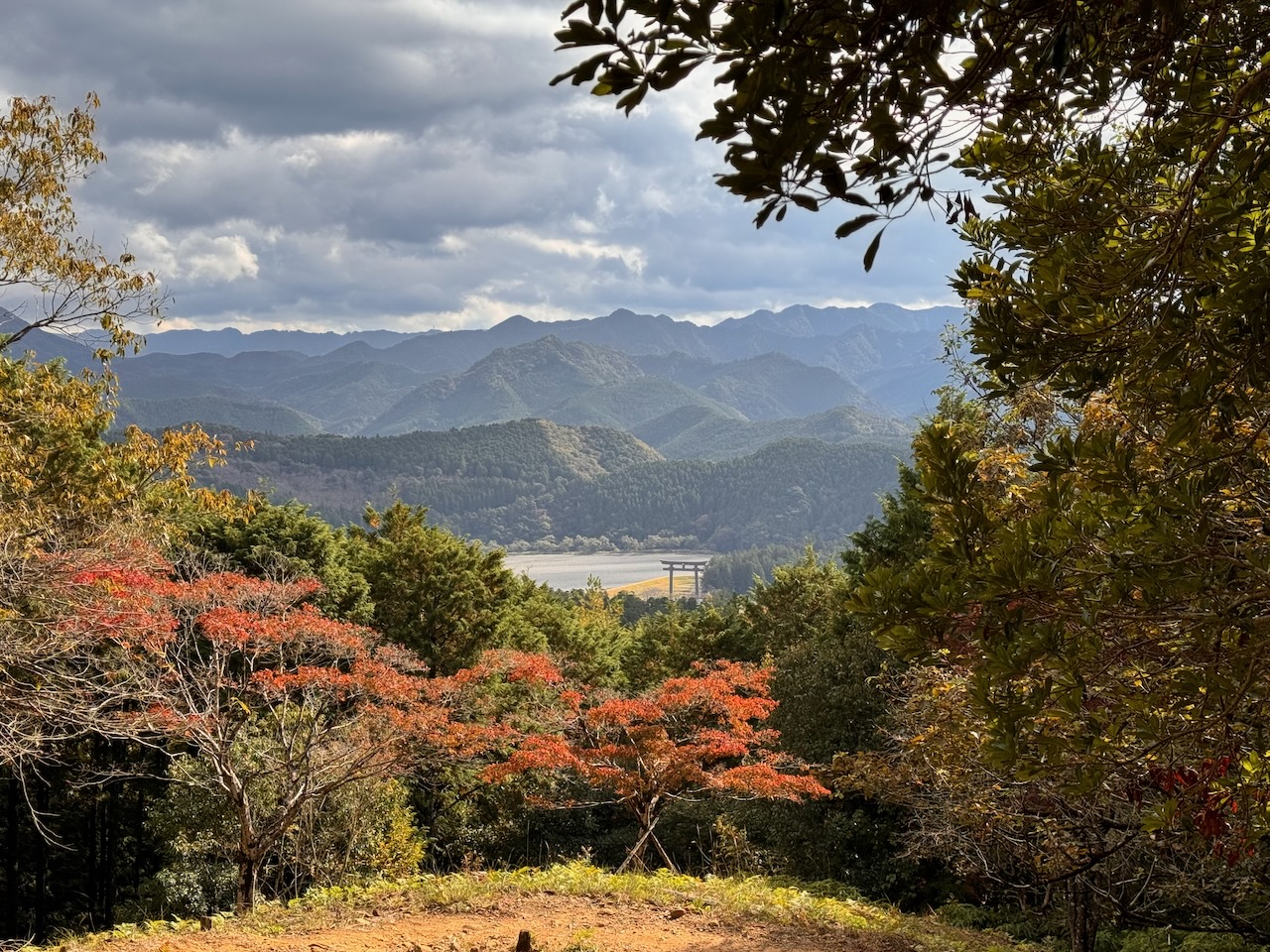
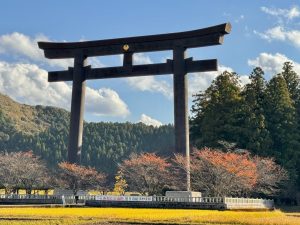
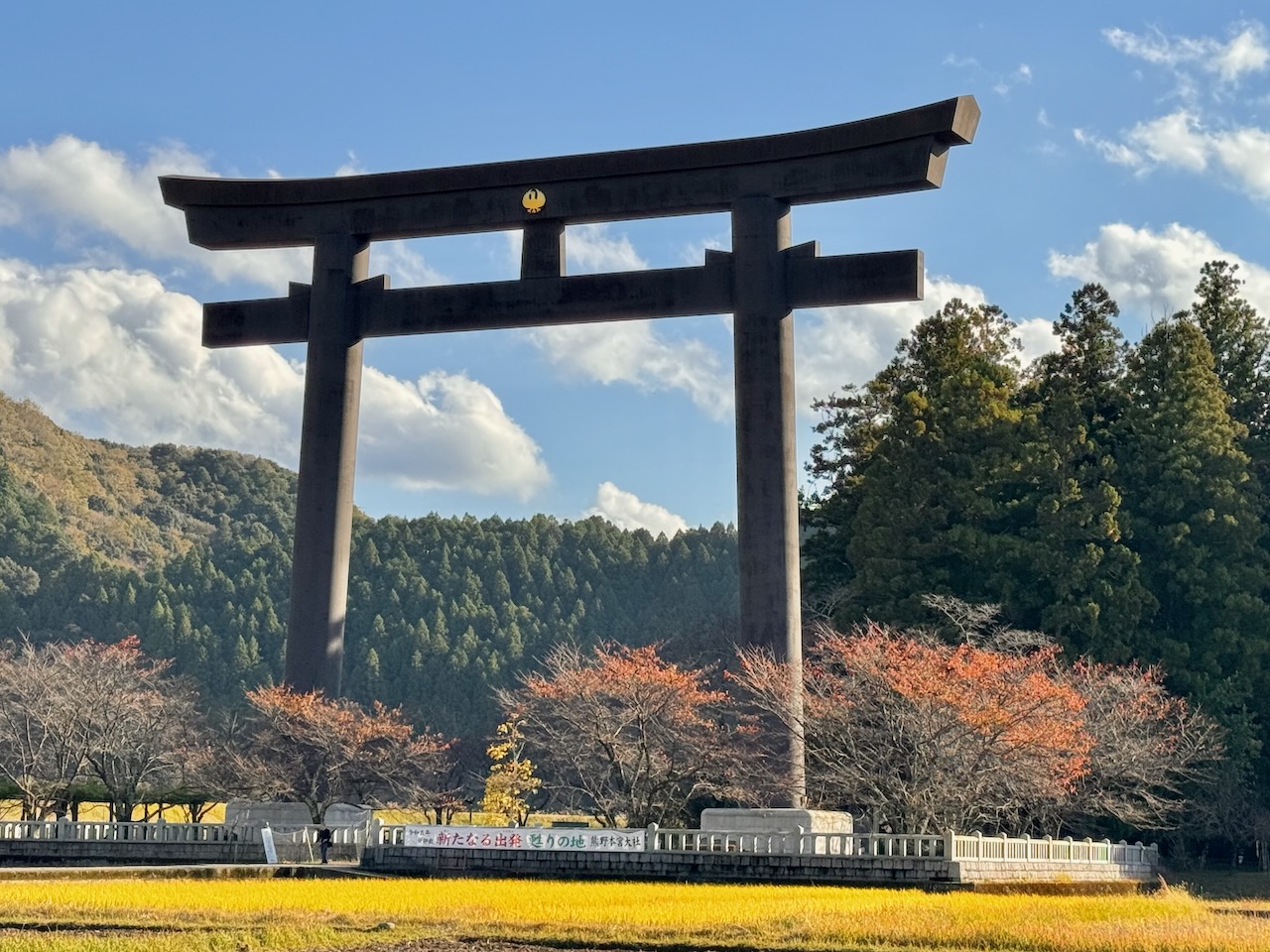
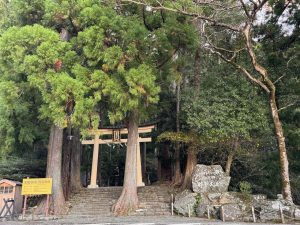
In 2000, the largest torii shrine gate in the world (33.9 meters tall and 42 meters wide) was erected at the entrance to the Oyunohara sandbank. It is an official gateway that designates the entrance to a sacred area. It signifies the division of the secular and the spiritual worlds. This torii is called Otorii (o means “great”) and is made of steel weighing 172 tons, which took about six months to make and another six months to assemble. (This was the gate seen from our lunch spot high above).
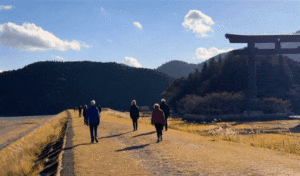
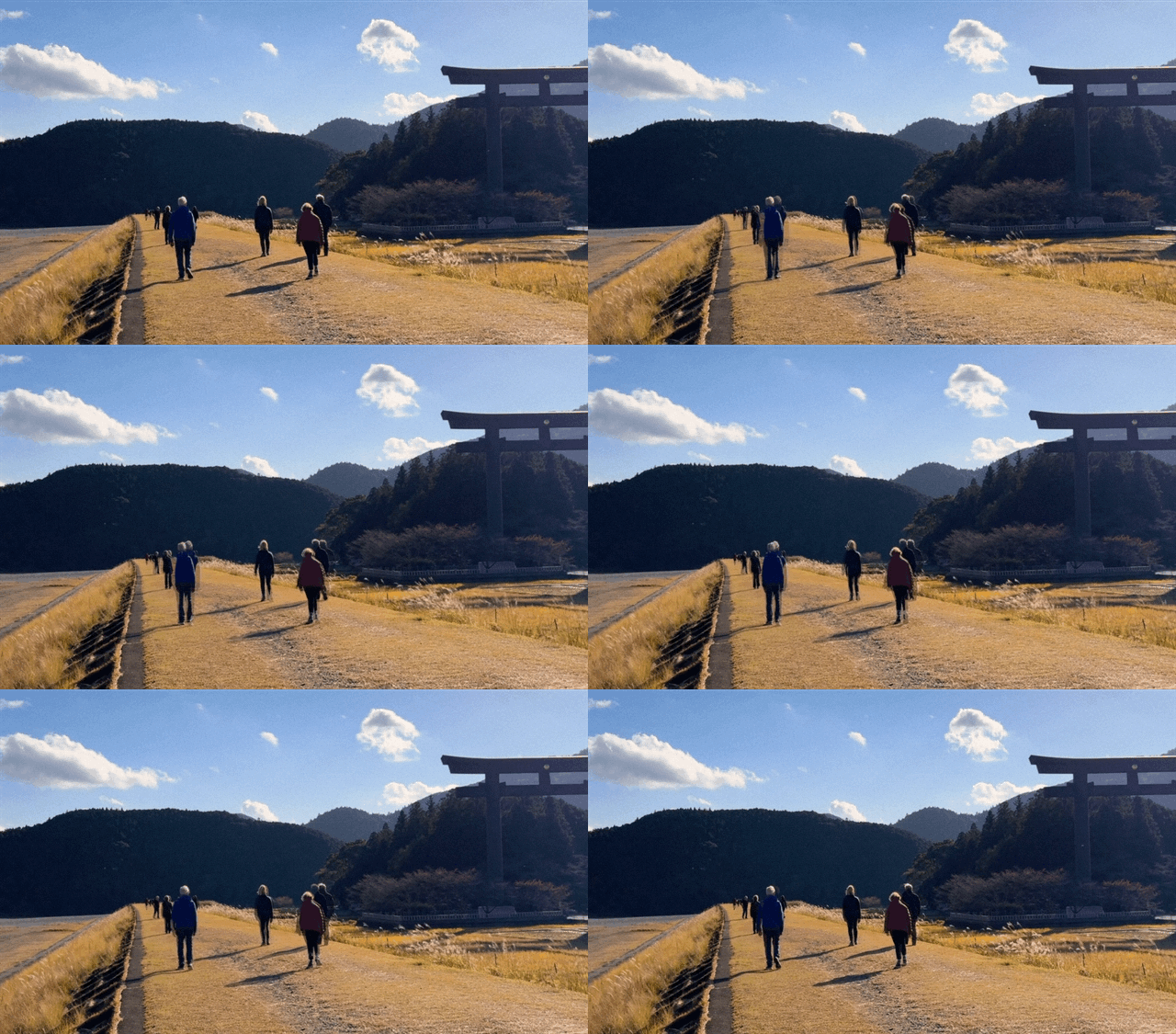
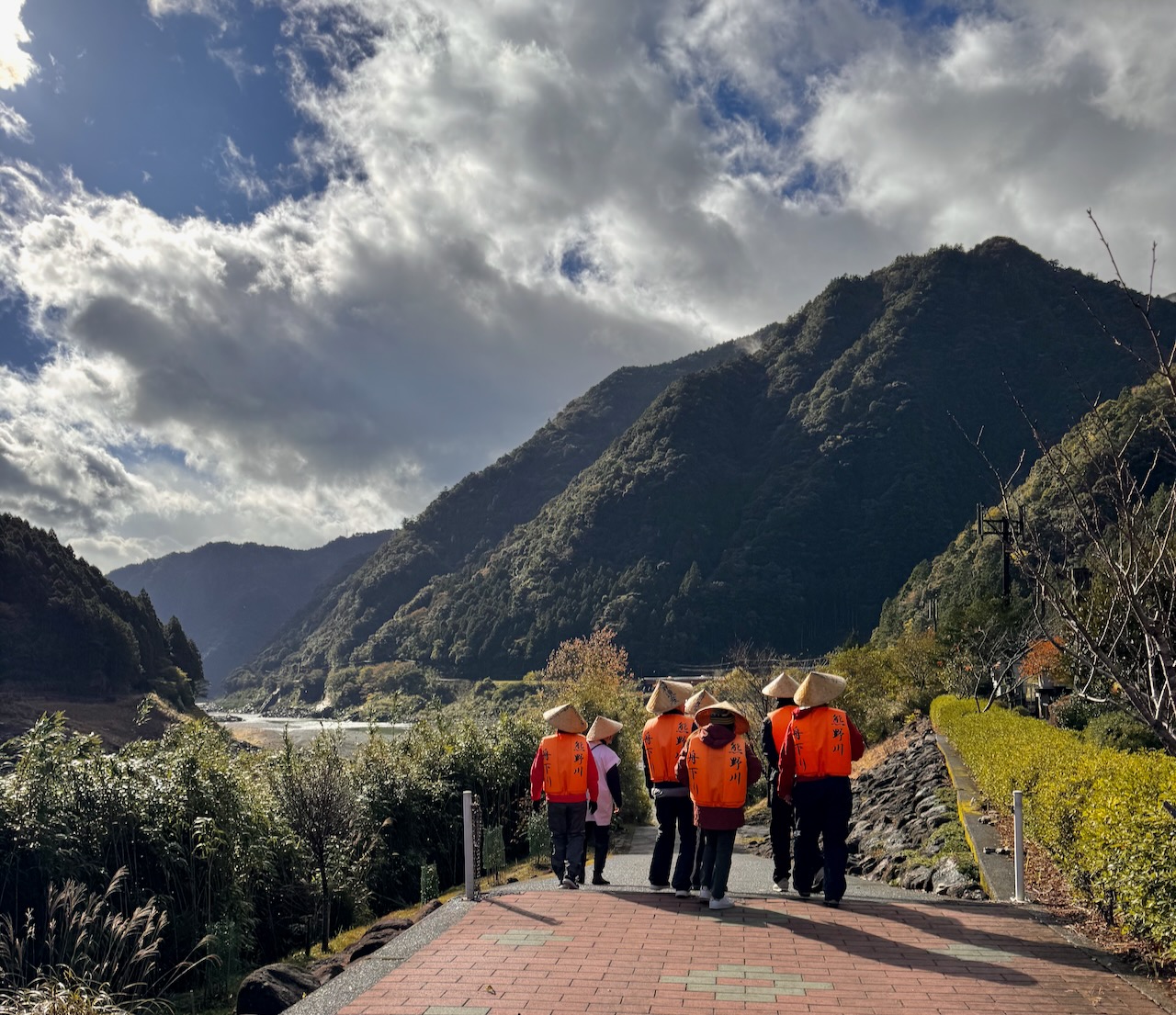
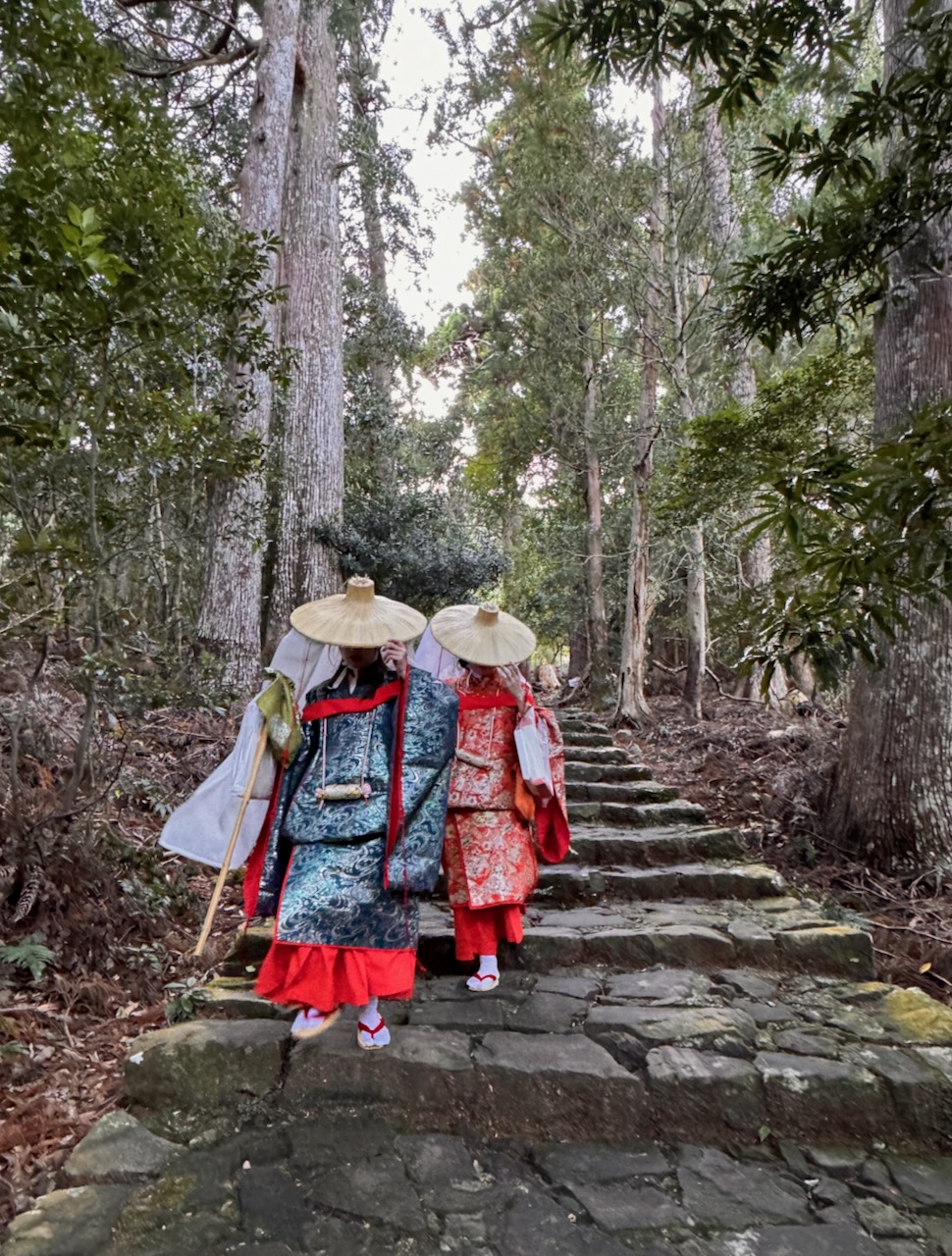
The people on the embankment that separates the torii gate from the river present an unusual site. They look to be typical tourists, but they are walking at a snail’s pace. We suspect they may be on a pilgrimage of some kind. They won’t get far shuffling at this rate.
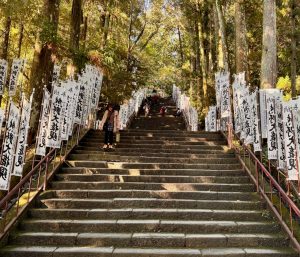
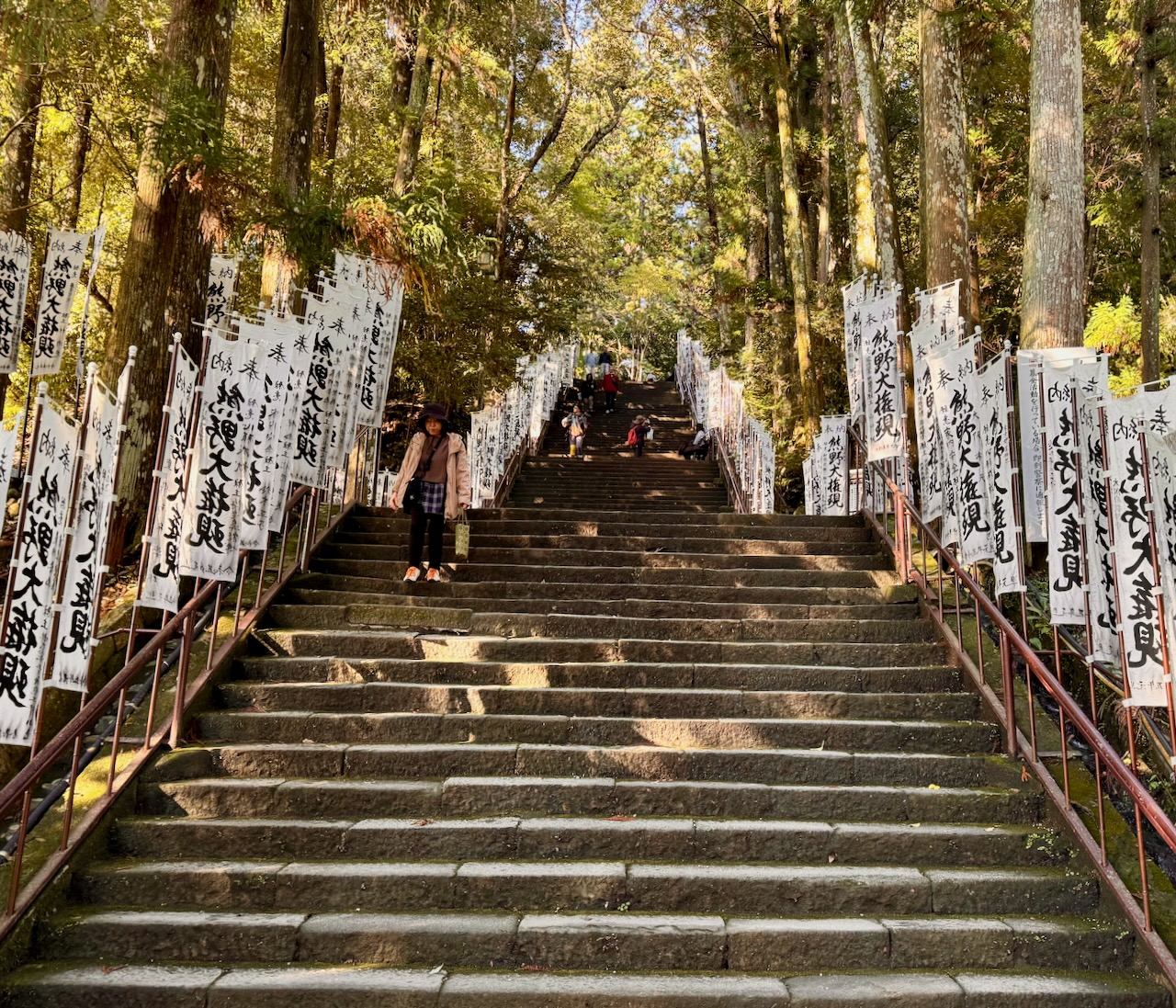
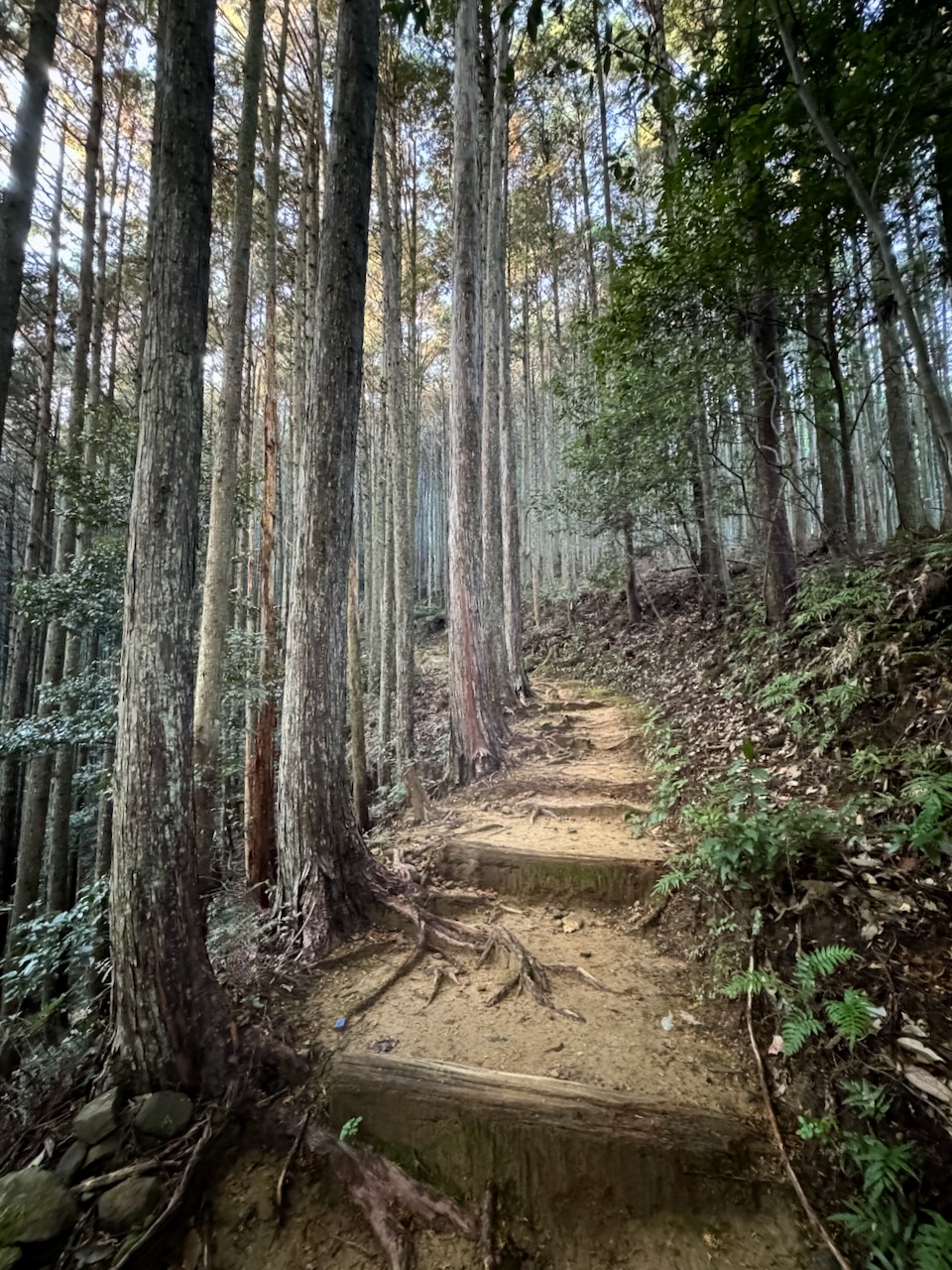
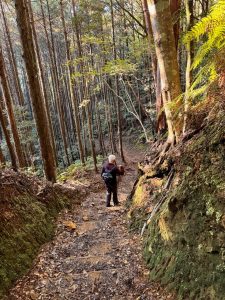
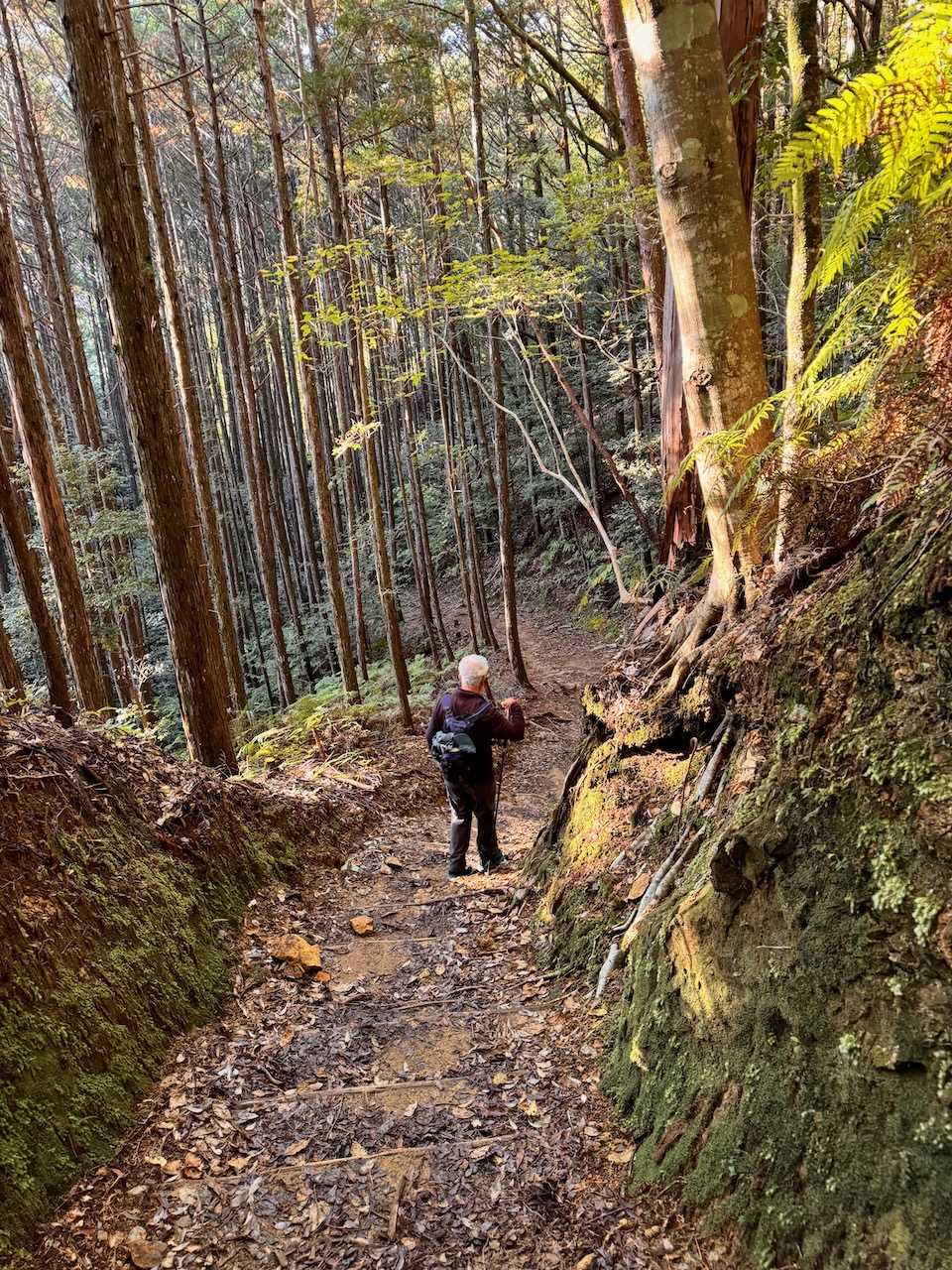
After leaving the shrine, the Dainichi-goe trail took a tough steep route up and over a section of trail that was punctuated with lots of tree roots and high stones. This, coupled with the thick forest and dimming light, made it the most difficult section of the walk for our day. It was really beautiful though and we only saw two couples walking the opposite direction, making it well worth the effort.
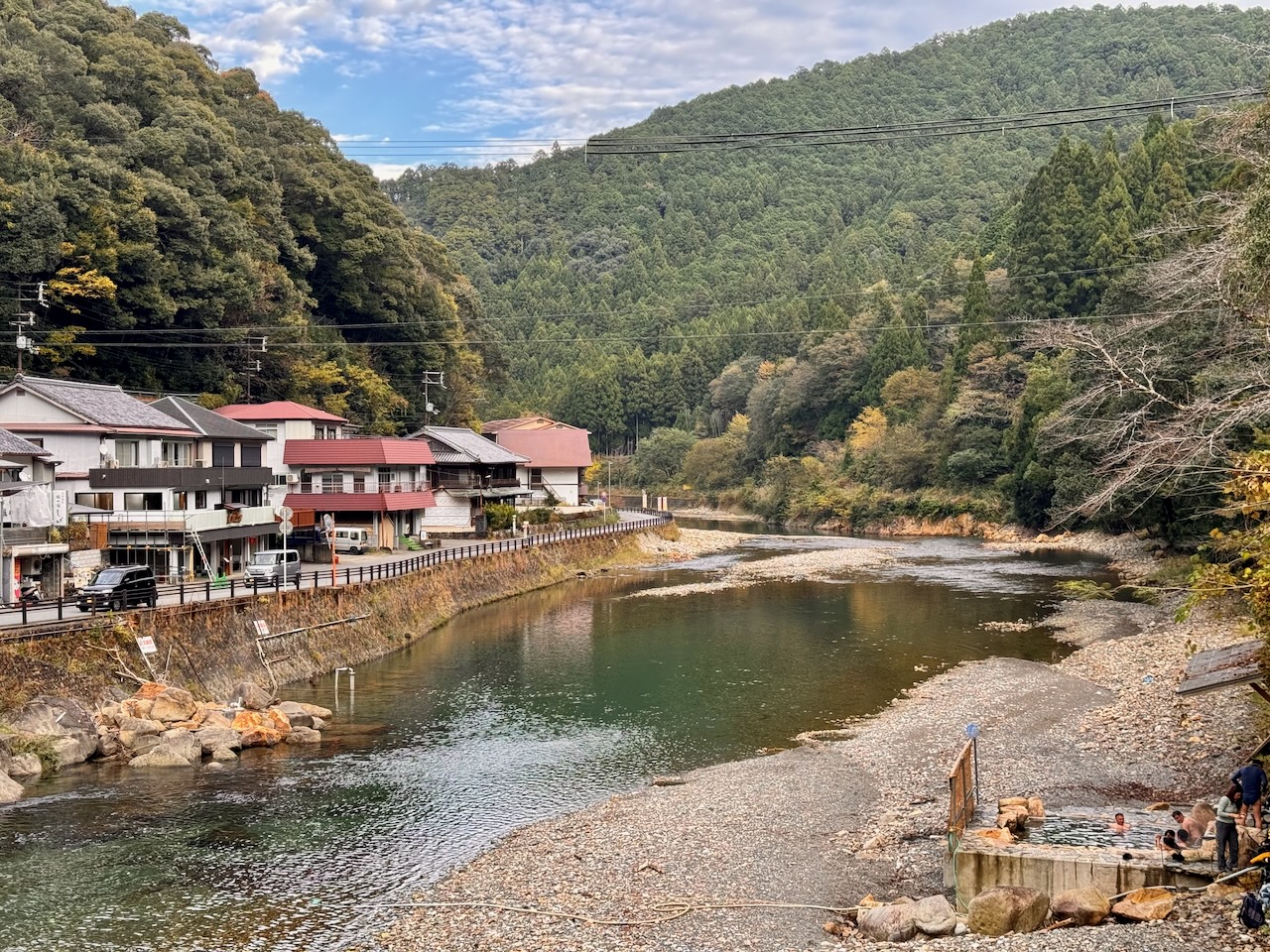
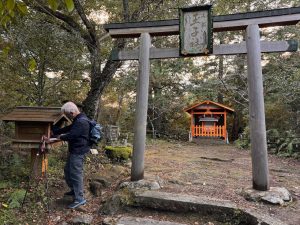
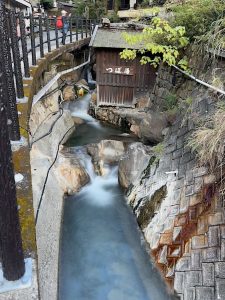
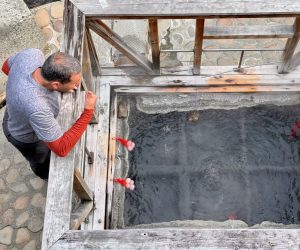
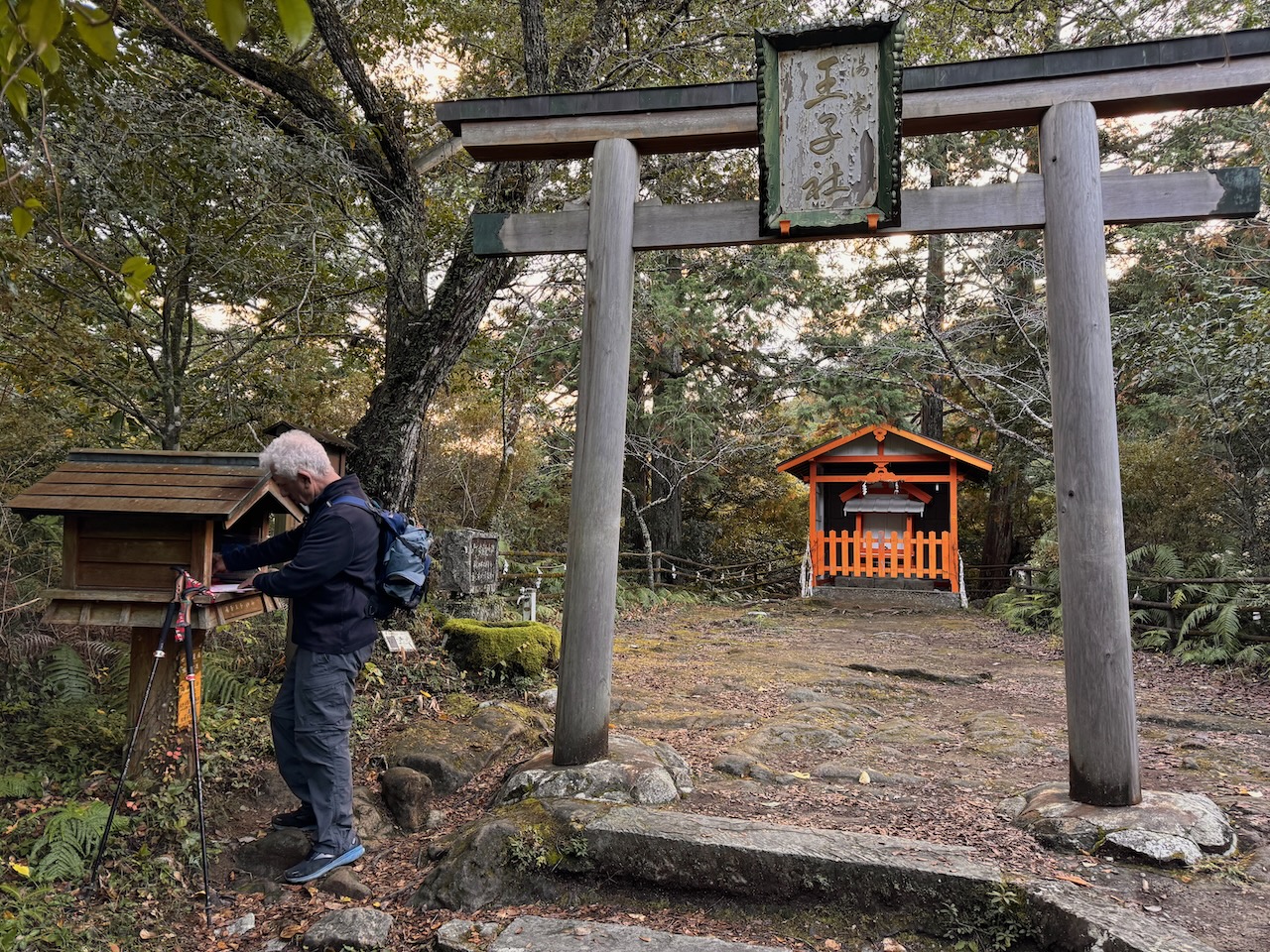
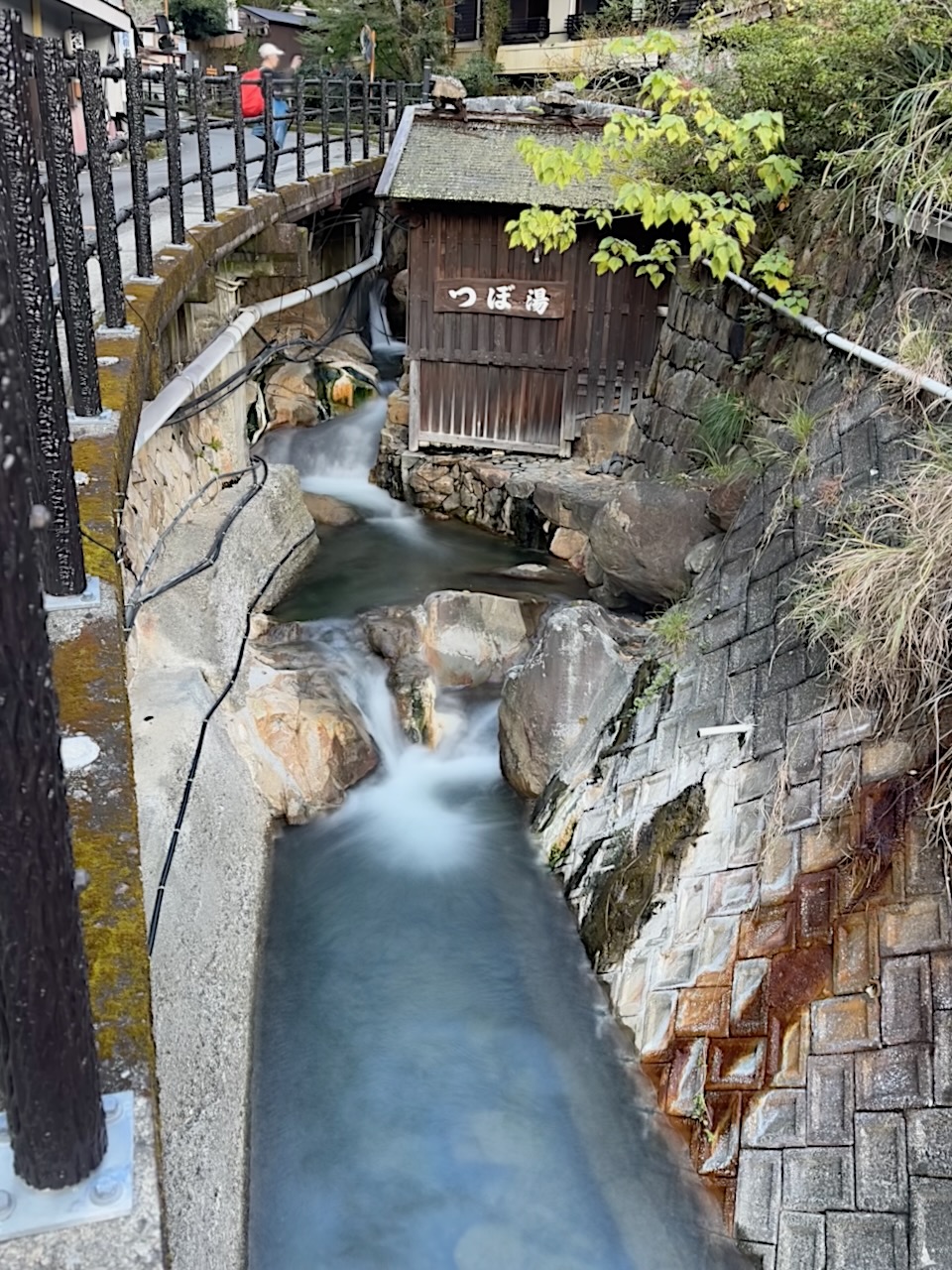
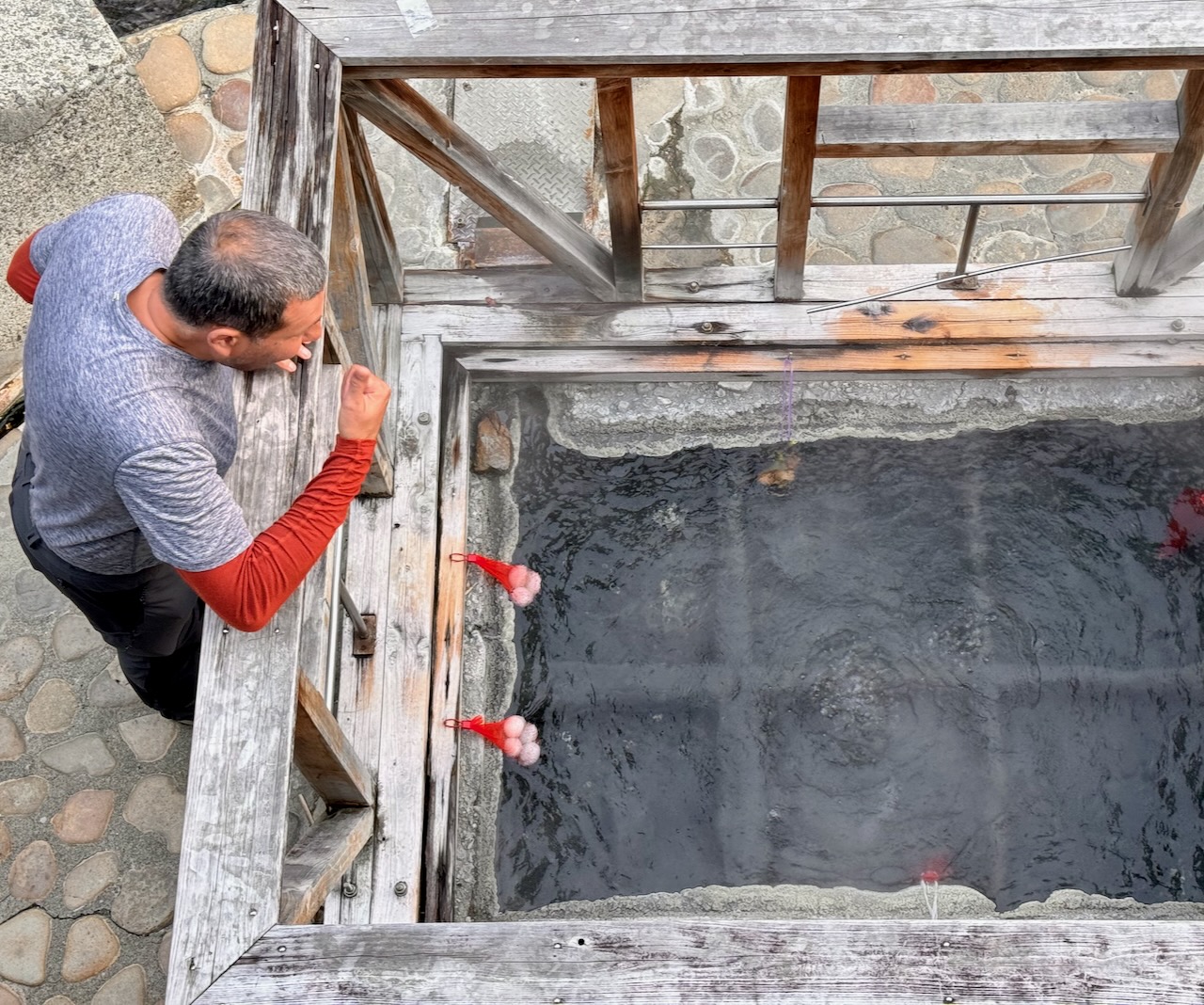
There was one last shrine before our overnight stop, and we stamped our “passport” here to prove we visited. Our destination, the historic village of Yunomine Onsen, is one of only a few hamlets with lodging. The thermal waters flowing through here offer popular bathing spots, and alongside the hot spring river is a basin gushing with water so hot you can boil an egg in it. Literally! You can buy eggs for this purpose at a nearby store, hang them in a net, hook it onto the railing, and wait 12 minutes. Voila! A hard boiled egg.
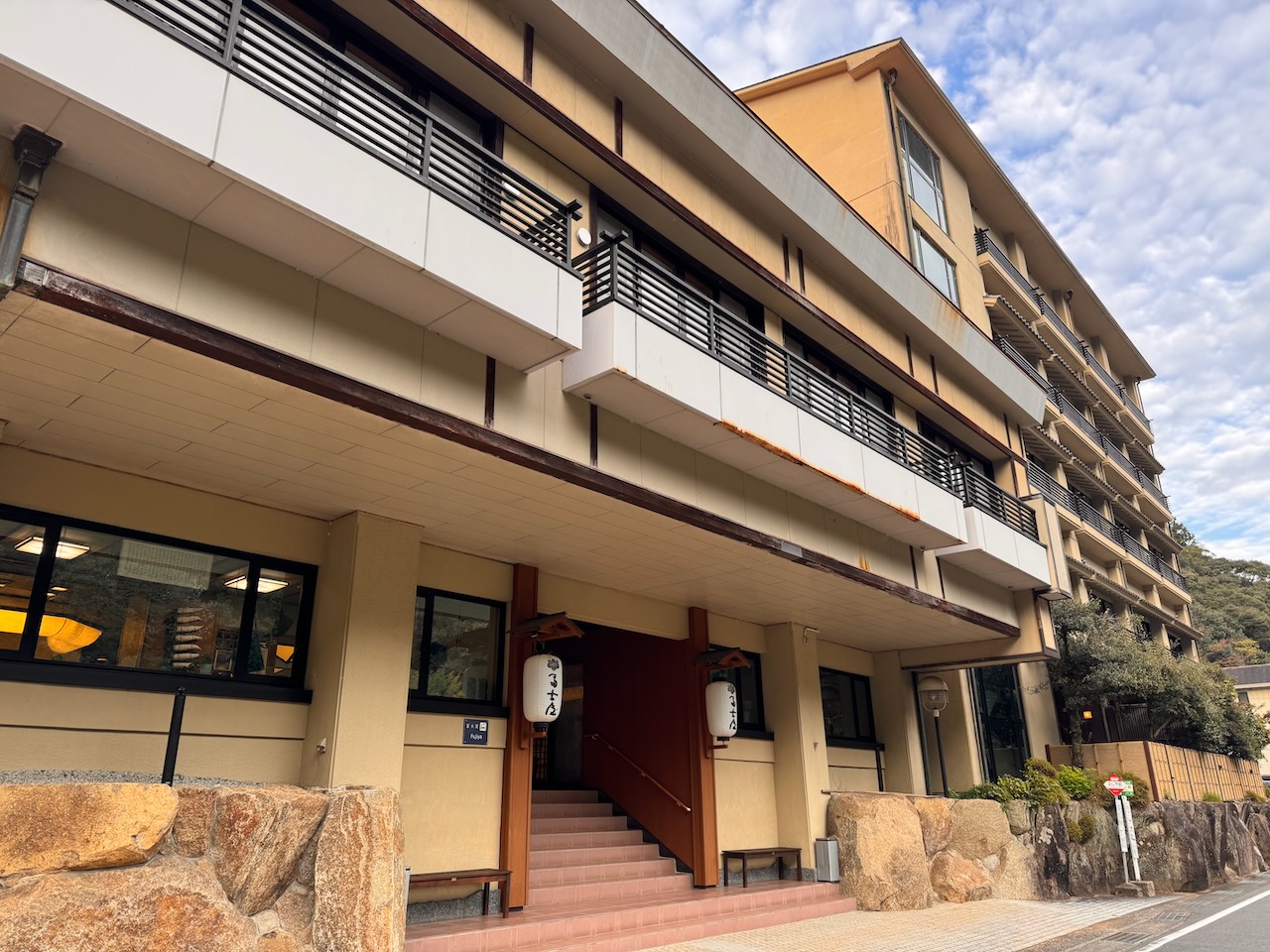
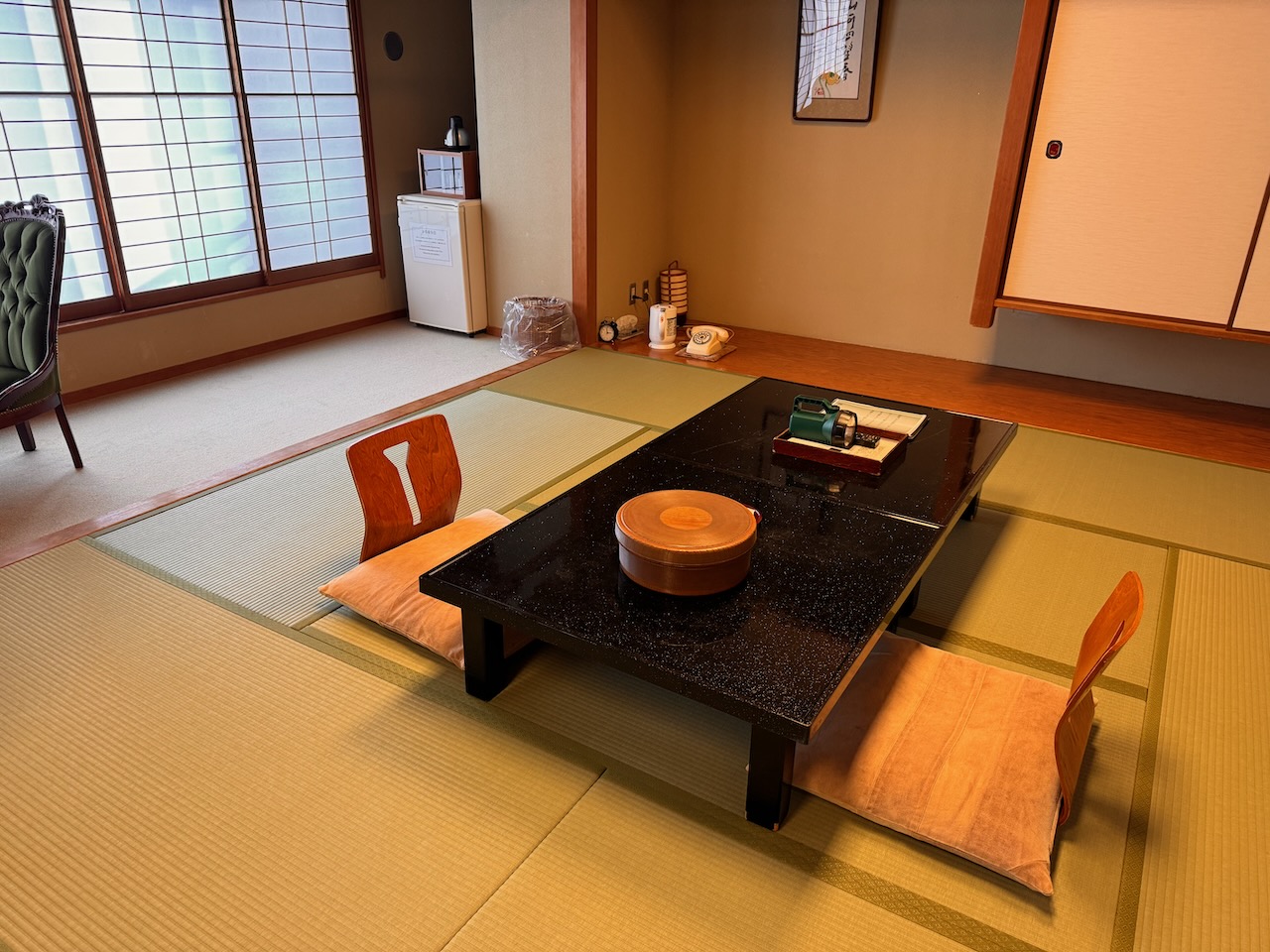
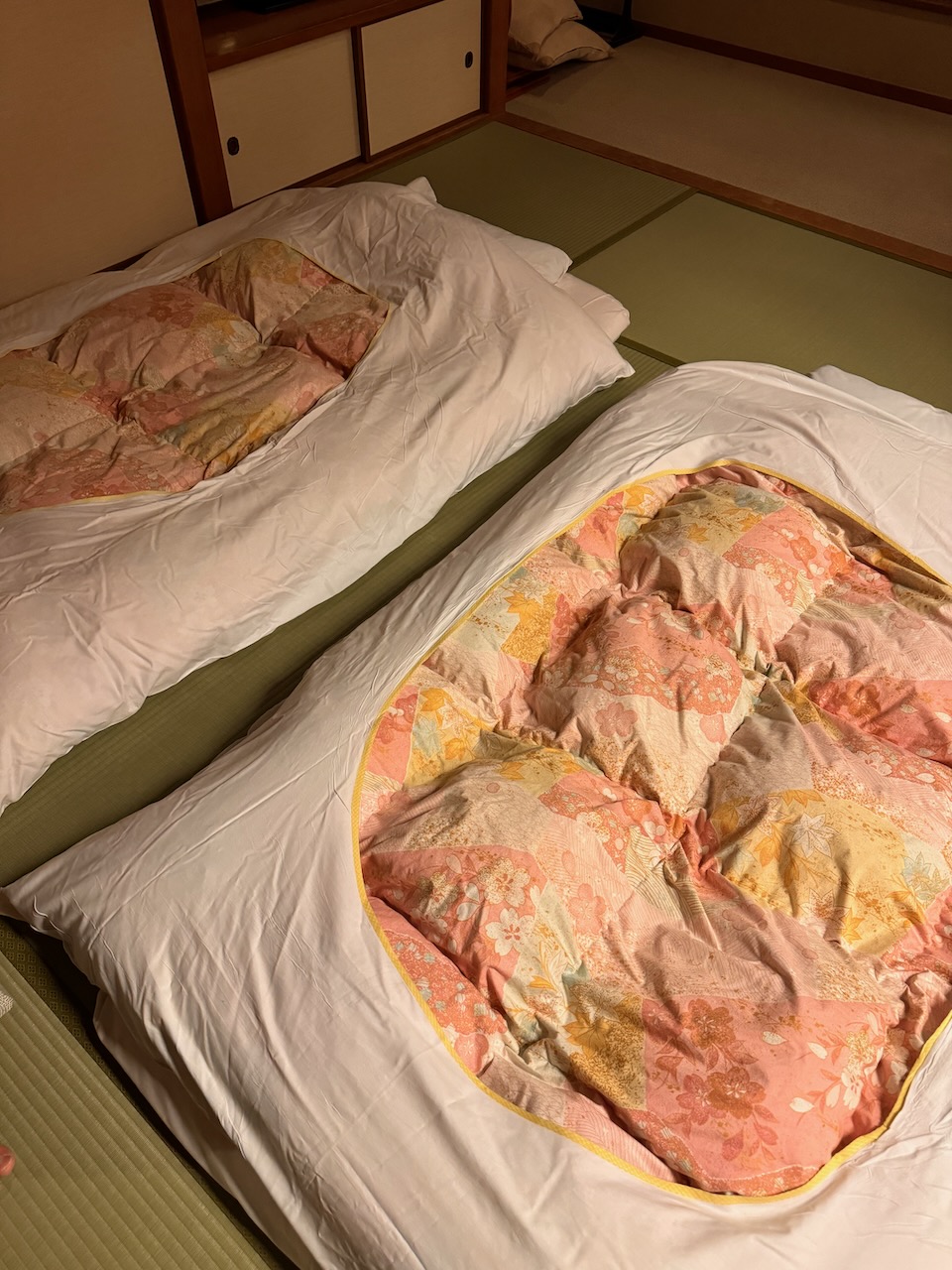
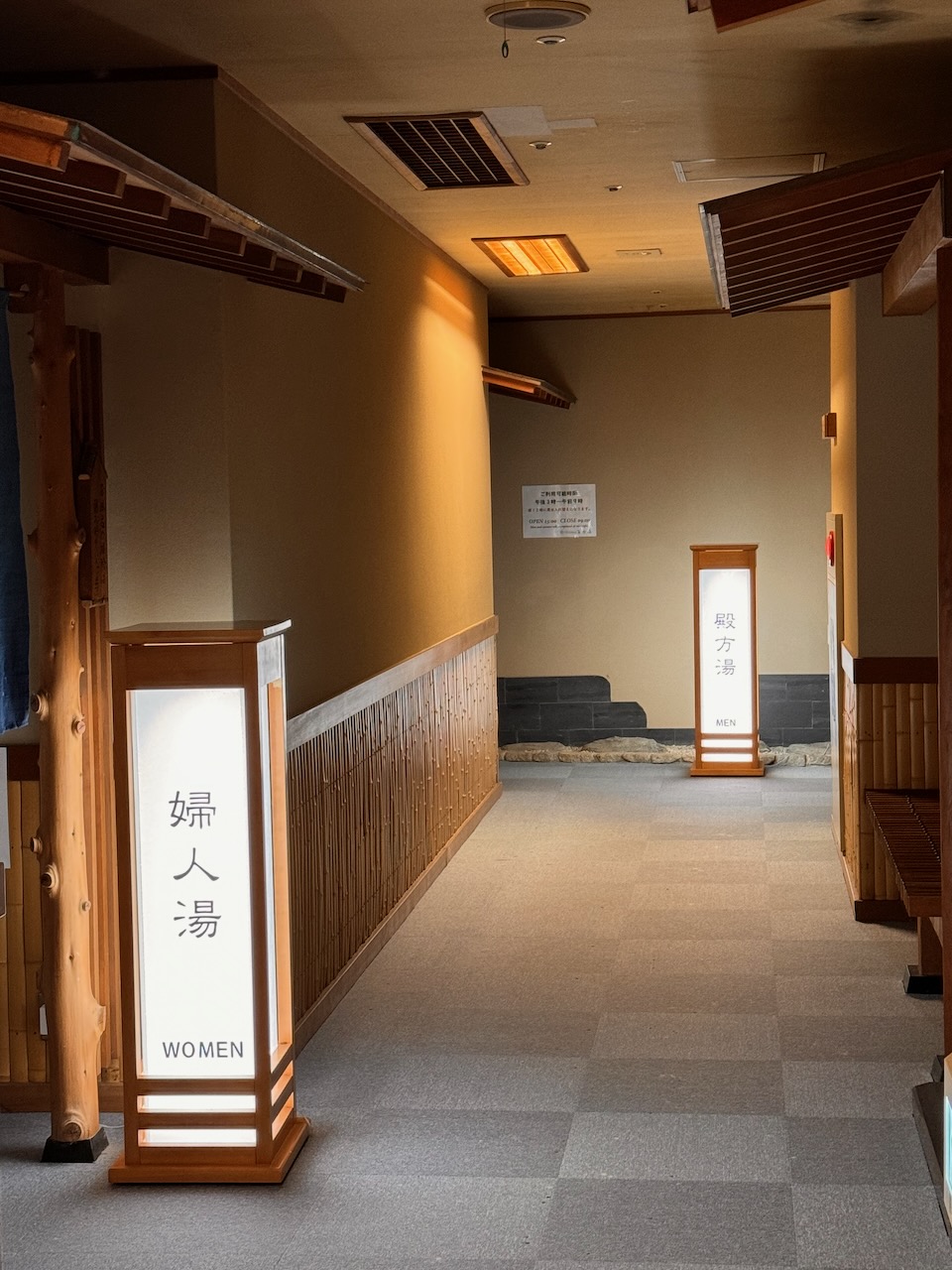
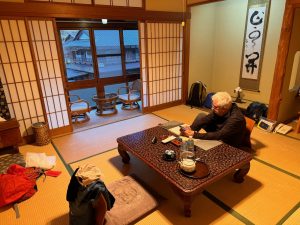
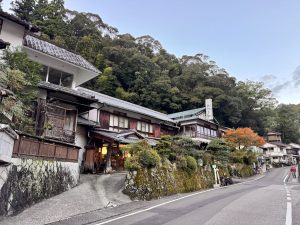
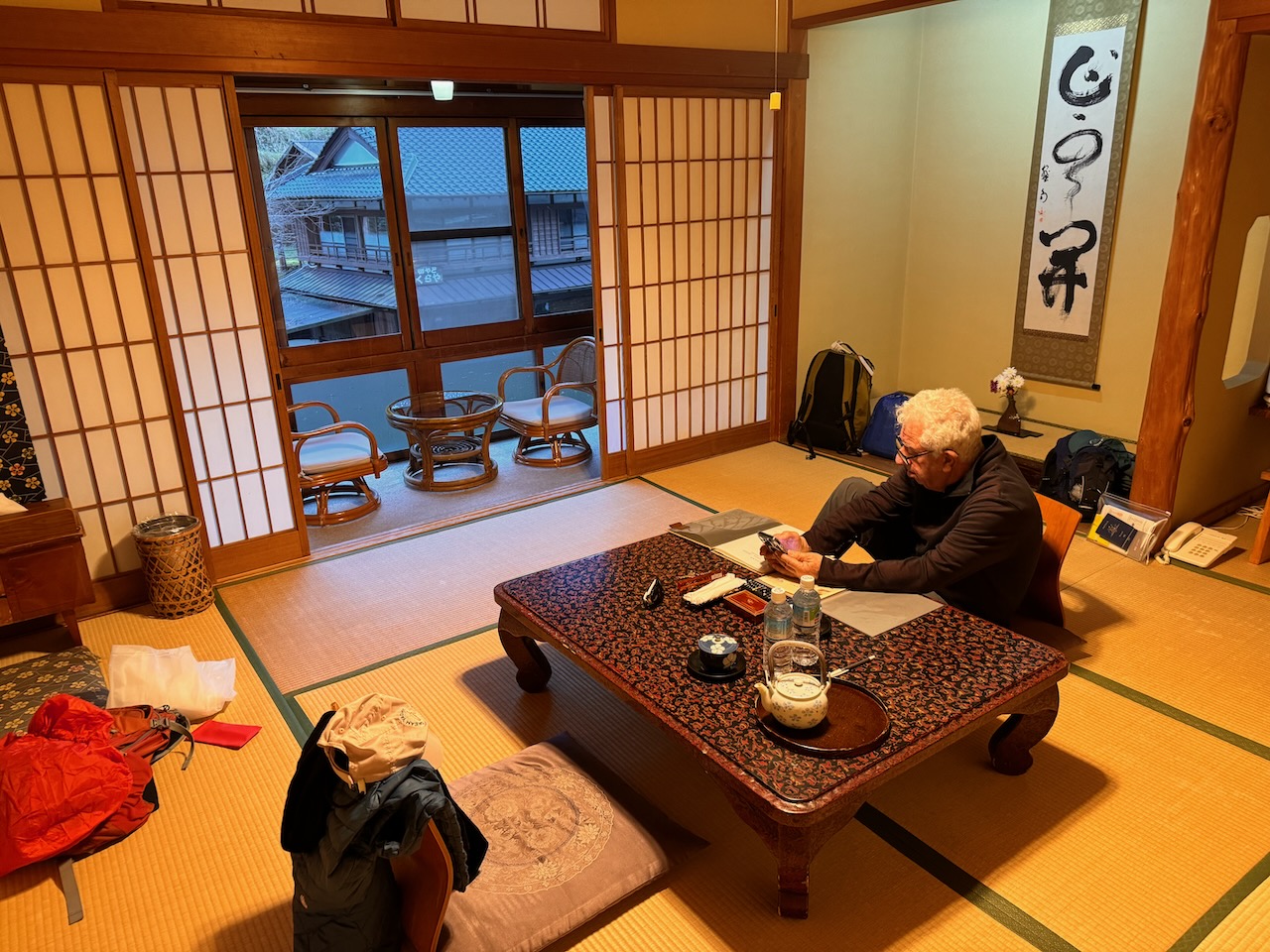
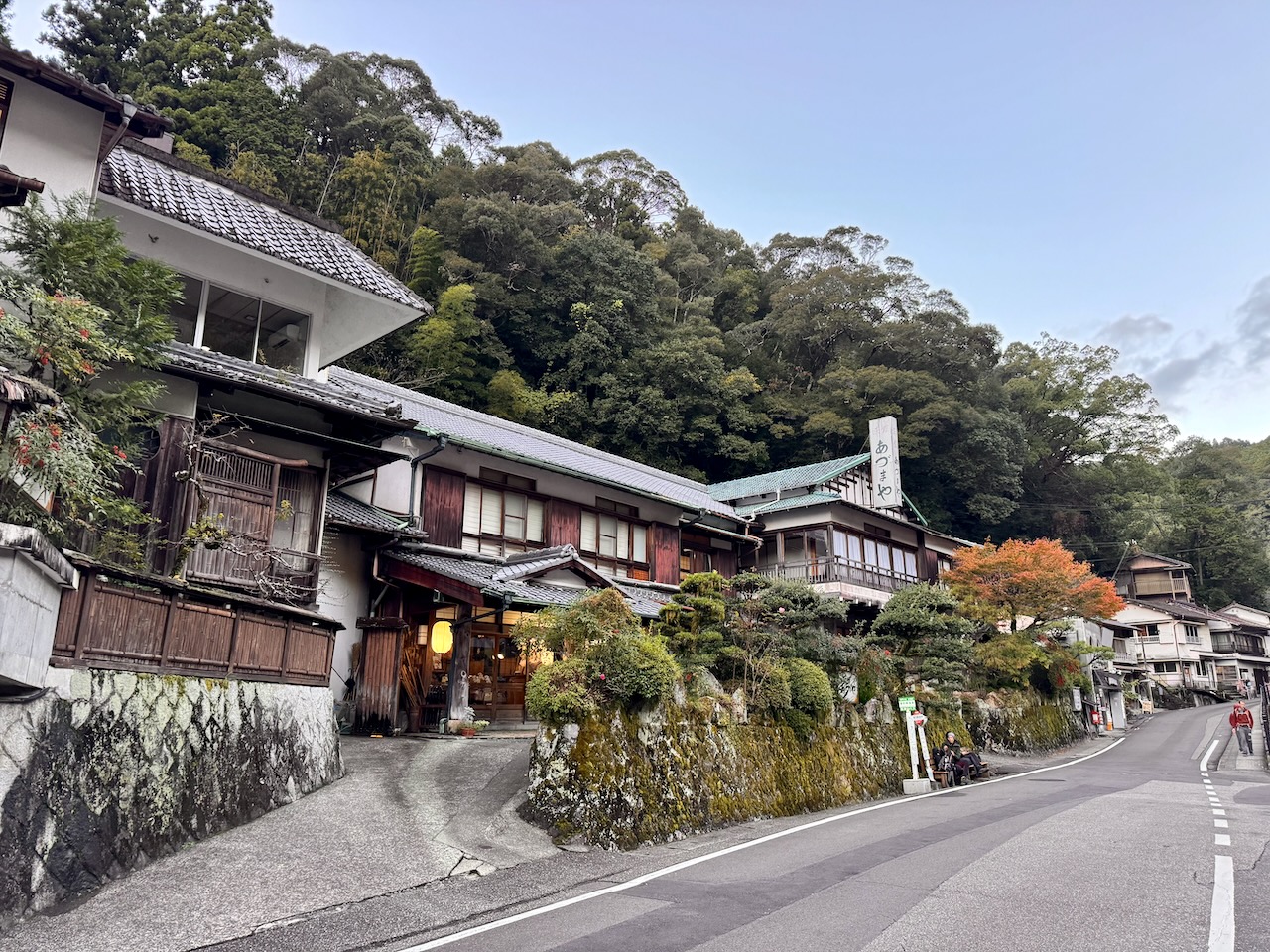
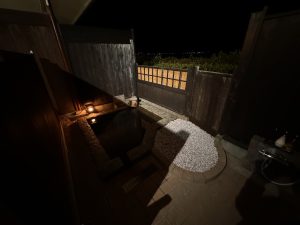
Ryokan Adumaya is one of the main traditional inns in Yunomine, a village with 1800 years of history. The inn was founded by a shrine priest in the 18th century. Our room was adequate, but the accommodation left much to be desired. Hallway carpets shredded and filthy, walls dirty and moldy. A very nasty feeling extended into all common areas. The outdoor onsen bath had a nice rock surround and plantings but the rocky floor felt slimy. Altogether an unpleasant place. But it’s historic.
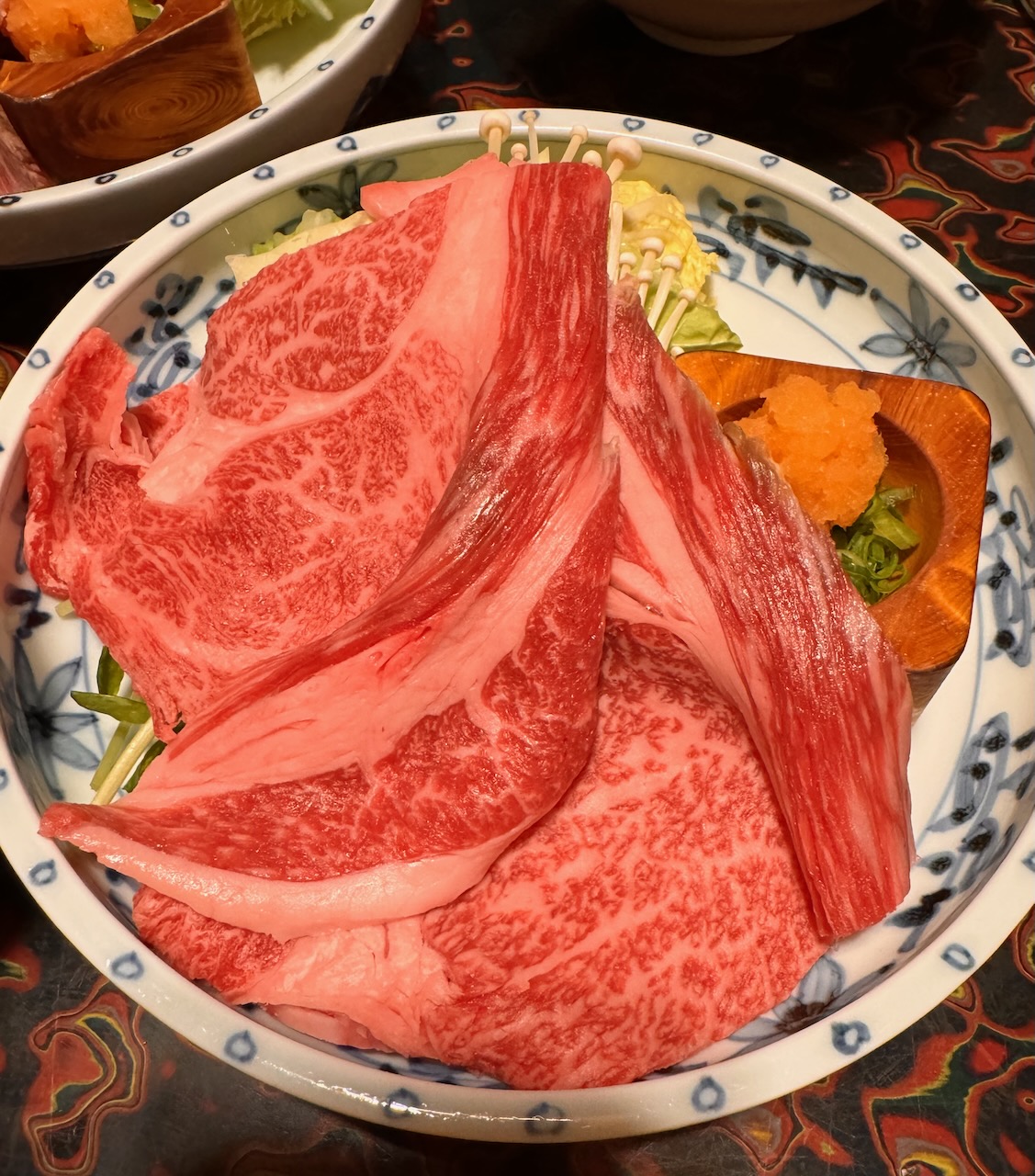
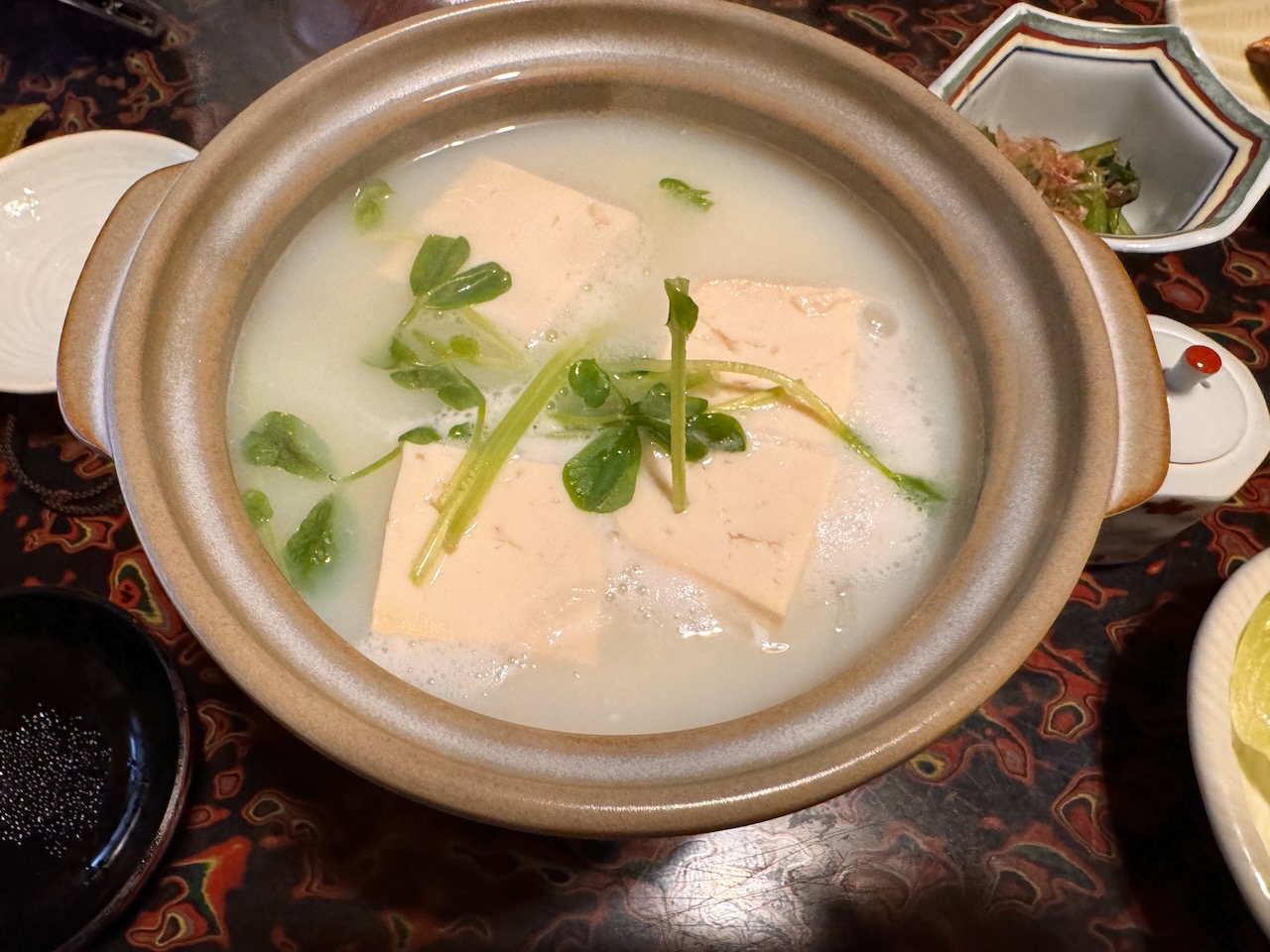
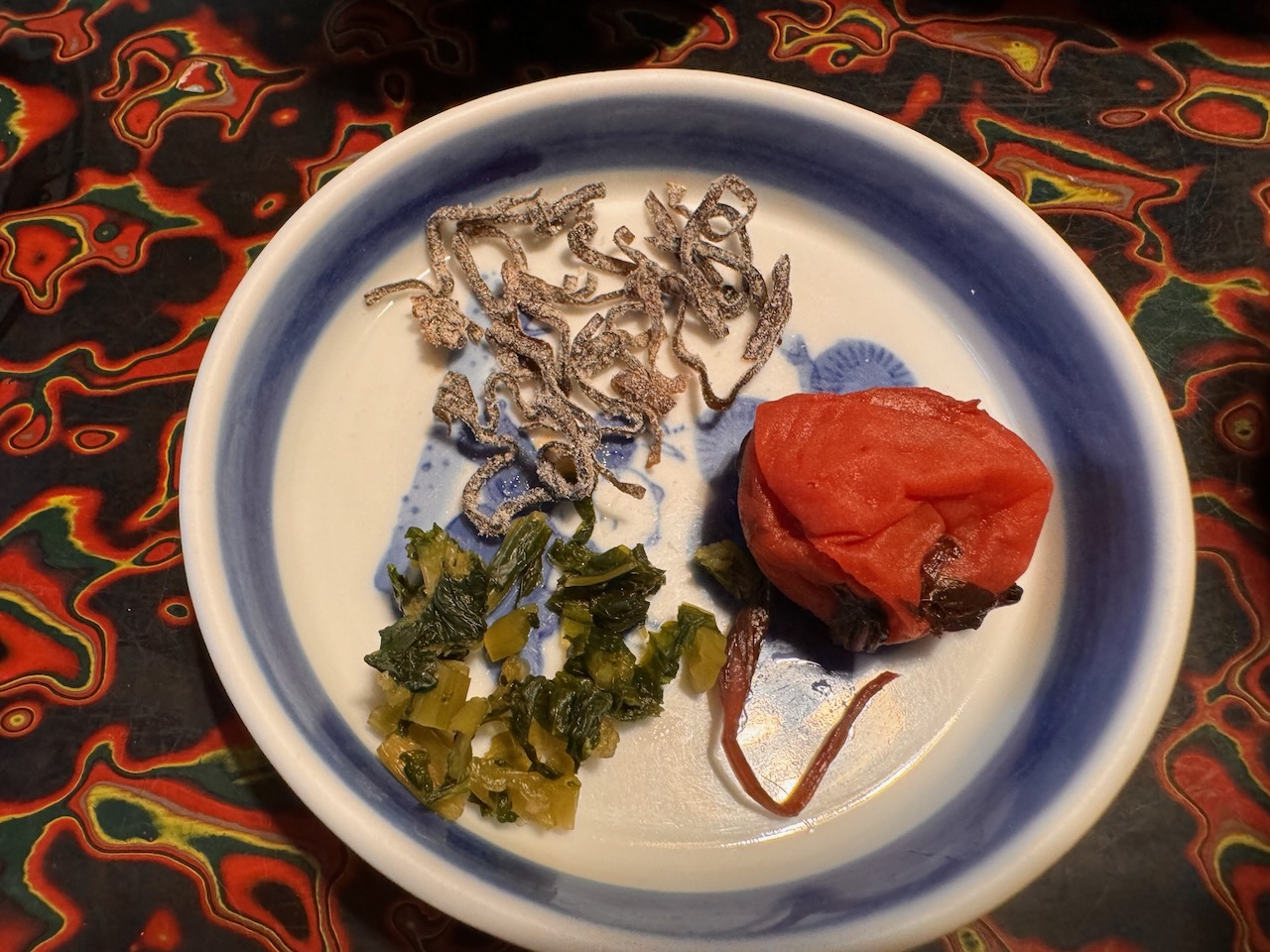
The Kumano River was historically the main transportation route between Kumano Hongu Taisha and Kumano Hayatama Taisha. Our 3rd day in the region began with a traditional cruise in a narrow open-topped boat down the river. The untraditional part was the motor on the back. Our cruise covered the lower half, finishing at the mouth of the river.
At about half-way, our guide asked for the motor to be cut and we drifted with the river listening to the sound of nature. After a while she pulled out a recorder and played what she said would have been a typical piece played on the river when it was the main transportation route.
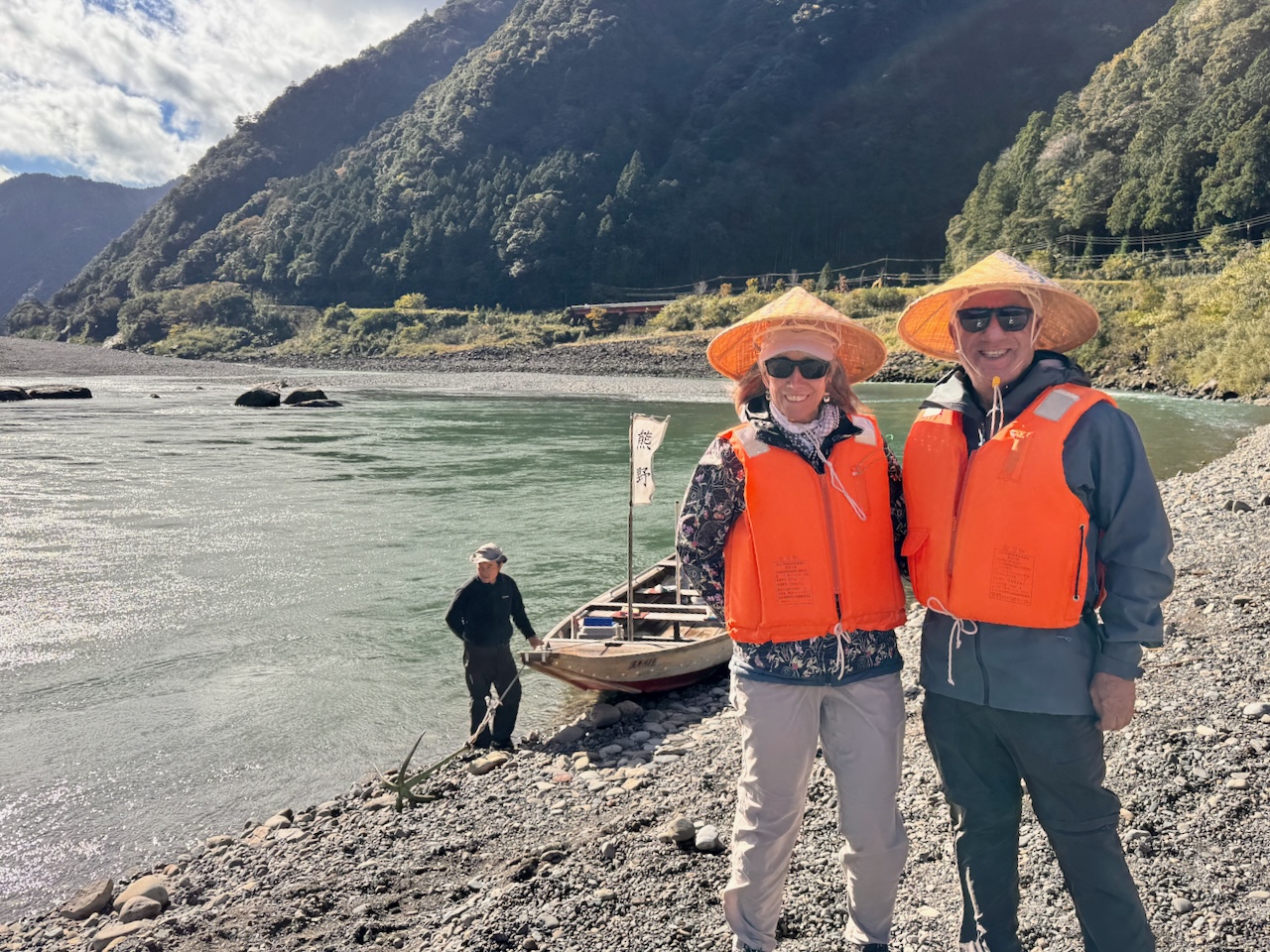
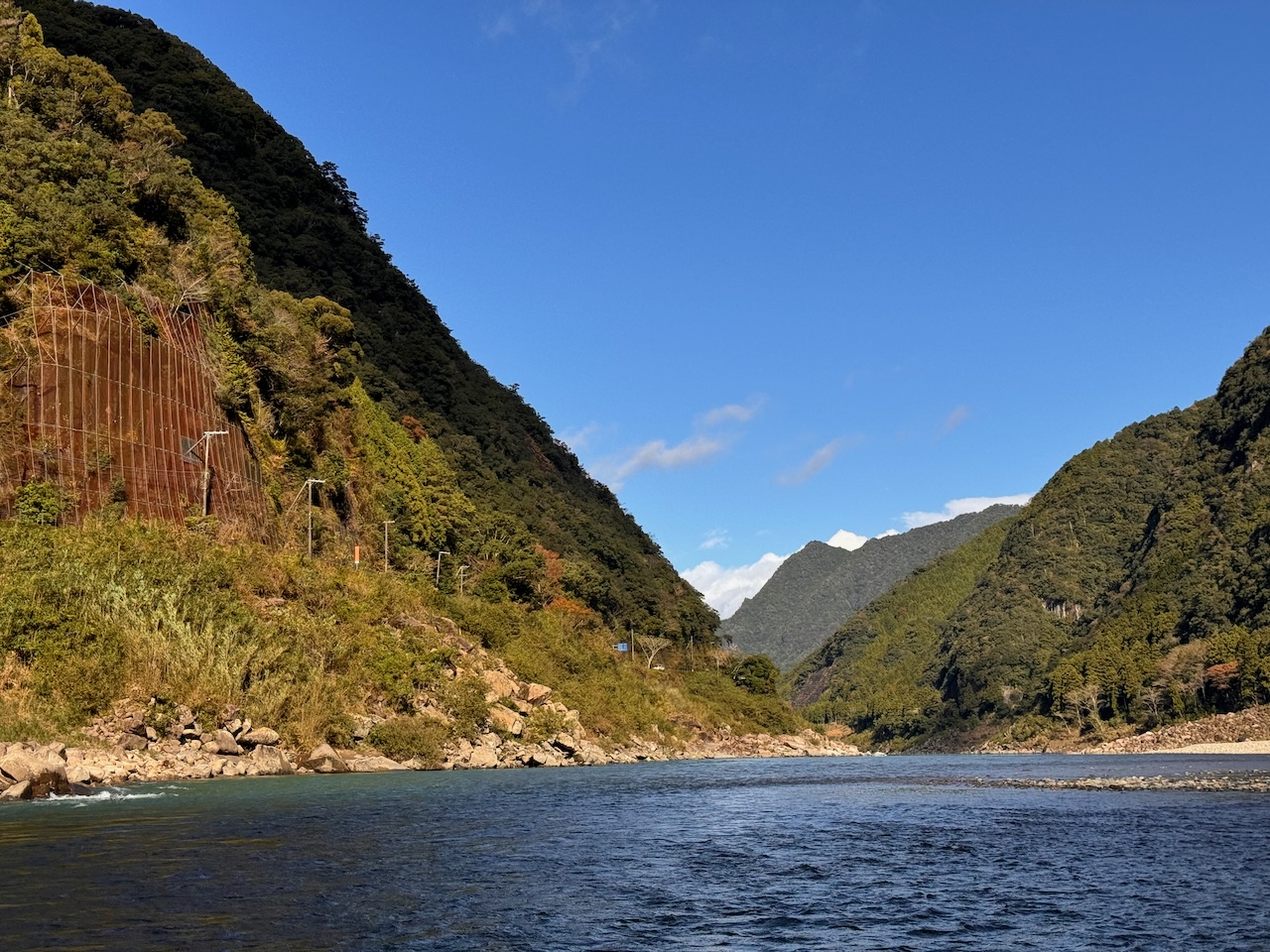
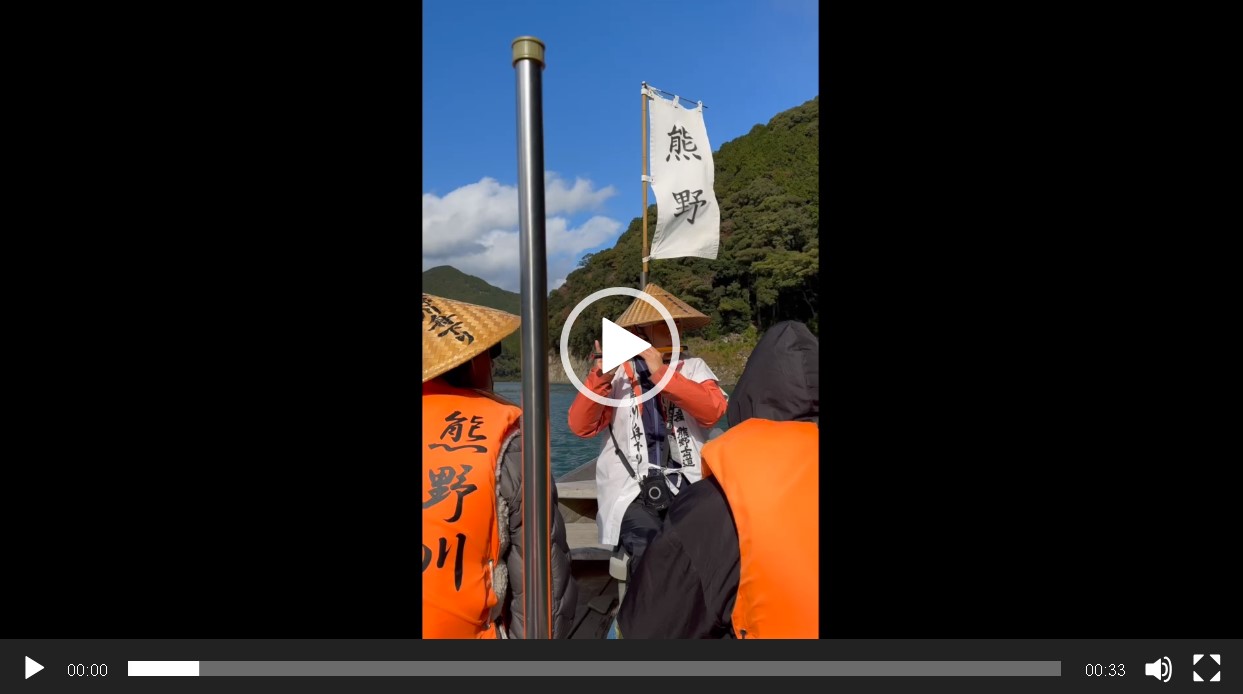
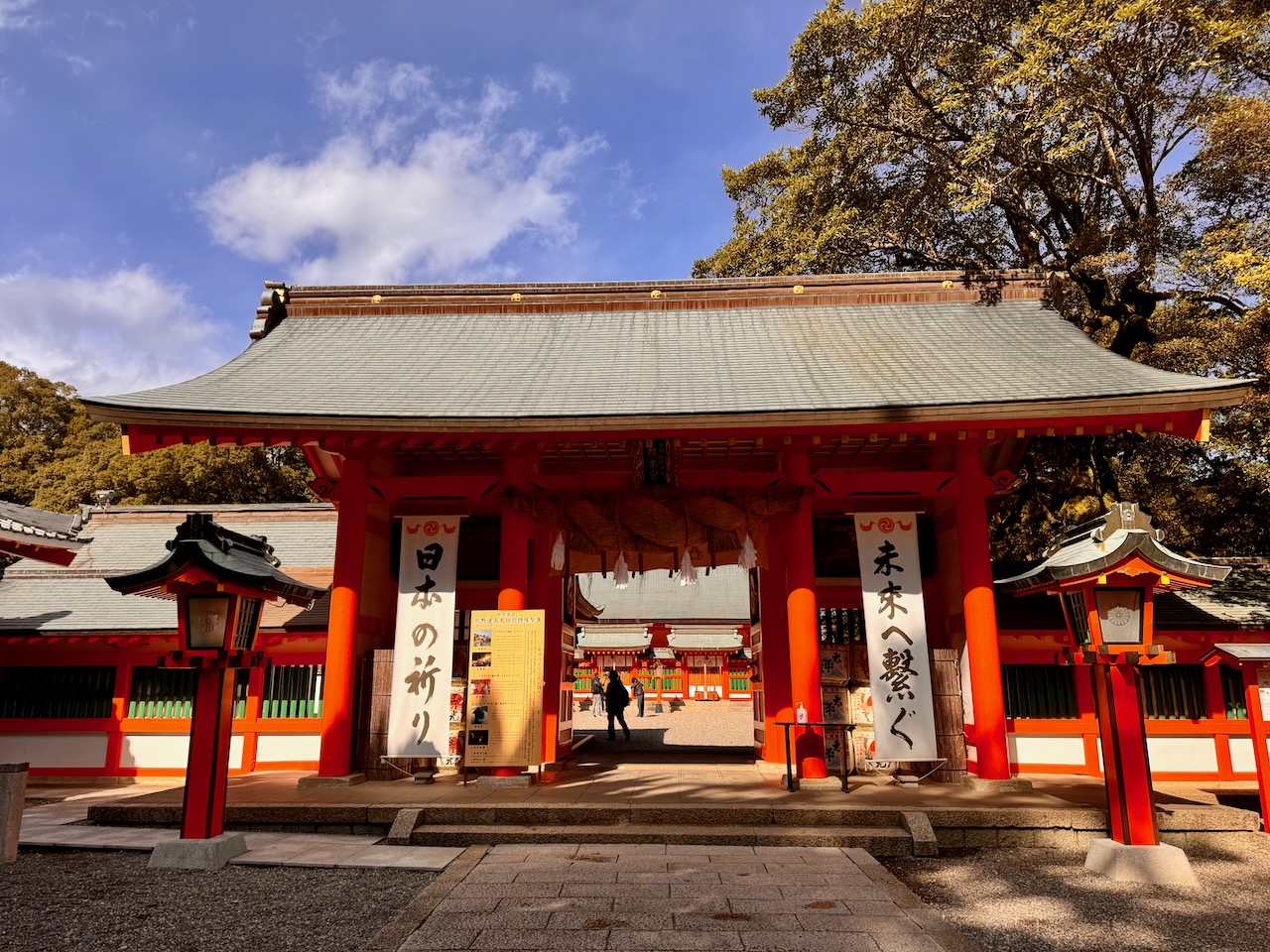
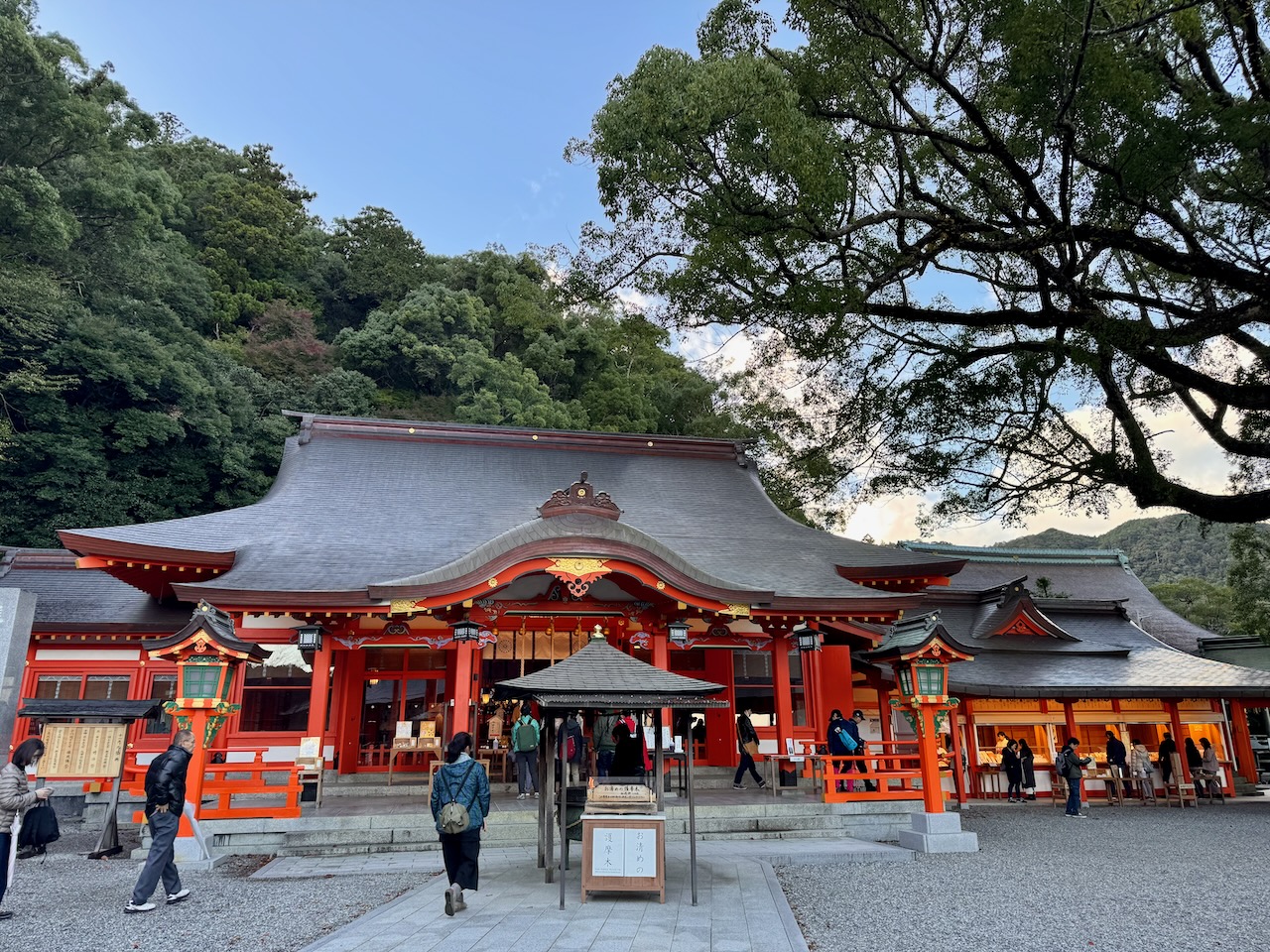
At the end of the cruise we beached our vessel at the second Grand Shrine before continuing the hike. While the current shrine’s buildings were rebuilt in 1951, Kumano Hayatama Taisha has occupied the same spot on the Kumano Riverbank since at least the 12th century. In addition, religious artifacts that date back to the 3rd century are evidence that the area has been a site of worship for much longer. According to one ancient creation myth, the Kumano deities first descended to earth on a rock not far from the shrine. The appearance of this shrine is quite different from Kumano Hongu Taisha.
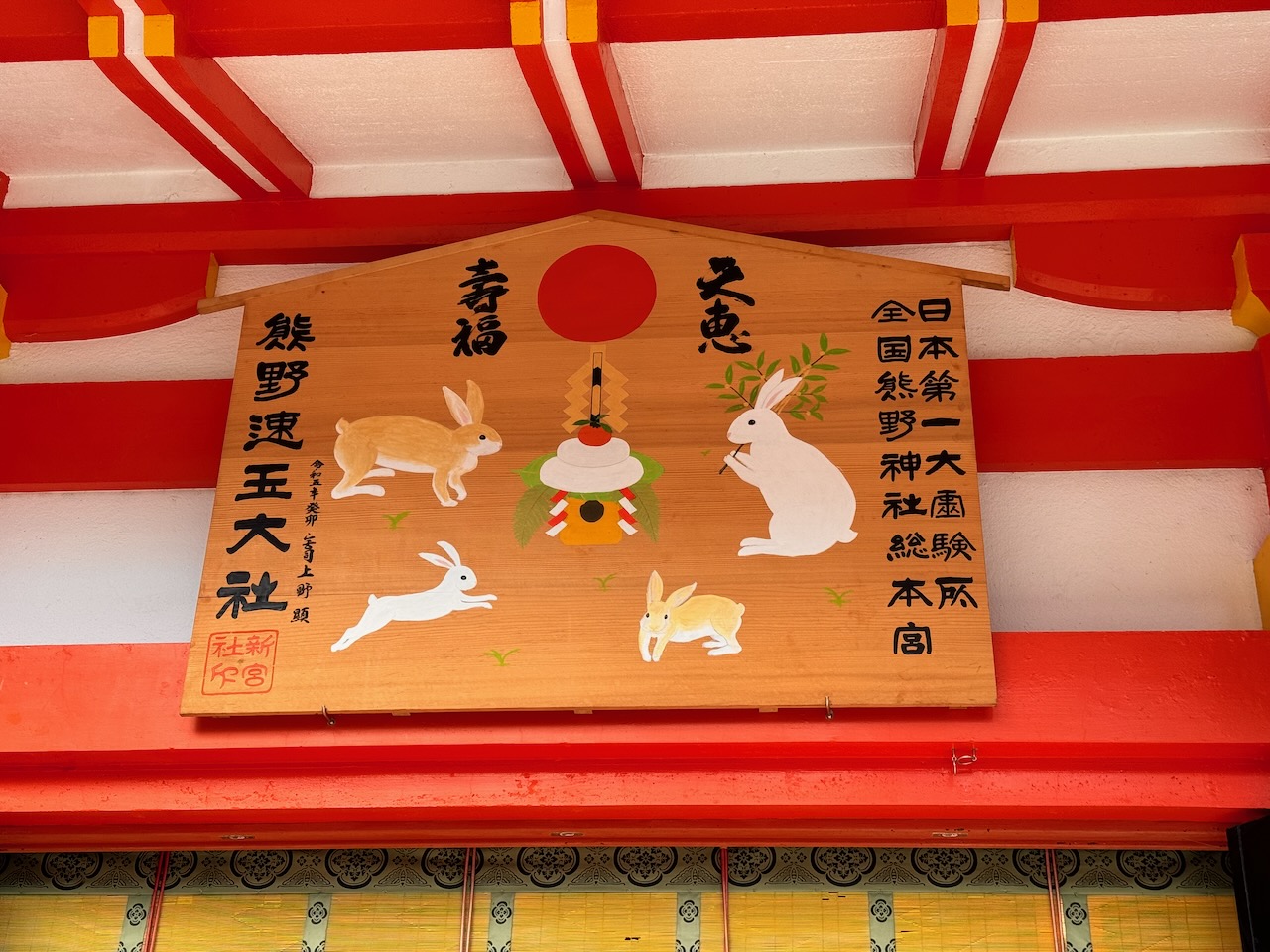
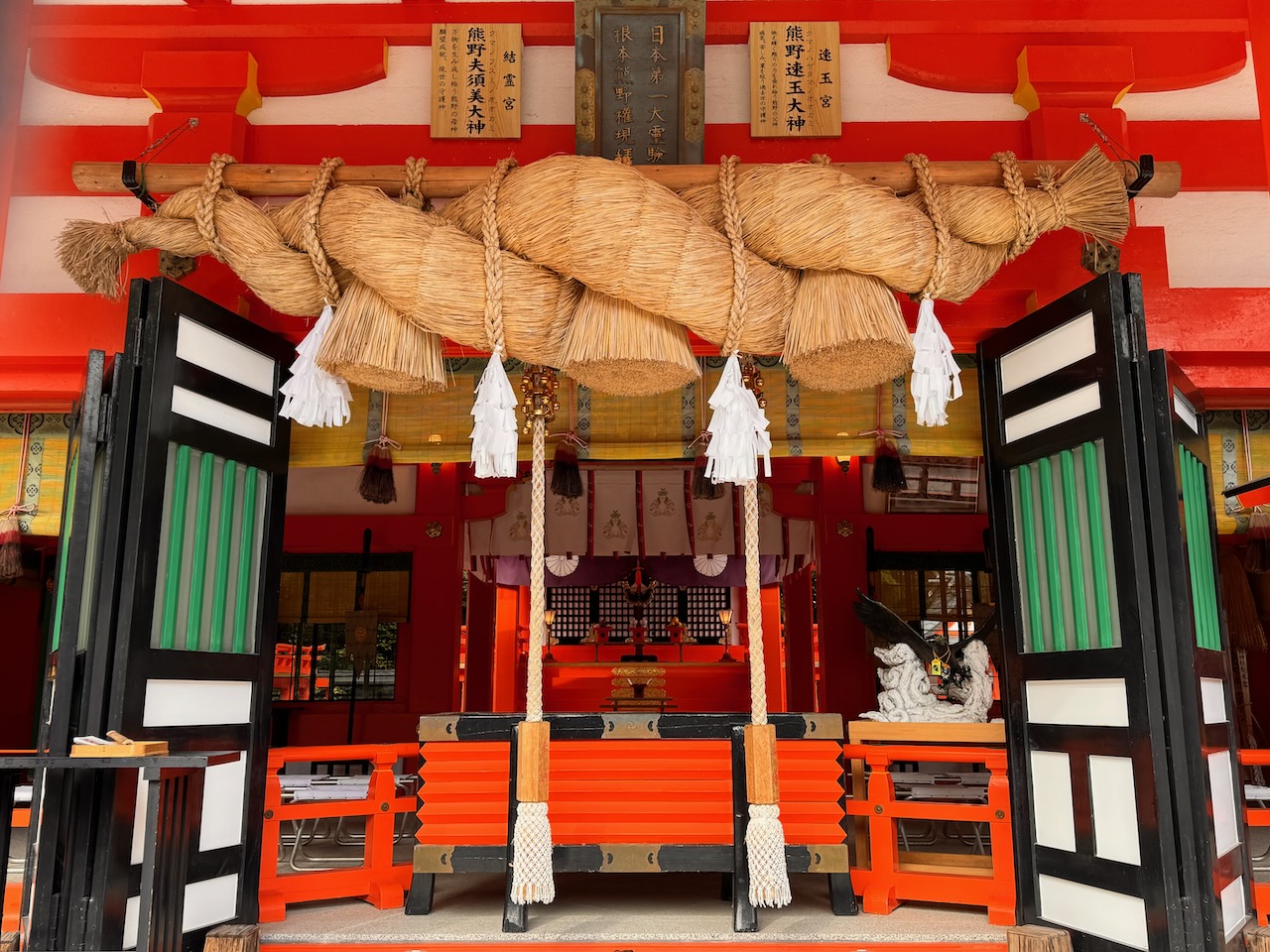
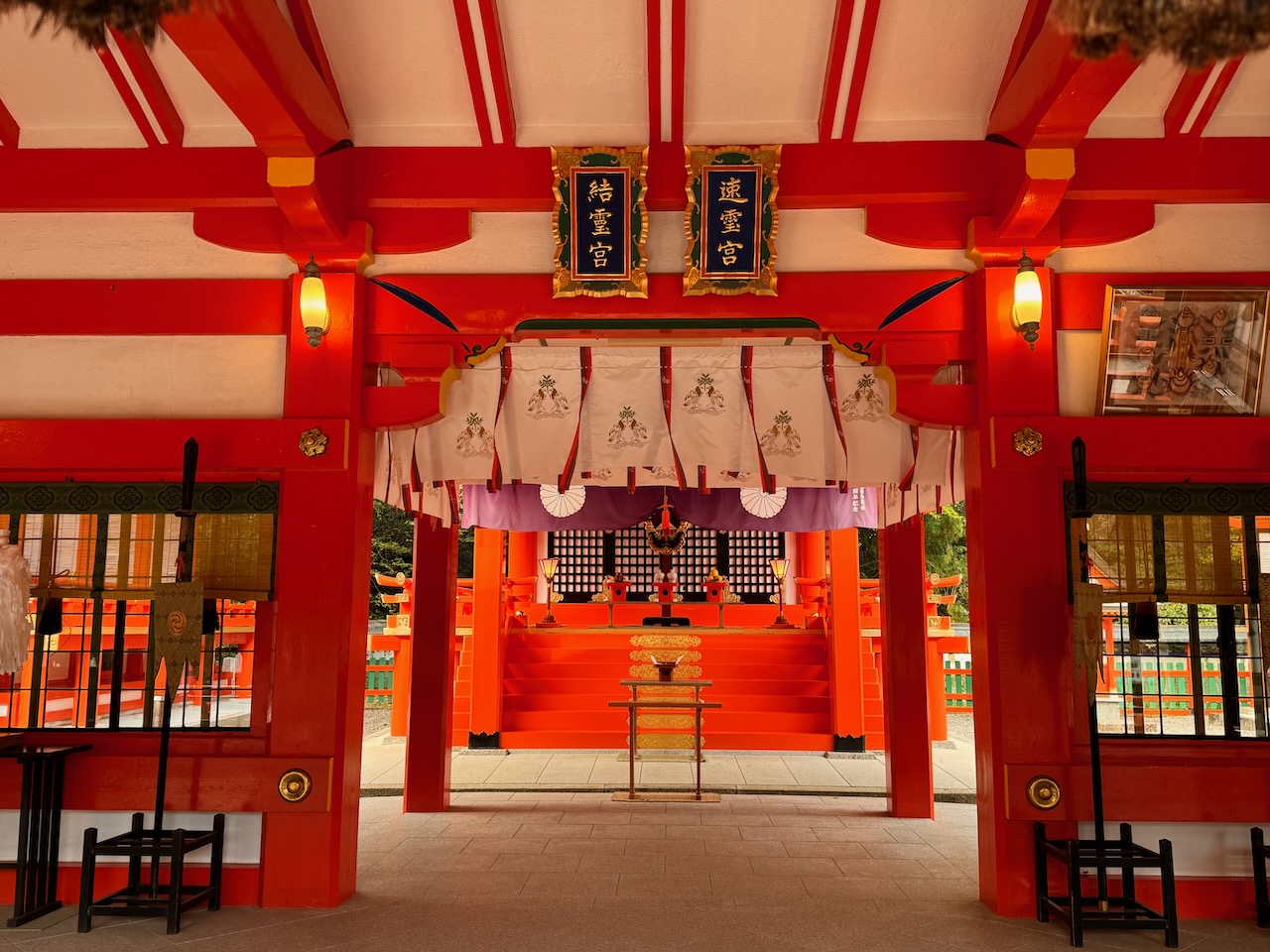
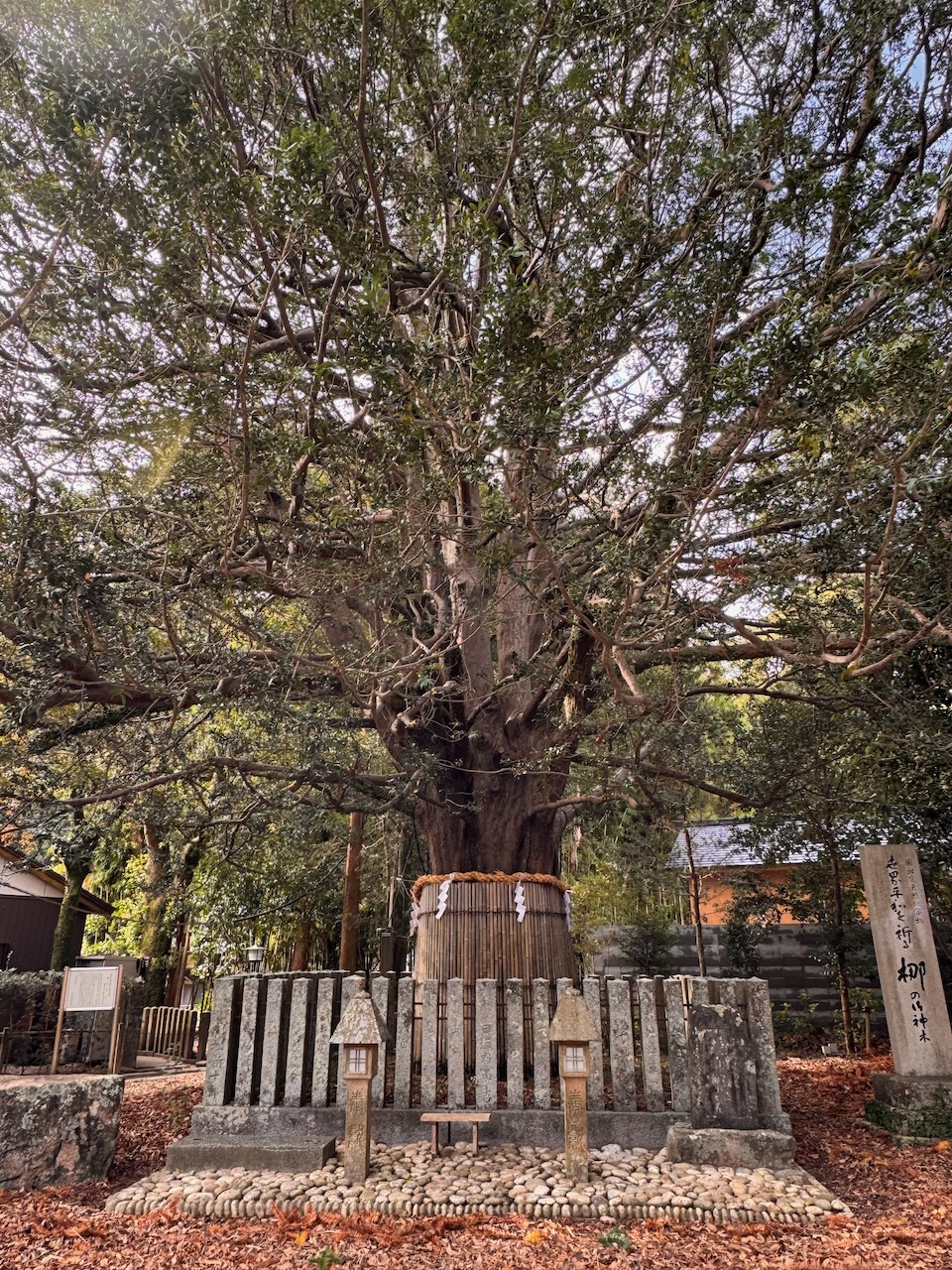
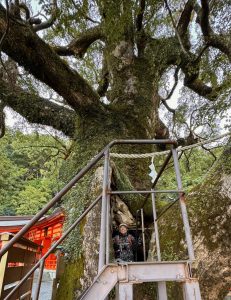
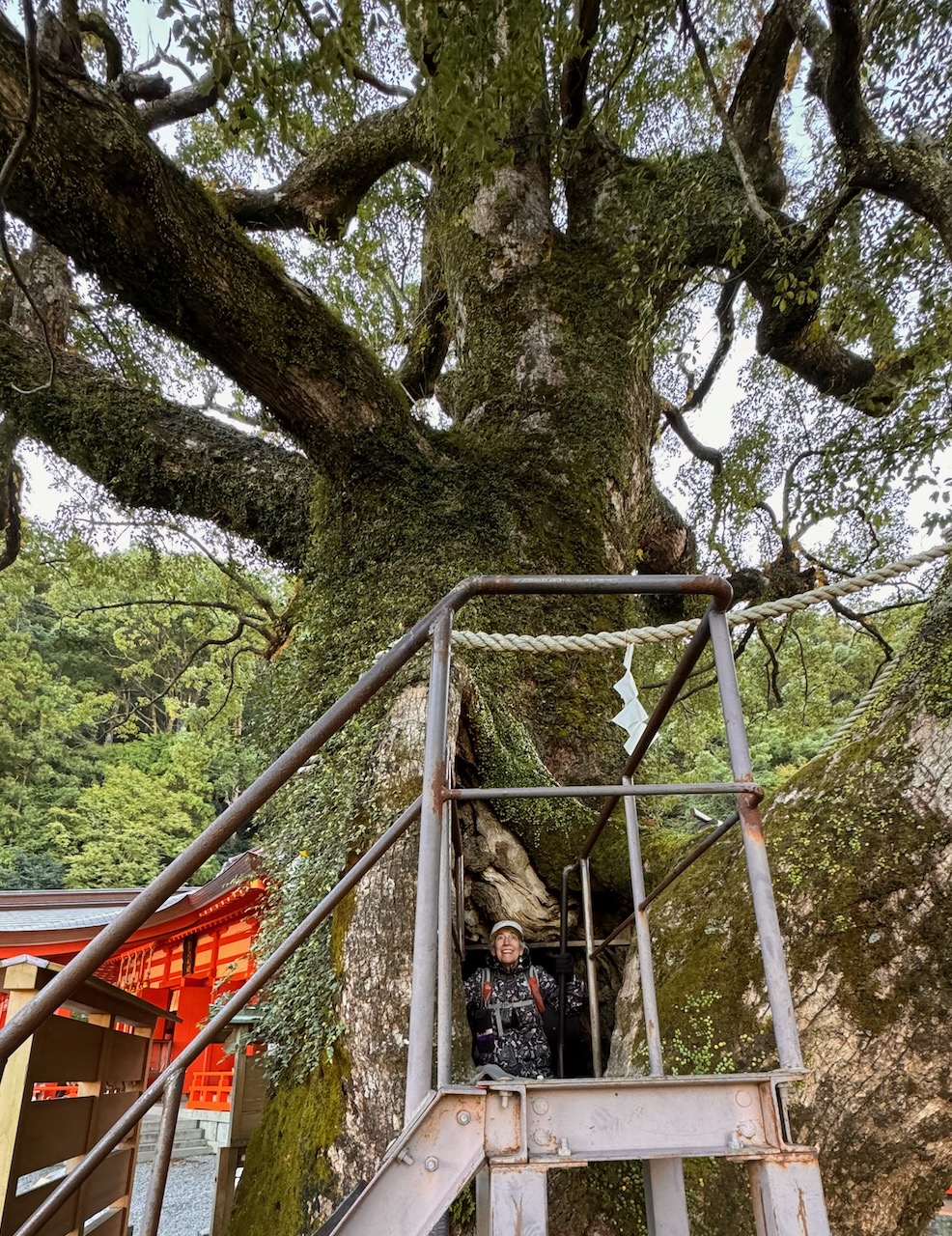
This ancient 800 year old Nagi-no-Ki tree is a sacred tree planted by a powerful feudal lord in 1159 in the shrine complex. The leaves were used as an amulet. They are difficult to tear crossways representing an unbreakable relationship with the deities. Pilgrims would return with a Nagi leaf as proof that they had completed the pilgrimage.
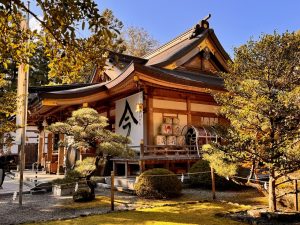
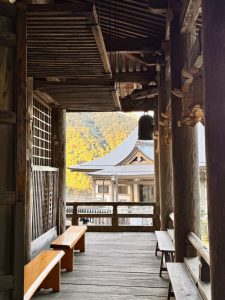
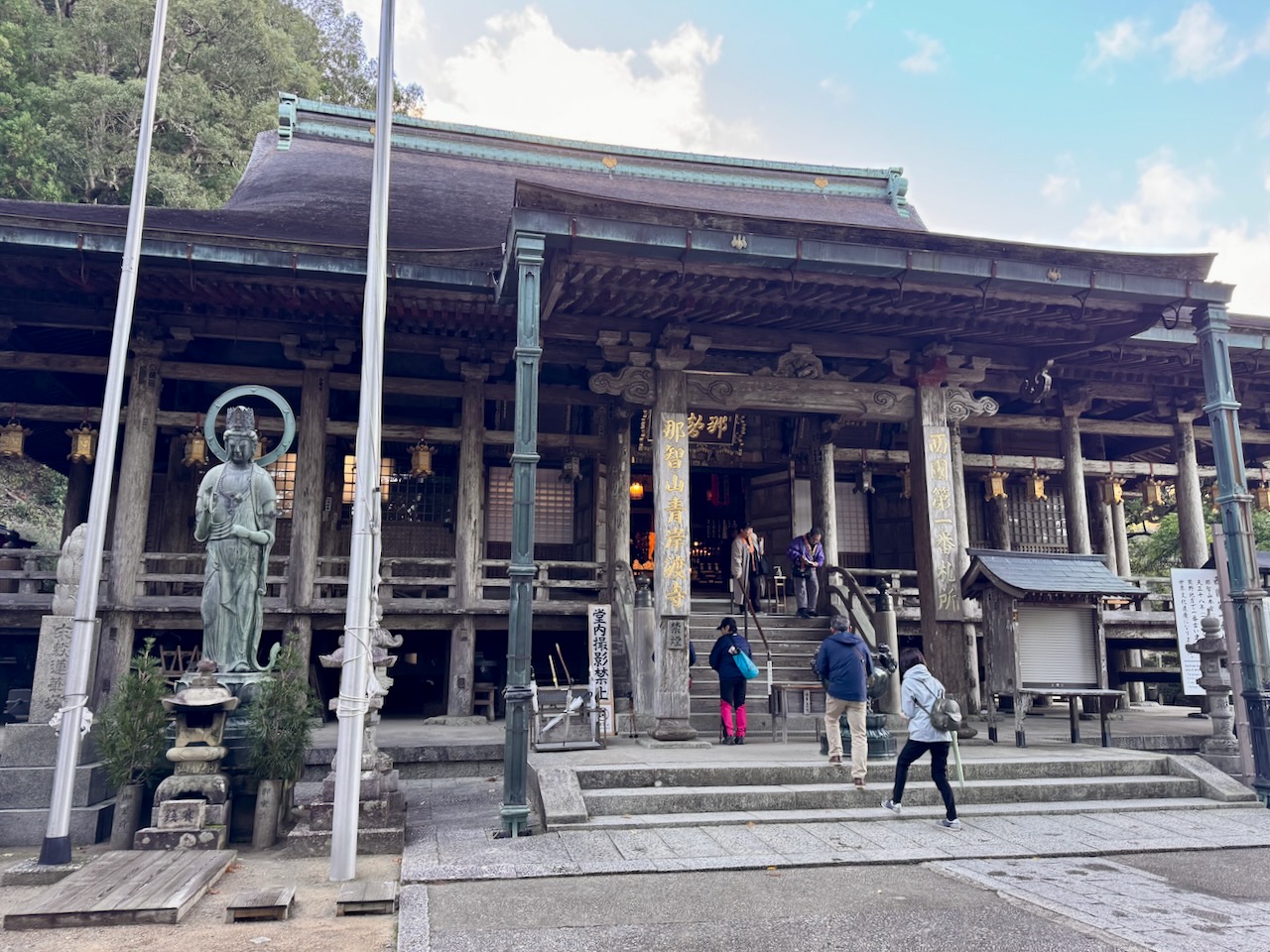
We reverted to bus transport to pick up the trail again at the base of the Daimon-zaka Slope which leads to the third Grand Shrine, Kumano Nachi Taisha, situated a few kilometers inland from the coastal hot spring resort of Katsuura. The shrine is part of a large complex of neighboring religious sites that exemplify the past fusion of Buddhism and Shinto. Once Buddhism arrived in Kumano, it took root quickly, and rather than competing with the indigenous religion for religious authority, it began a long process of harmonious mixing (what a concept!). A product of this congenial relationship can be seen at Nachi Taisha. Directly beside the eminent shrine is the Buddhist temple Seigantoji. In fact, for most of their history the buildings were not even under separate control and functioned as one religious institution.
I remind you to click the pic to see the beautiful detail in these.
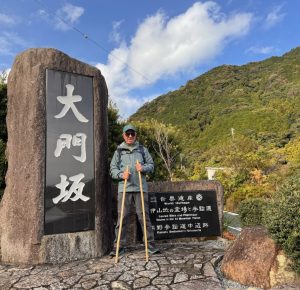
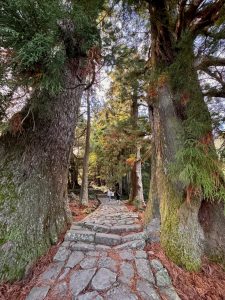
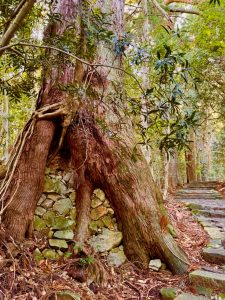
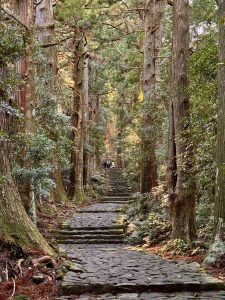
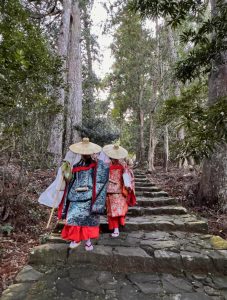
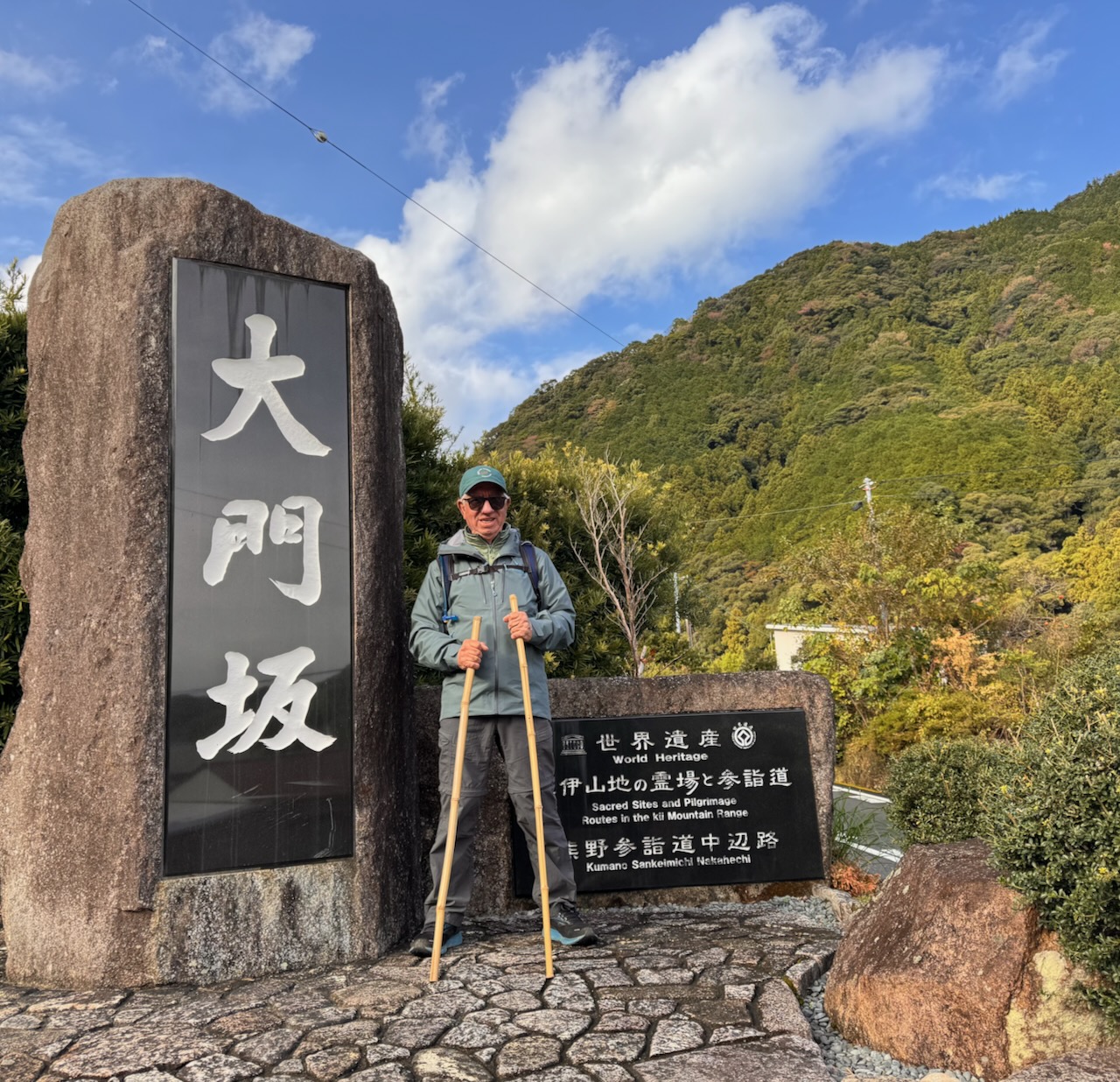
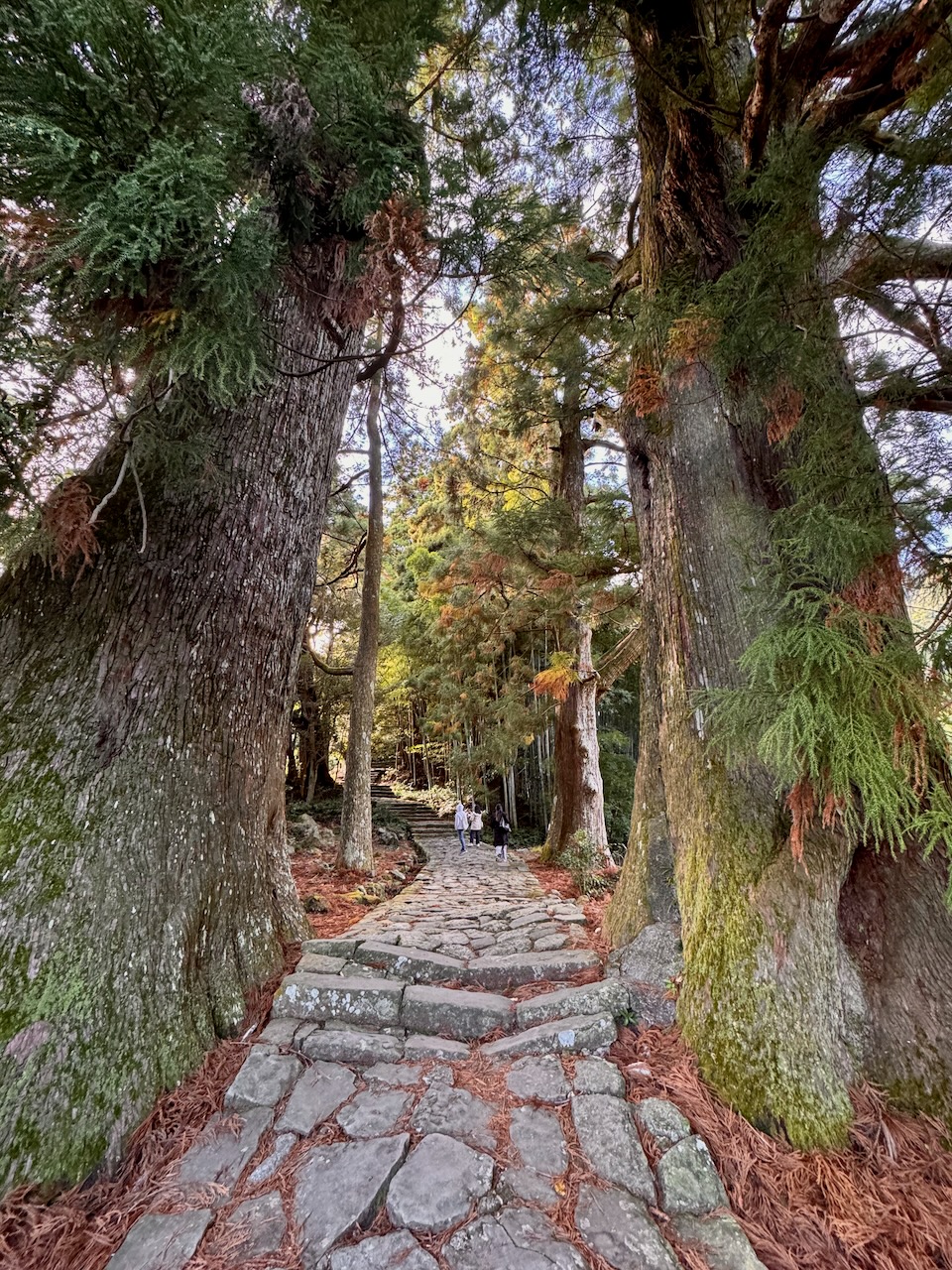
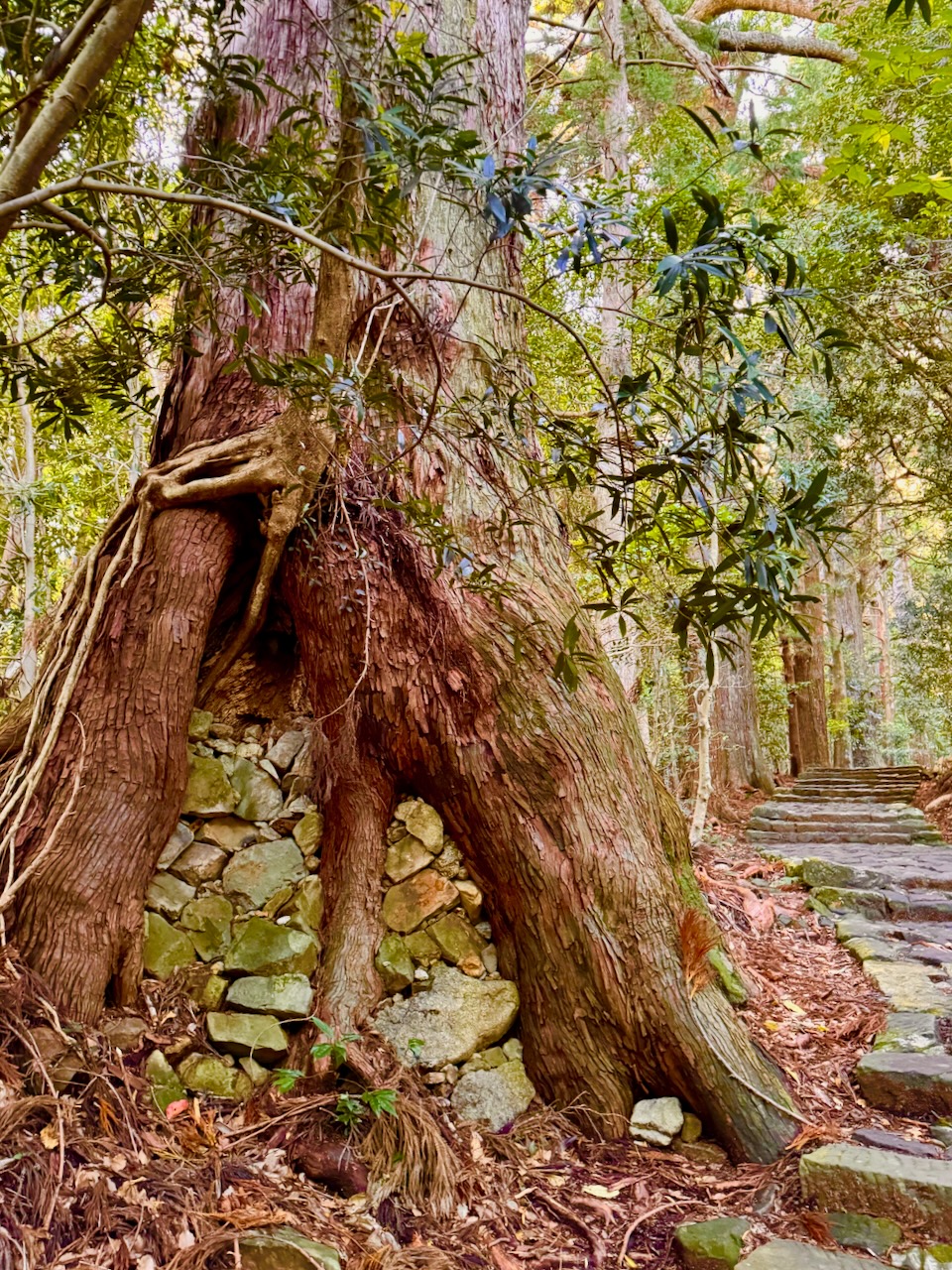
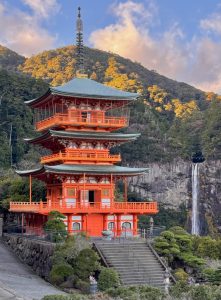
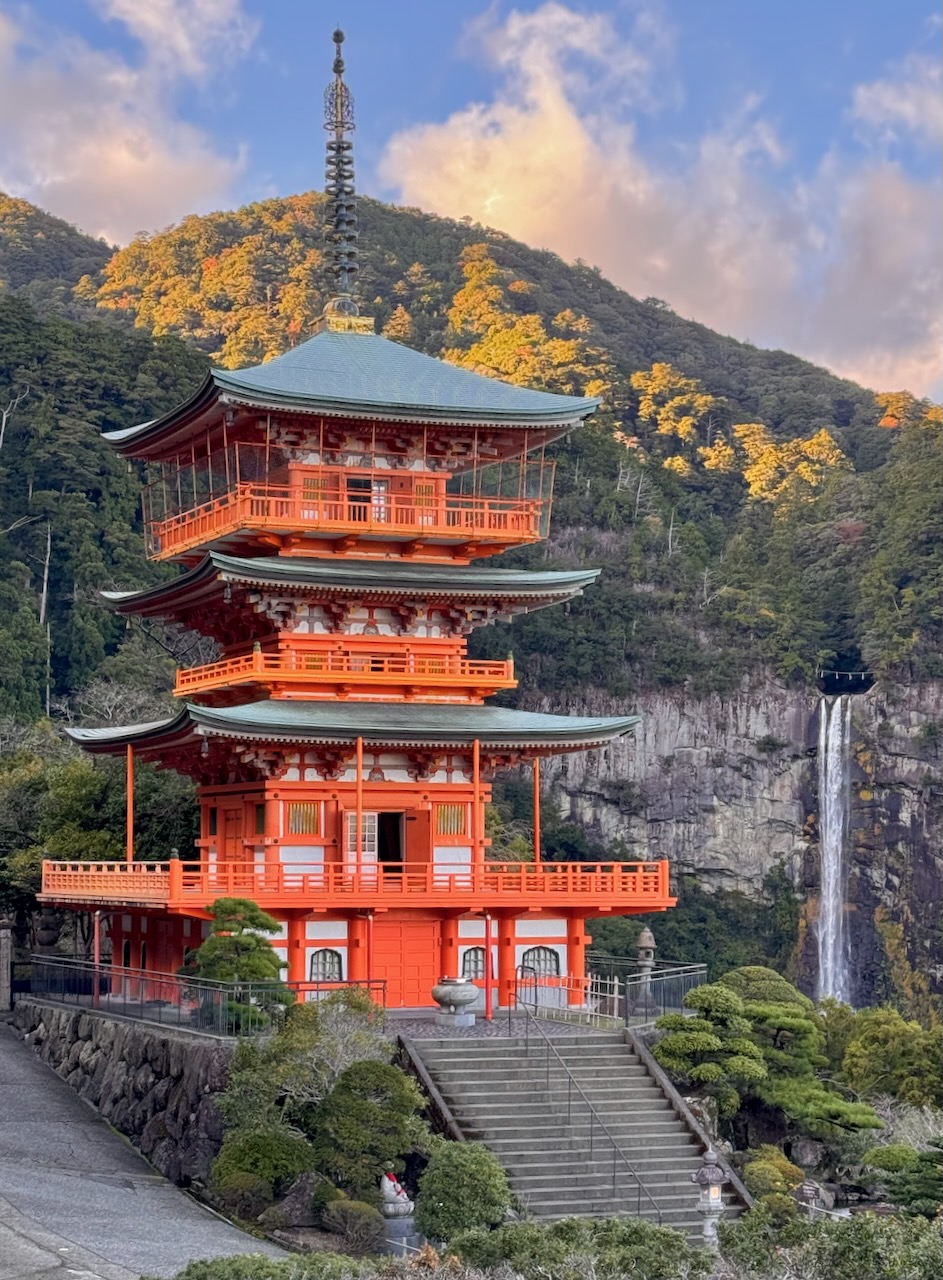
The buildings of both the shrine and the temple are impressive, and among the buildings of Seigantoji Temple is a three-story pagoda. The shrine and temple were separated during the Meiji Period. This was our favourite of the Golden Shrines. The buildings have undergone at least 20 renovations over the years.
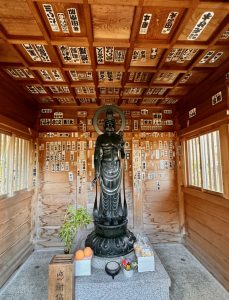
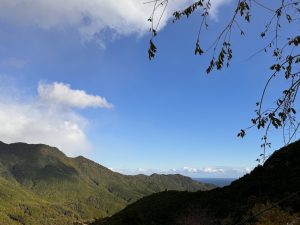
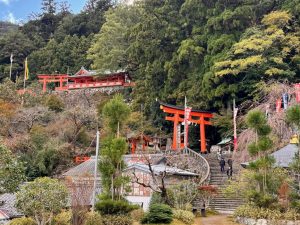
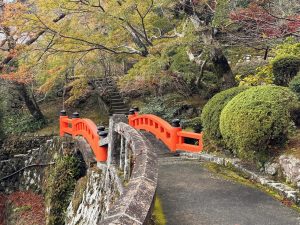
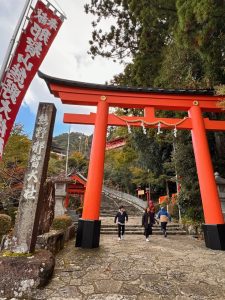
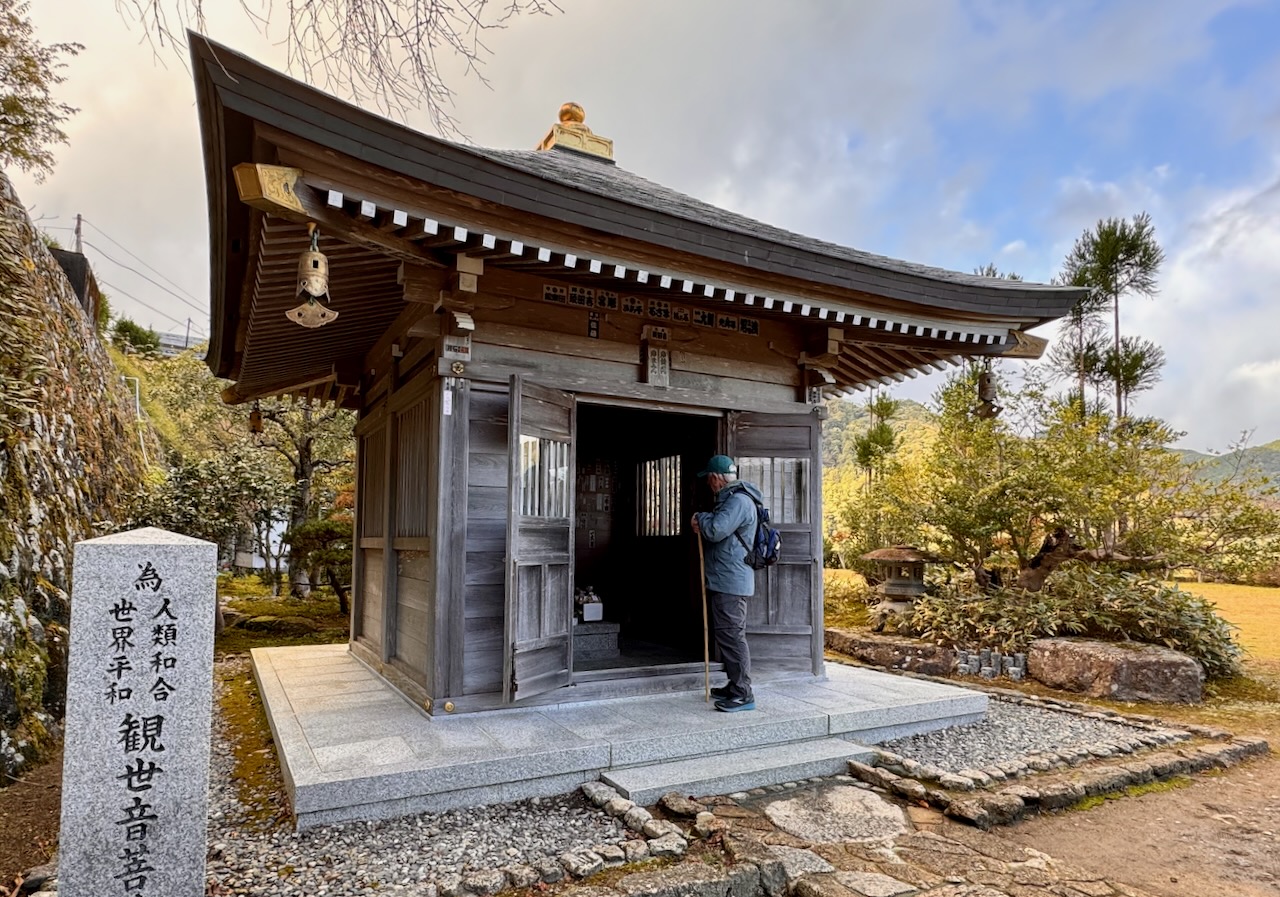
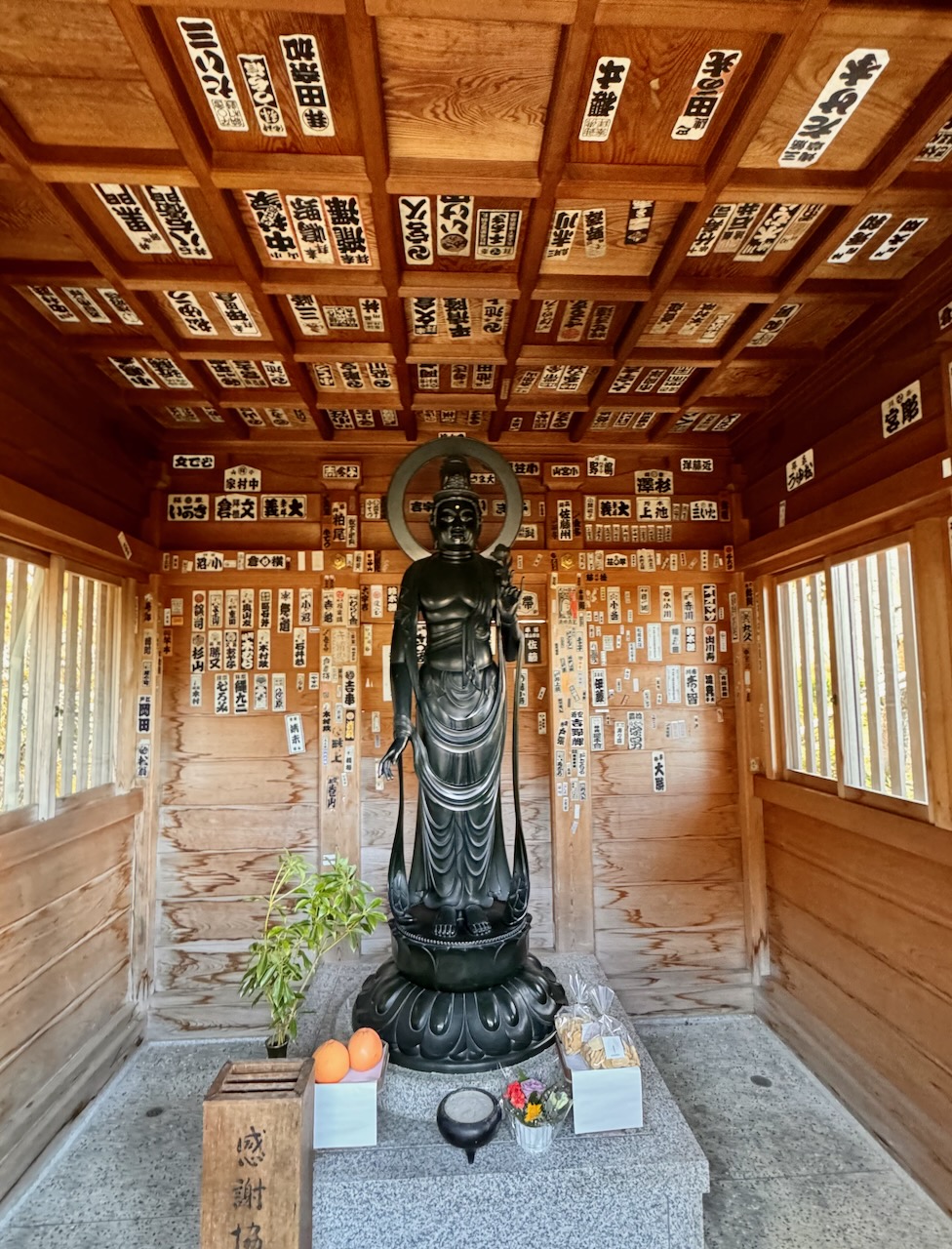
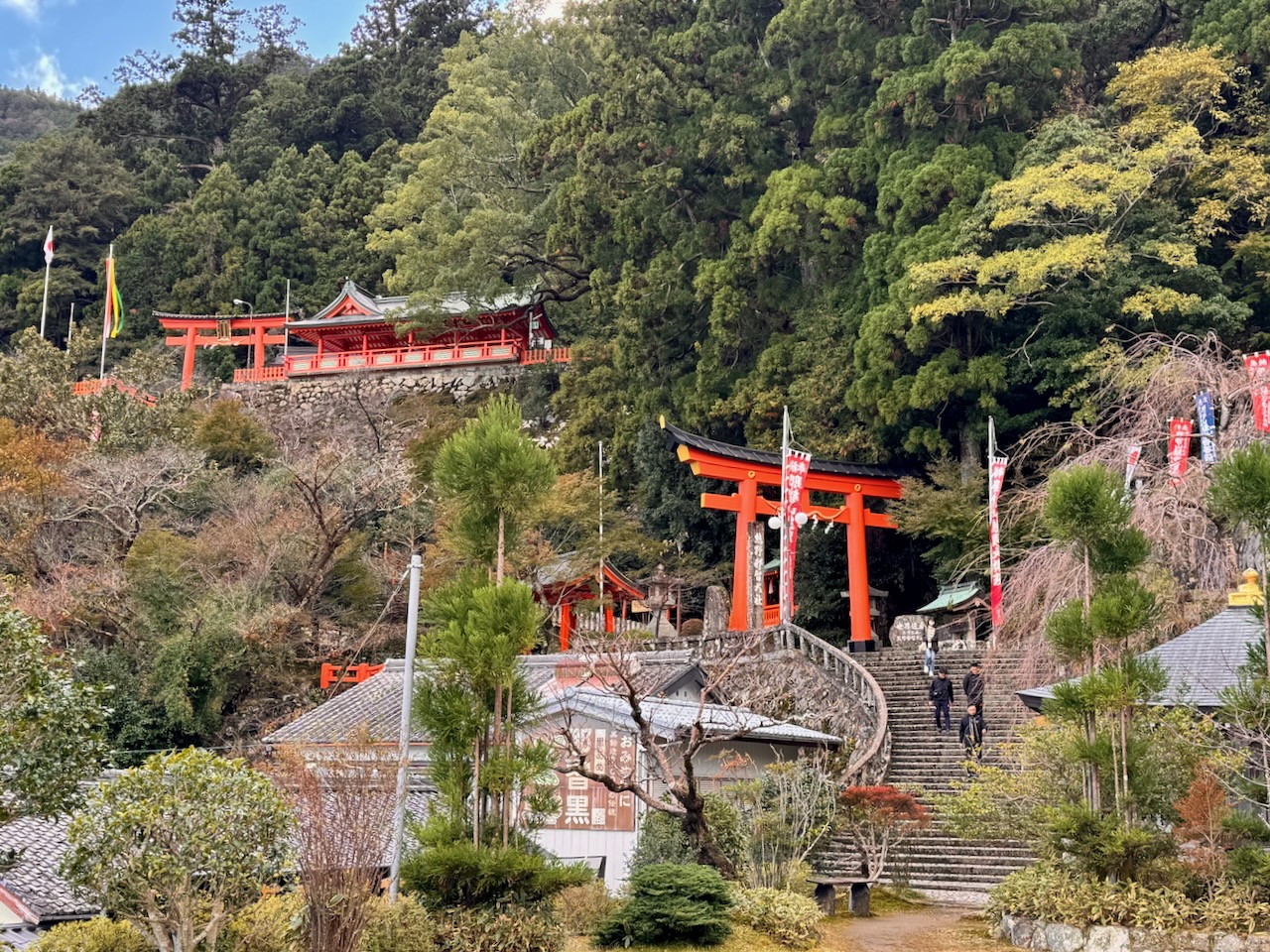
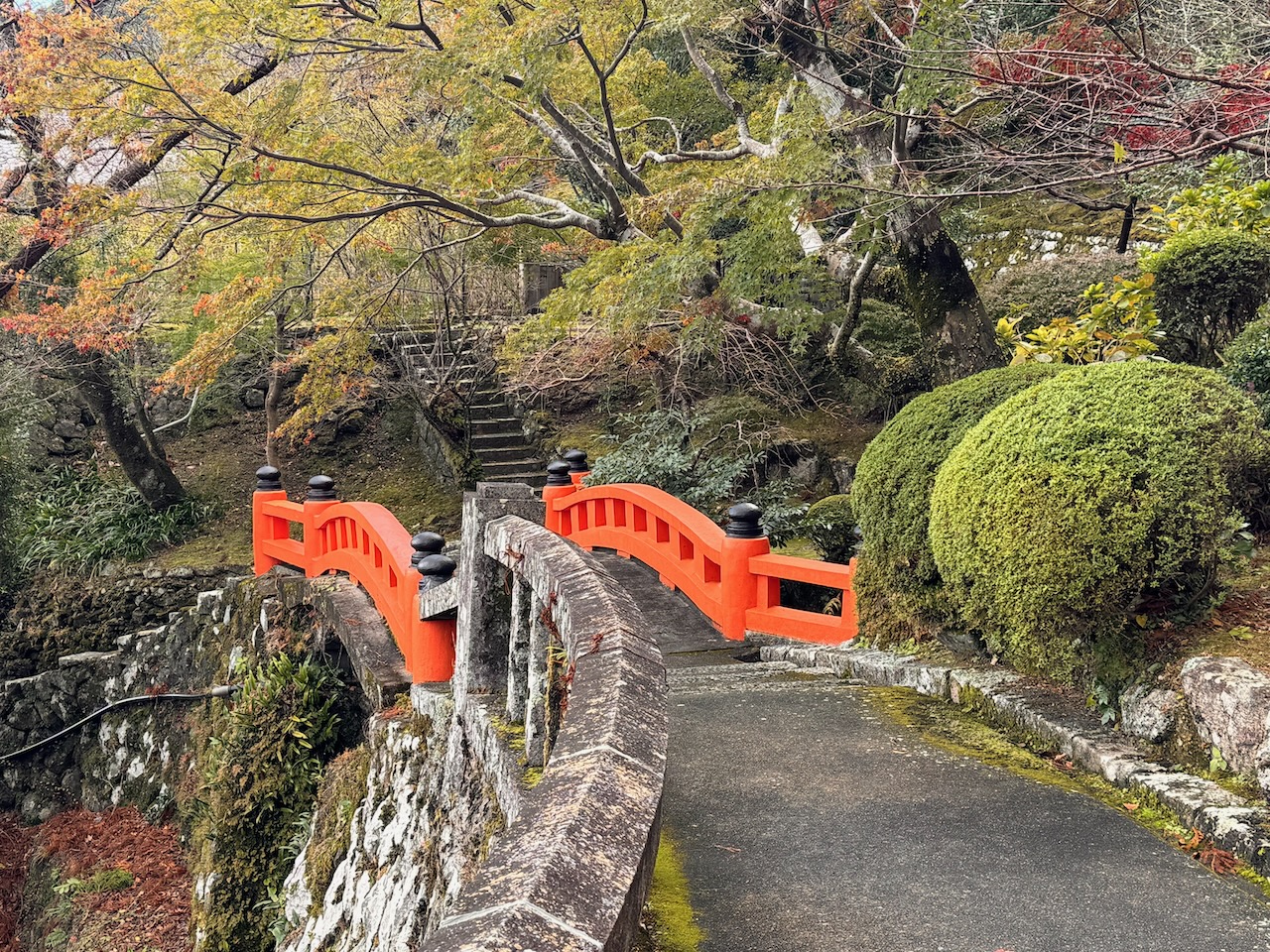
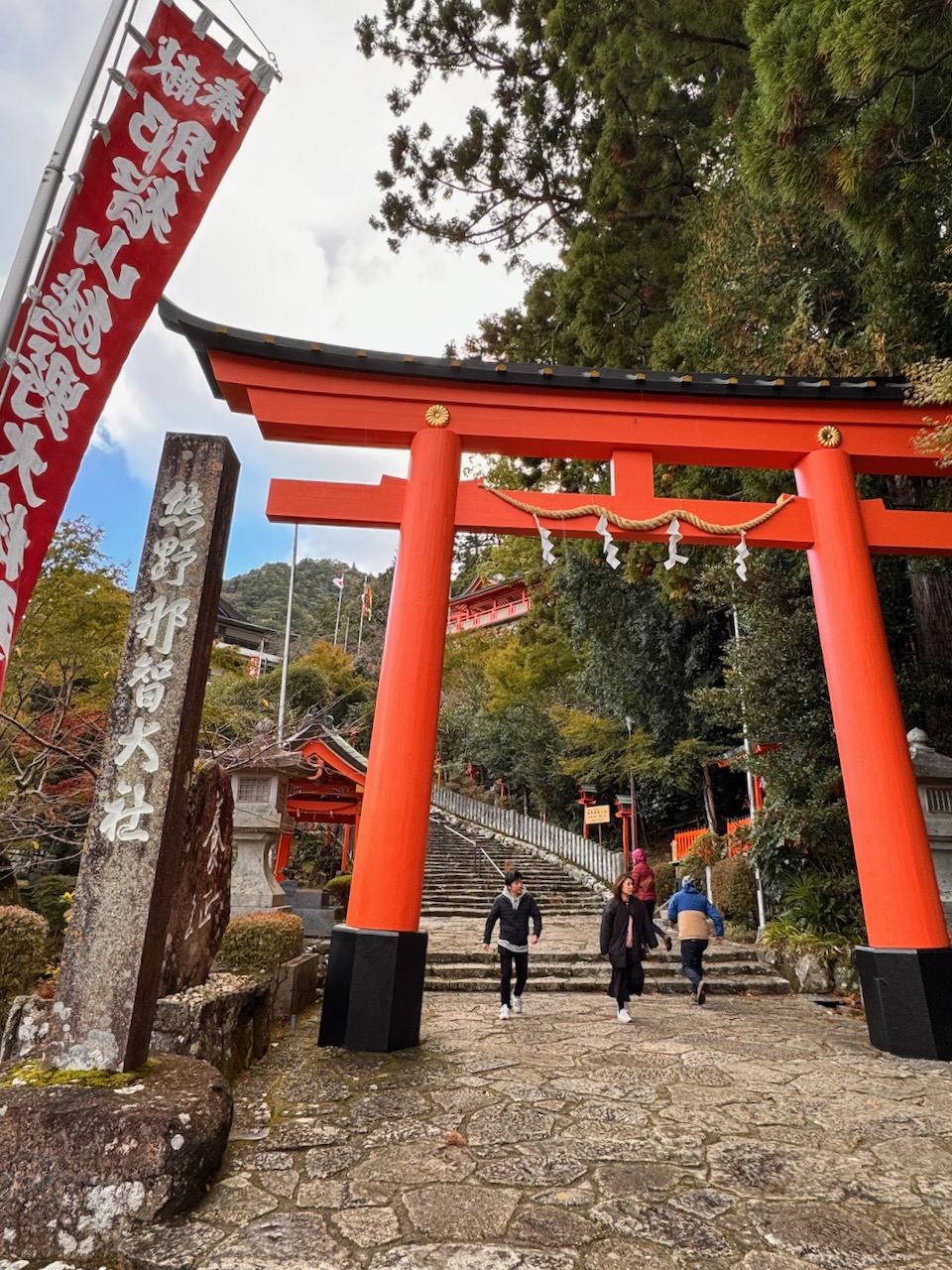
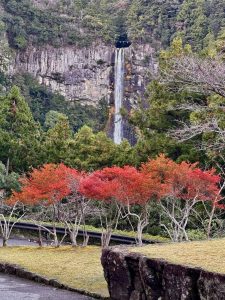
Here, the two spiritual structures remain connected and represent harmony in the presence of nature, both dedicated to the powerful and striking wonder of the area—Nachi Falls—that inspired people long before either were built.
The combination of this pagoda and Nachi Falls is probably the most commonly photographed image on the Kumano Kodo. The 133-meter waterfall is the tallest single-tiered waterfall in Japan. It was the original religious site in the area and continues to be venerated by locals and visitors.
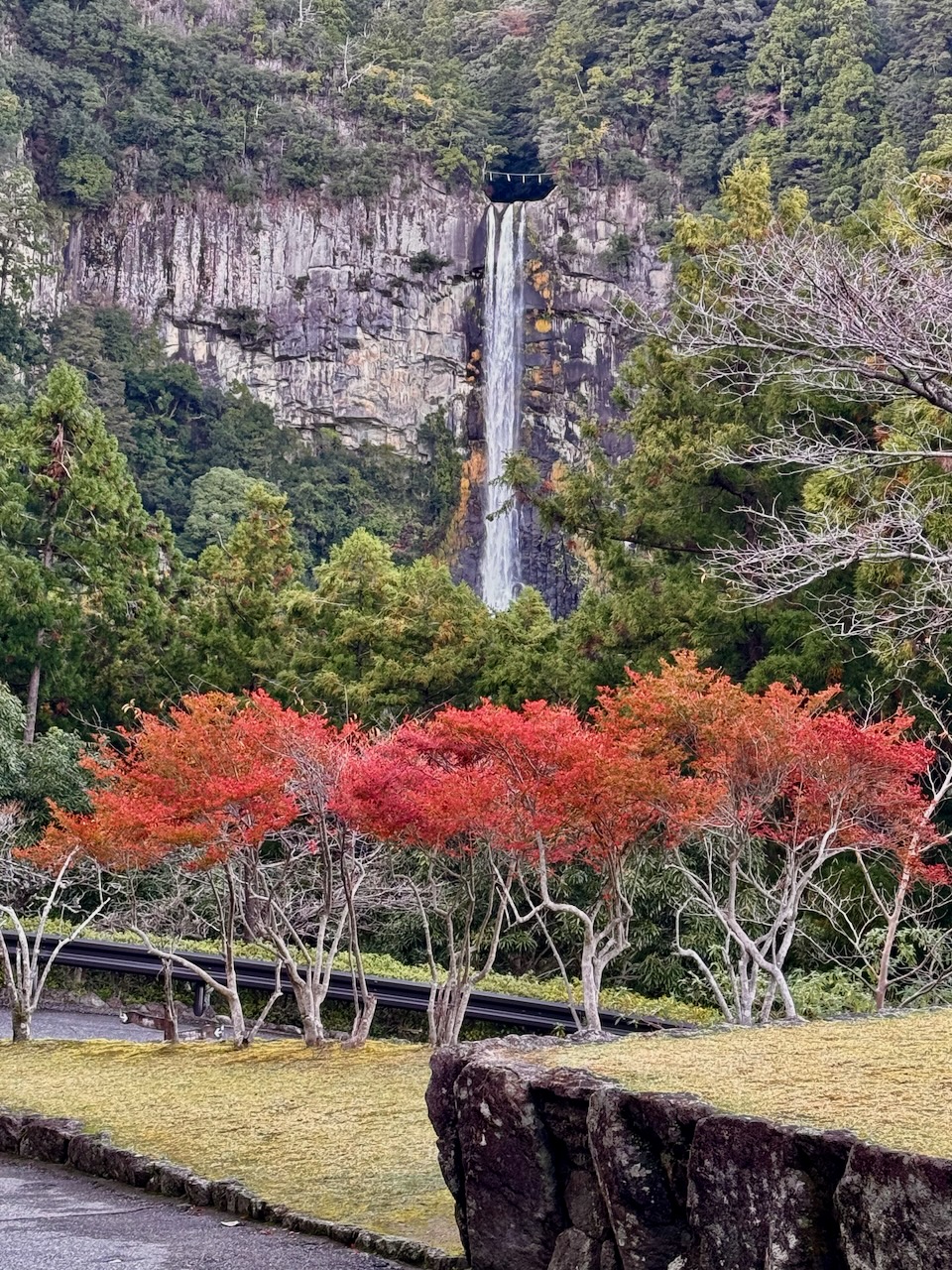
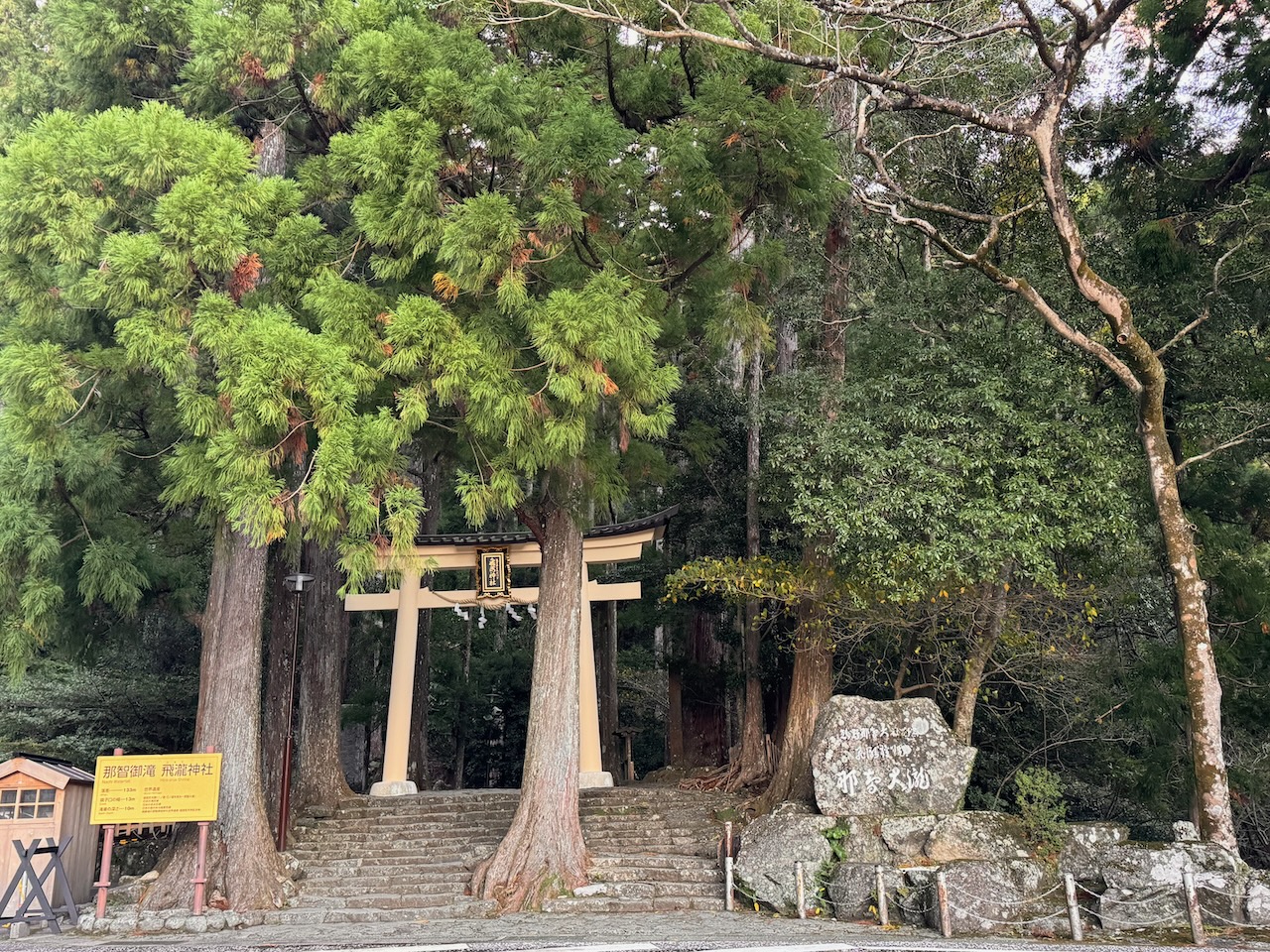
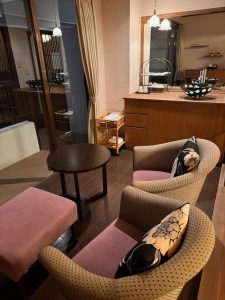
Our last night was spent in the small coastal city of Katsuura. It is the place for whale-watching and boasts the greatest tuna catches in Japan.
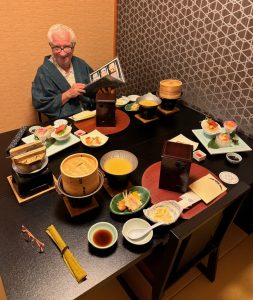
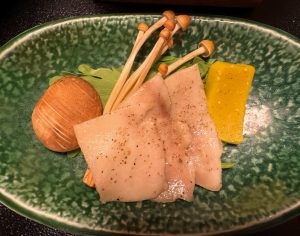
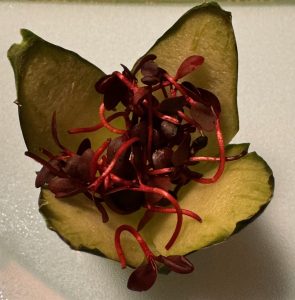
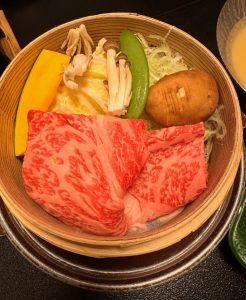
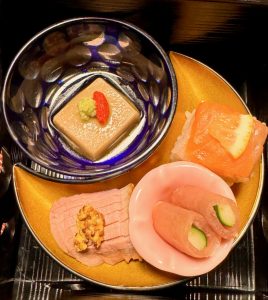
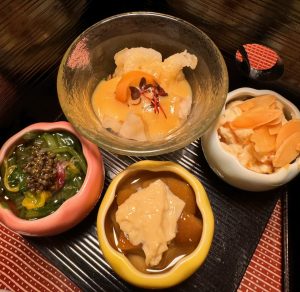
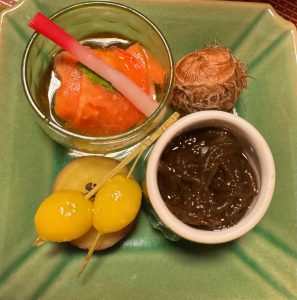
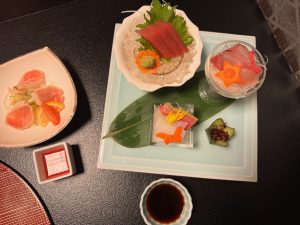
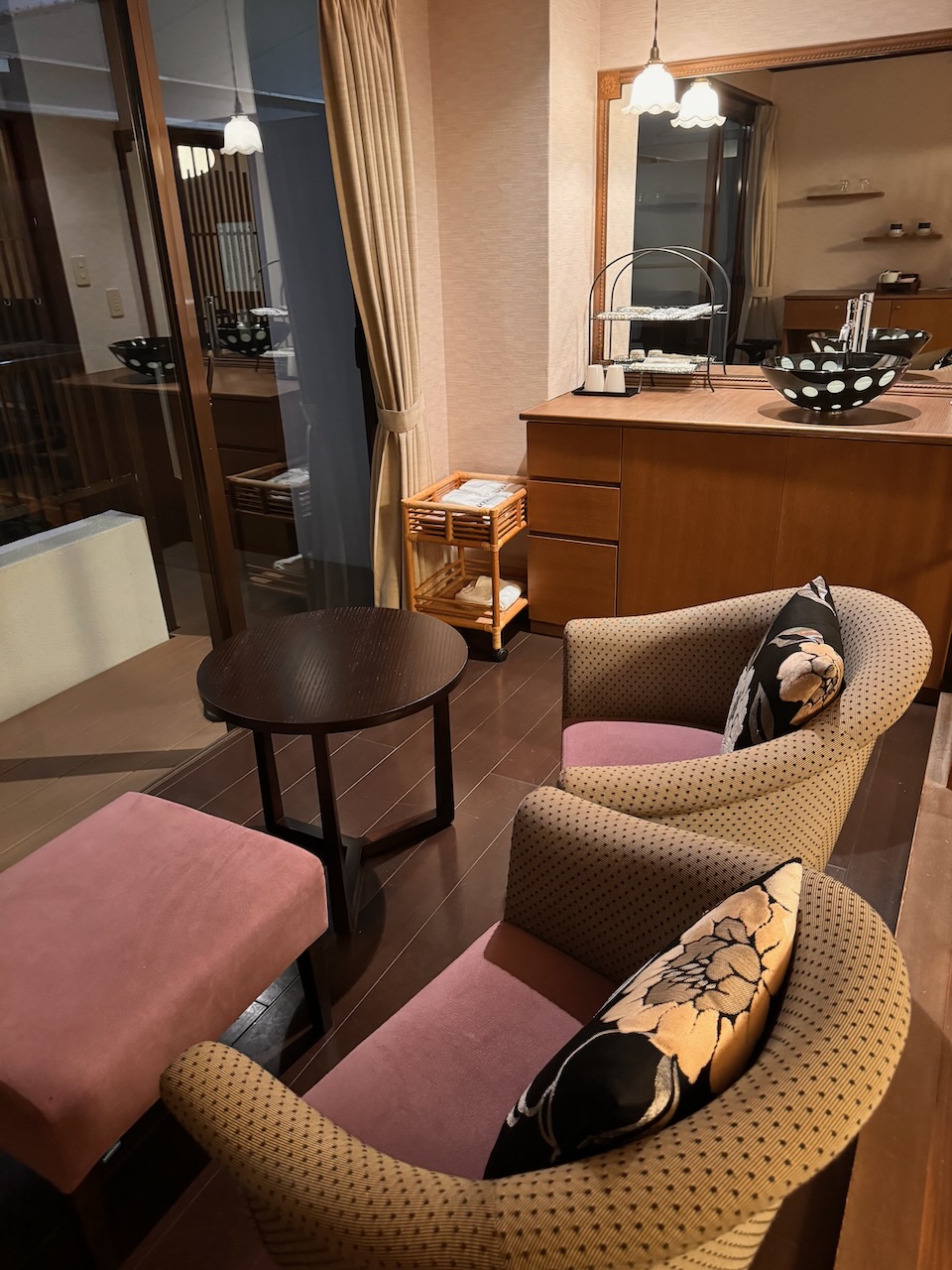
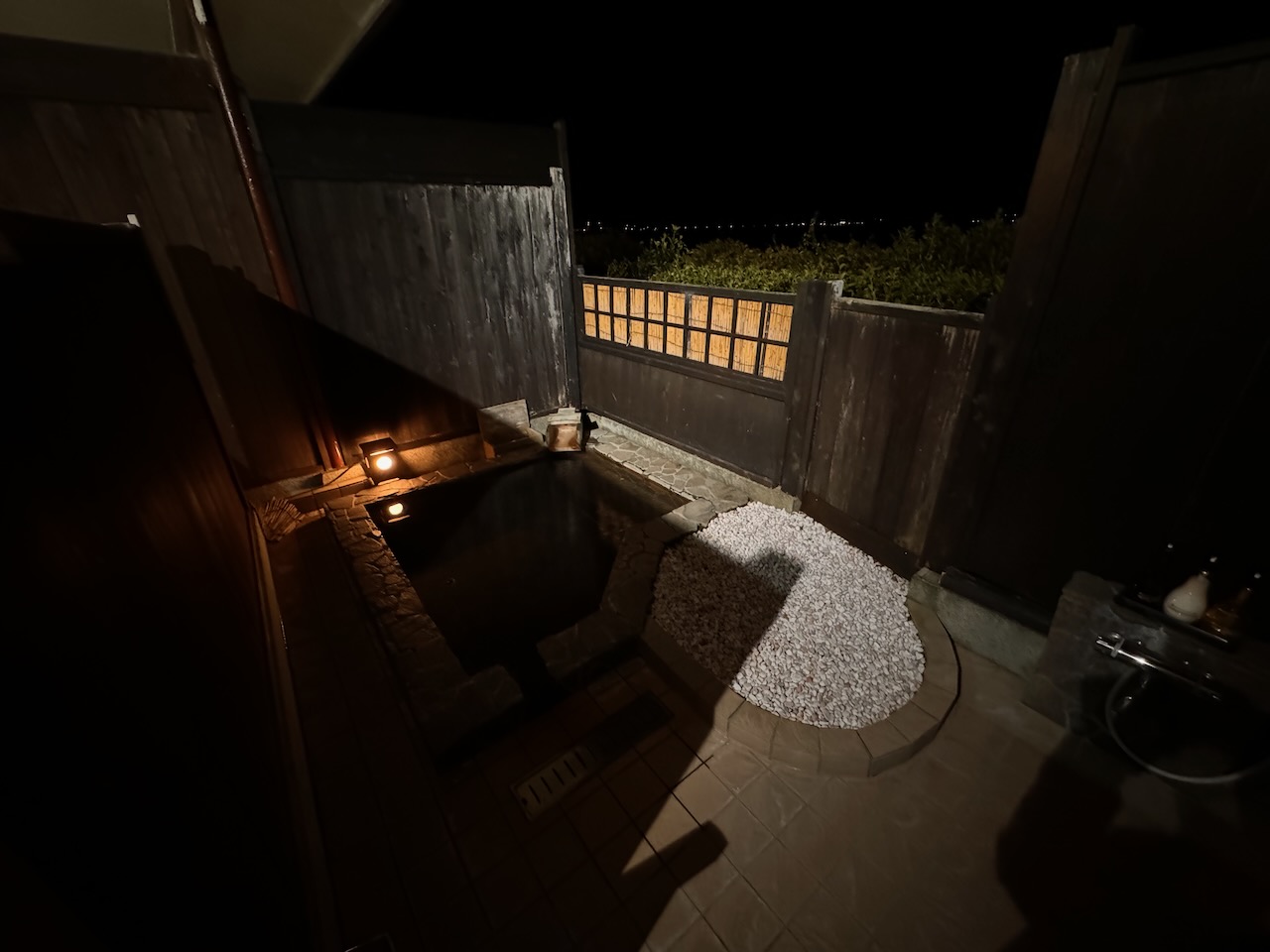
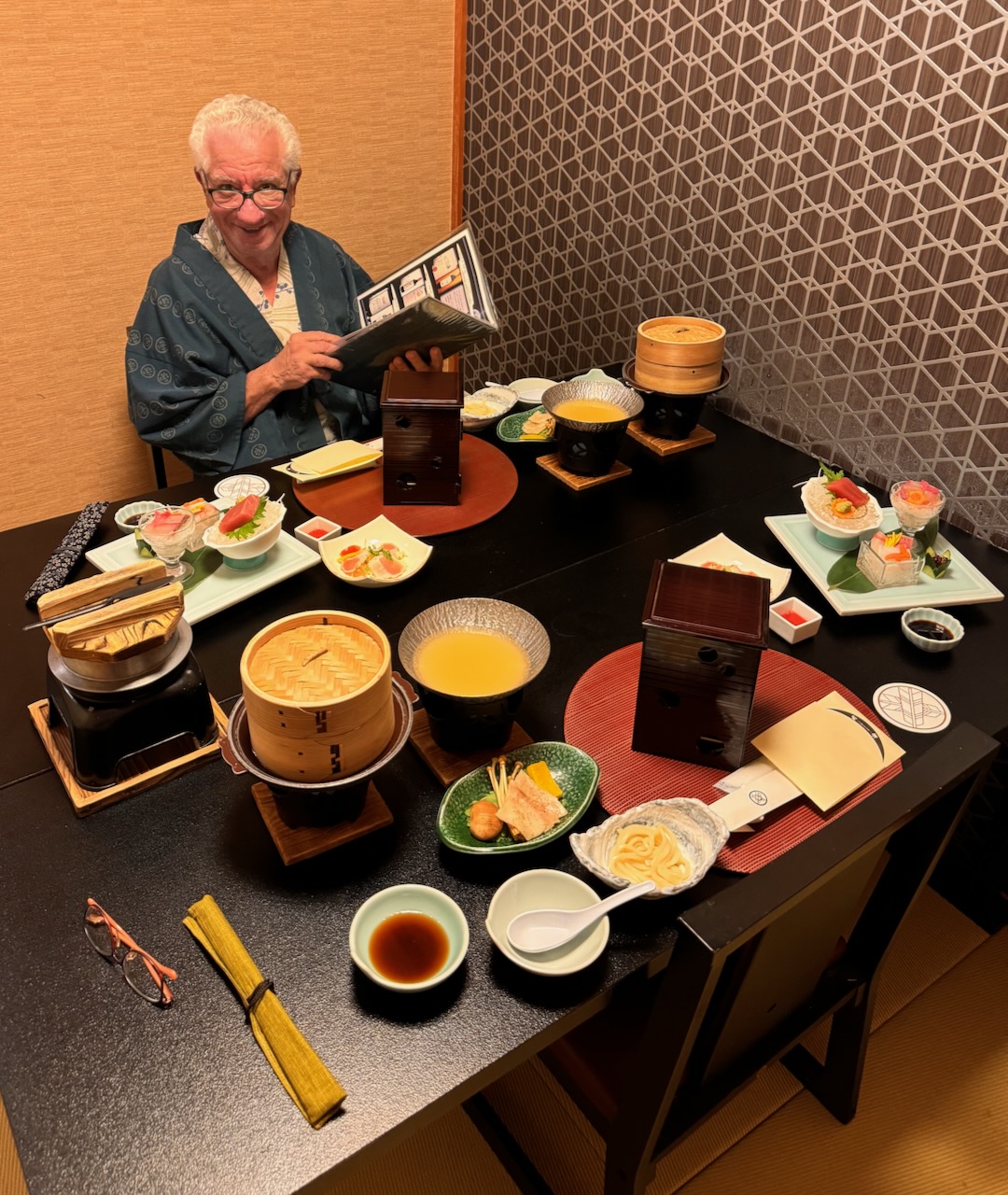
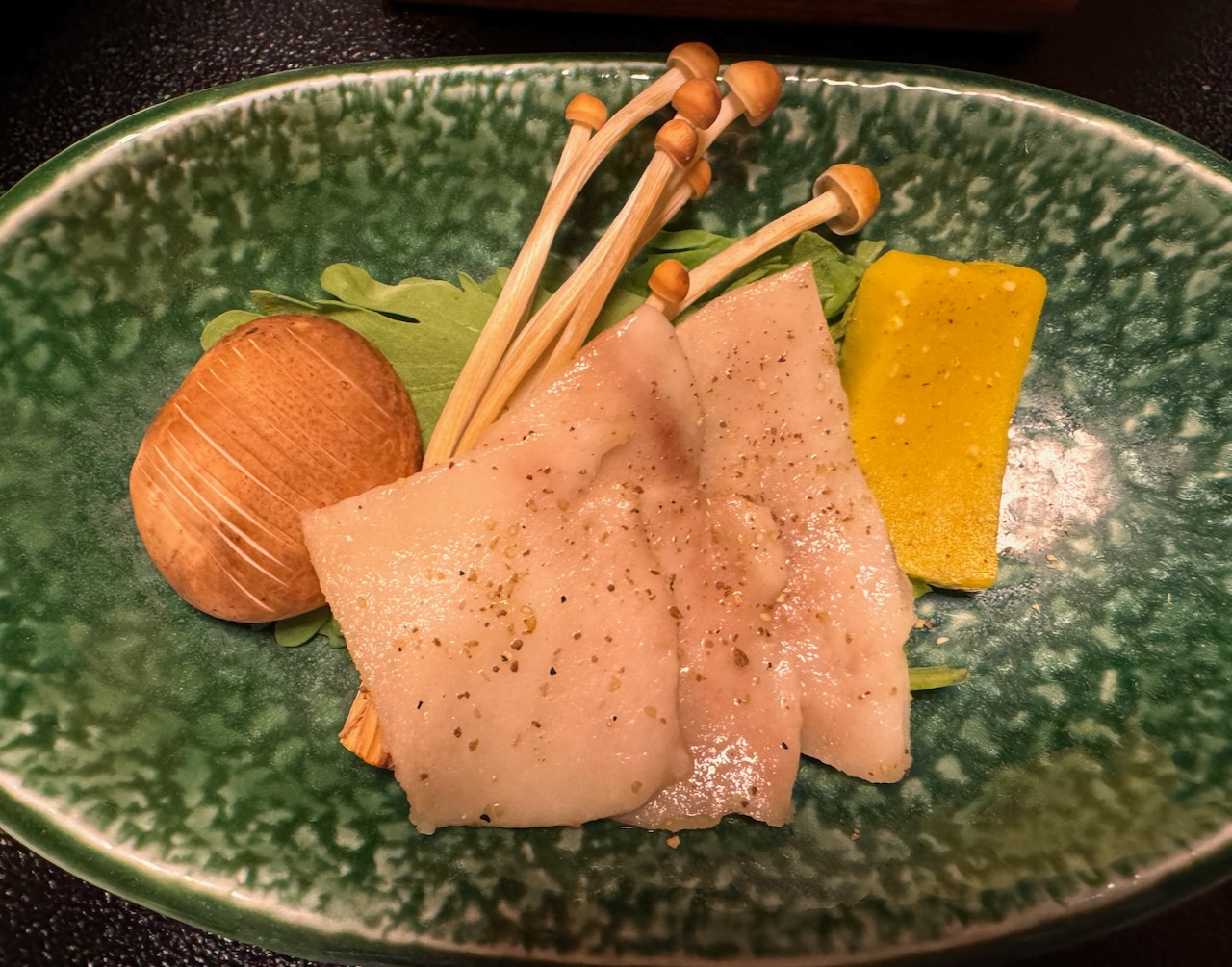
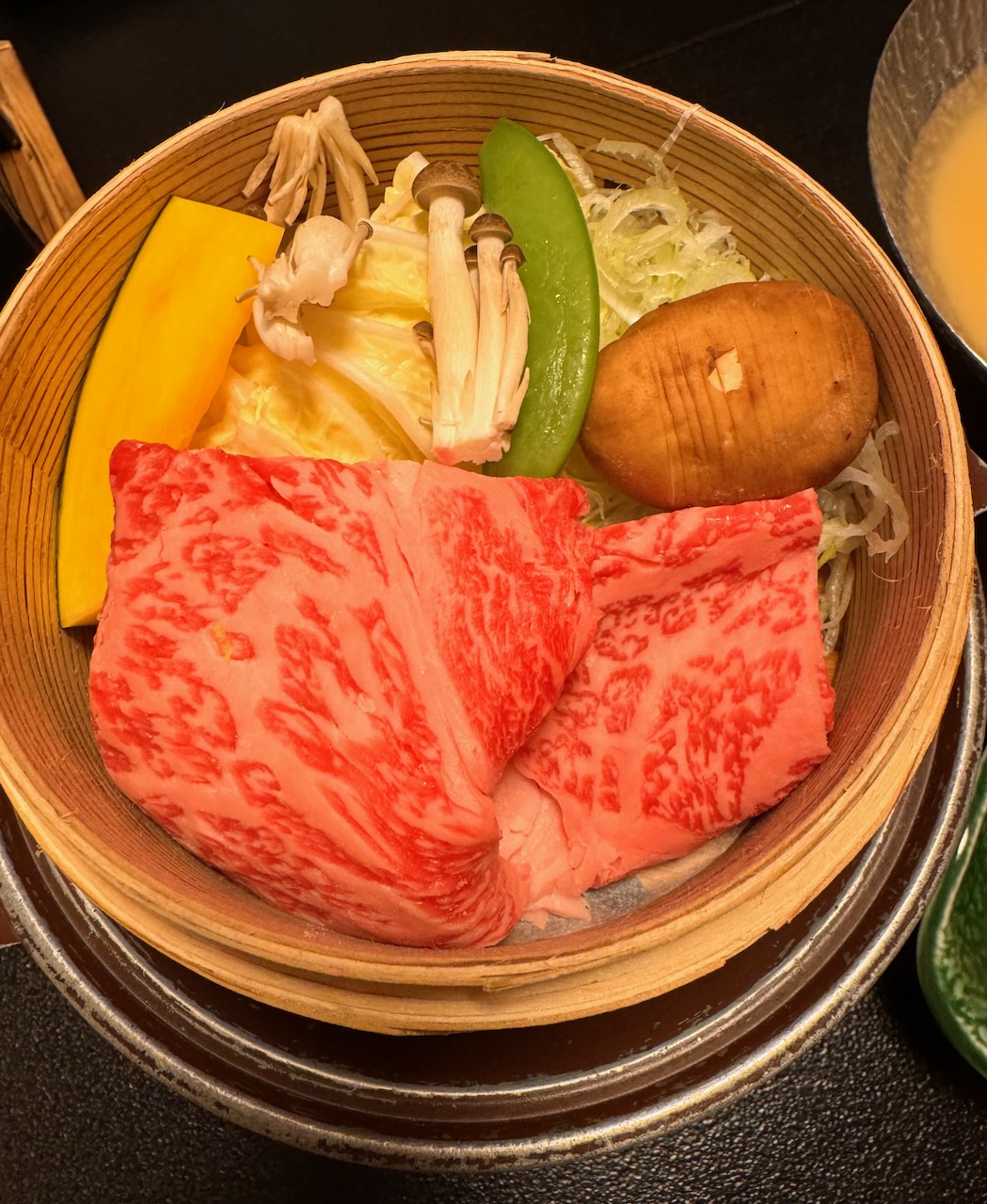
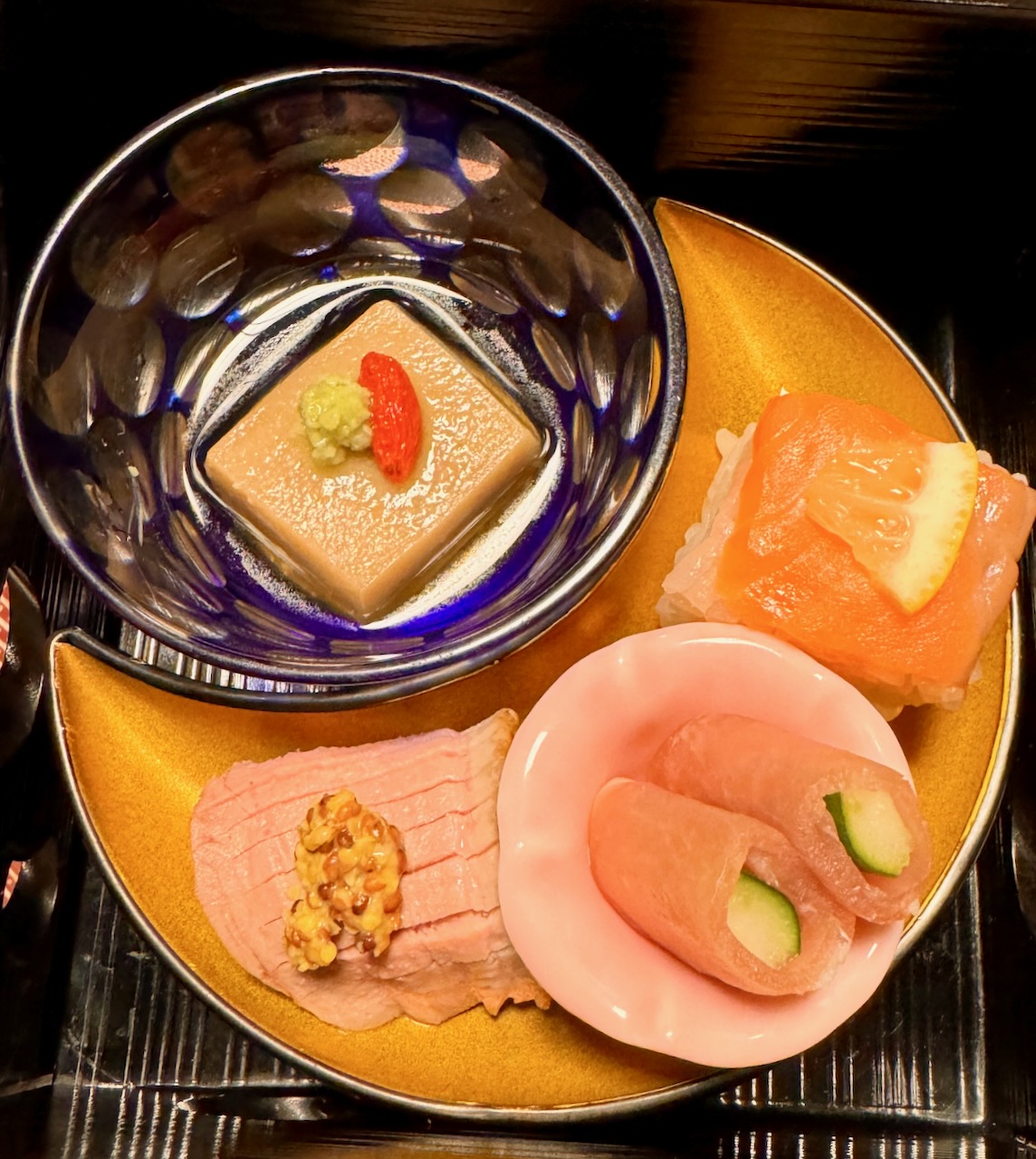
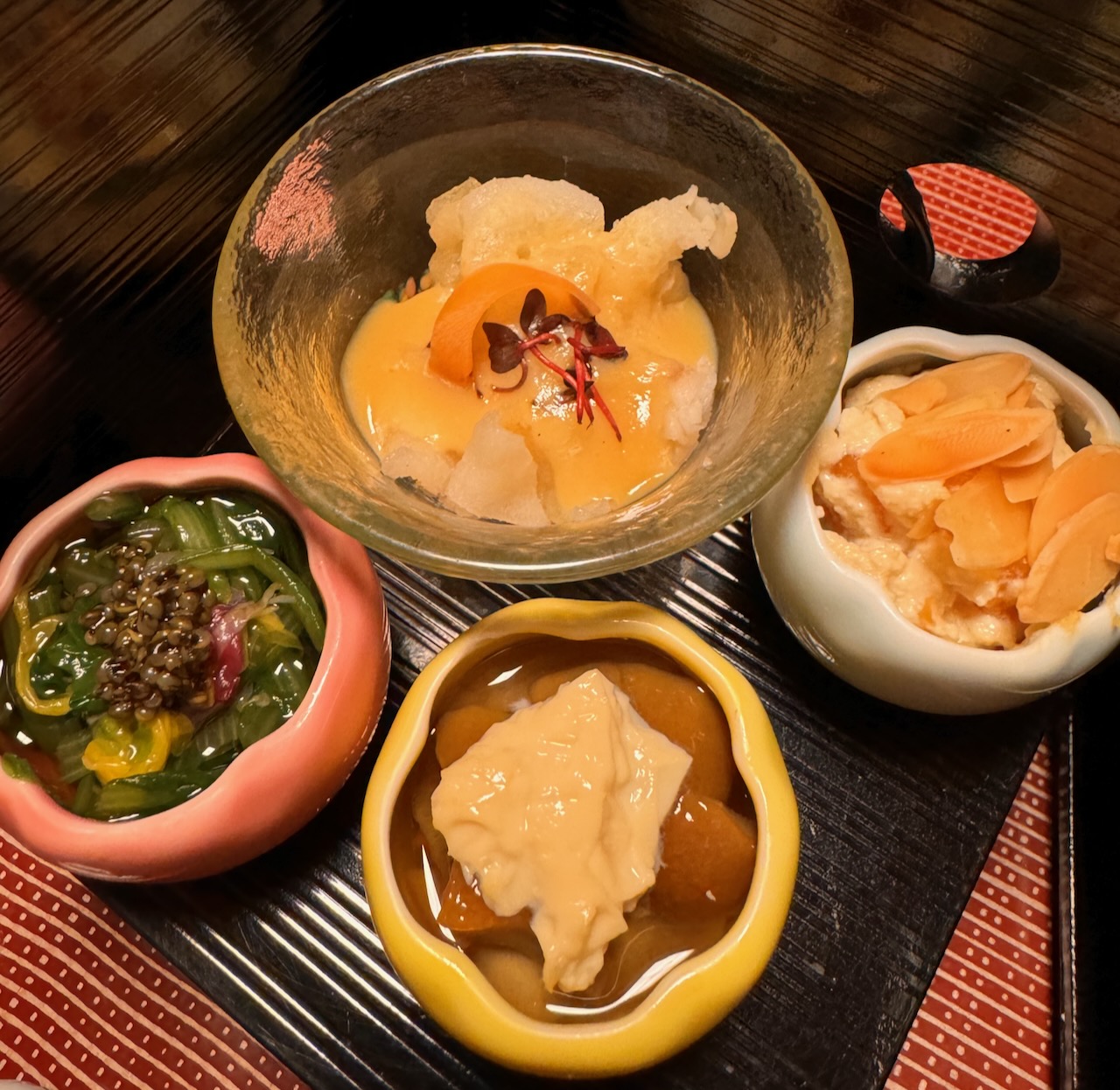
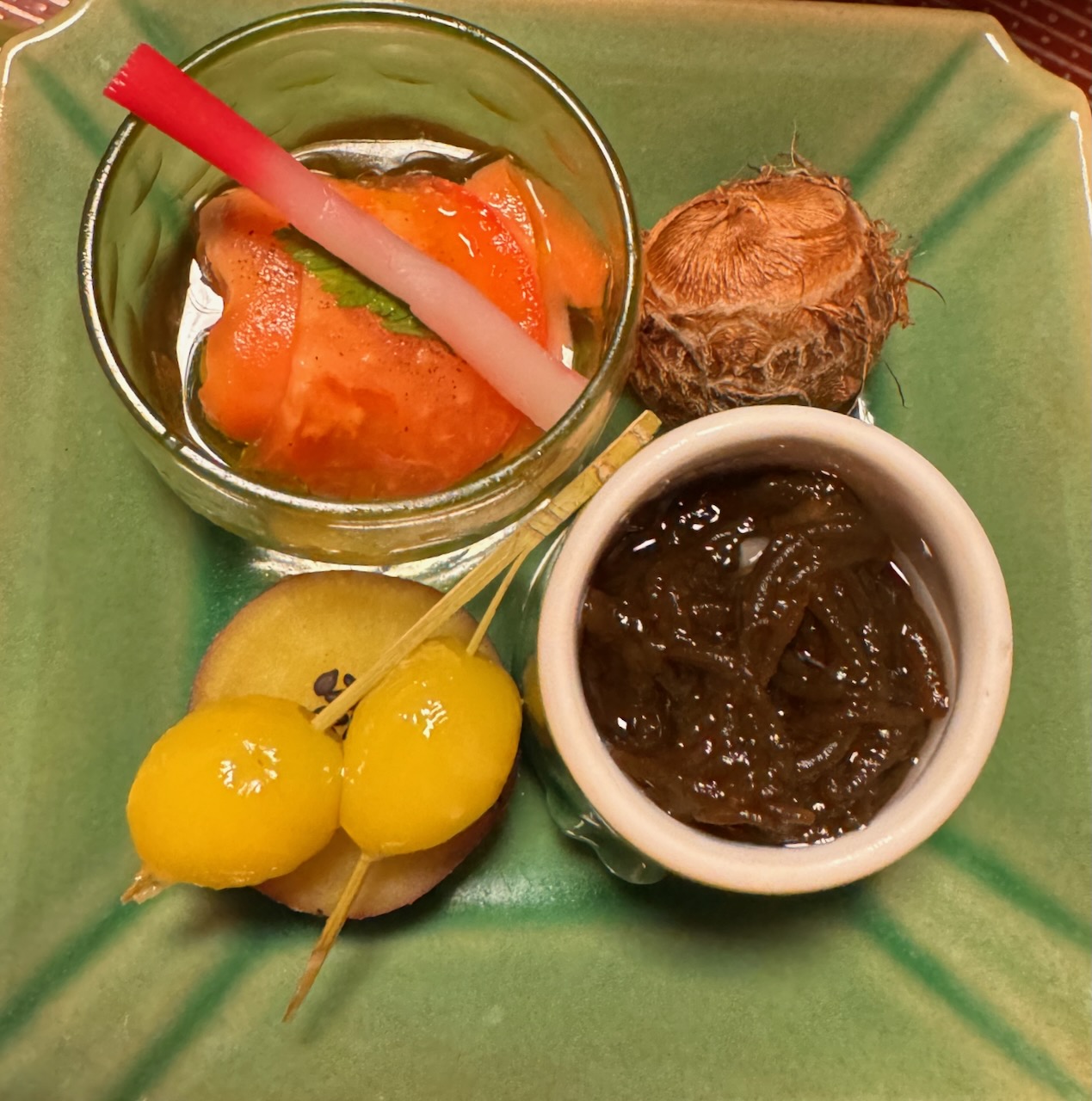
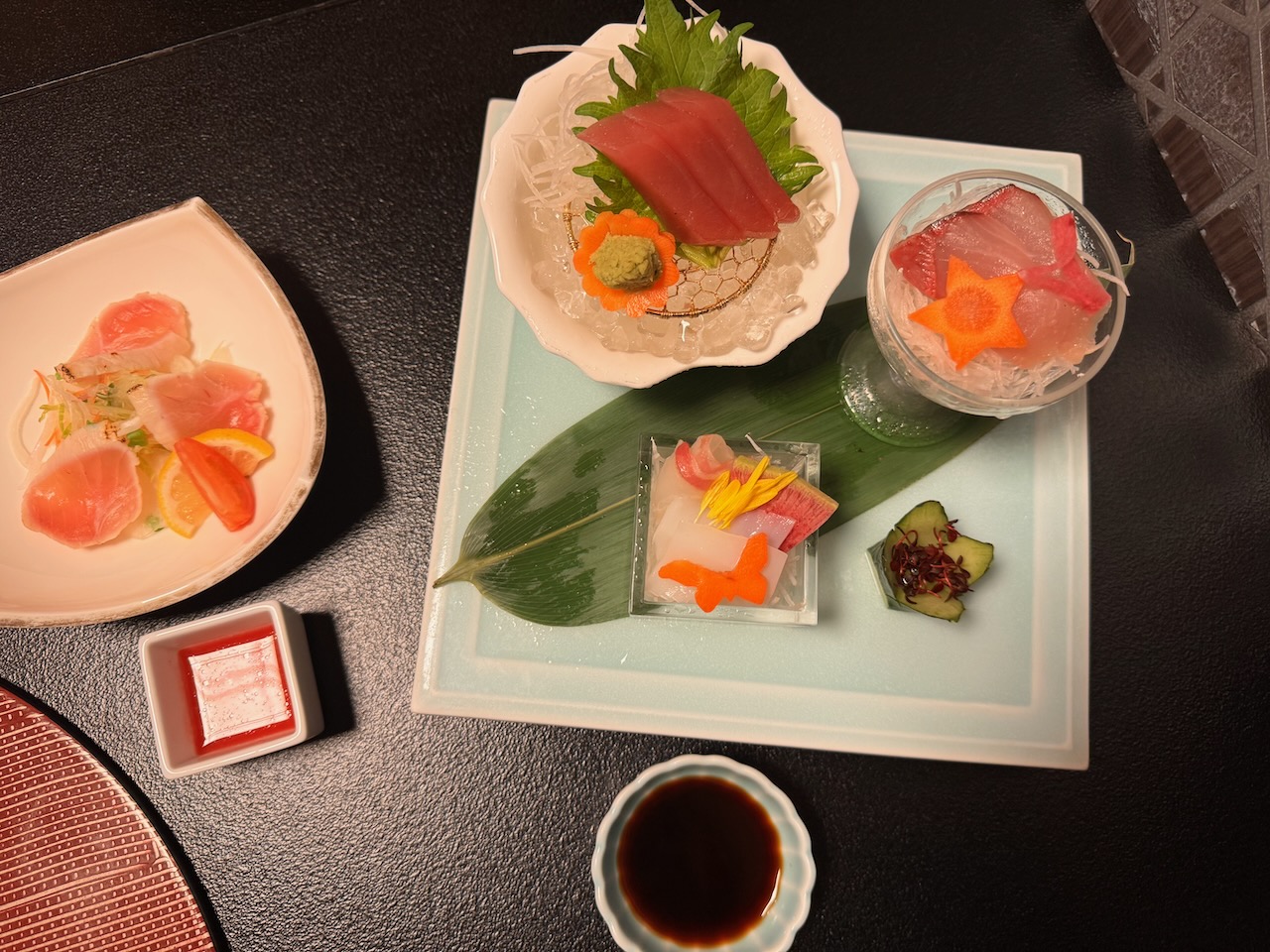
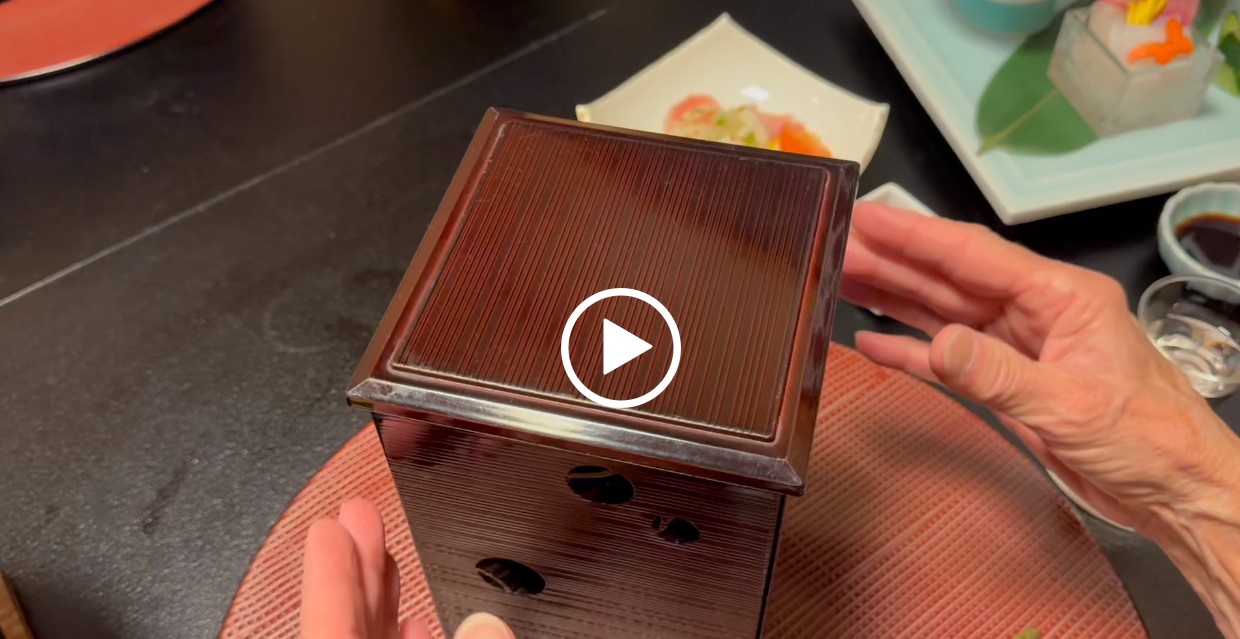
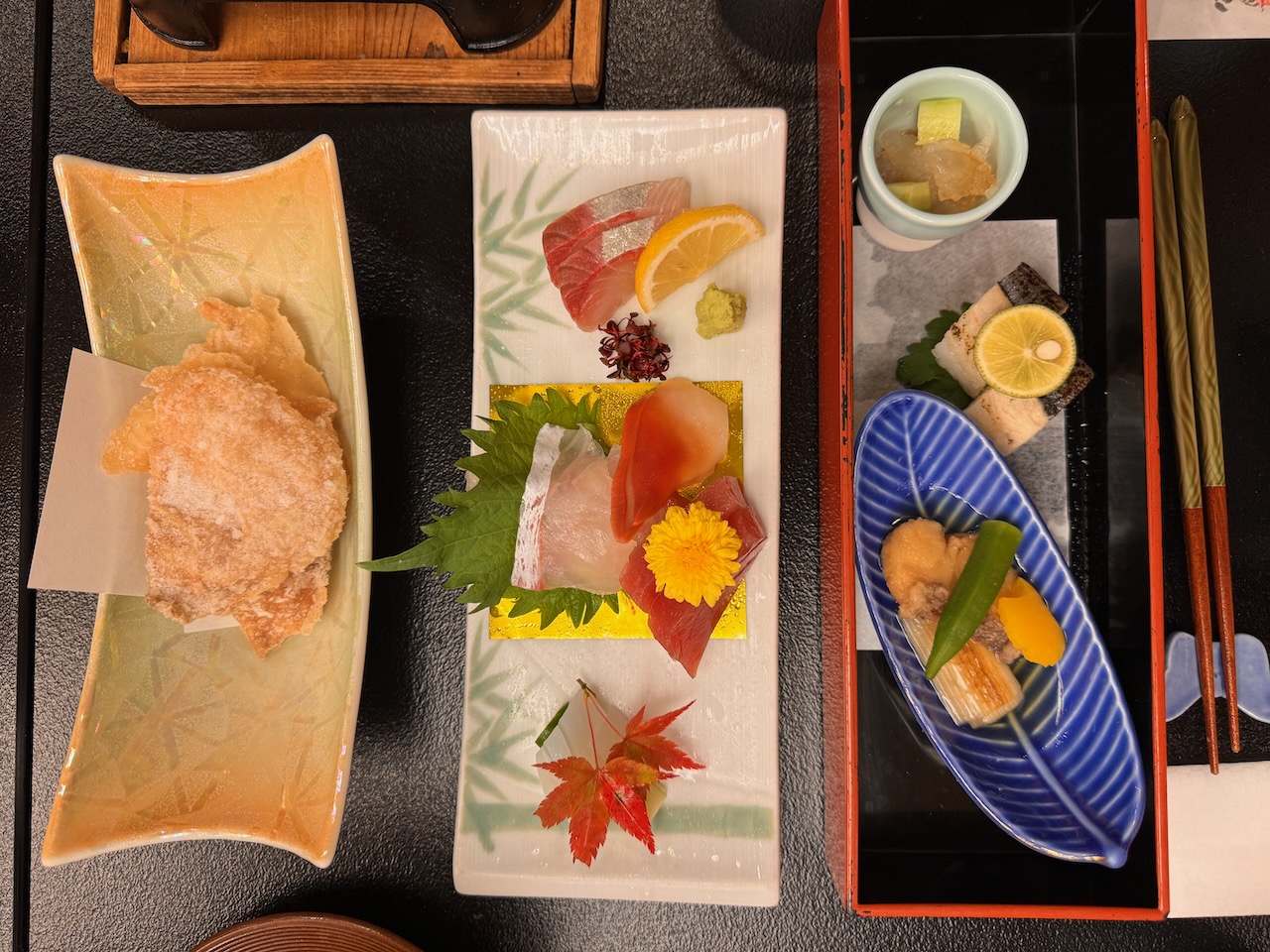
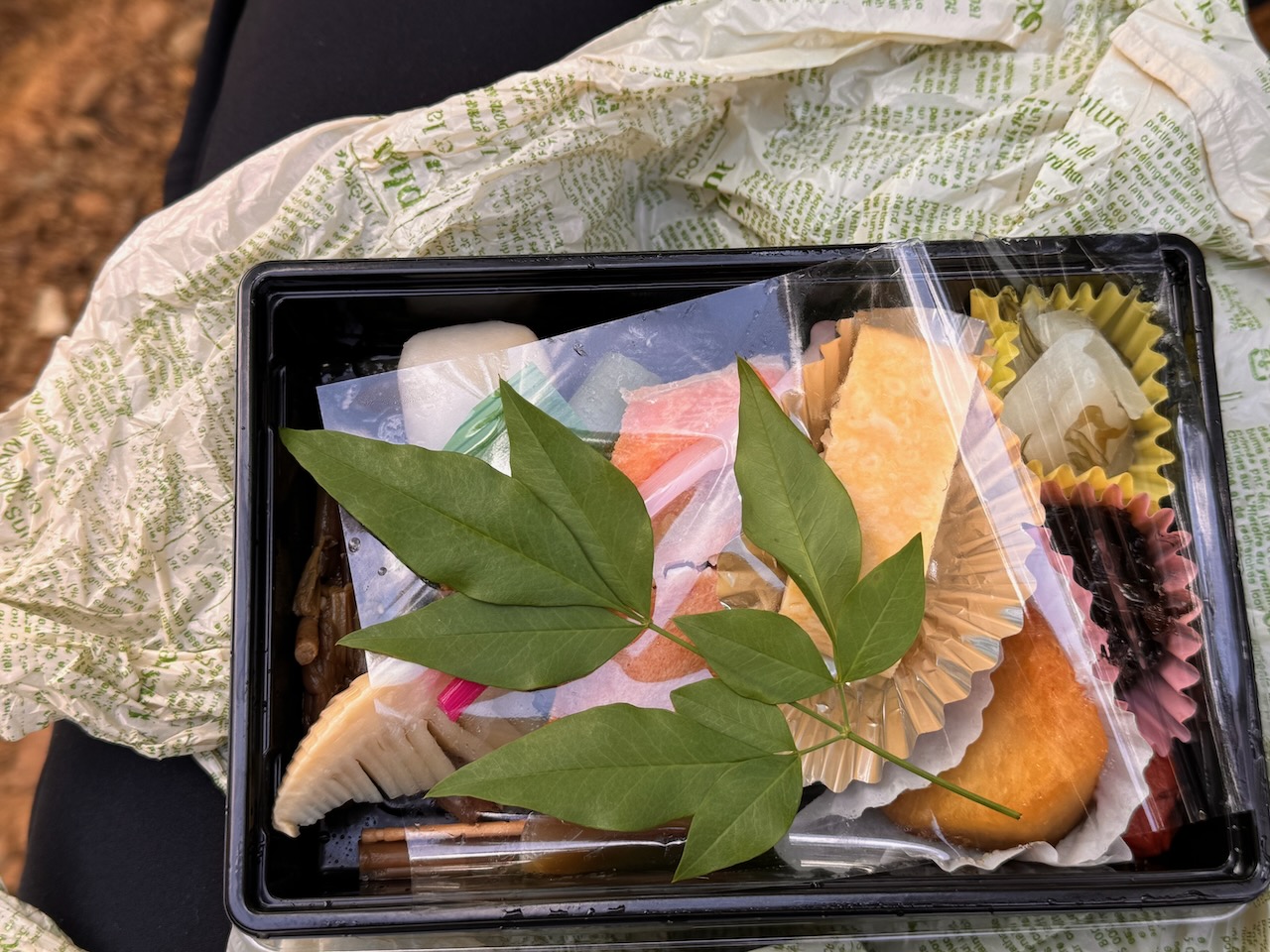
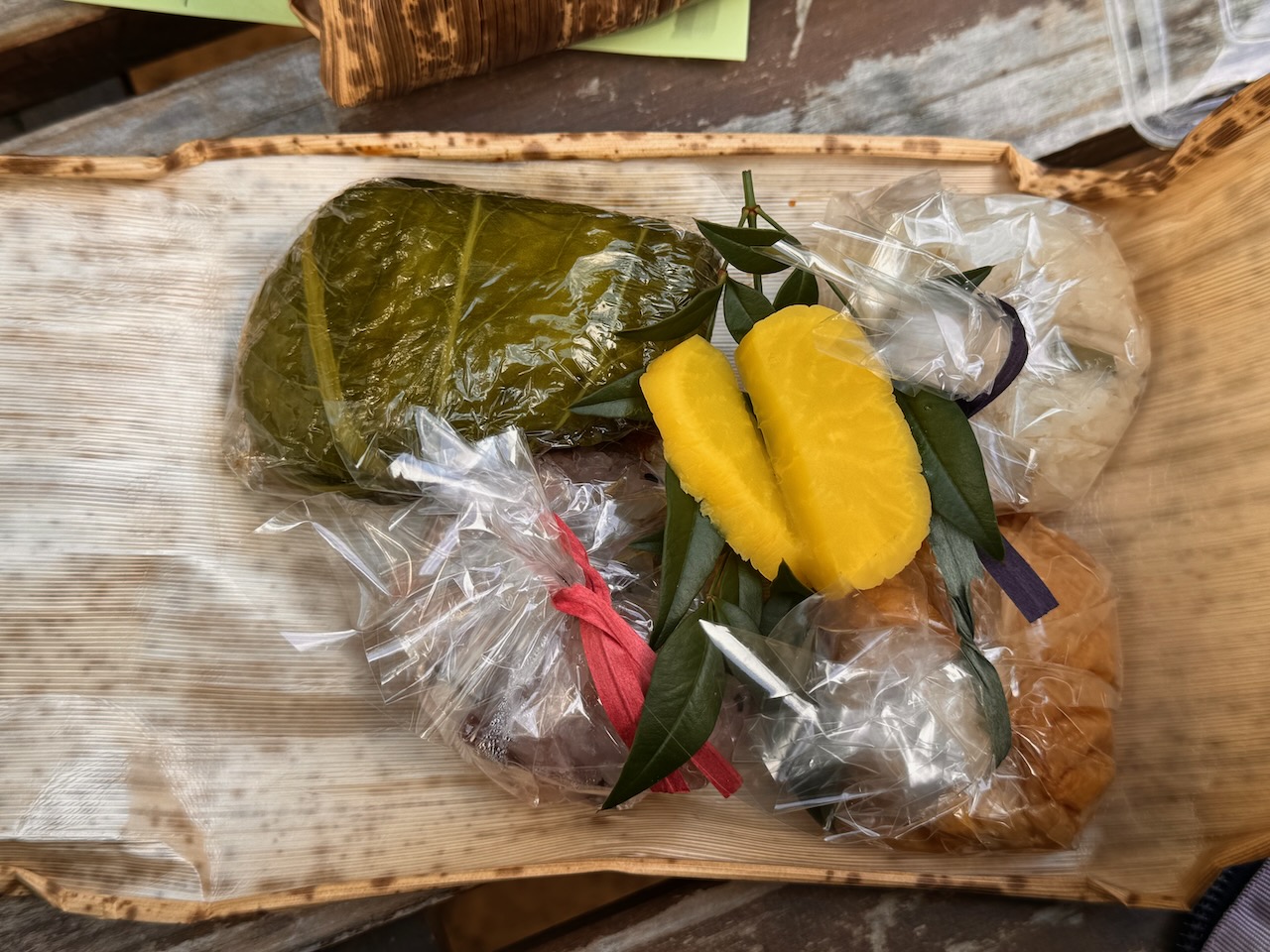
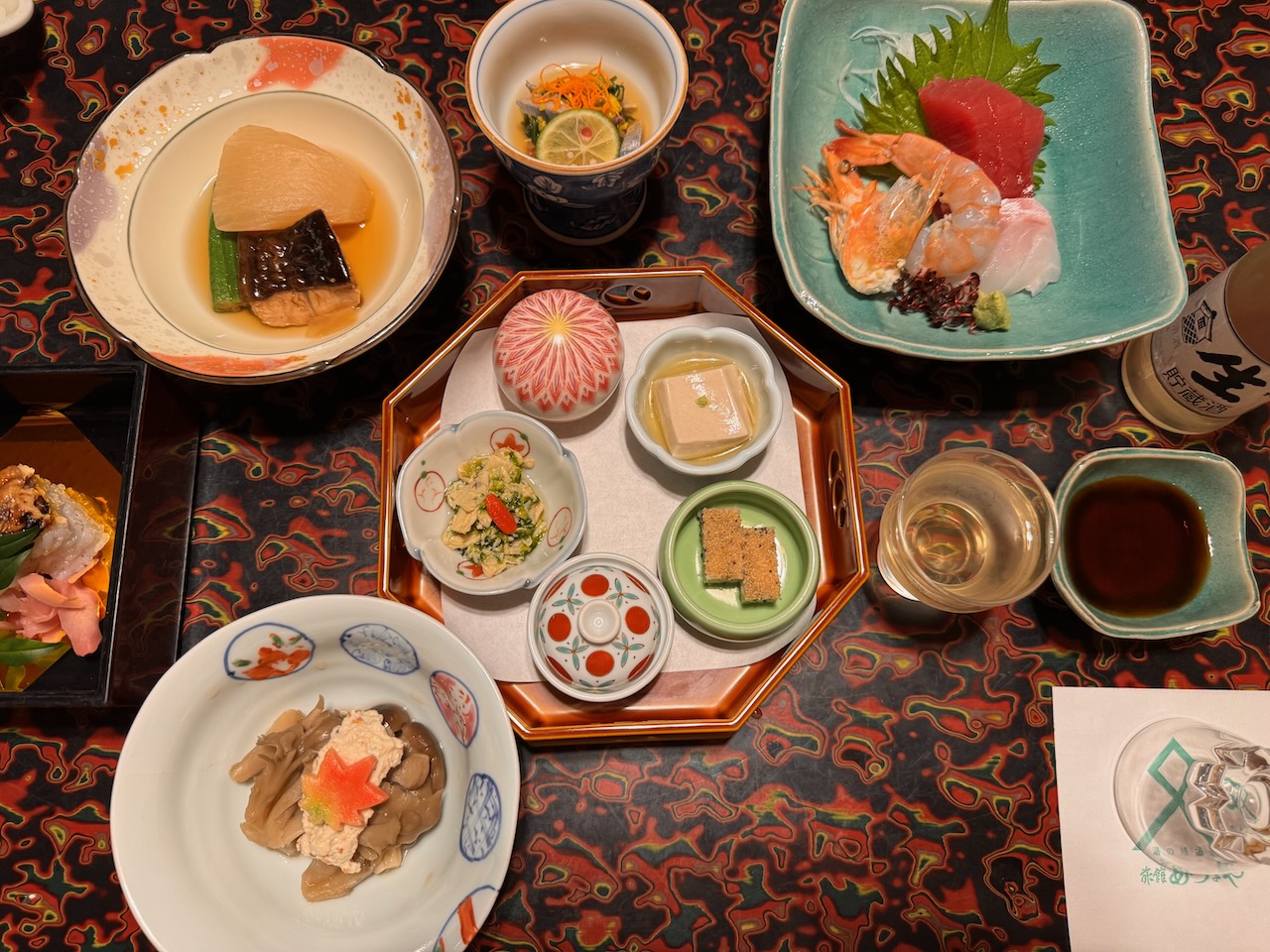
The ultimate Kiaseki dinner presentation.

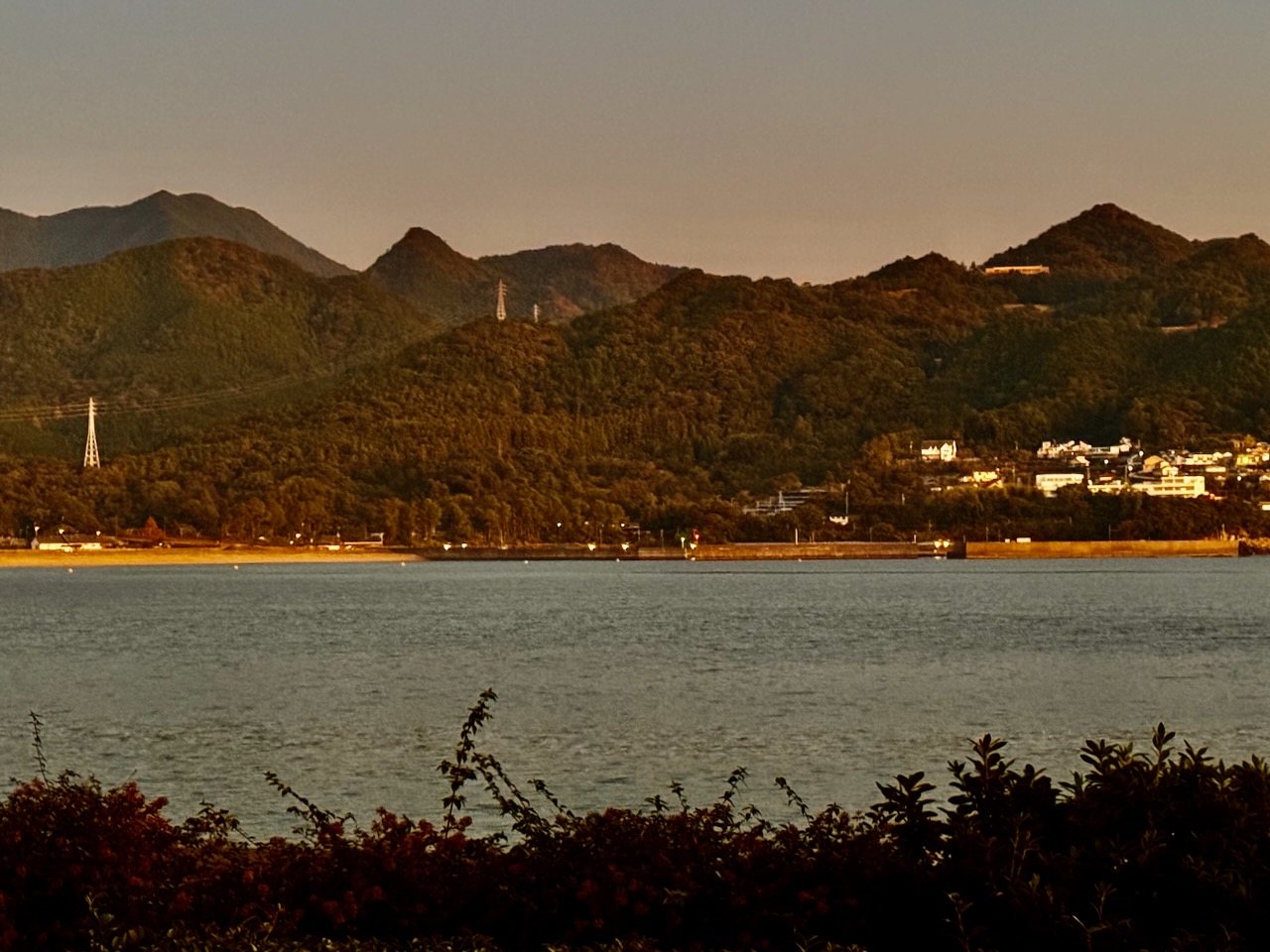
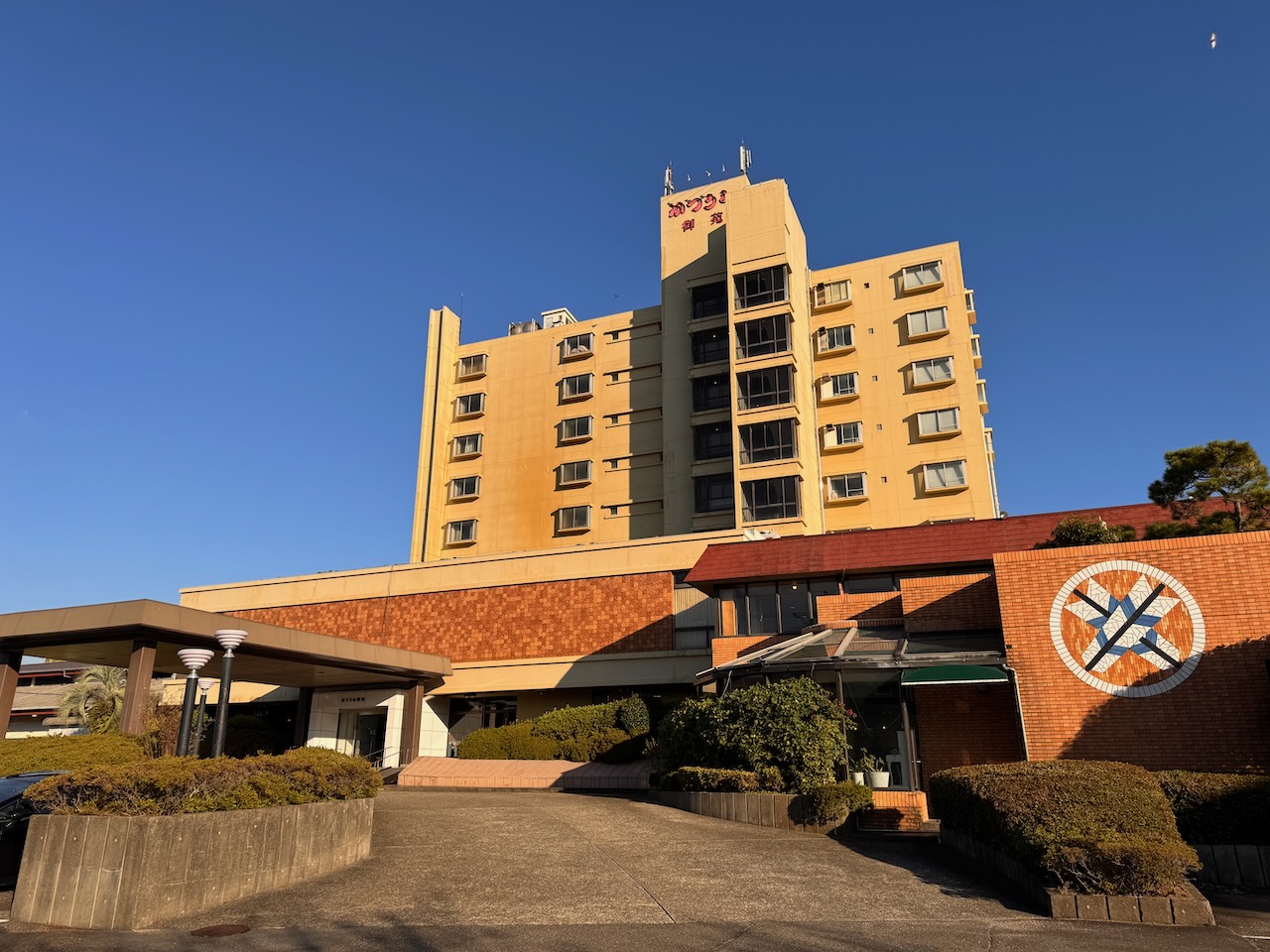
Next stop…Osaka and Hiroshima.
10 thoughts on “Hiking the Kumano-Kodo”
Again! Fabulous photos and travelogue!
You’ll be eligible for Japanese citizenship after this in-depth cultural experience!
Several things caught my fancy: the “long chopsticks” was hilarious, the River Rats reminded me of our time on the Smith River here in MT, and the walk through tree is just a pedestrian version of the drive through Redwood. The idea of harmoniously combining religions was a winner too but the opening of the keiseki box was simply sensational. WOW! What a trip you had!
Wow! What a trip. I do hope you publish a book of you travels, especially this one.
I love that you went on a two-day hike. What a grand time you had.
Really nice and interesting adventure, step by step documentation and pictures are excellent.
Thanks for sharing this beautiful trip.
I just loved every photo and video and all the great descriptions – so informative and colorful and so good I read it three times. I have to experience in person now!
“The torii gate for the original Kumano Hongu Taisha shrine location. The water visible behind it flooded the shrine in 1889.” What a stunning photo!
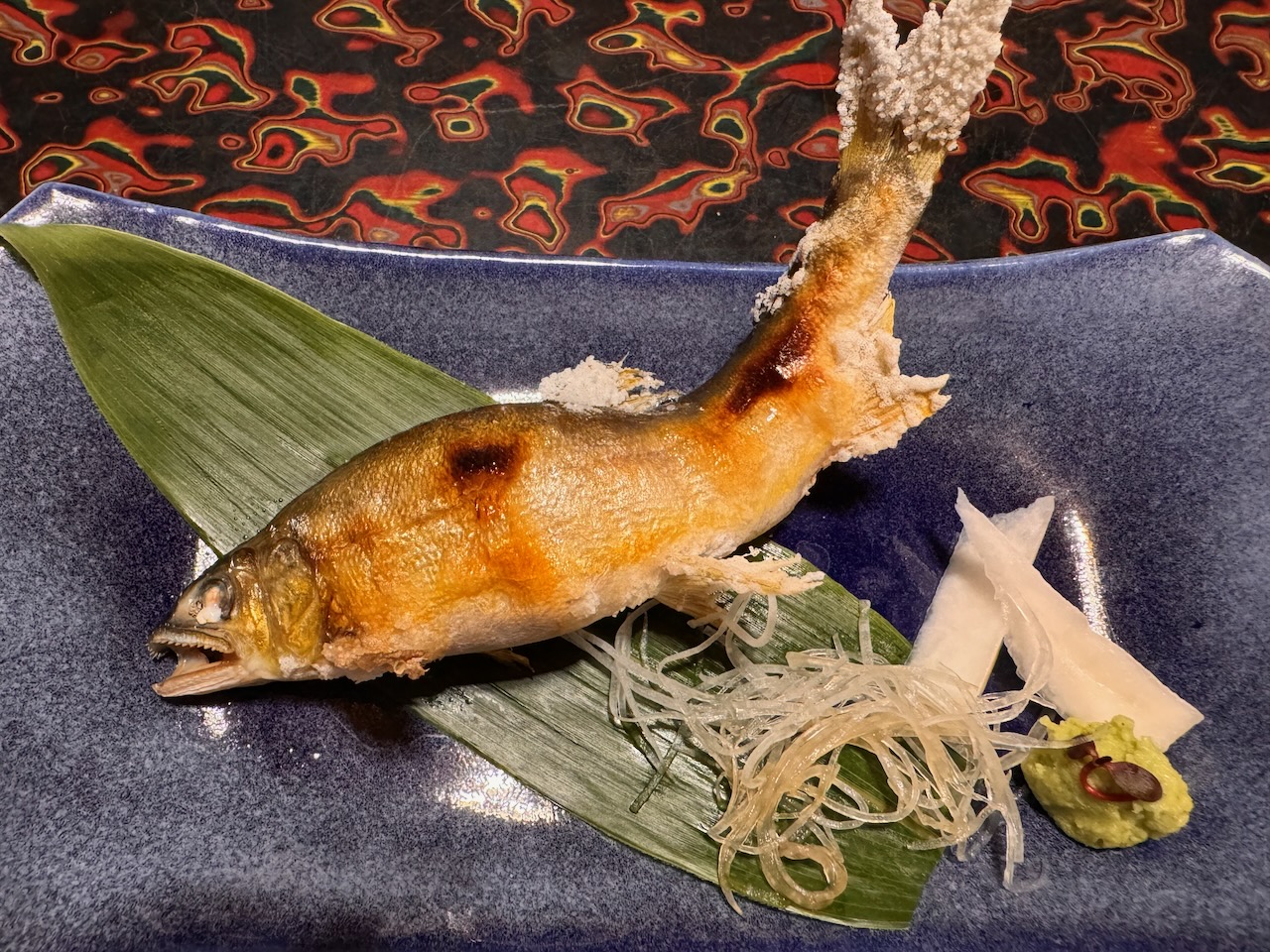
Ryokan Adumaya: “You need an open mind and adventurous palate to realize these unusual-looking foods can be quite tasty.” Mary and Joe, I remember when Dad, Mom, sister Lisa and I came to Mt. Zao to ski, our ryokan served a breakfast of quail eggs and candied crickets. I was all for it, but sister Lisa cried all the way to the ski slopes!
Kumano Nachi Taisha: “Once Buddhism arrived in Kumano, it took root quickly, and rather than competing with the indigenous religion for religious authority, it began a long process of harmonious mixing (what a concept!). ” Mary and Joe, love-love-love this!
Agree with Robin: “The idea of harmoniously combining religions was a winner but the opening of the keiseki box was simply sensational. ”
We are so, so mesmerized by your travel video-journals. Arrigato gozai-masu!
thank you for sharing this pilgrimage with us all, the food looks amazing, so delicate! beautiful views and pictures, quite informative too thanks Mary, I didn’t realize that you had to book before you visit!
For the hike, it is imperative to book. I think I mentioned a woman we met who thought she could wing it…she was not allowed to take a chance. I think it’s the only way they can keep control of the numbers.
Such an amazing adventure! It is all so beautiful, including the food. There is so much to eat it’s a good thing you did a lot of walking to compensate. I love the centuries-old nature of the hike.