Historic Kyoto
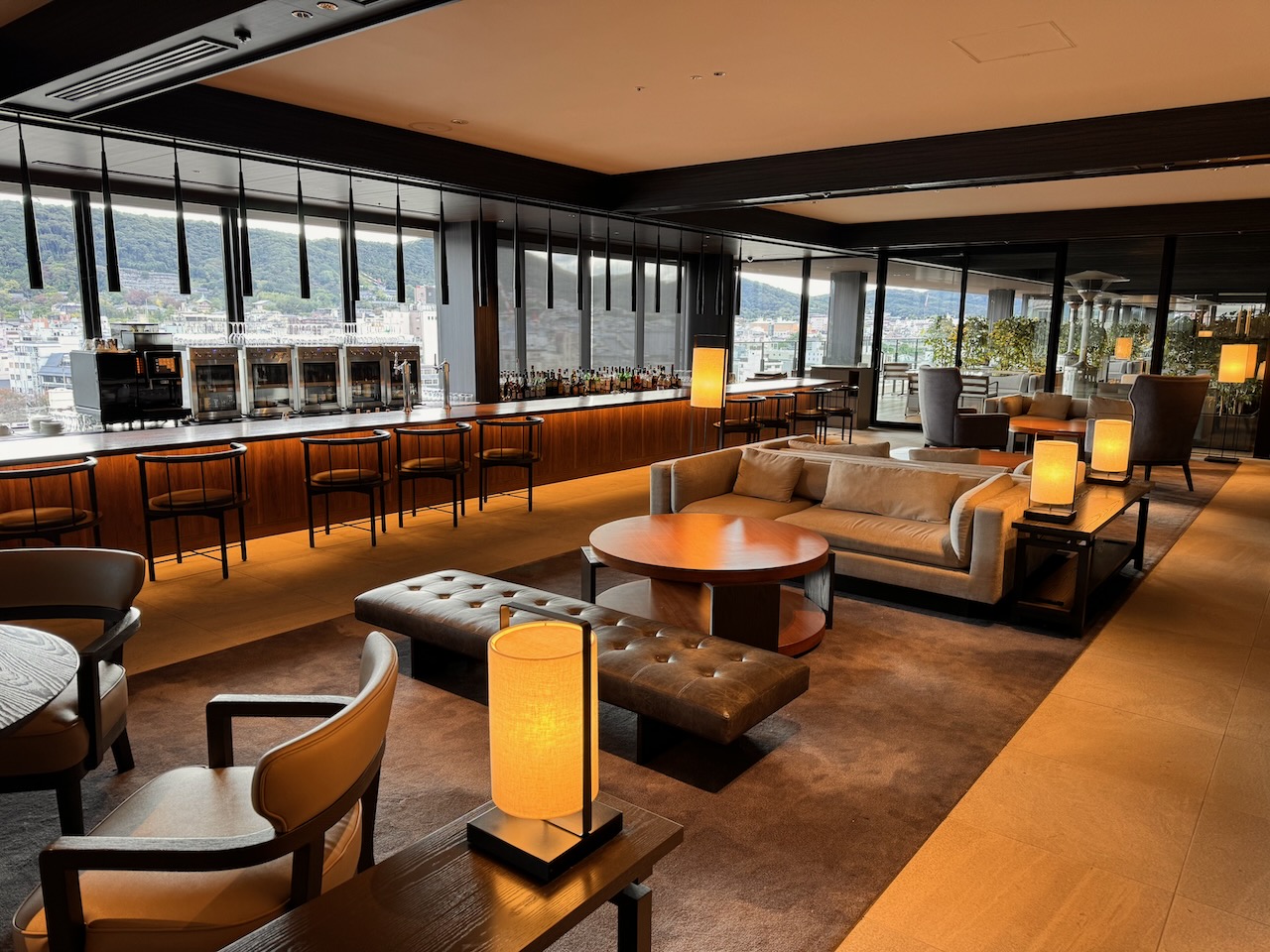
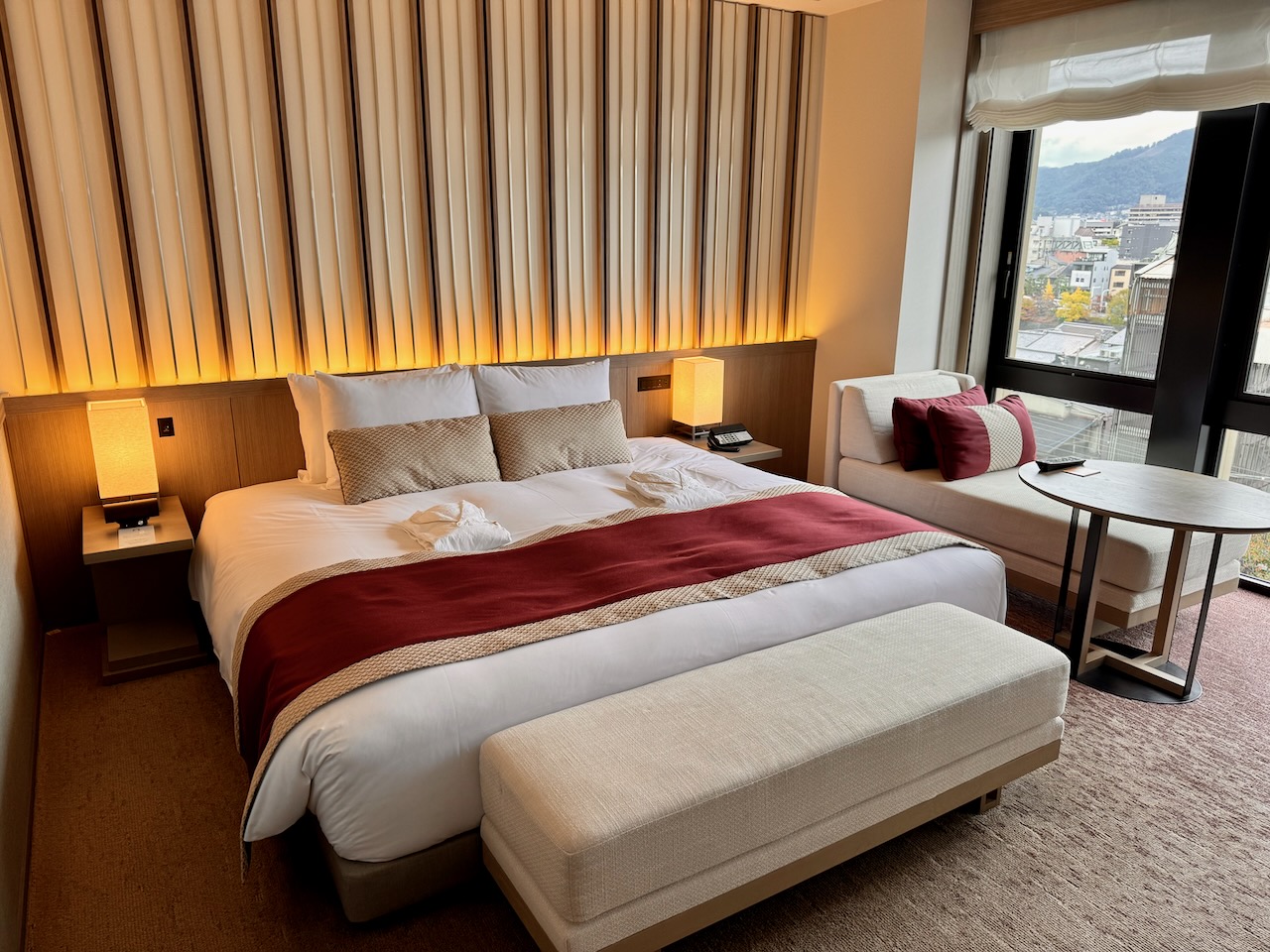
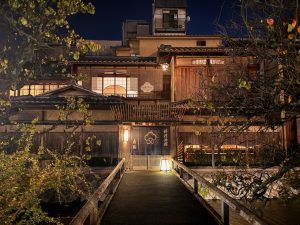
If there was ever a city we wanted to visit, Kyoto was it. Our expectations were very high. We had four nights and three days to cram it all in, but this isn’t our travel style anymore, so we chose carefully. Although the city really covers a lot of real estate, the skyline is not too tall and doesn’t feel as overwhelming as Tokyo. From the train station we taxied to the Gate Hotel in Pontocho, one of the five geisha districts in Kyoto. The hotel was practically new, very sleek and contemporary. We admired the view from our room on the 6th floor, dropped the bags and went out to explore the neighborhood before evening set in.
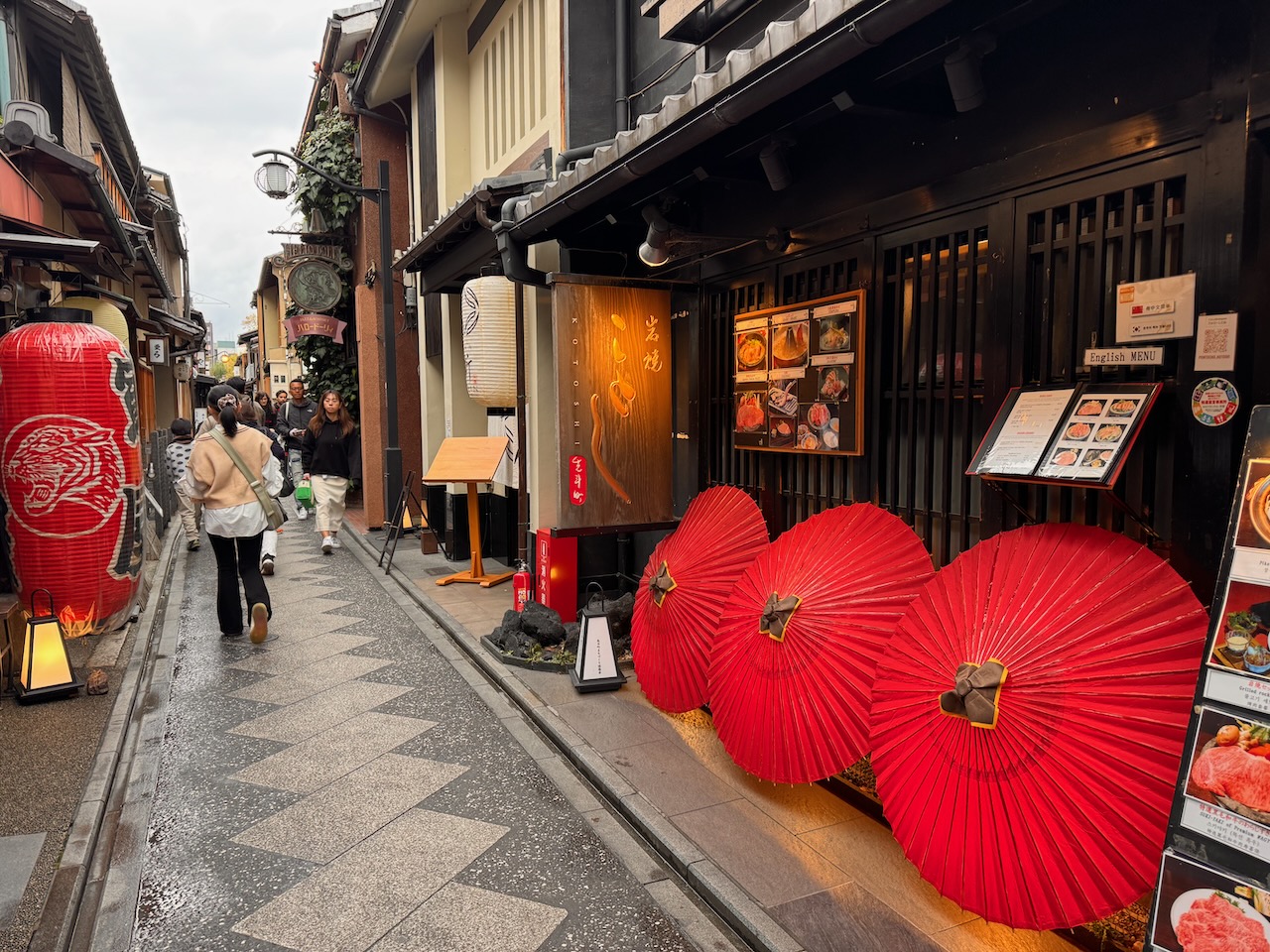
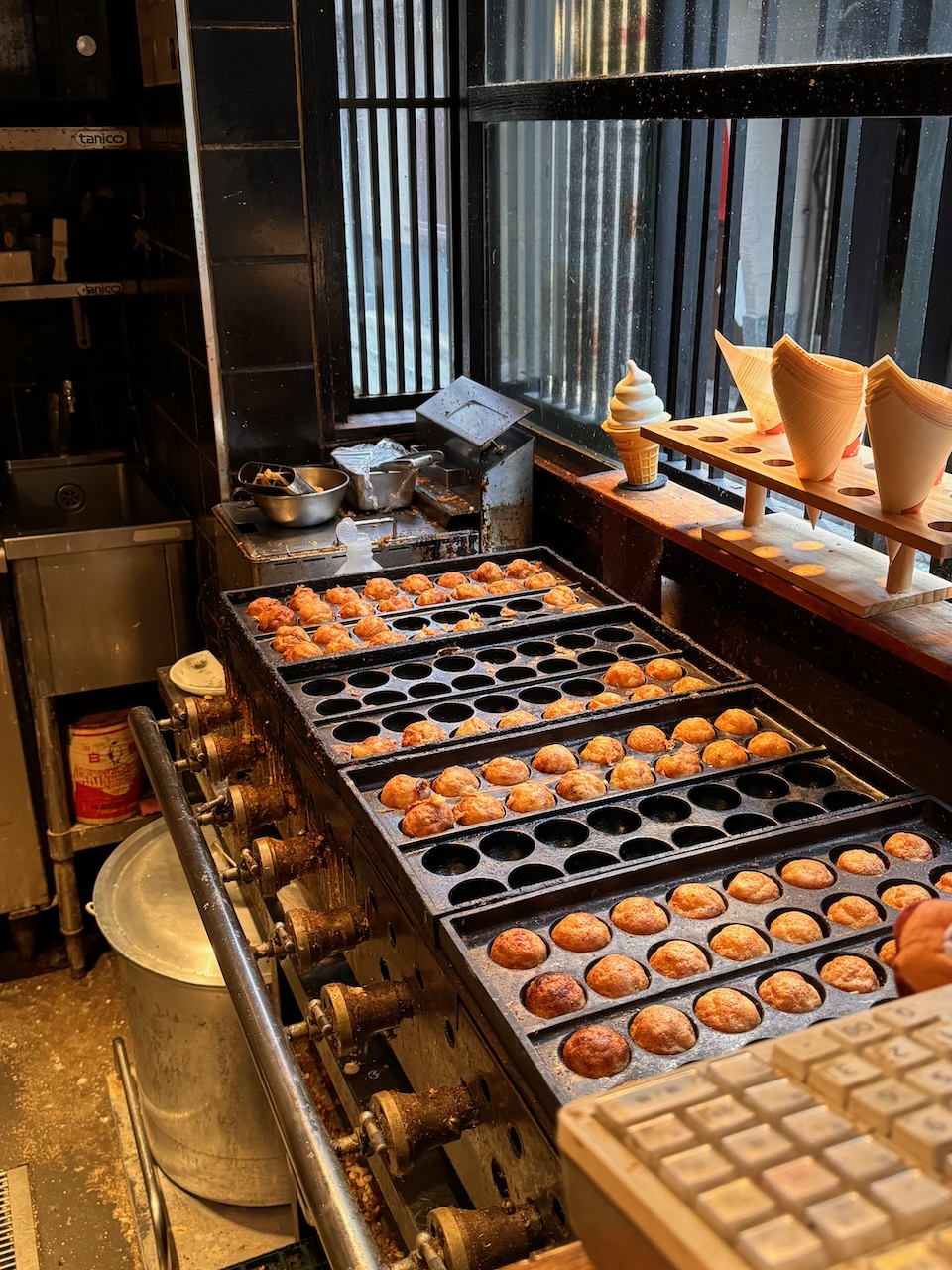
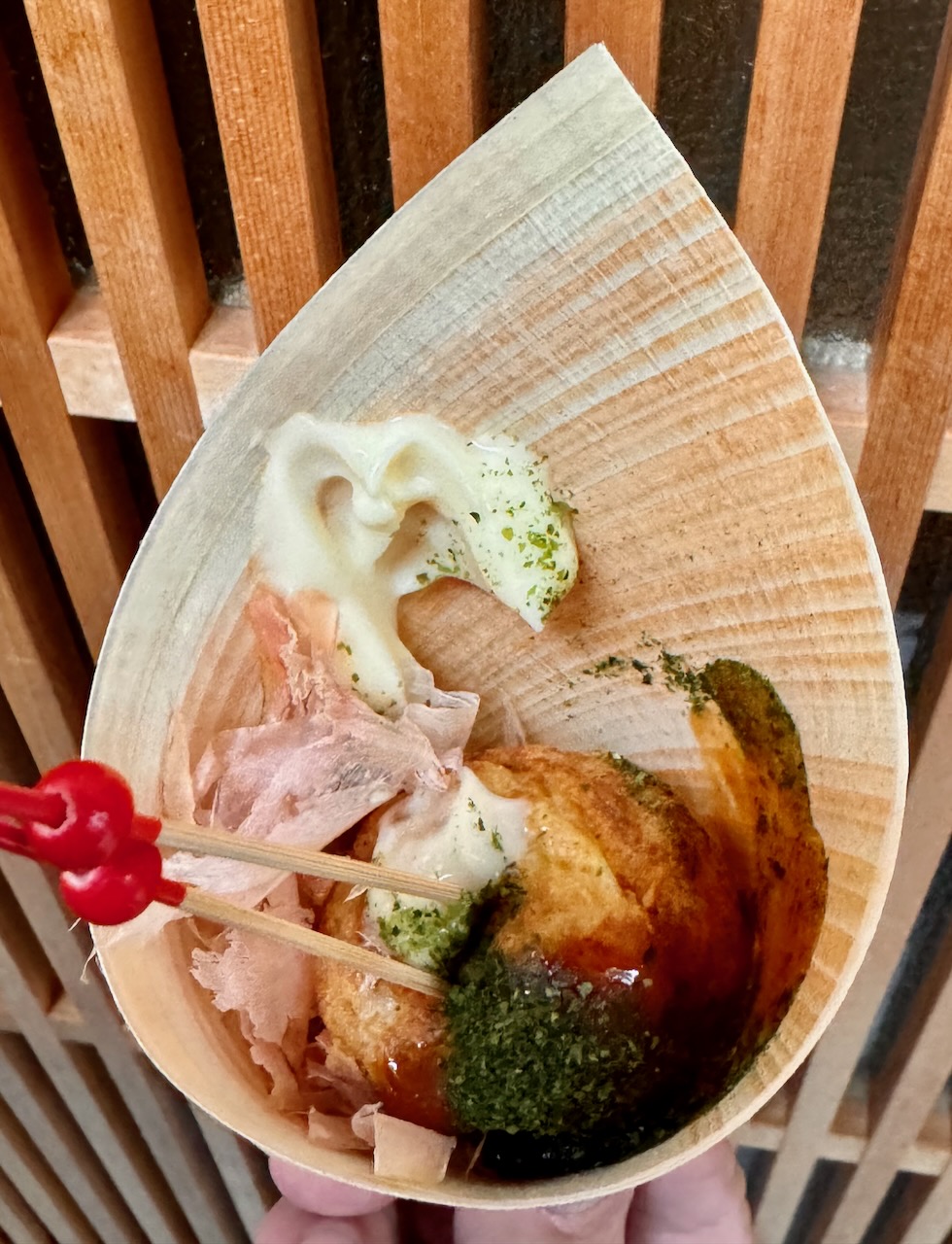
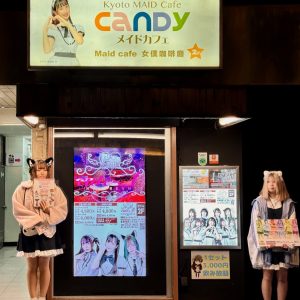
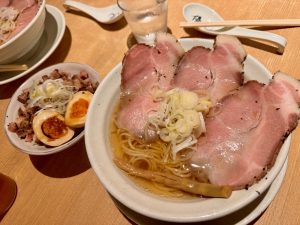
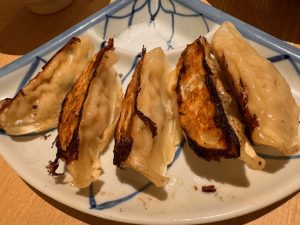
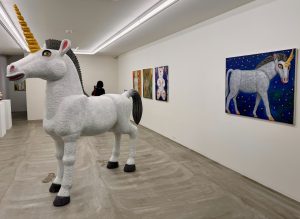
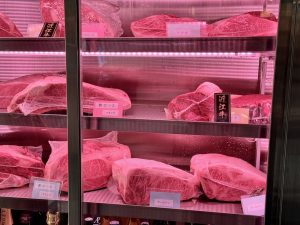
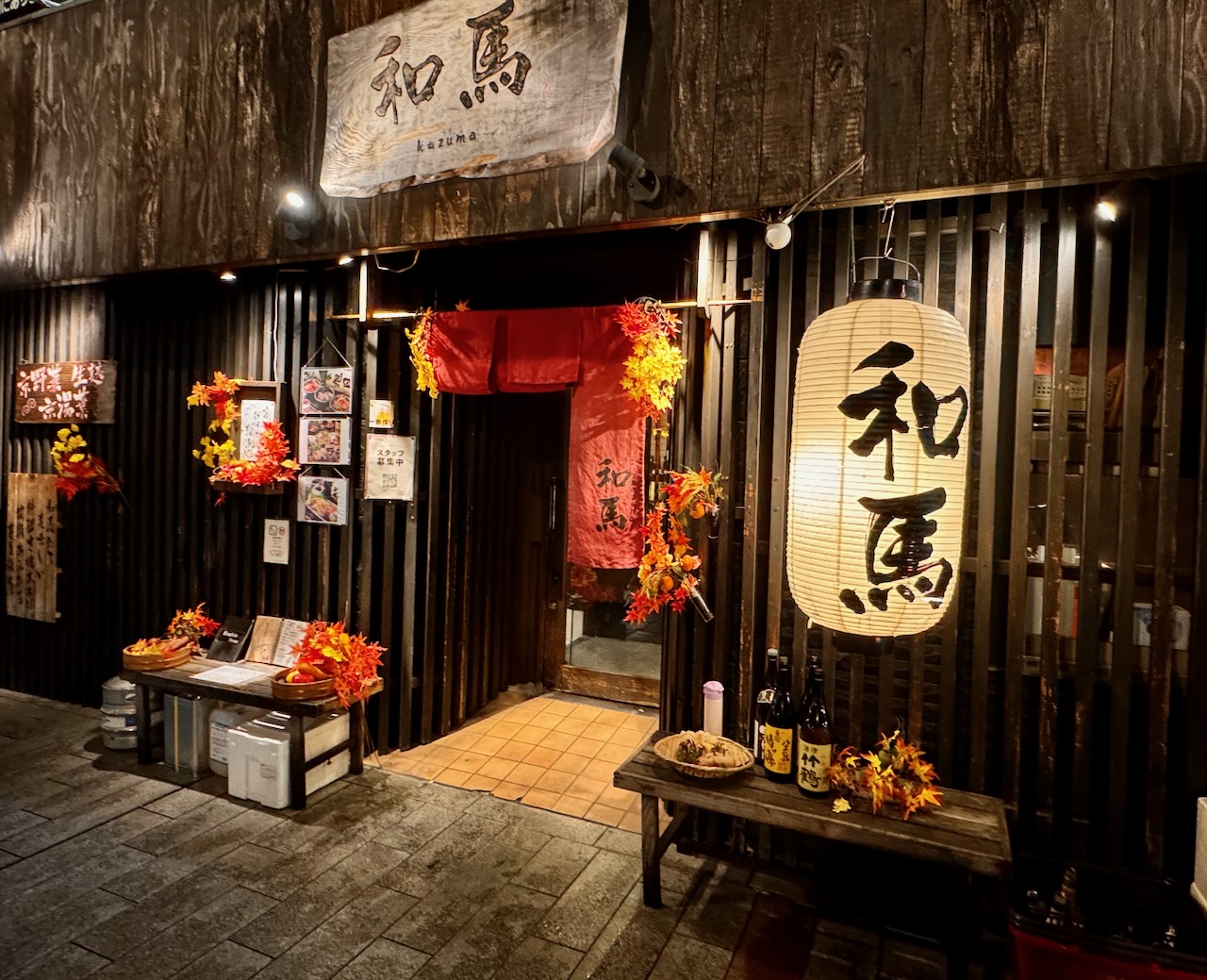
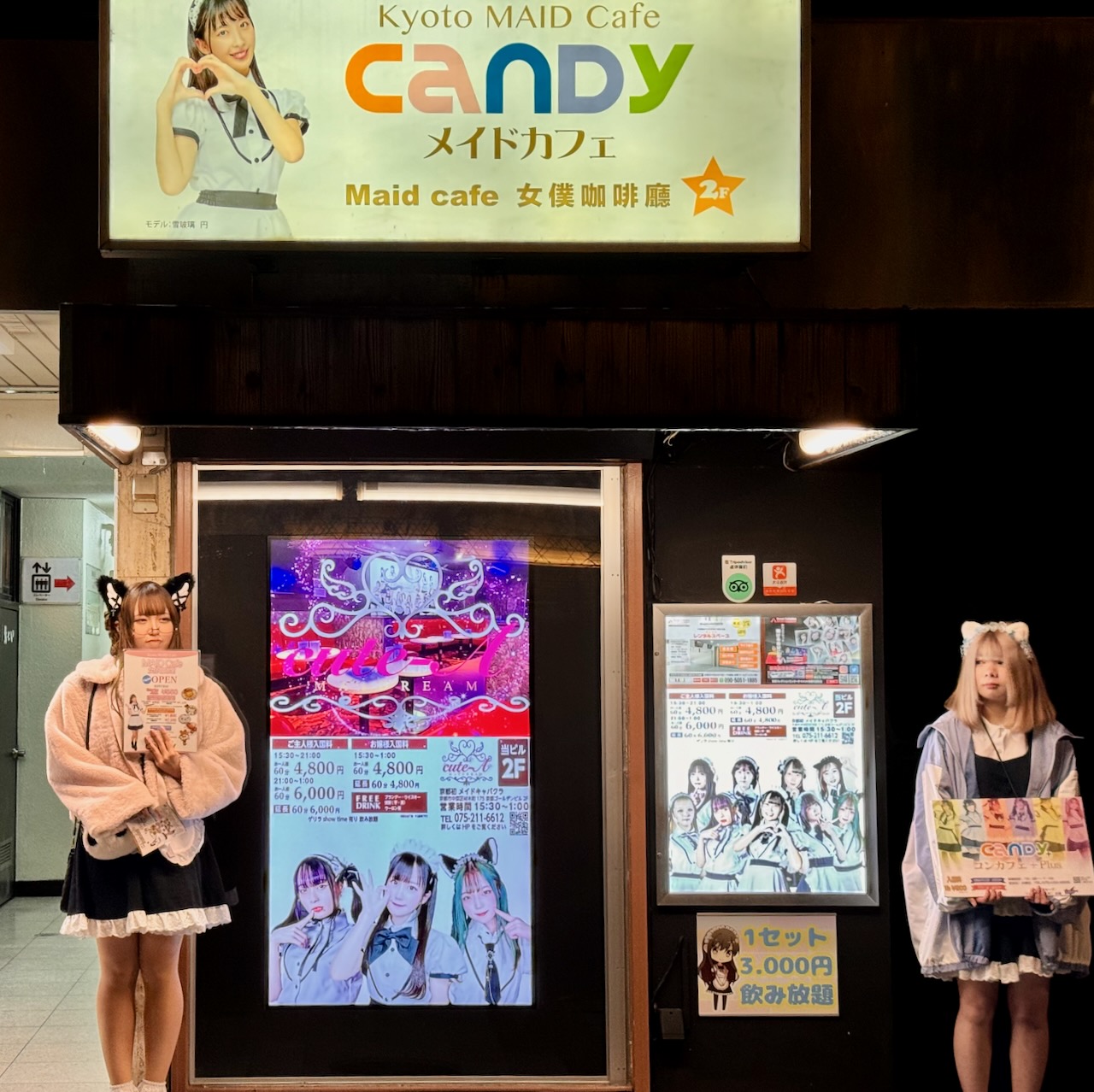
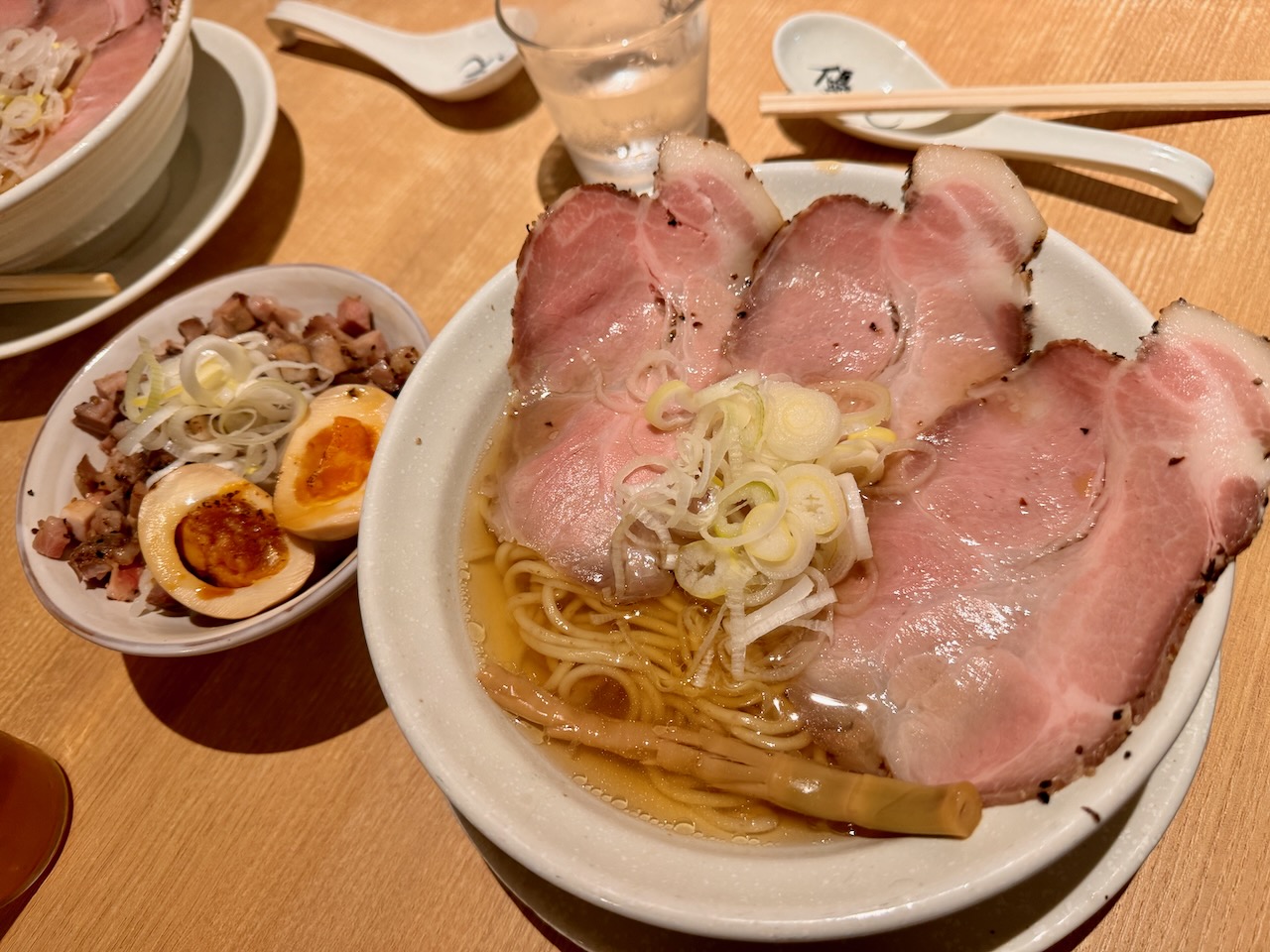
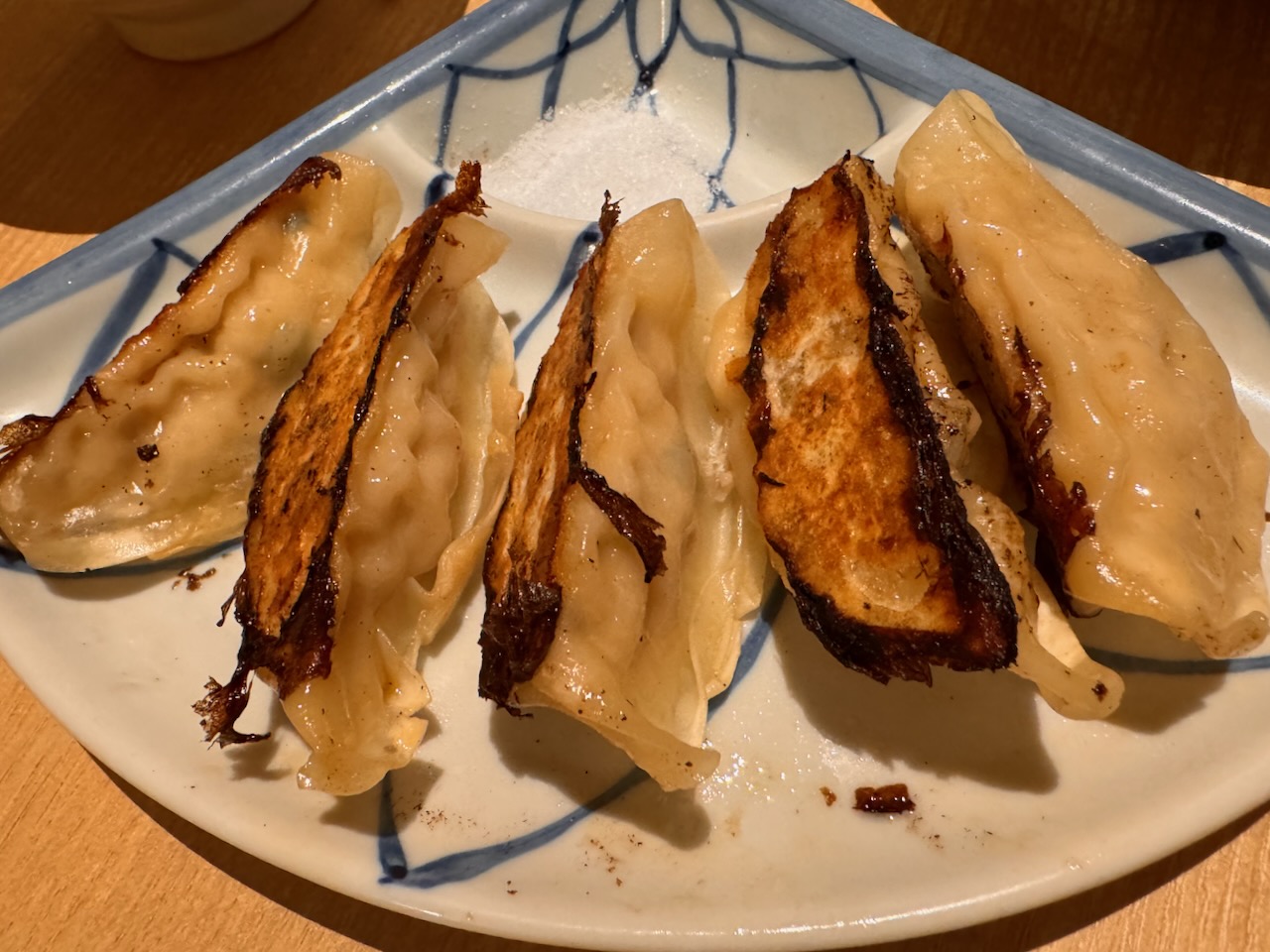
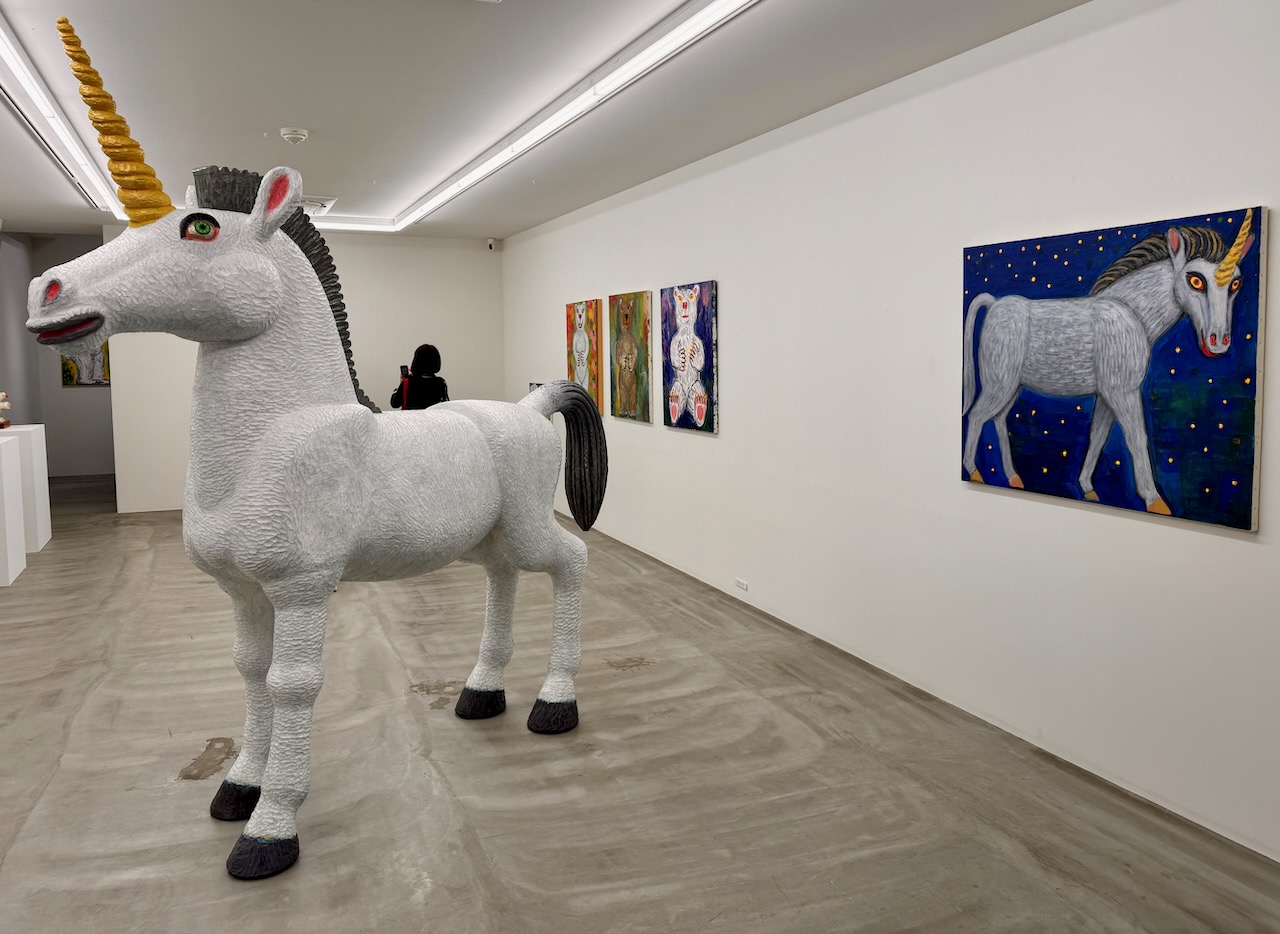
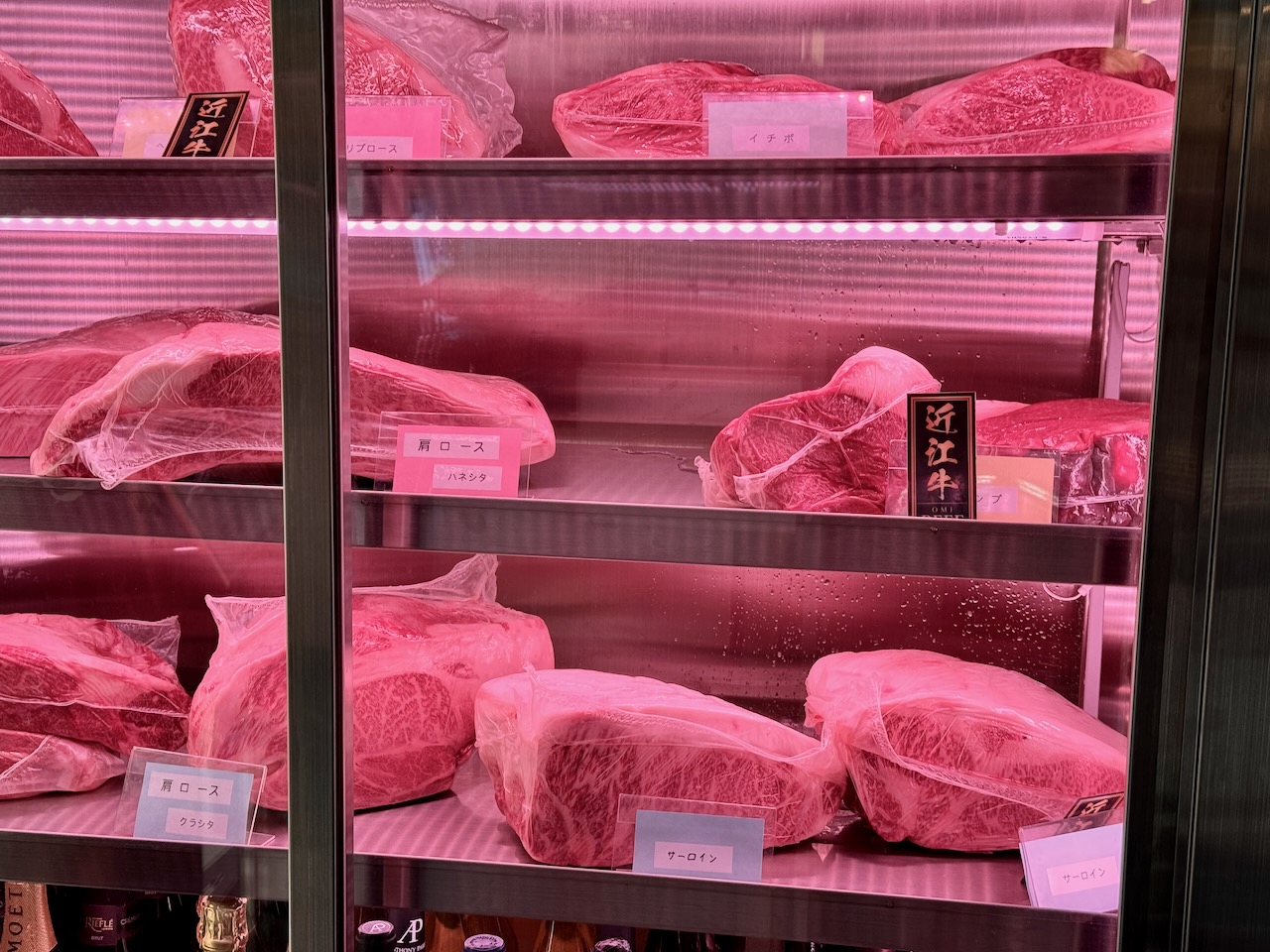
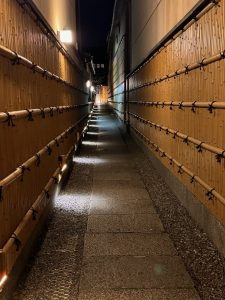
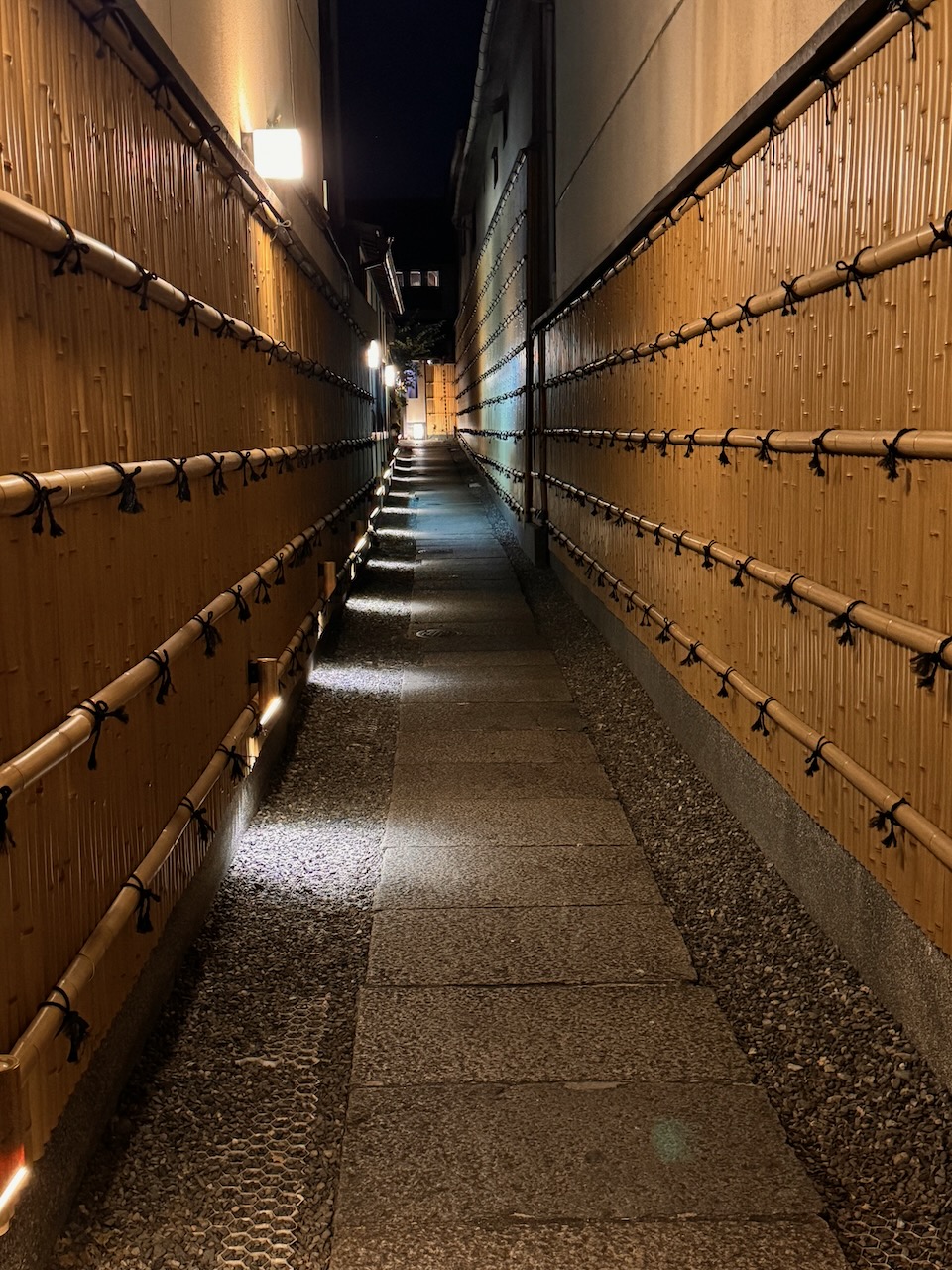
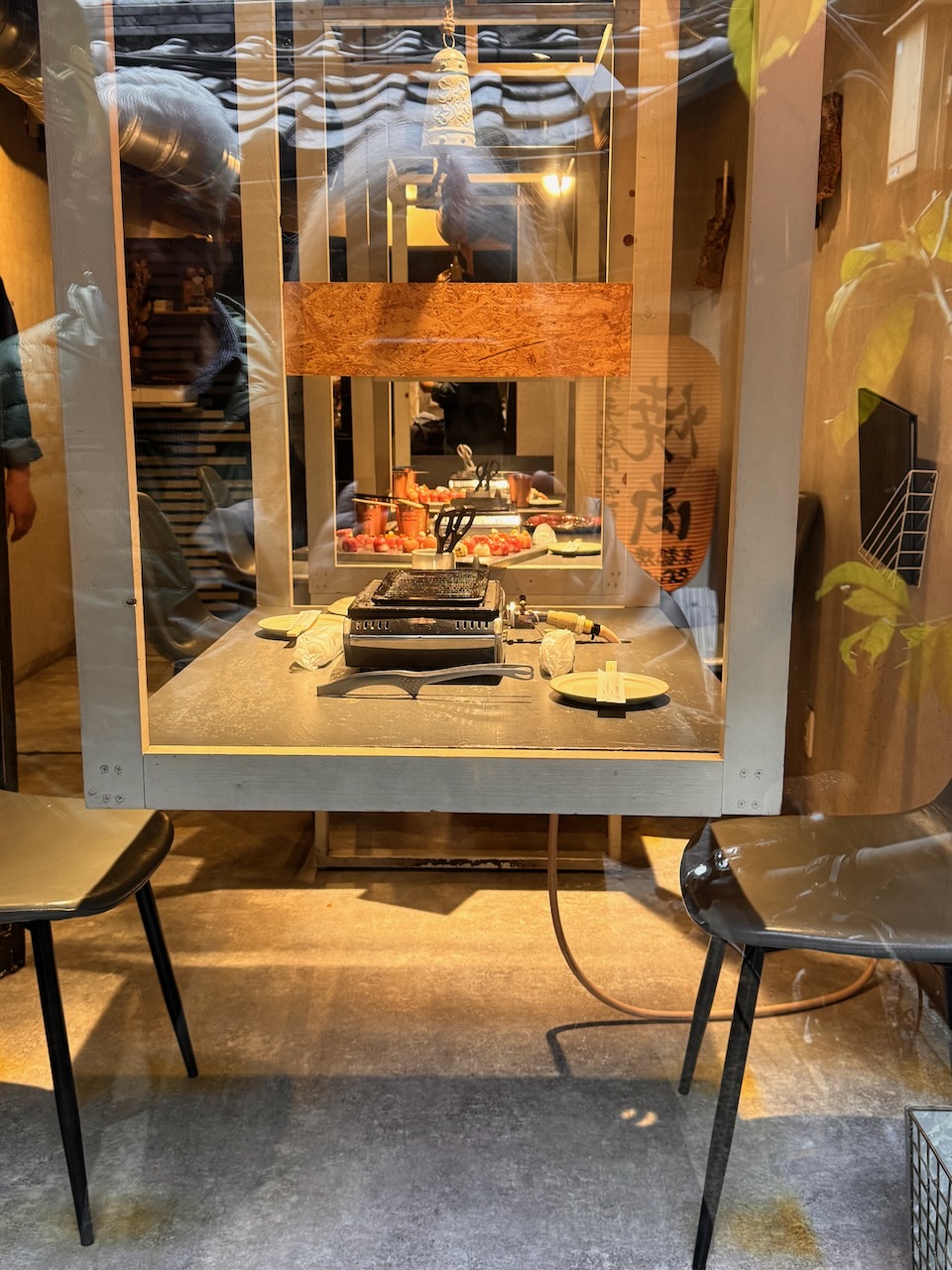
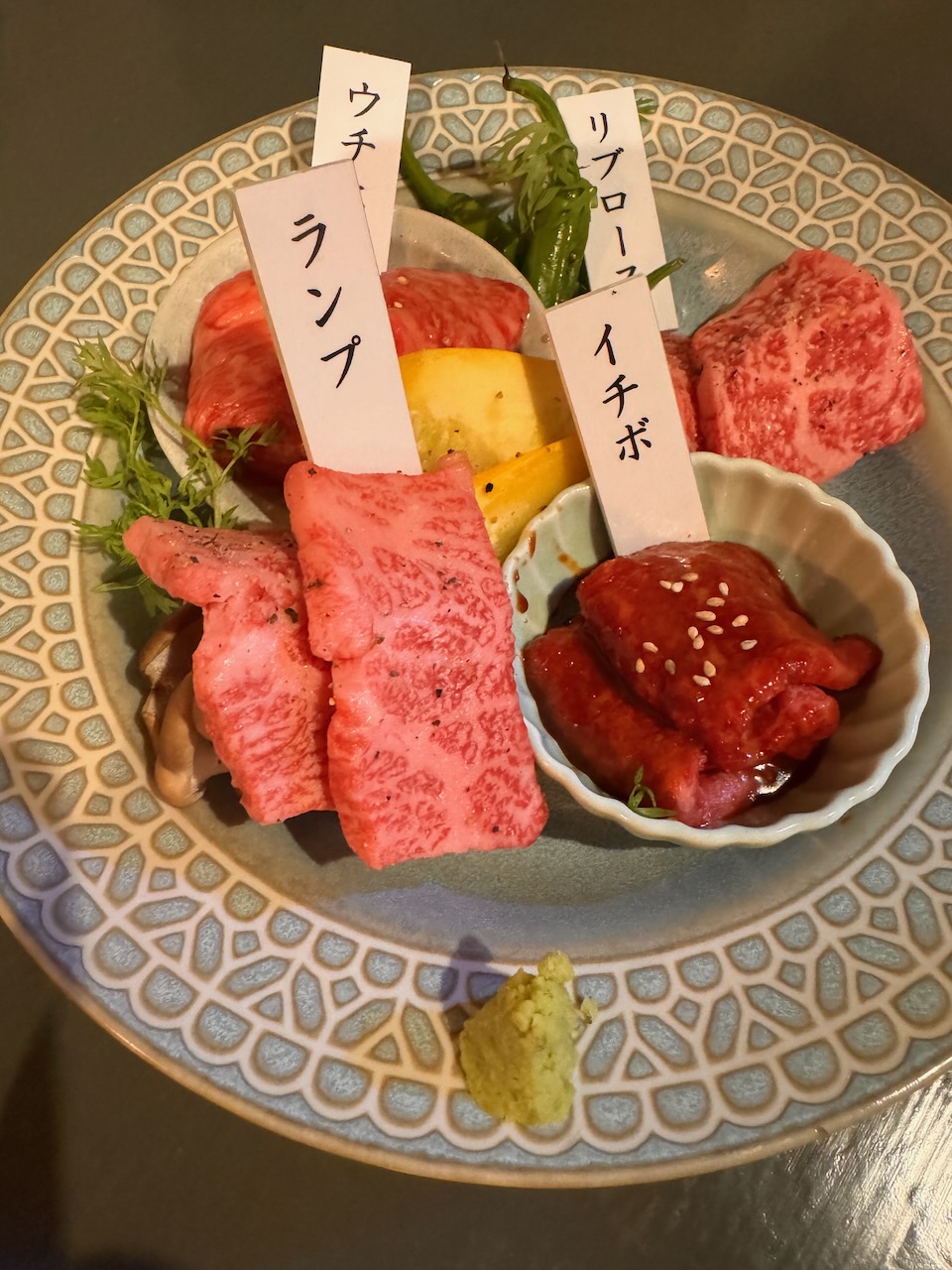
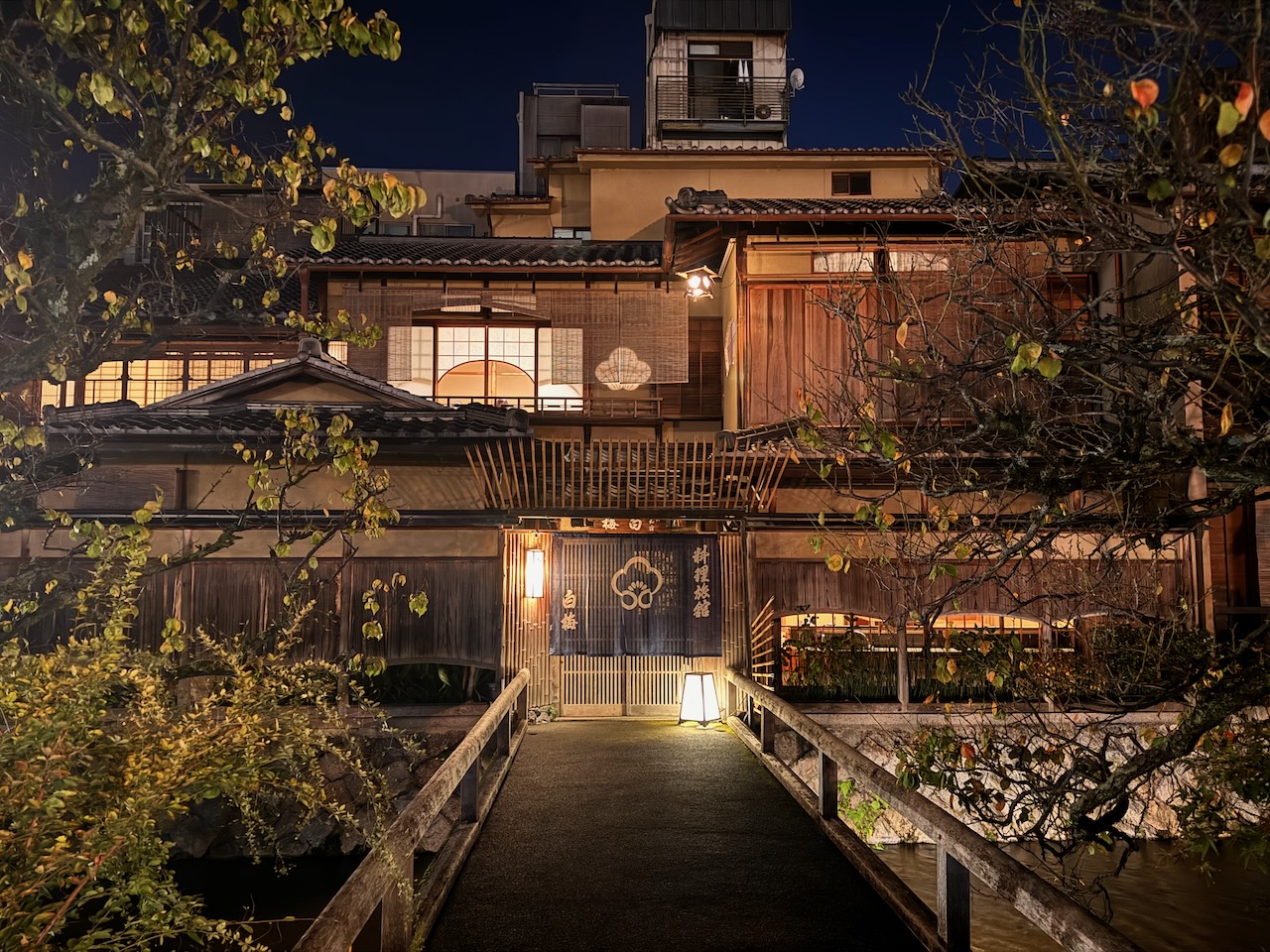
Lighting and displays really enhance the atmosphere in the narrow streets. The “maid cafe” is a subcategory of the cosplay, or theme restaurants popular in Japan. In maid cafes the service staff dress as elegant maids or butlers and treat customers as masters and mistresses in a private home rather than as cafe customers. Sounds sexist to me. With an urge for ramen, we walked 20 minutes to Men-ya Yukou, a compact restaurant offering homemade noodles. There was a 30-minute queue to get in, but our order was taken outside so once we were seated, we were served immediately. My shellfish broth ramen and Joe’s darker broth ramen were yummy. We also ordered a serve of gyoza and some rice with pork and egg. Hard to beat all this for less than $15 in either currency. On the way we saw some artwork and beef displayed.
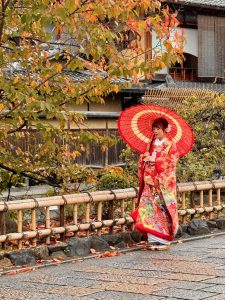
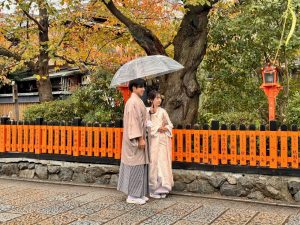
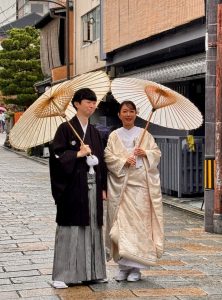
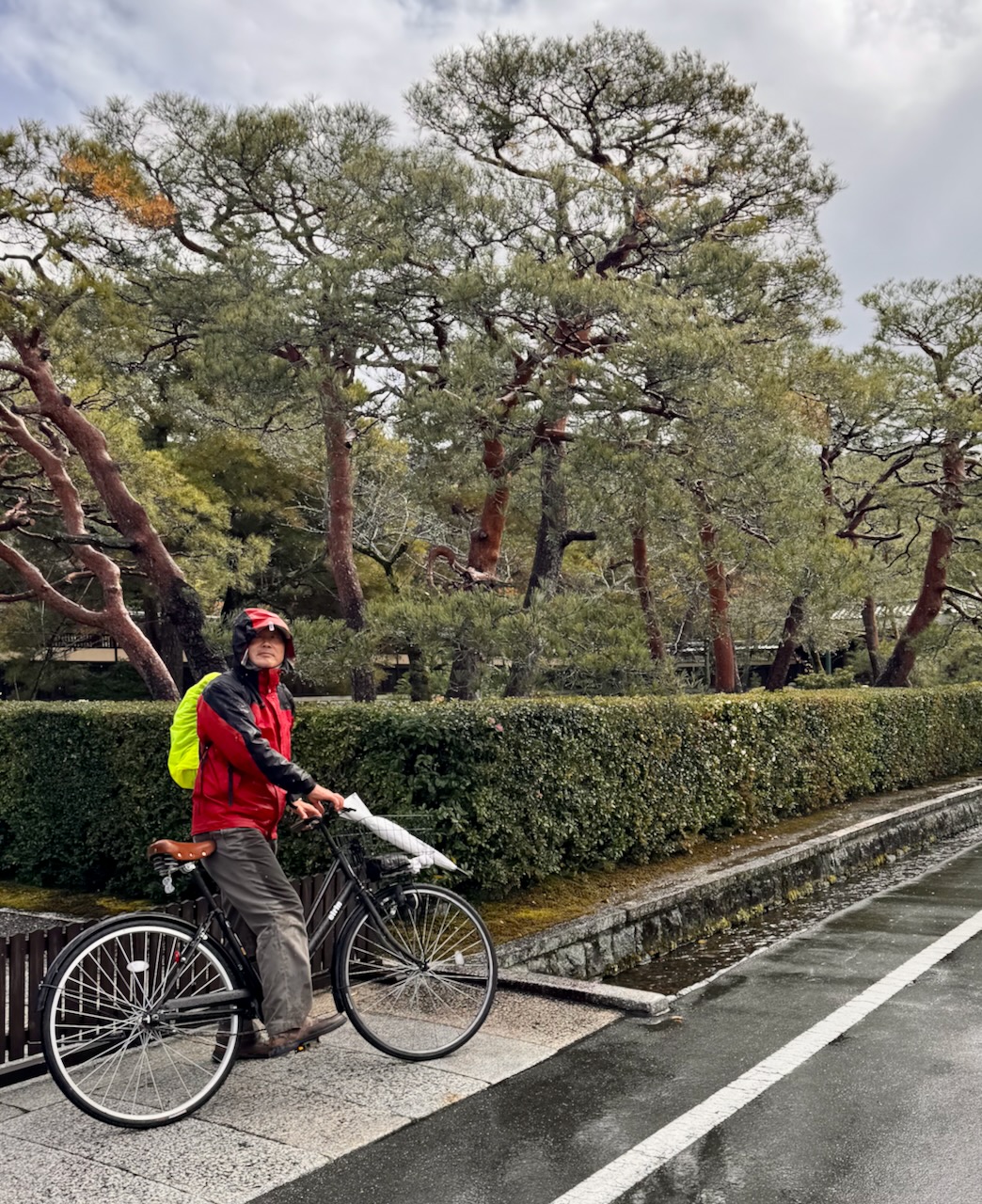
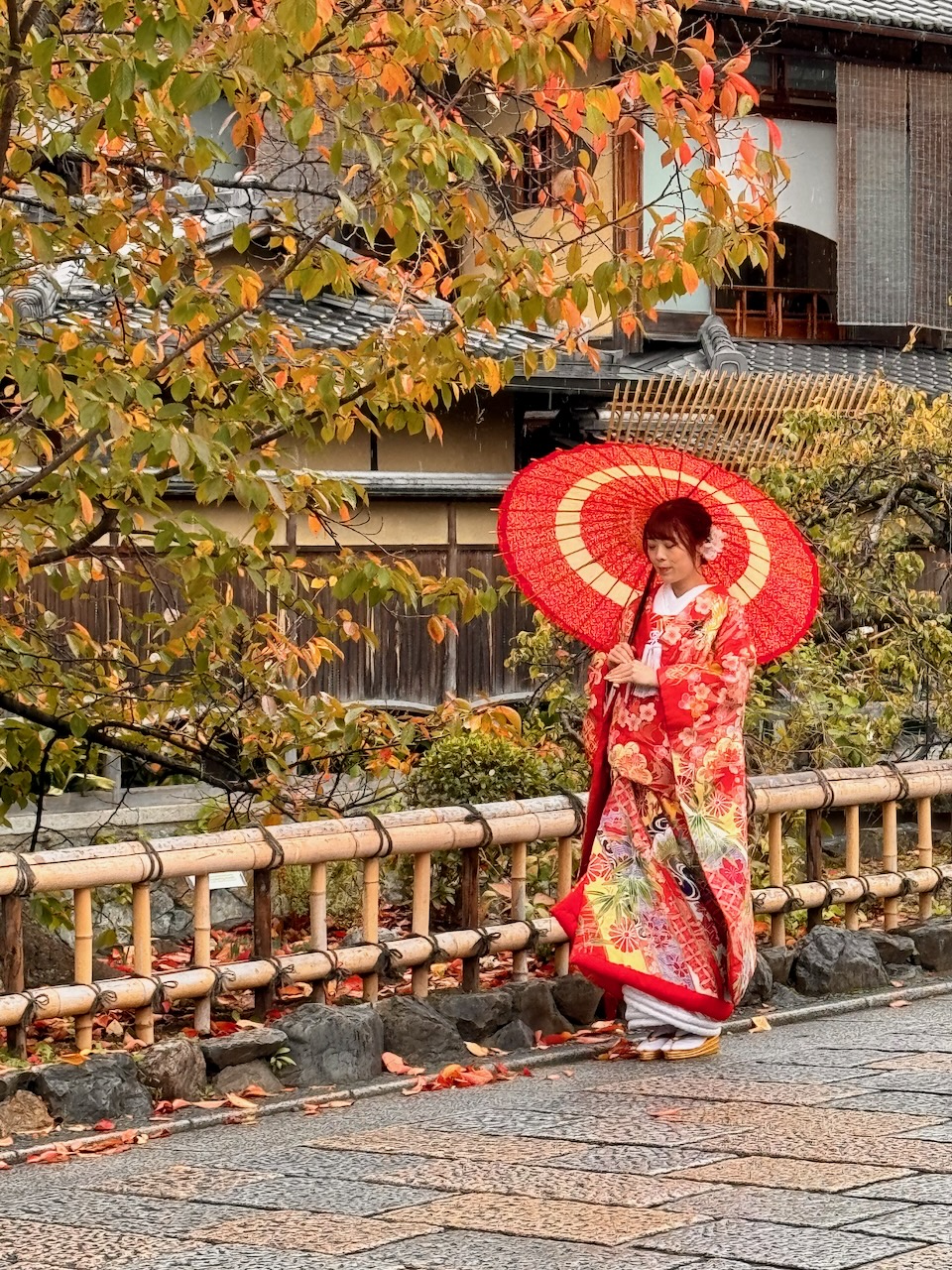
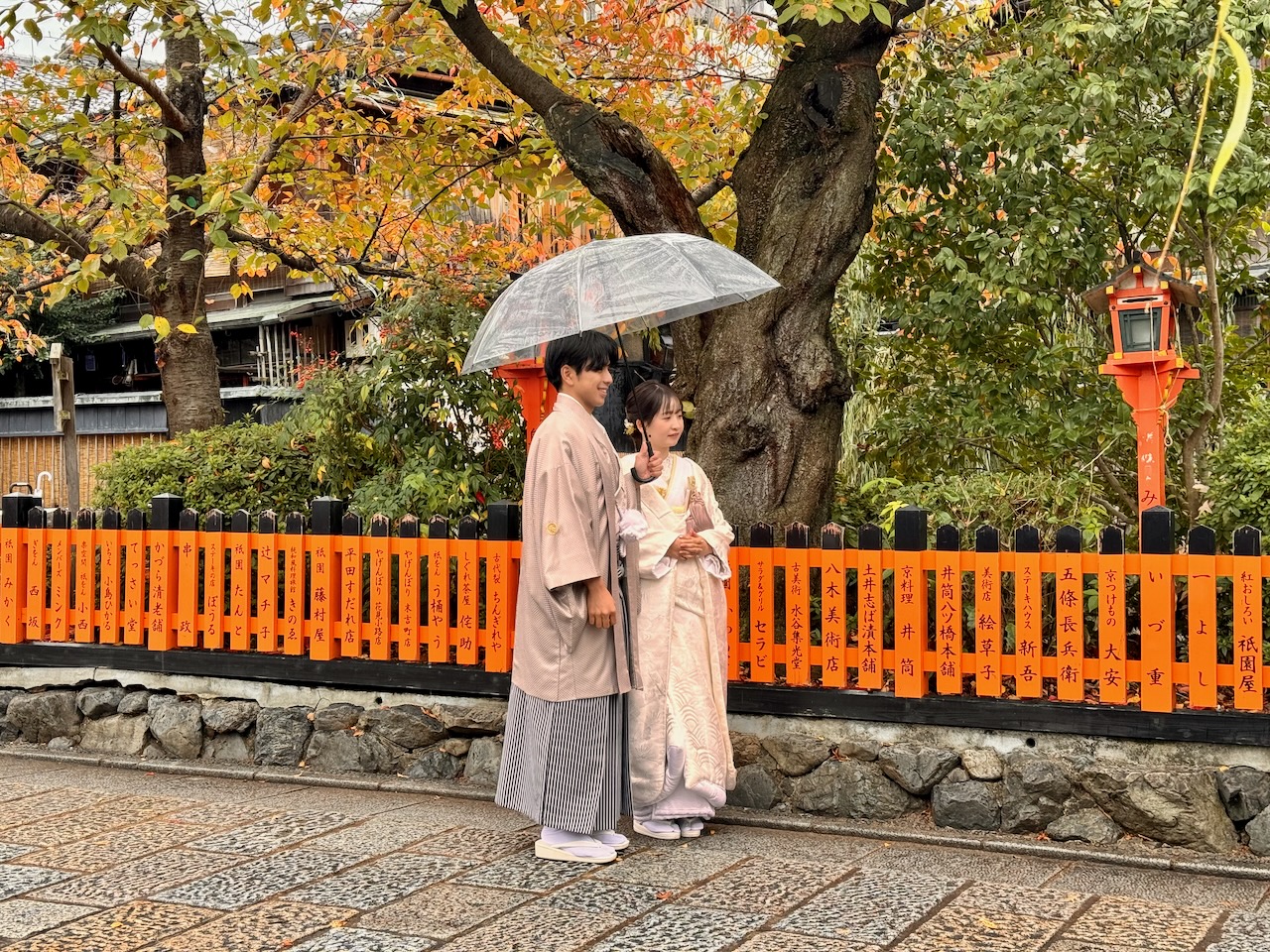
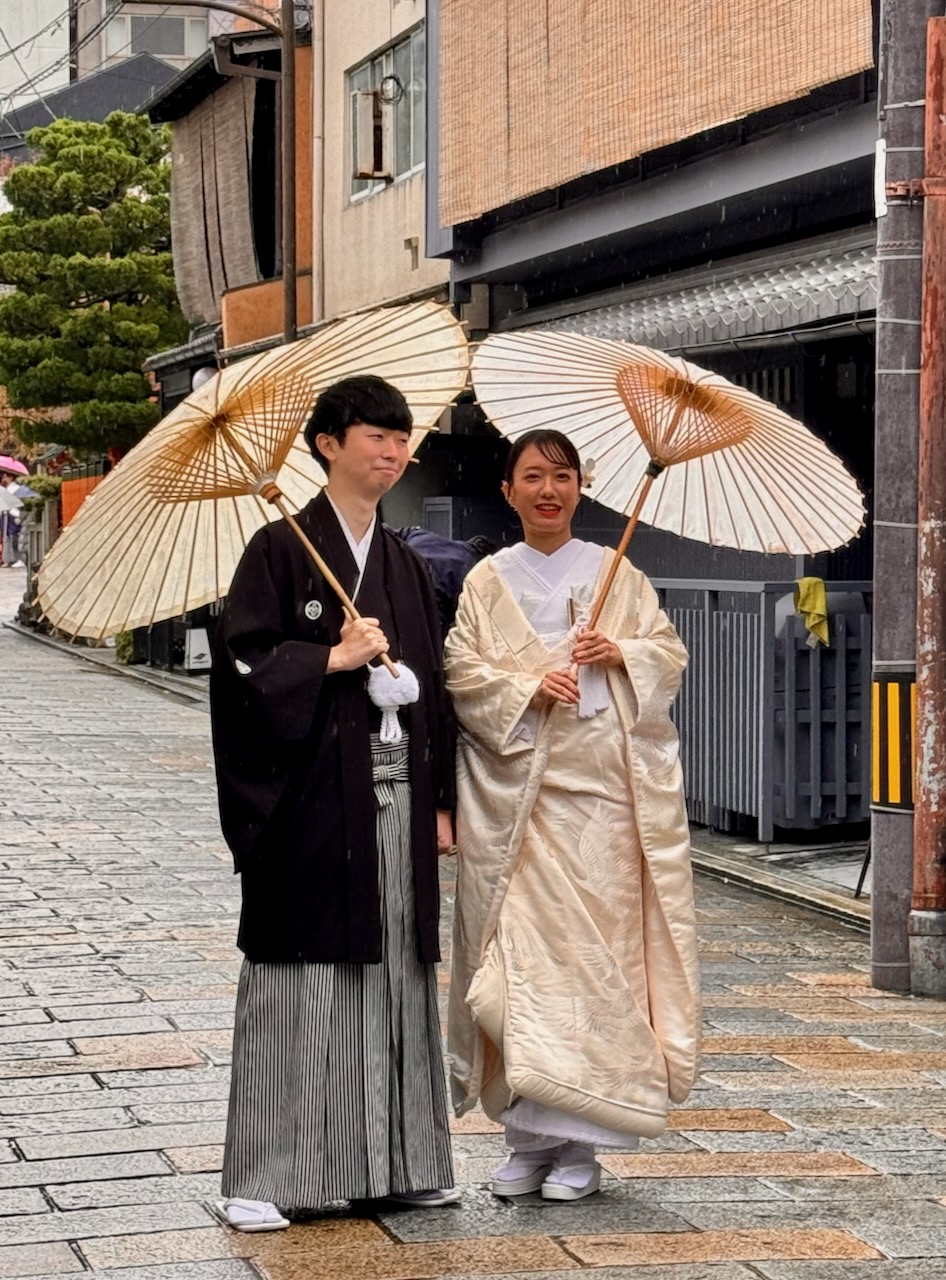
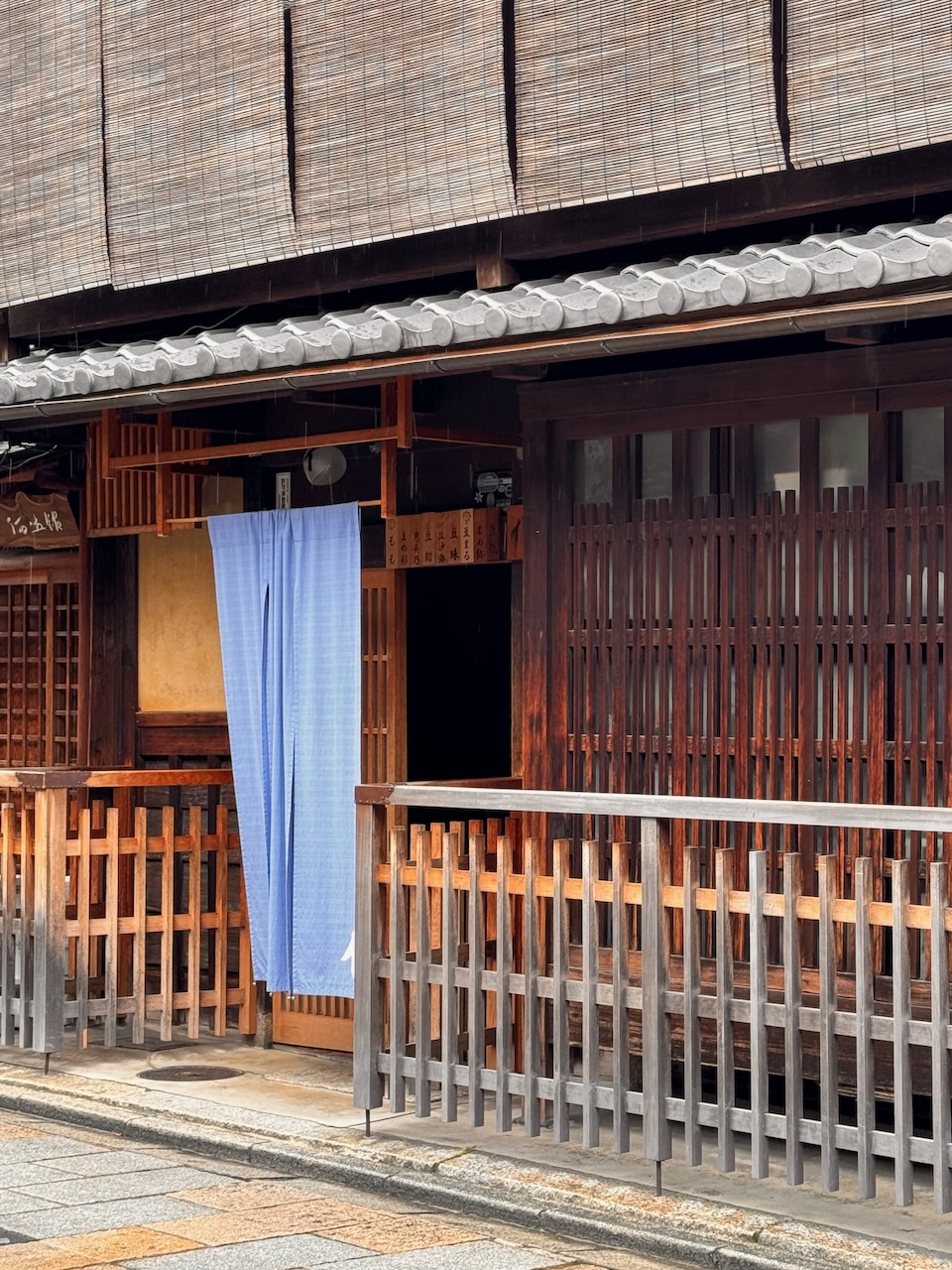
Despite calls for a rainy day our intrepid bicycle guide, Mazda (Maza), was prepared to steer us through east Kyoto for a half day tour. We didn’t have very appropriate gear, so we got wet but it’s just water. He doesn’t own a car, so he is used to these conditions. We started in Gion, the iconic geisha district where Maza pointed out the residences of maiko, geisha-in-training. Rain didn’t deter couples on a wedding photo shoot along a canal in Gion.
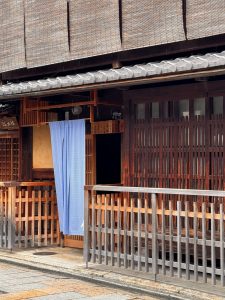
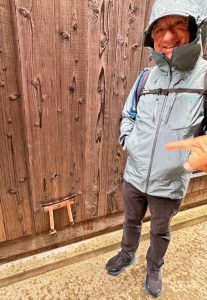
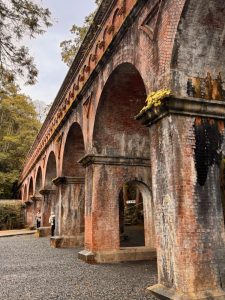
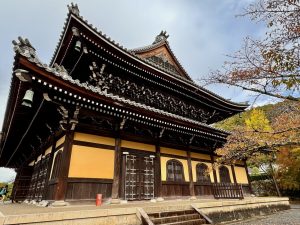
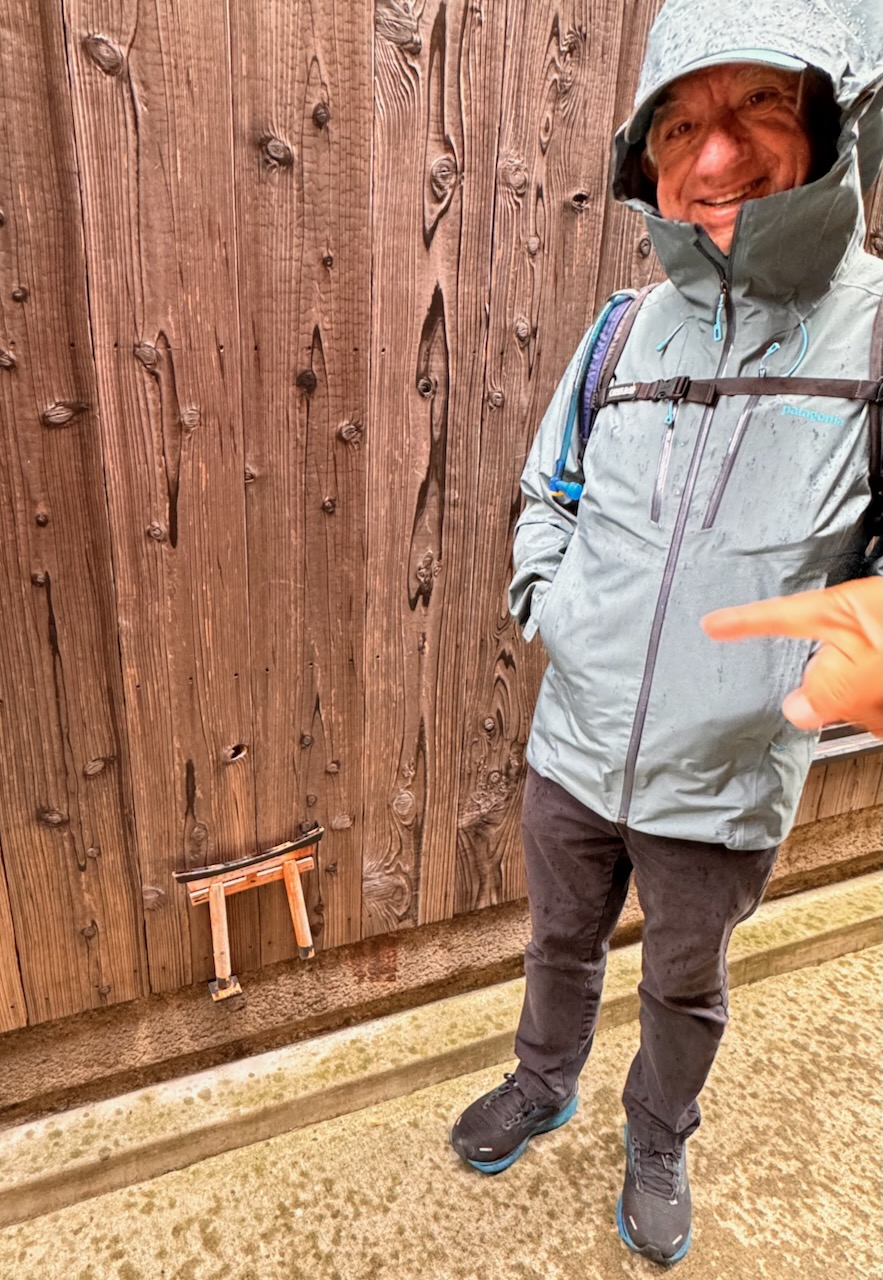
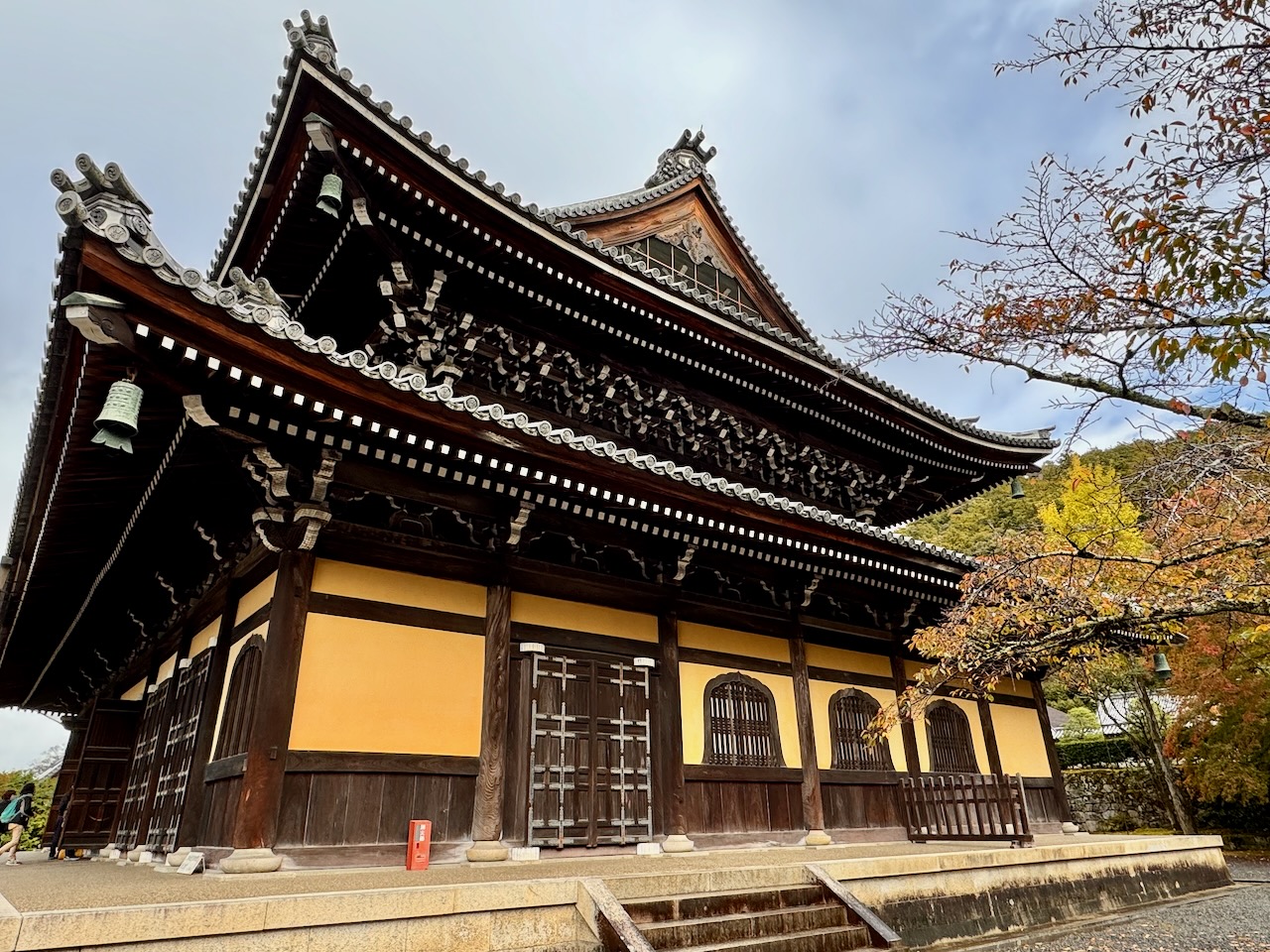
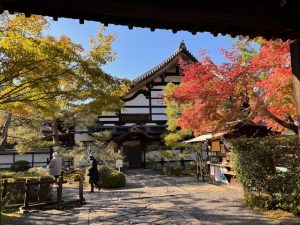
Masa pointed out a miniature torii gate. Although there’s no shrine behind the tiny torii, it’s still denoting a sacred space and Japanese are expected to behave accordingly. These little torii are in fact there to protect the neighbourhood from drunks urinating against walls or dumping rubbish. Nanzenji Temple, whose spacious grounds are located at the base of Kyoto’s forested Higashiyama mountains, is one of the most important Zen temples in all of Japan. It is the head temple of one of the schools within the Rinzai sect of Japanese Zen Buddhism and includes 12 sub temples. The Suirokaku Water Bridge is a large brick Roman-style aqueduct passing through the temple grounds. It is part of a canal system that was constructed to carry water and goods between Kyoto and Lake Biwa.
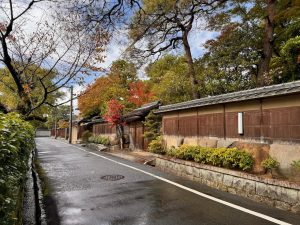
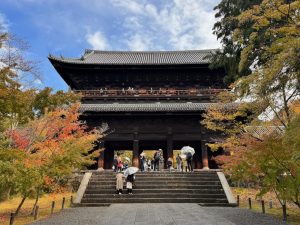
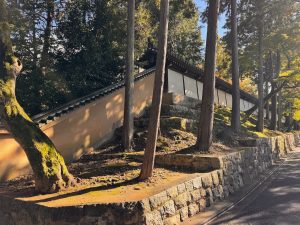
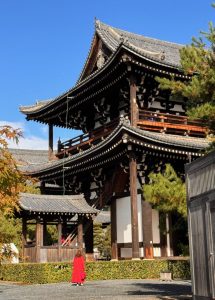
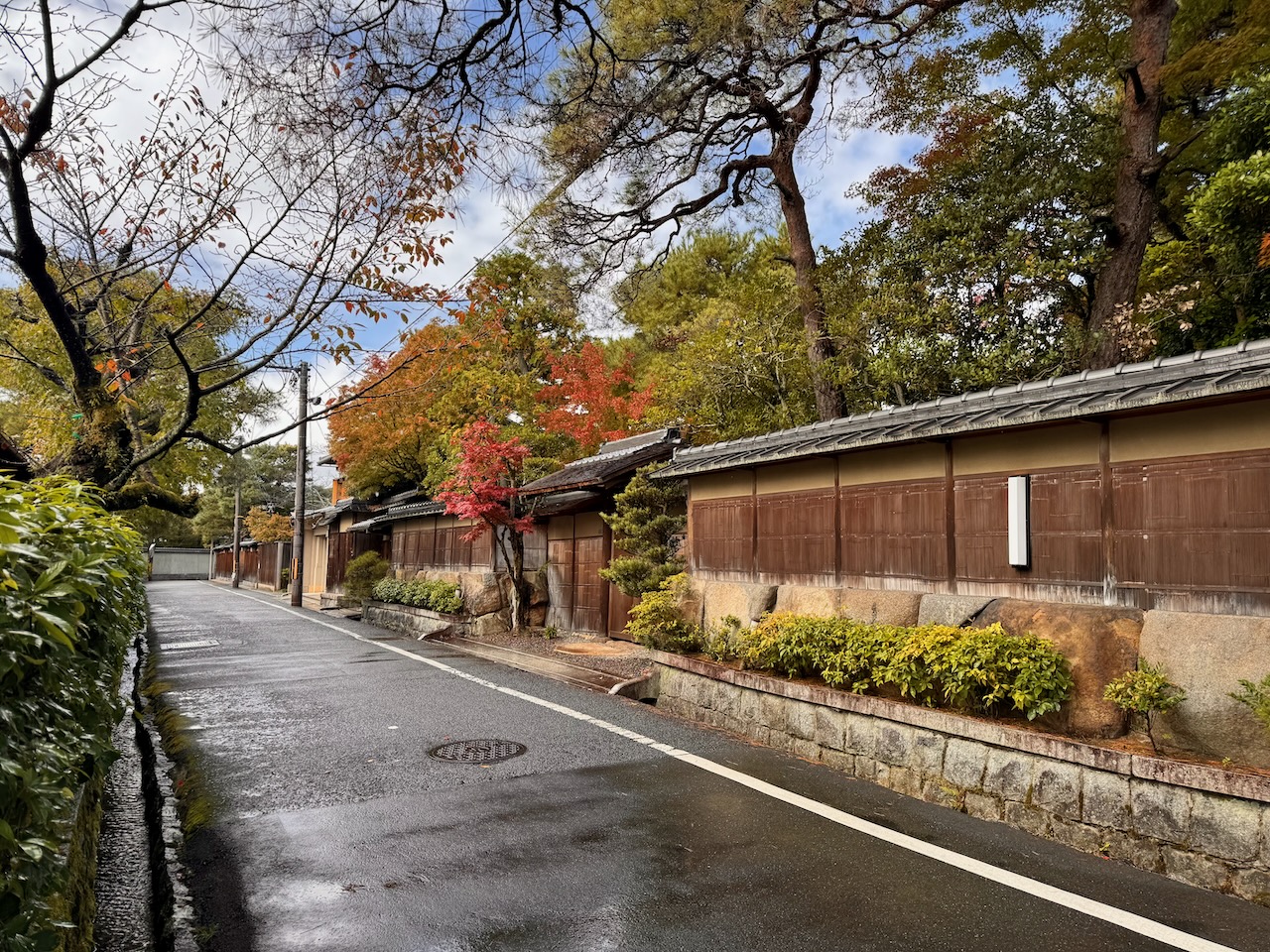
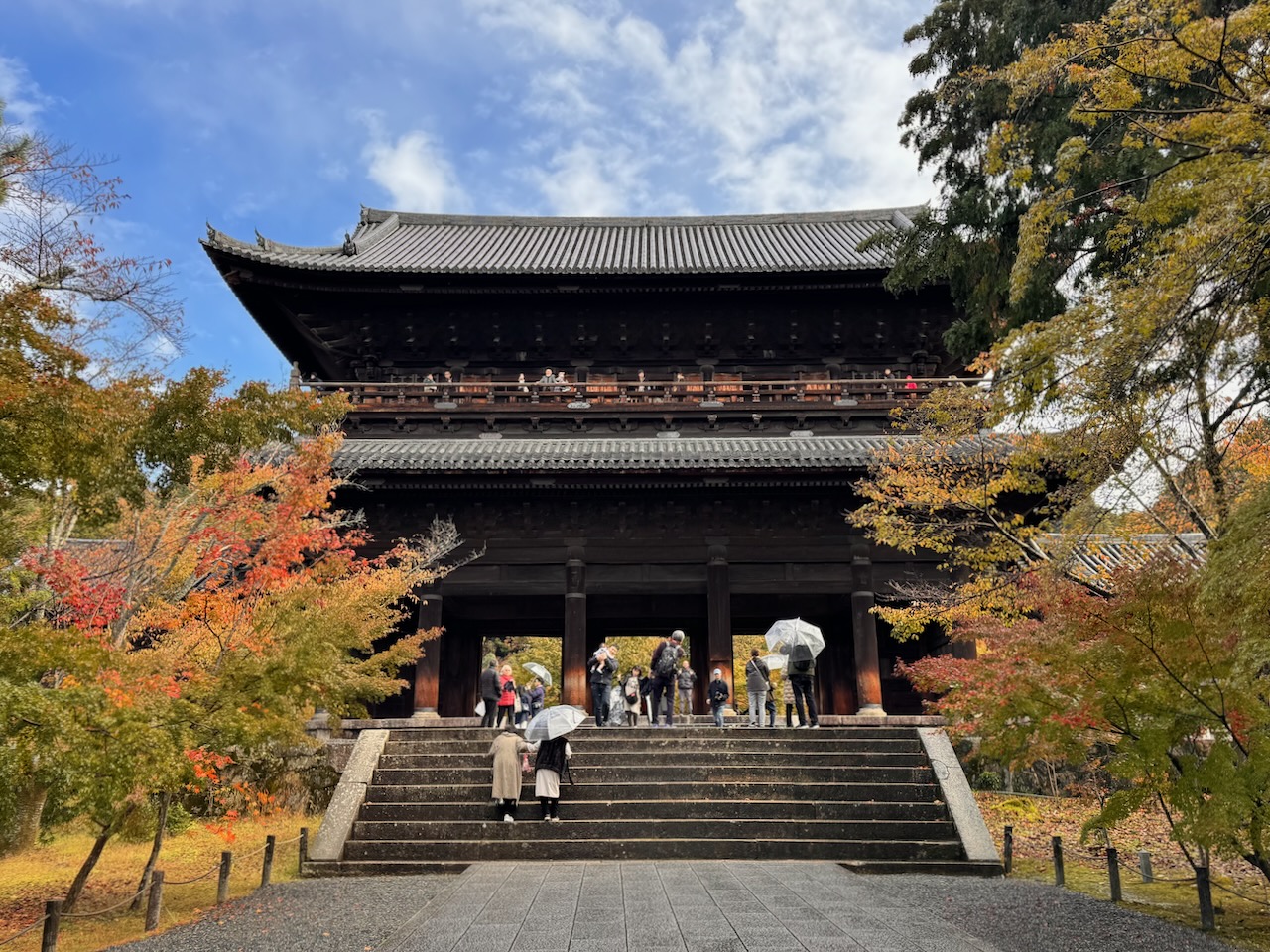
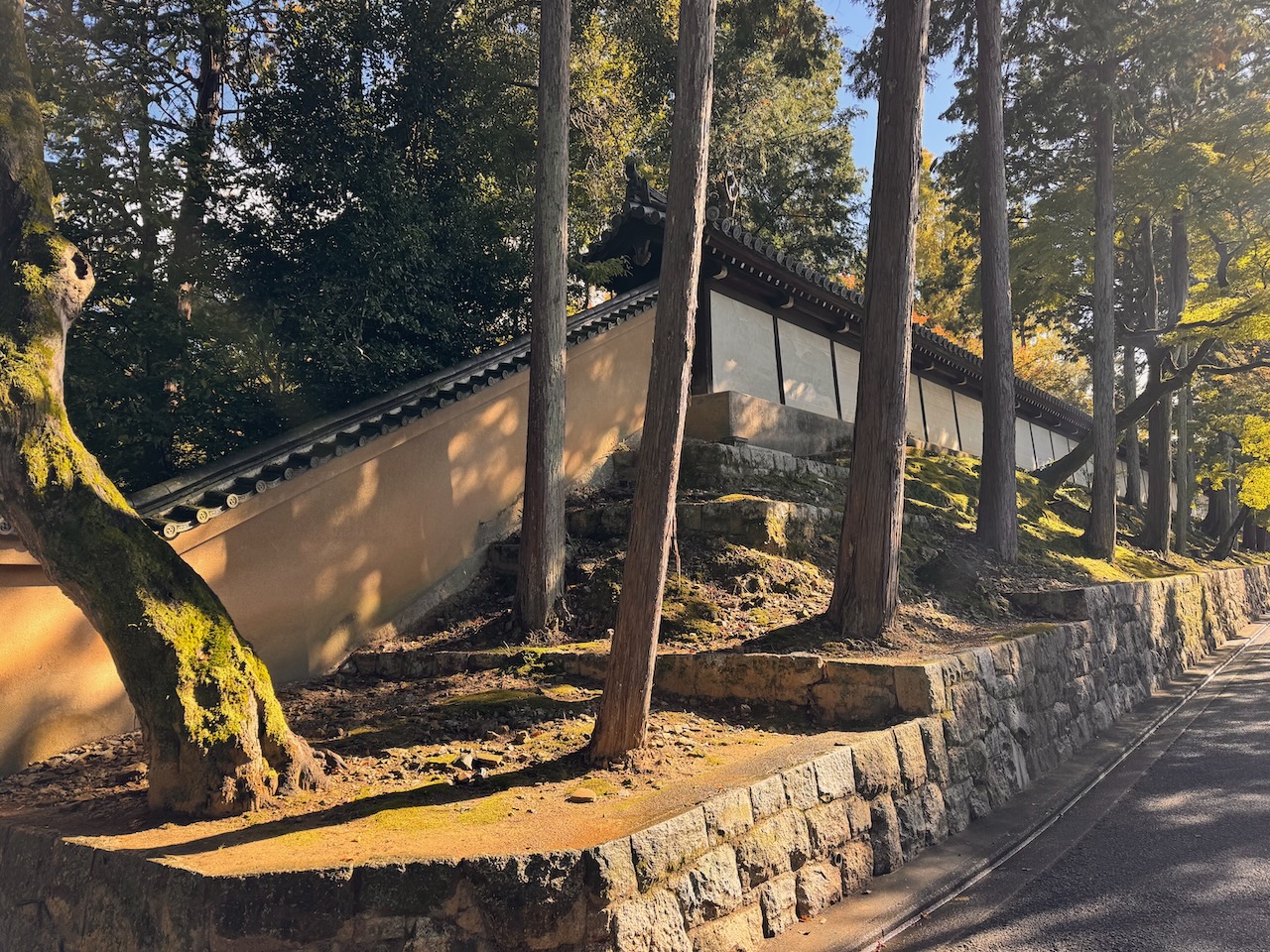
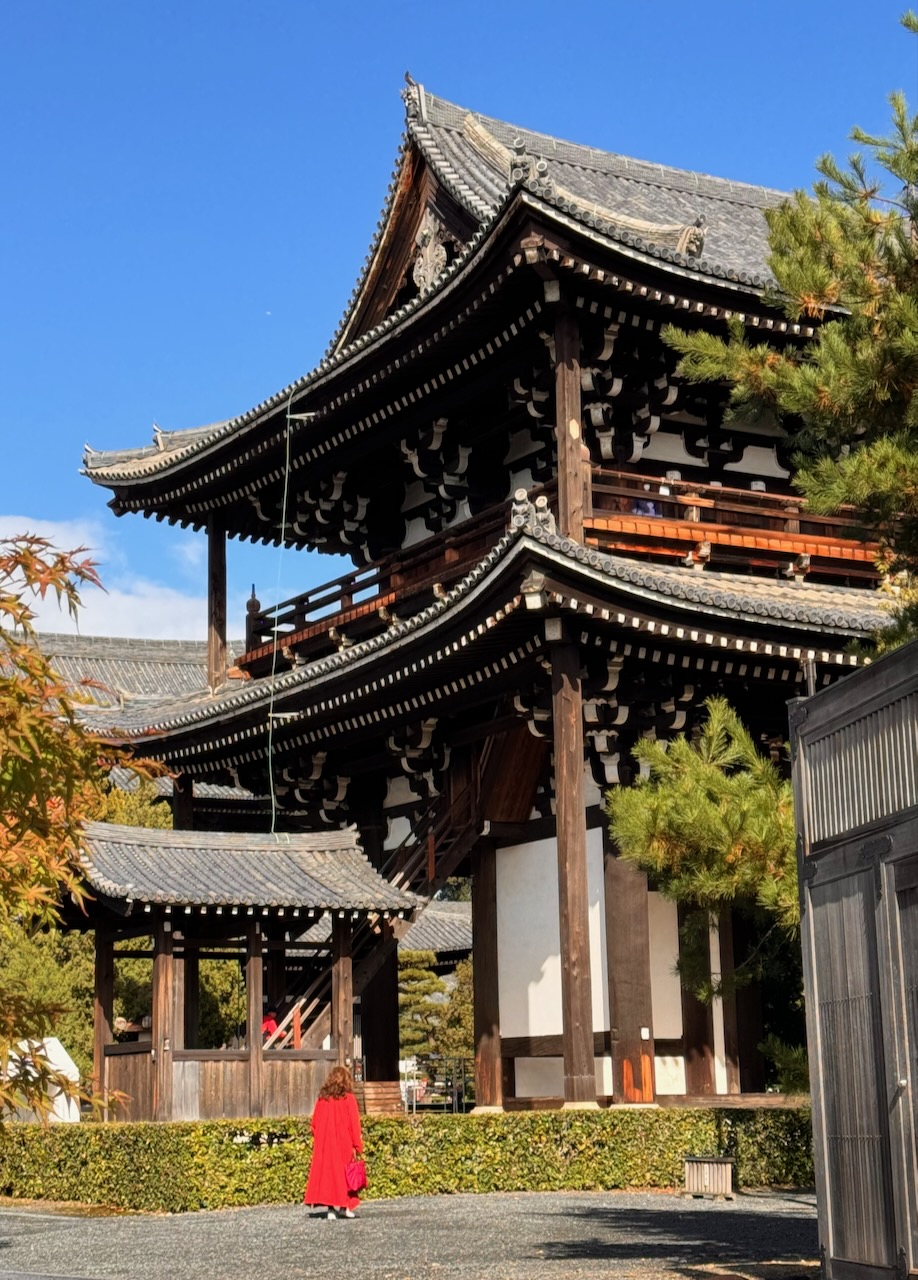
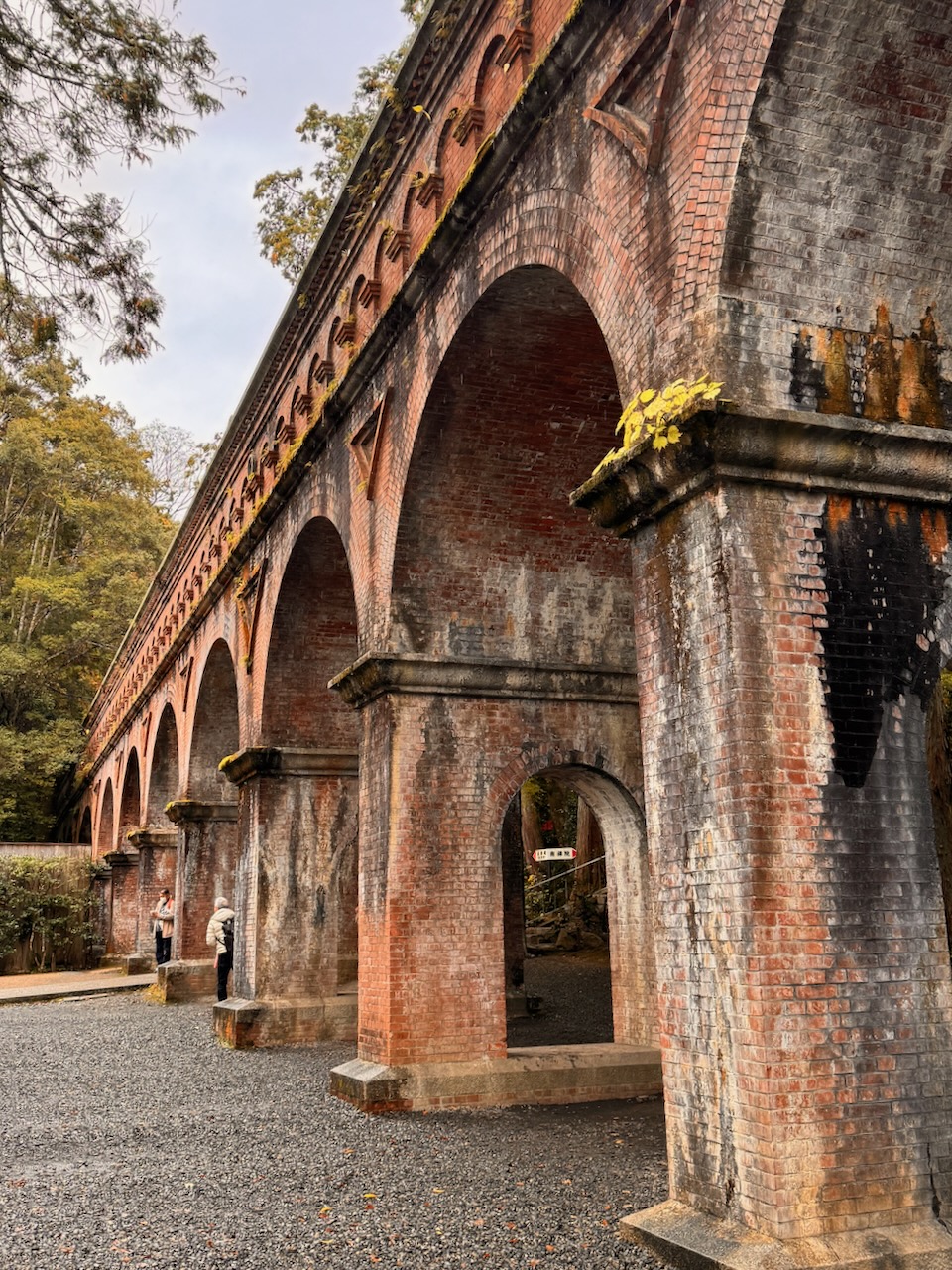
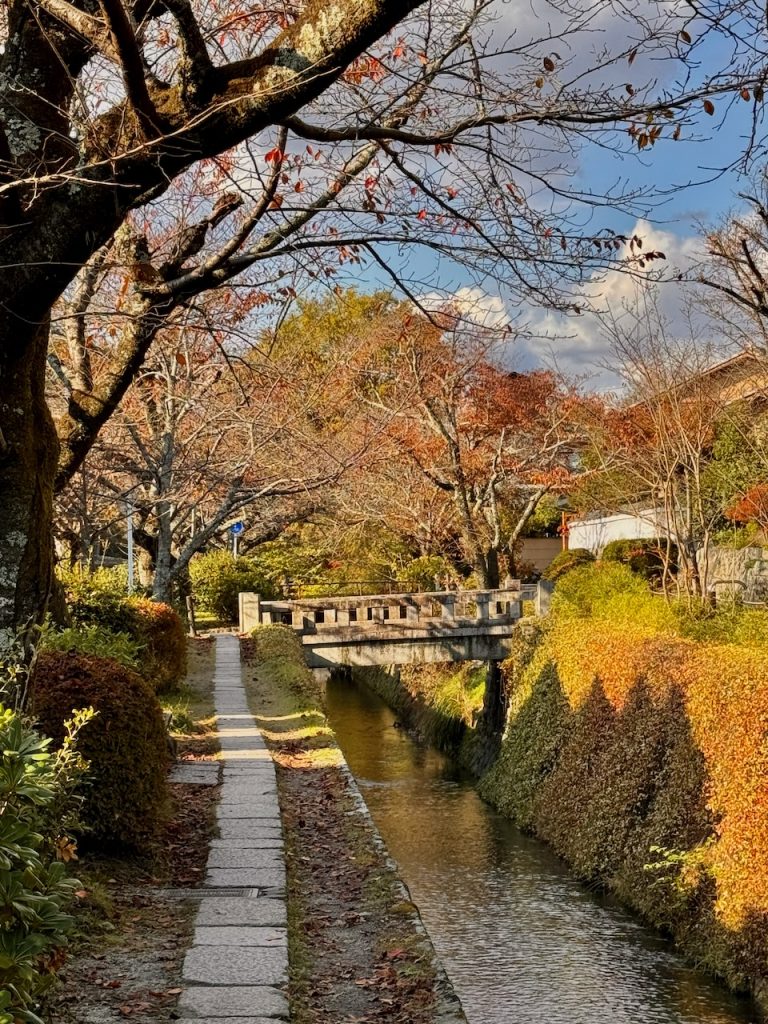
Approximately 2 kms long, the Philosopher’s Path got its name from one of Japan’s most famous philosophers, who was said to practice meditation while walking this route on his daily commute to Kyoto University. The canal is lined in cherry trees so it would be spectacular in spring during the blossom season.
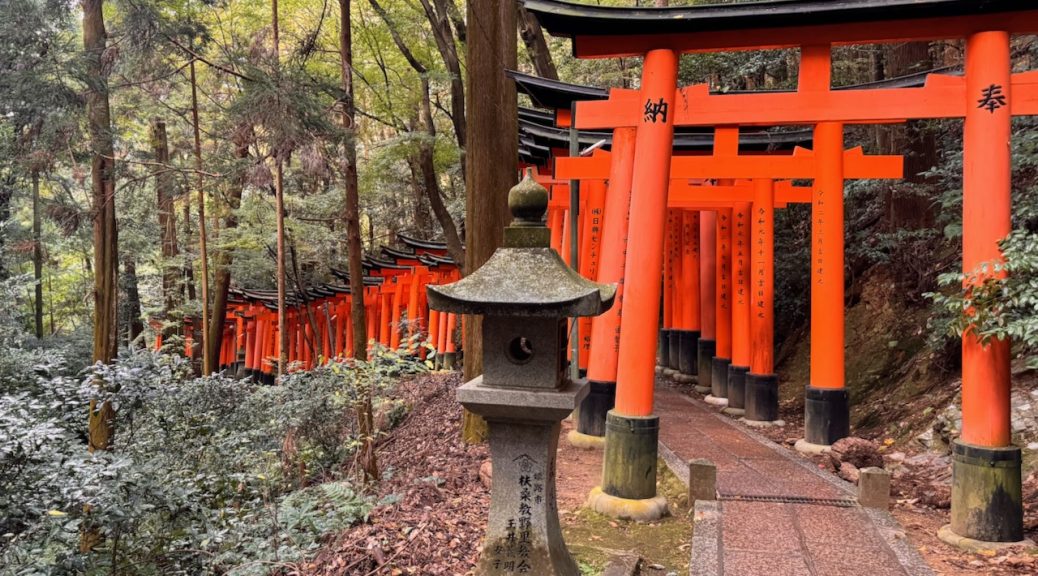
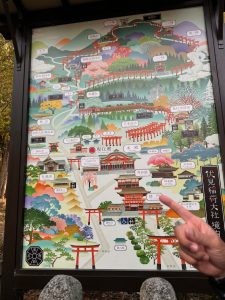
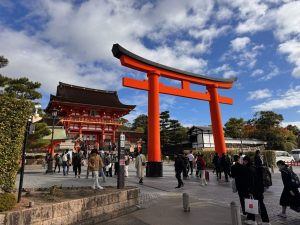
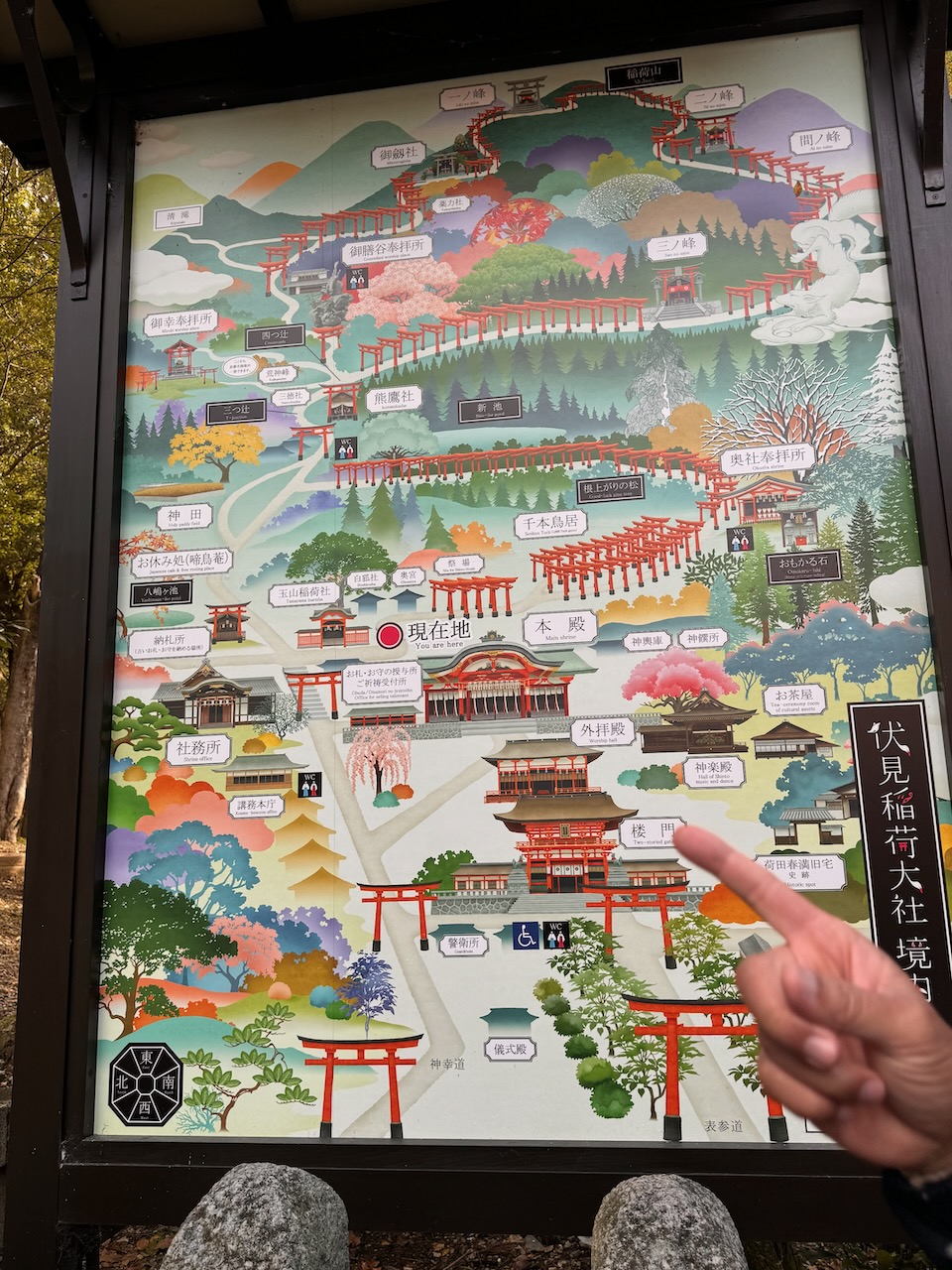
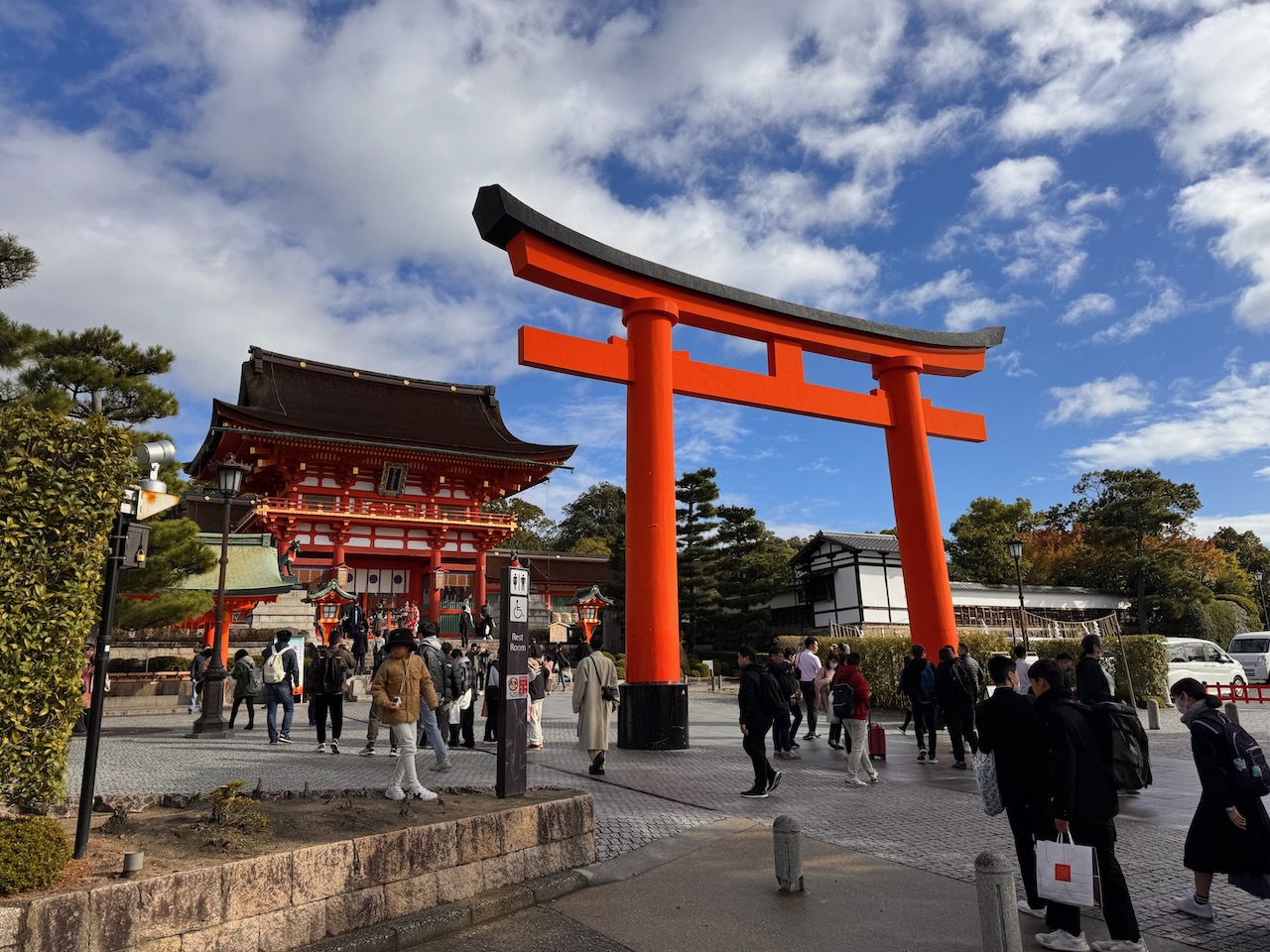
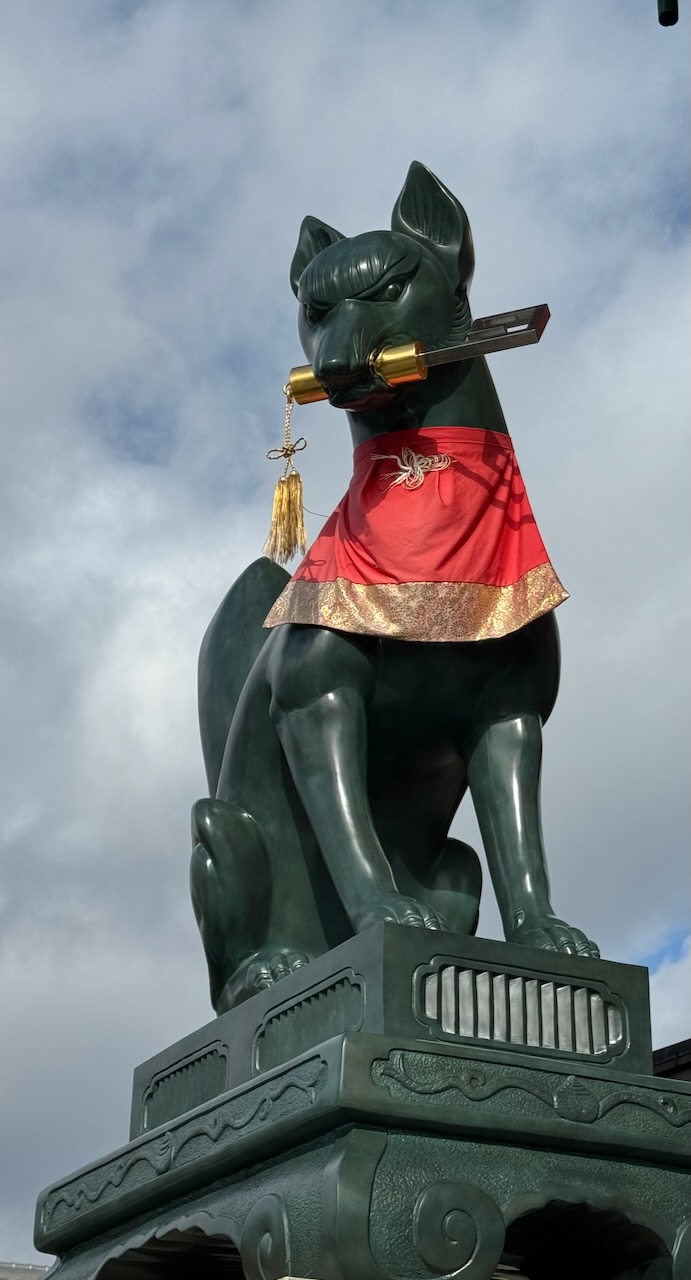
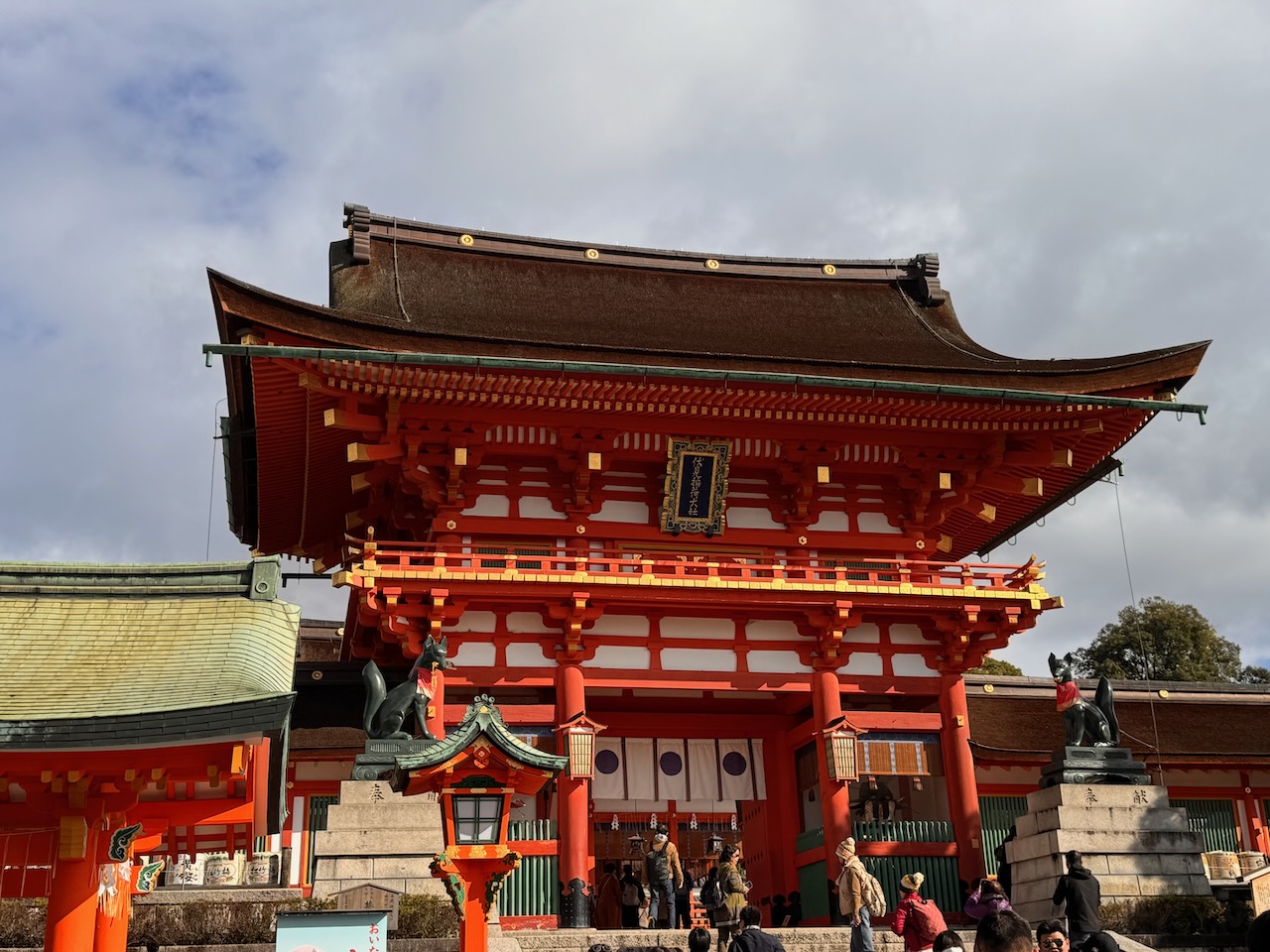
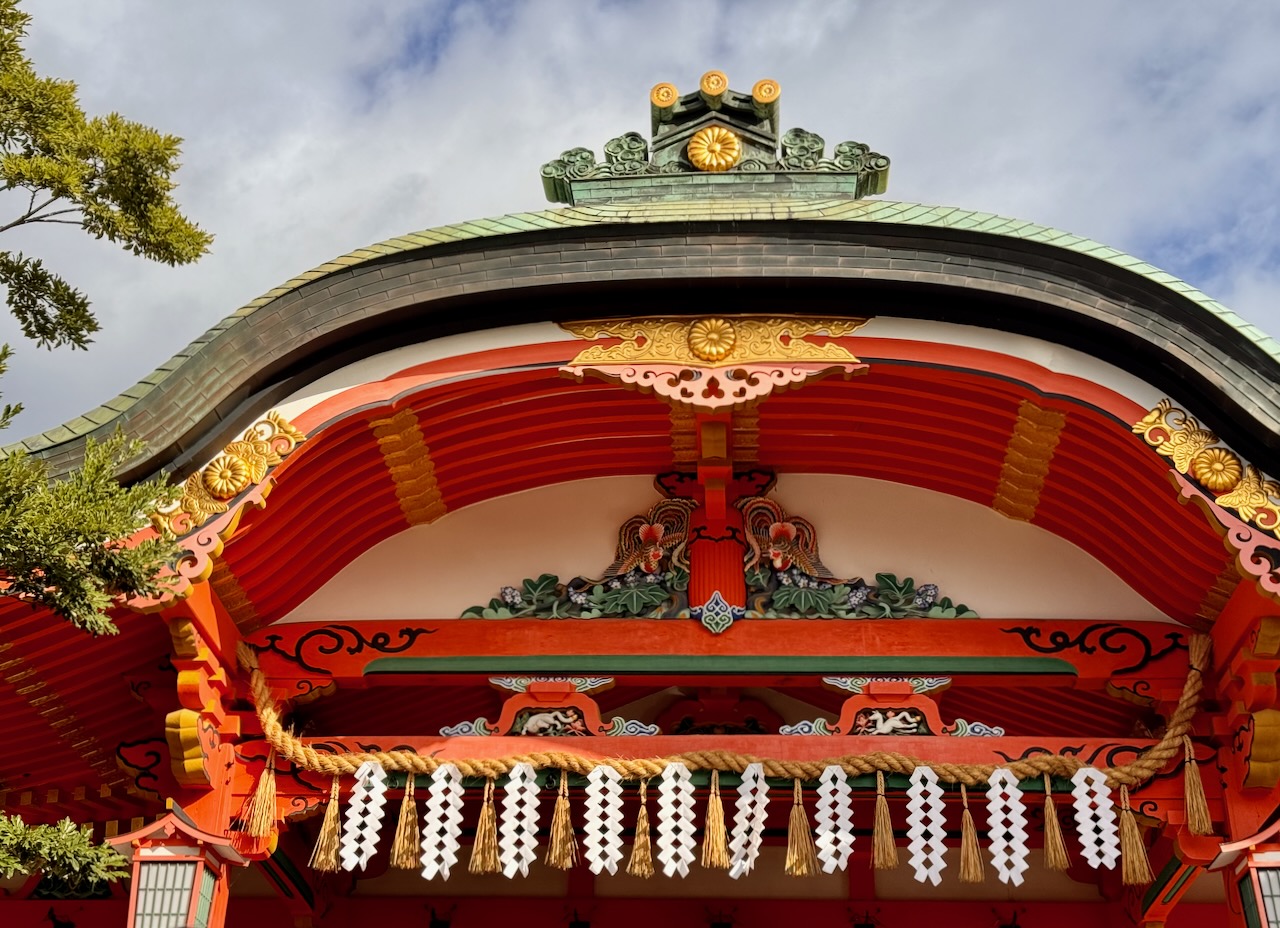
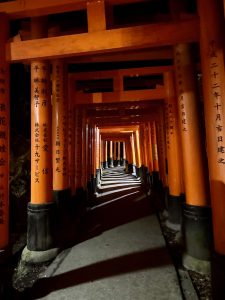
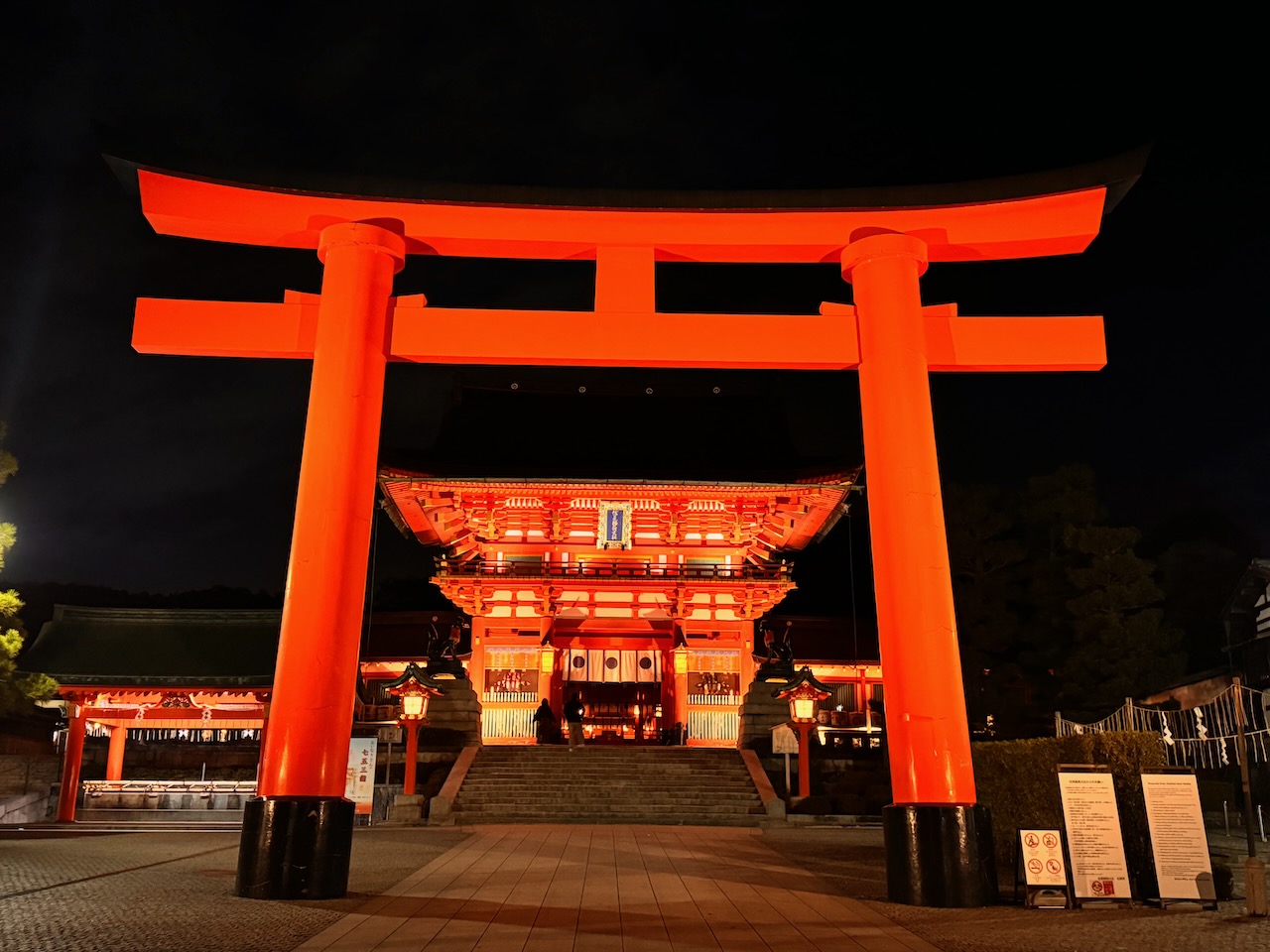
Fushimi Inari Shrine, arguably the most visited site in Kyoto, and our hotel receptionist didn’t know what we were talking about when queried about the location! Is this a case of Lost In Translation? As shown in the diagram the path leads up the 233-meter-tall Mt. Inari which is dotted with many stone altars (otsuka) and marked by approximately 10,000 torii gates. This long tunnel of vibrant orange torii gates is an iconic sight in Kyoto. Fushimi Inari is the most important of several thousands of shrines dedicated to Inari, the Shinto god of rice. Foxes are thought to be Inari’s messengers, resulting in many fox statues across the shrine grounds, and always on either side of the entrance to the main room. We were lucky to catch a glimpse of a craftsman creating a replacement Torii gate in his workshop.
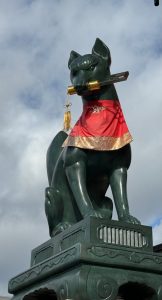
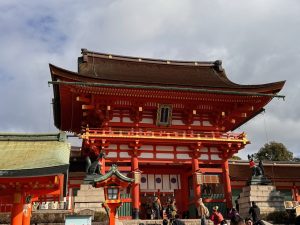
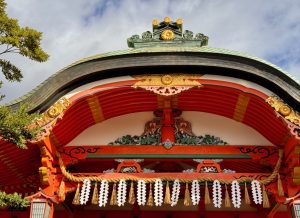
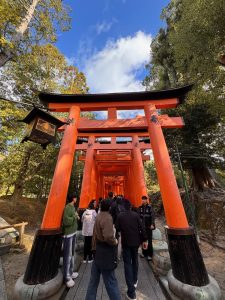

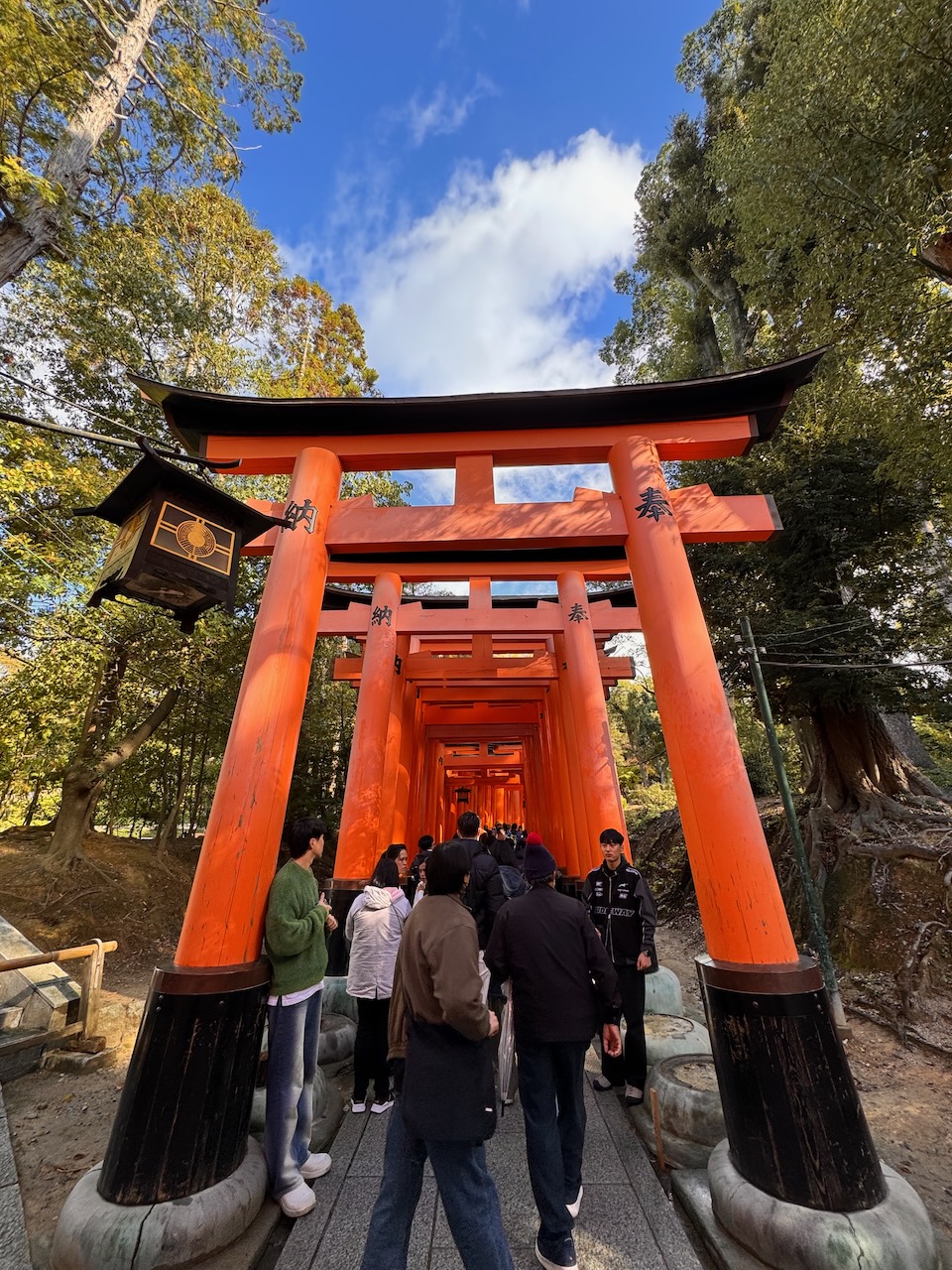

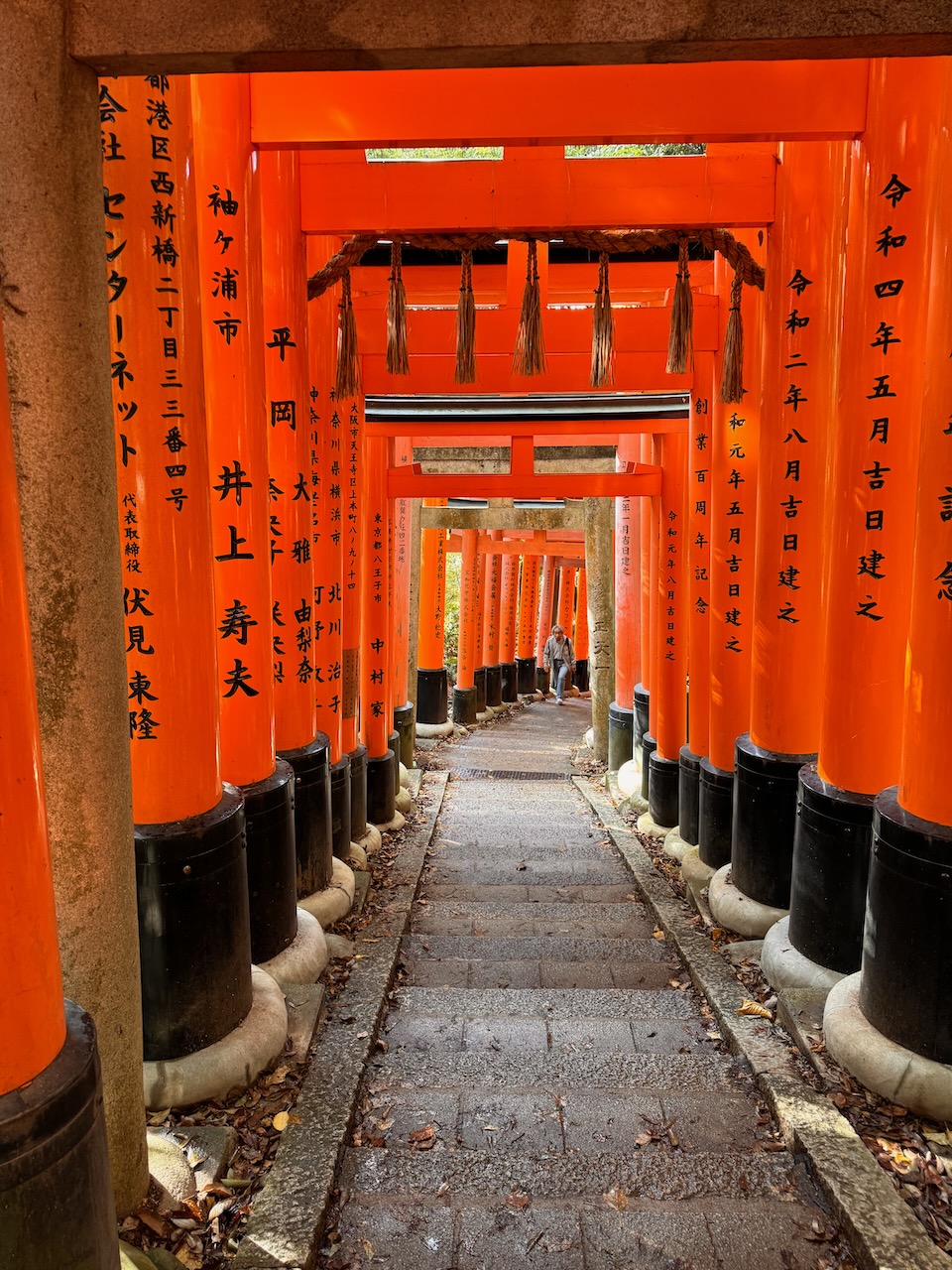
After a while the crowd thins – the morning rain as well as more than 2 km of steps eliminated most of the crowd, so we eventually had people-free photos.
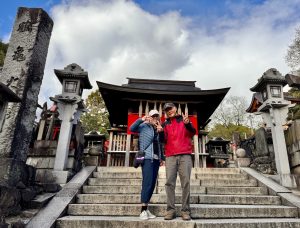
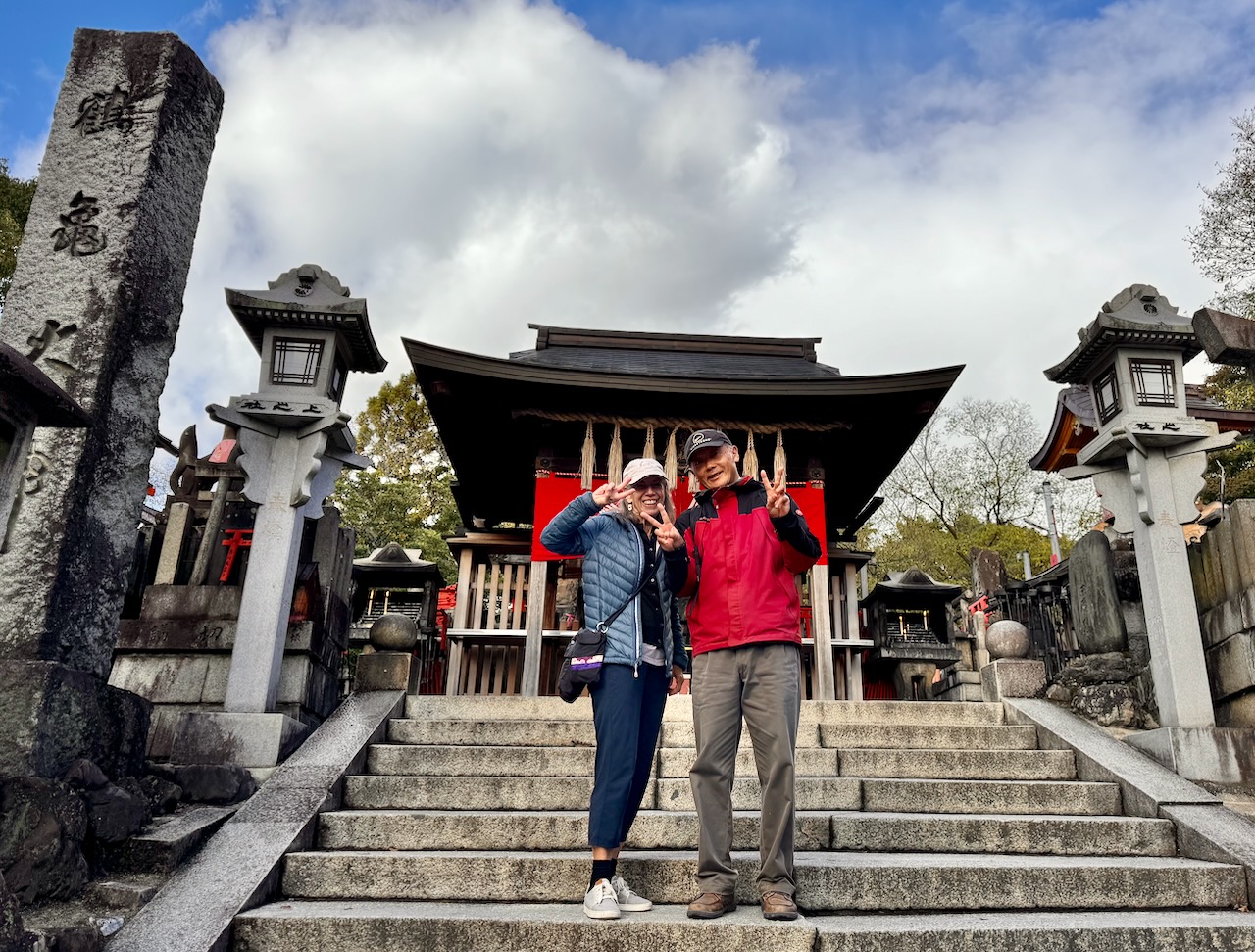
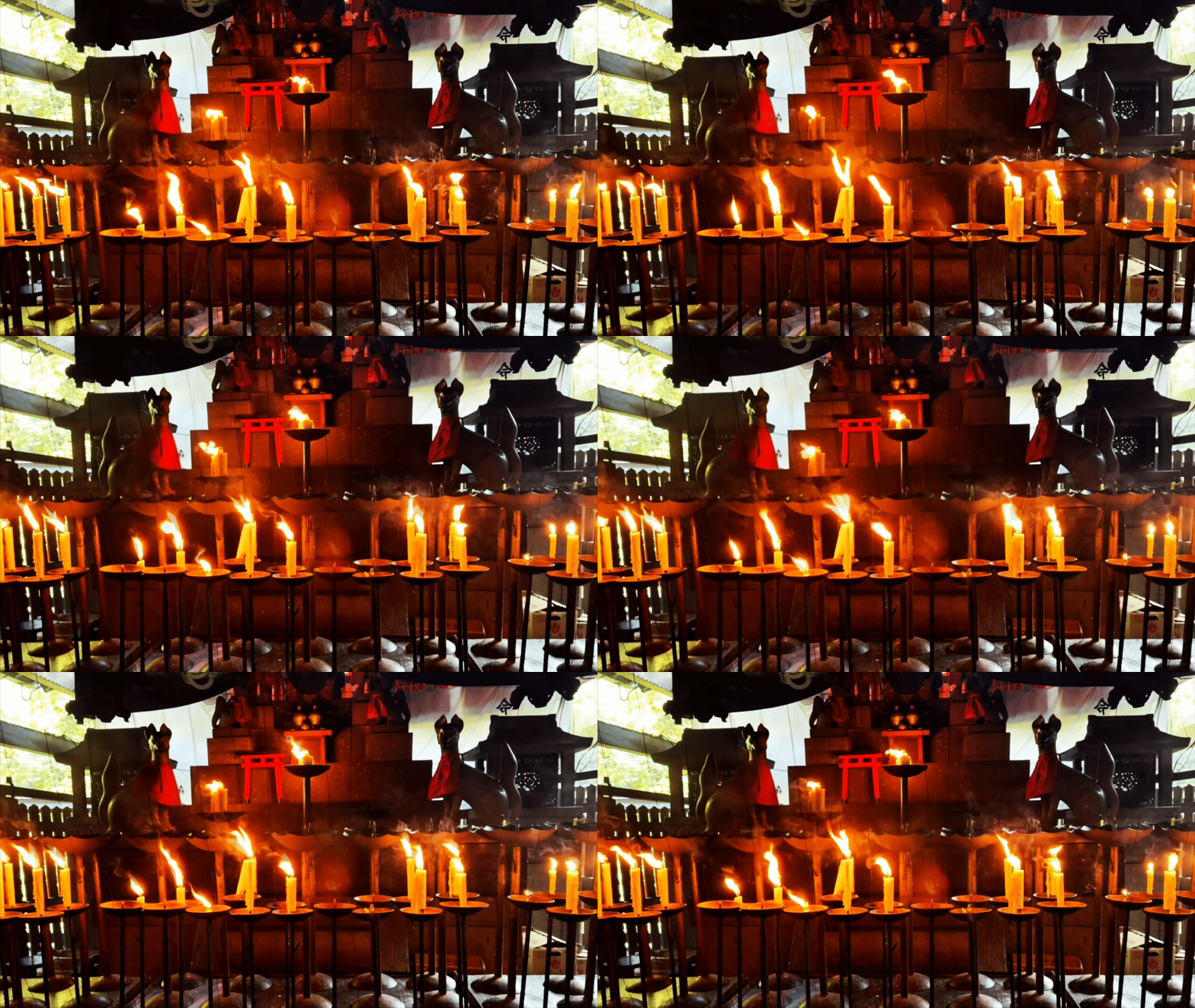
There are three “peaks” on the way to the top. Maza and Mary at one where candles were offered by the faithful. After our bike ride we realized our 4 hour ride turned into 6 hours. Maza claimed to be impressed with our stamina, so much so he was willing to hang out with us longer. Nice!
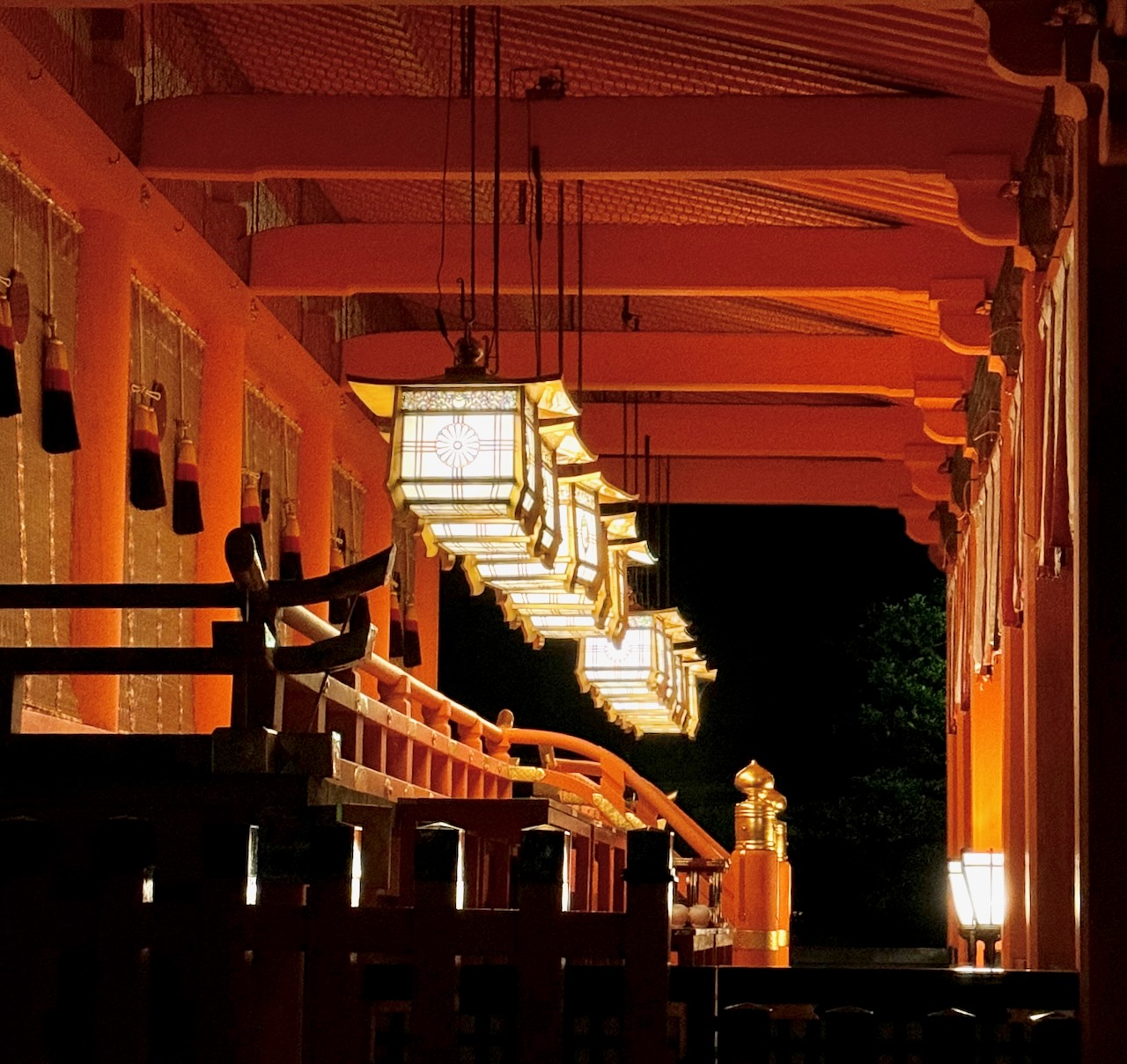
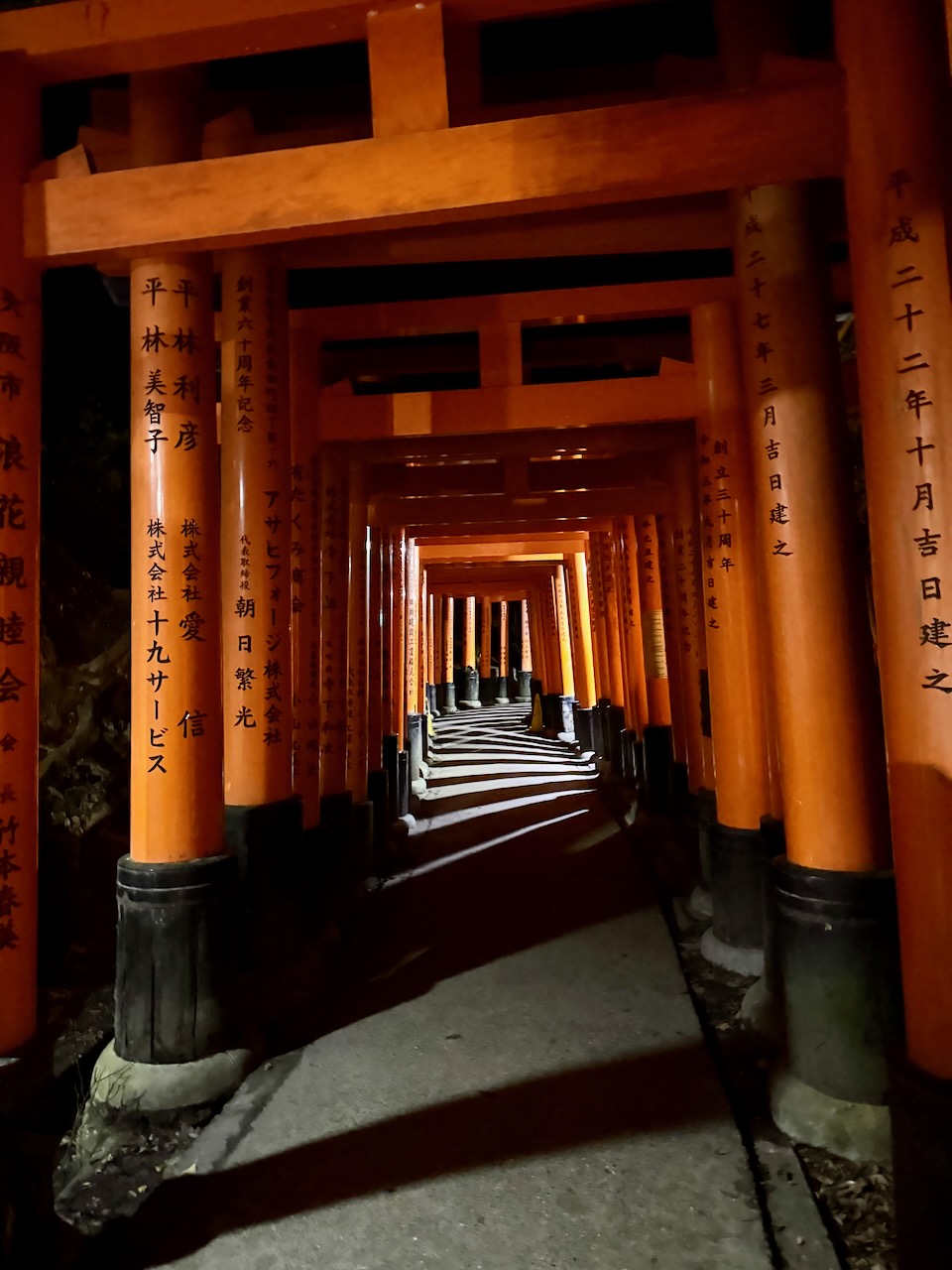
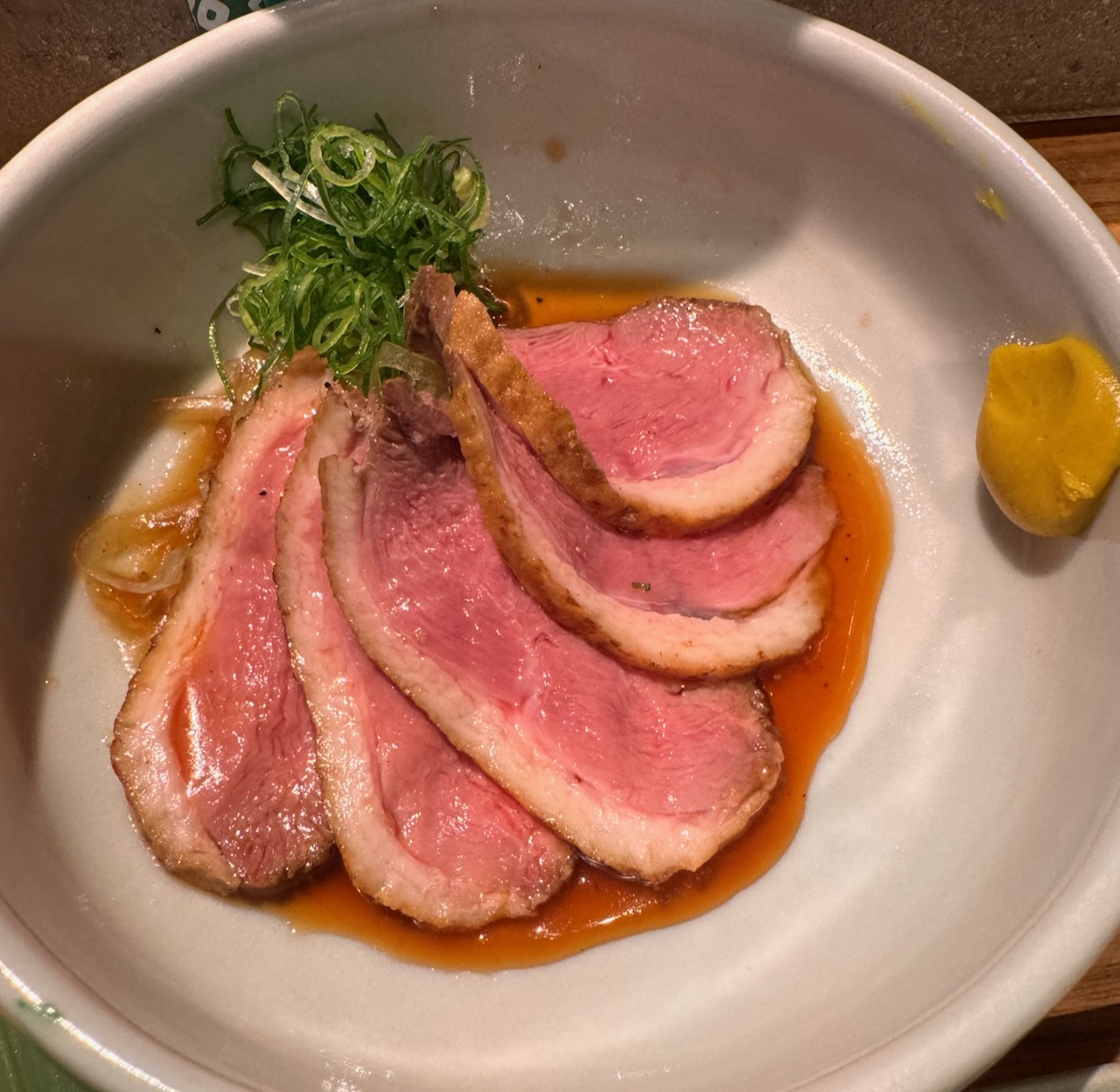
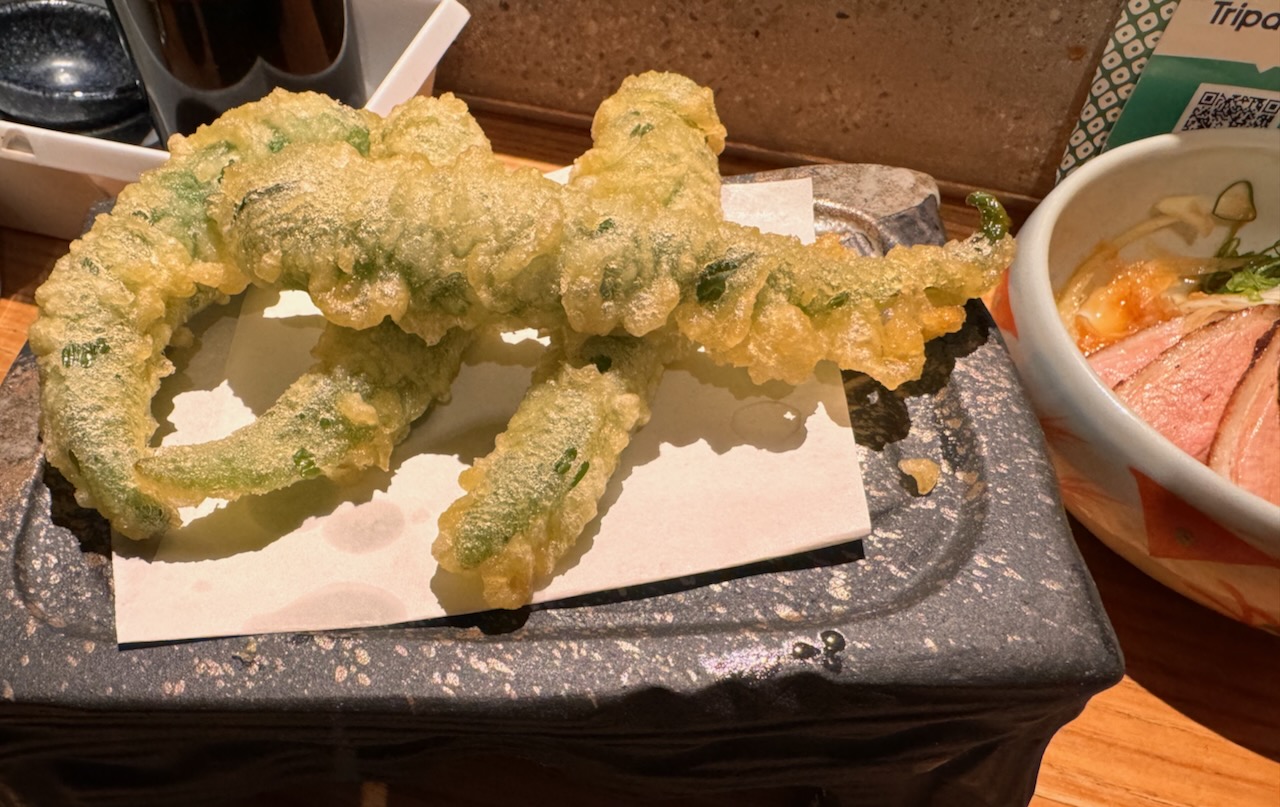
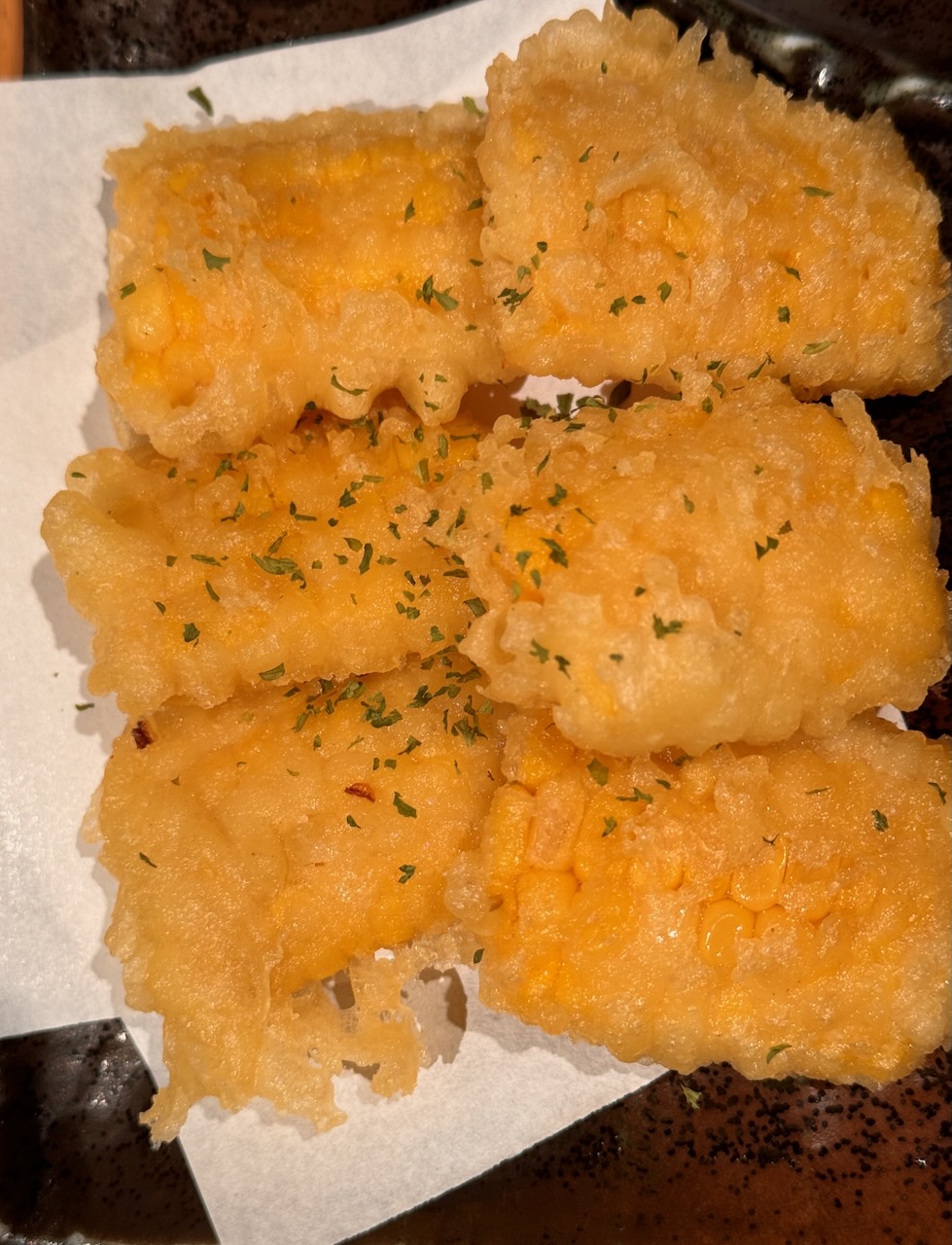
Walking around on our first night we had found EnEn restaurant, and we managed to book it for this evening after much google translating and giggling by all. After dinner we decided to return to Fushimi Inari to see it at night, virtually crowd-free.
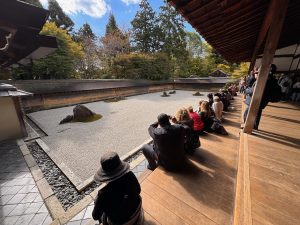
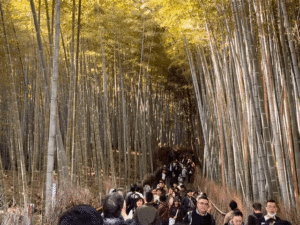
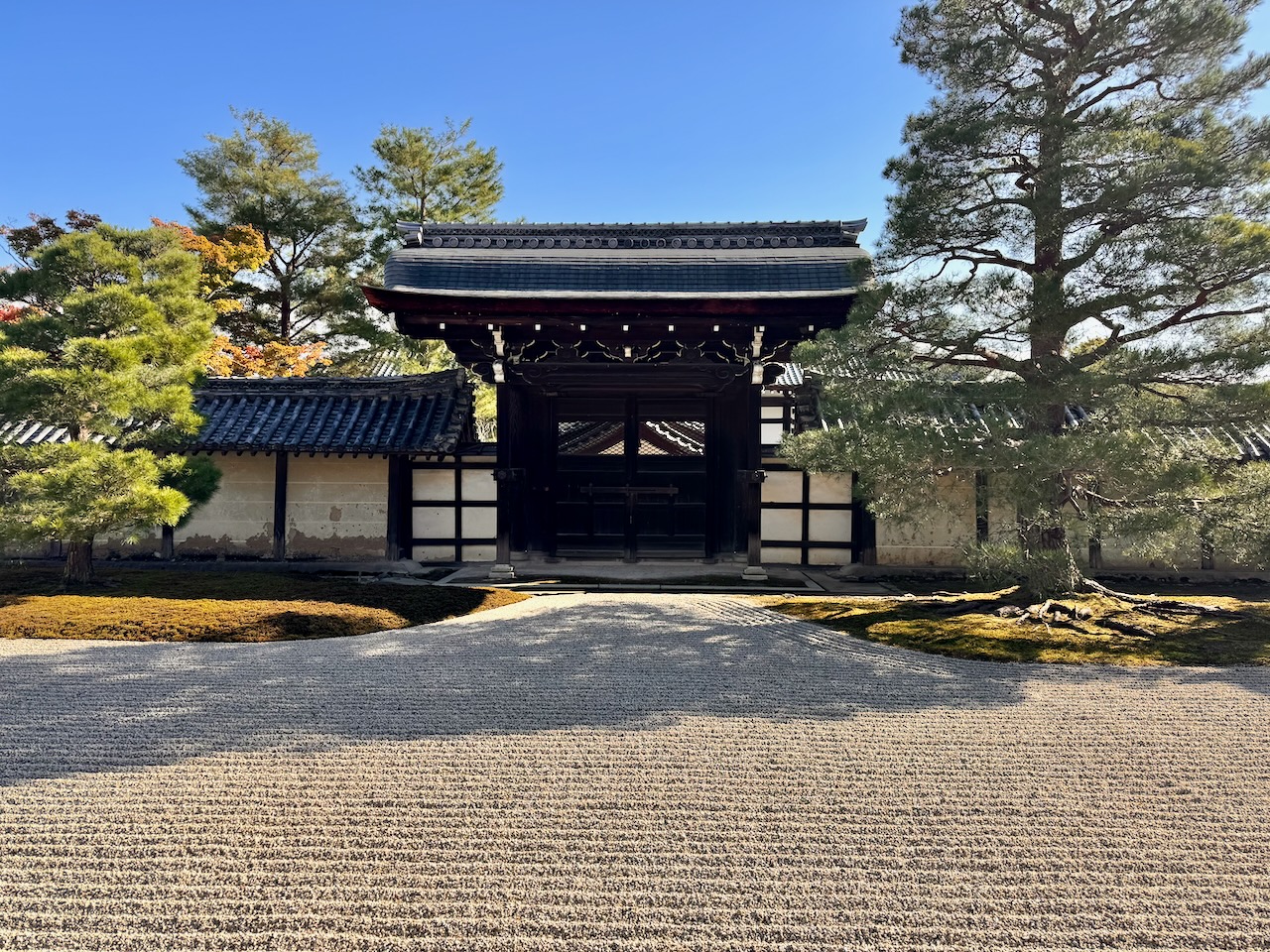
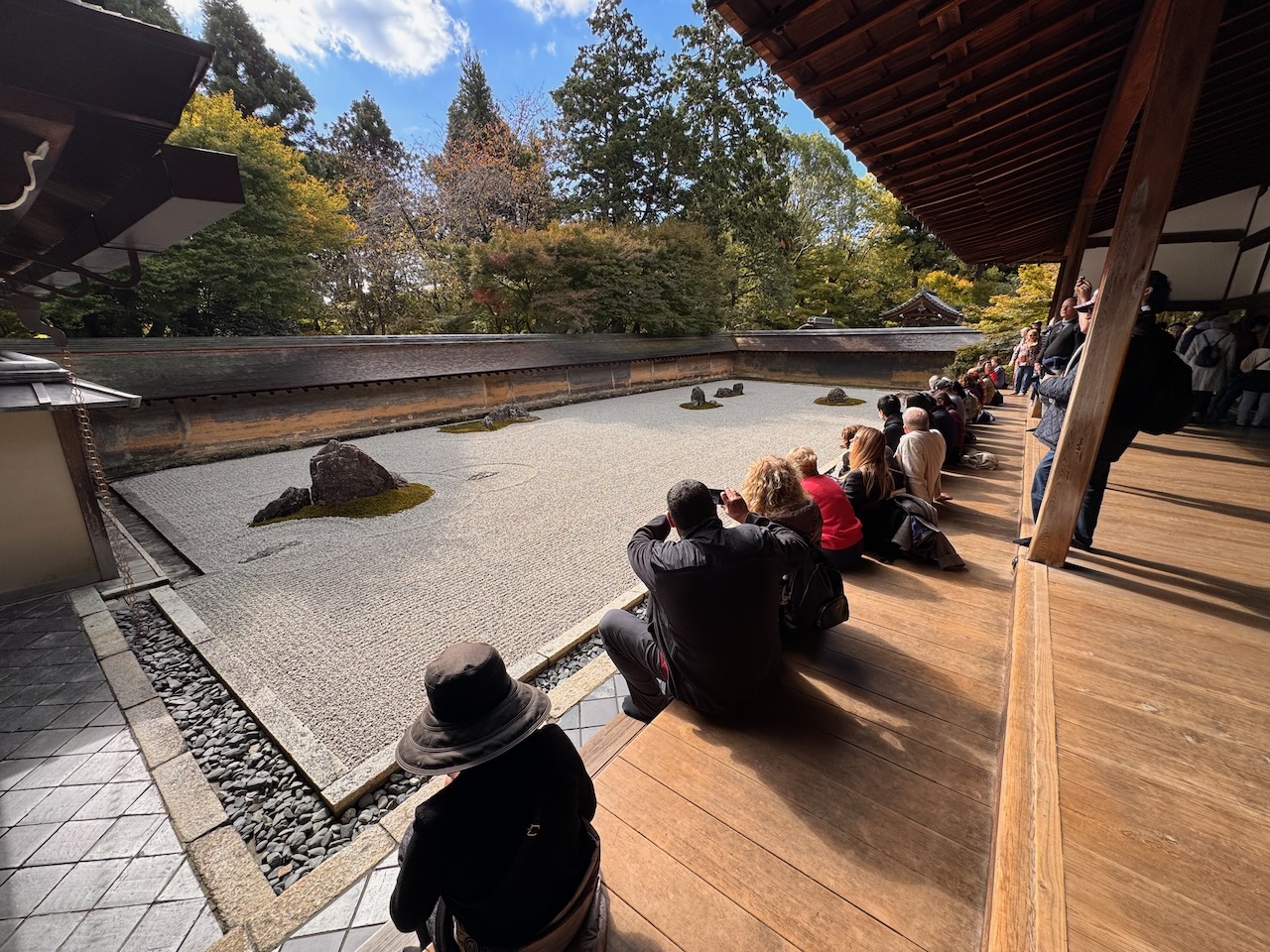
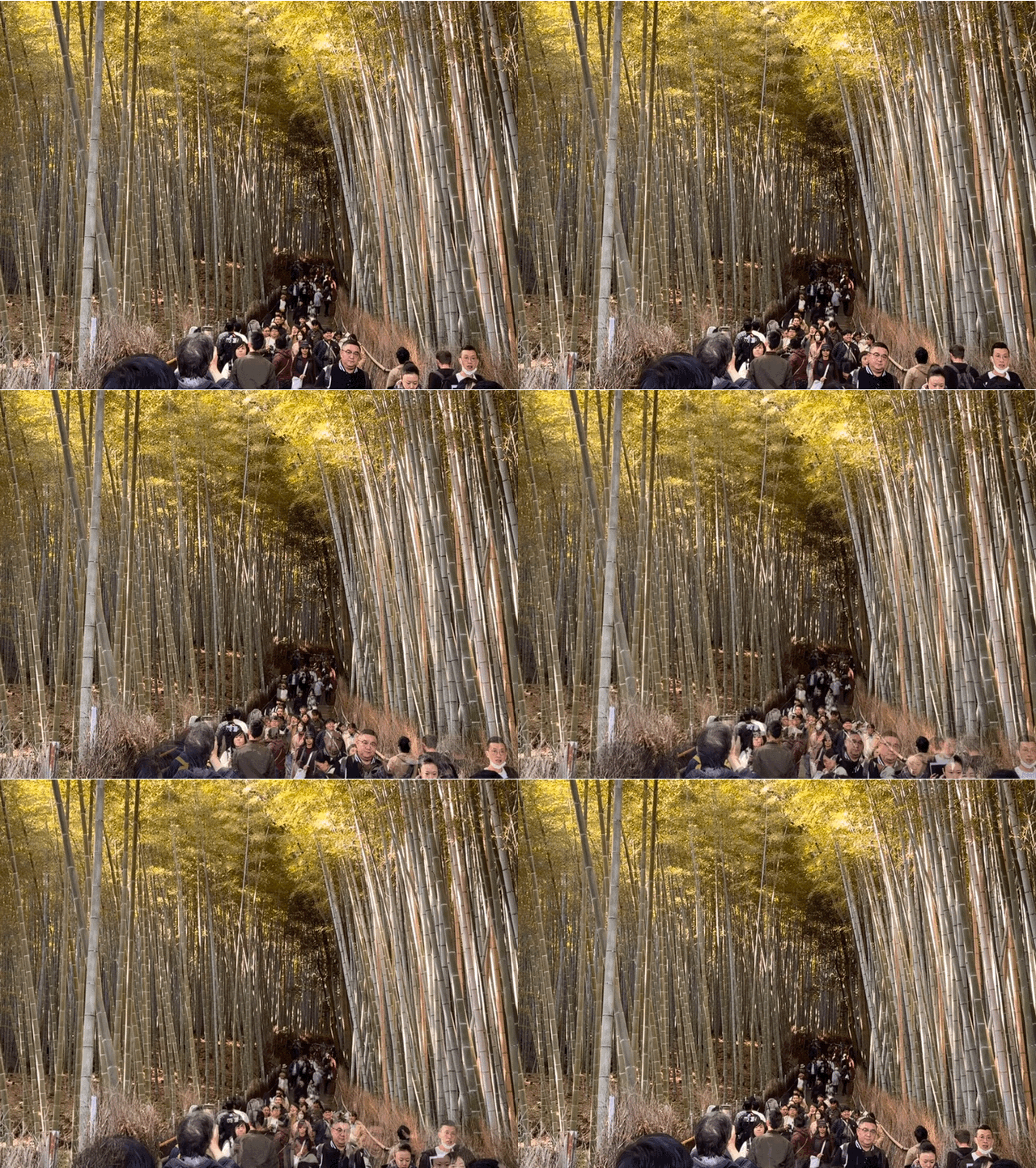
The following day we went to Tenryuji Temple in Arashiyama to visit the famed Bamboo Forest, passing a manicured rock garden in front. Usually simple and devoid of anything other than sand, gravel or stone, they are raked in various shapes. Behind the temple grows the Bamboo Forest. Really over-rated and over-crowded! Next stop, the Ryoanji Temple with its internationally acclaimed rock garden. Small and devoid of trees, this is the most famous one in Japan. Despite its popularity as a place for quiet reflection and wonder, we don’t quite understand the fascination. Nice, but.. !
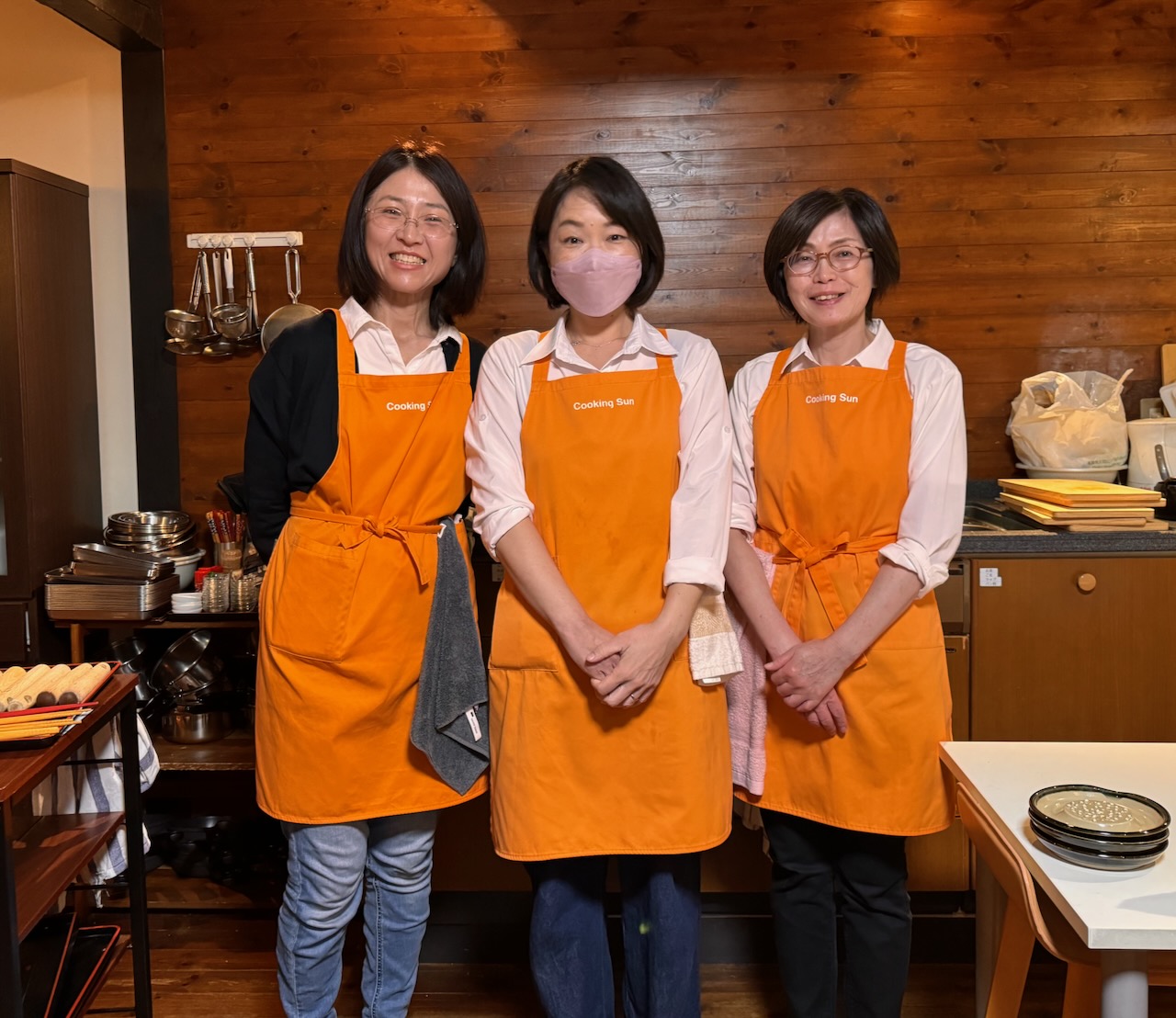
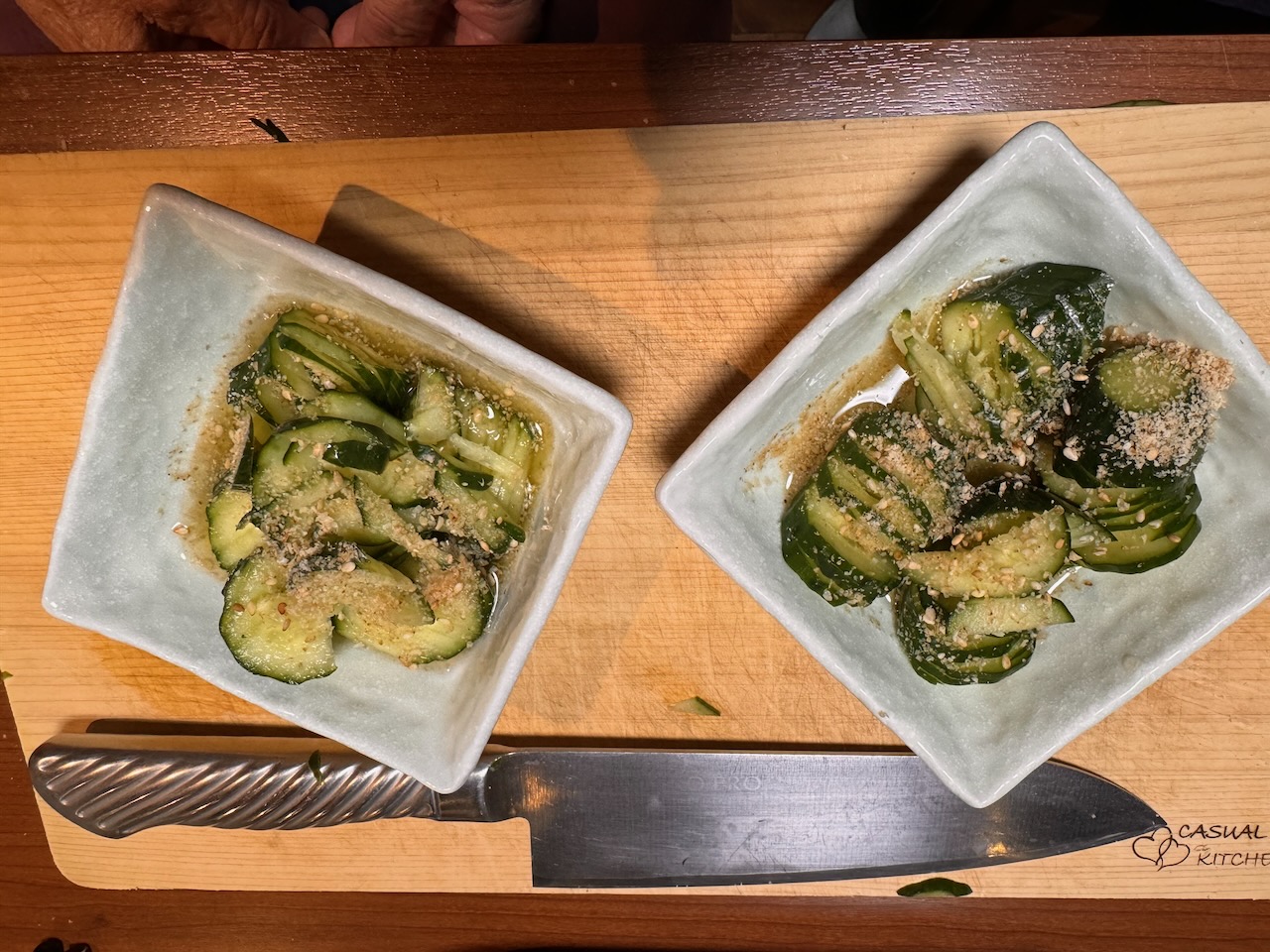
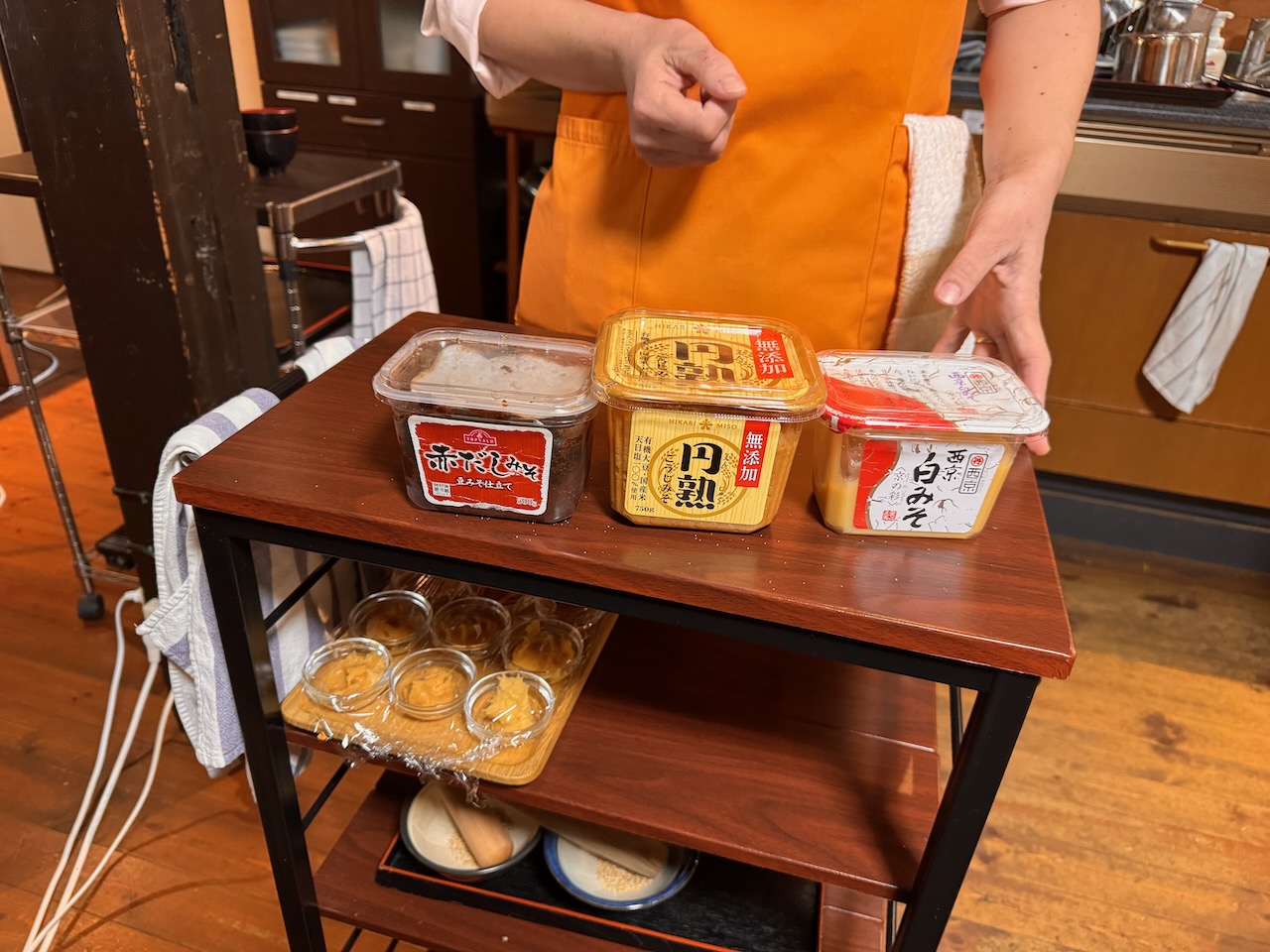
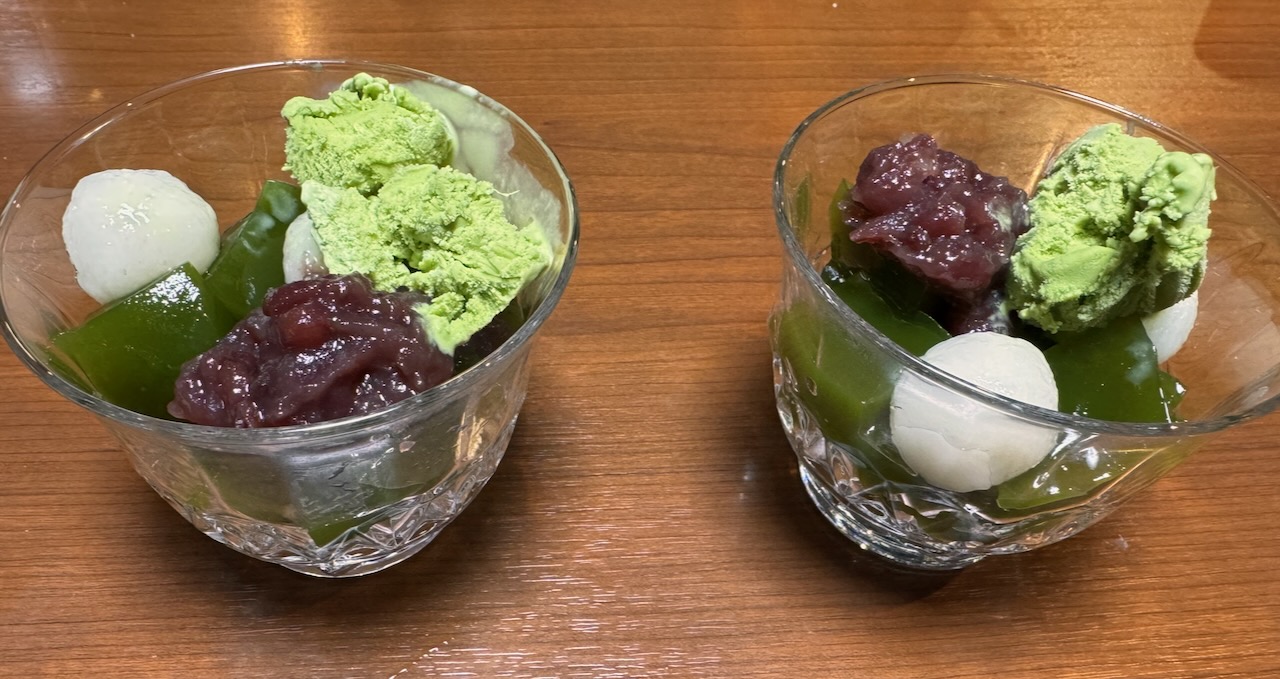
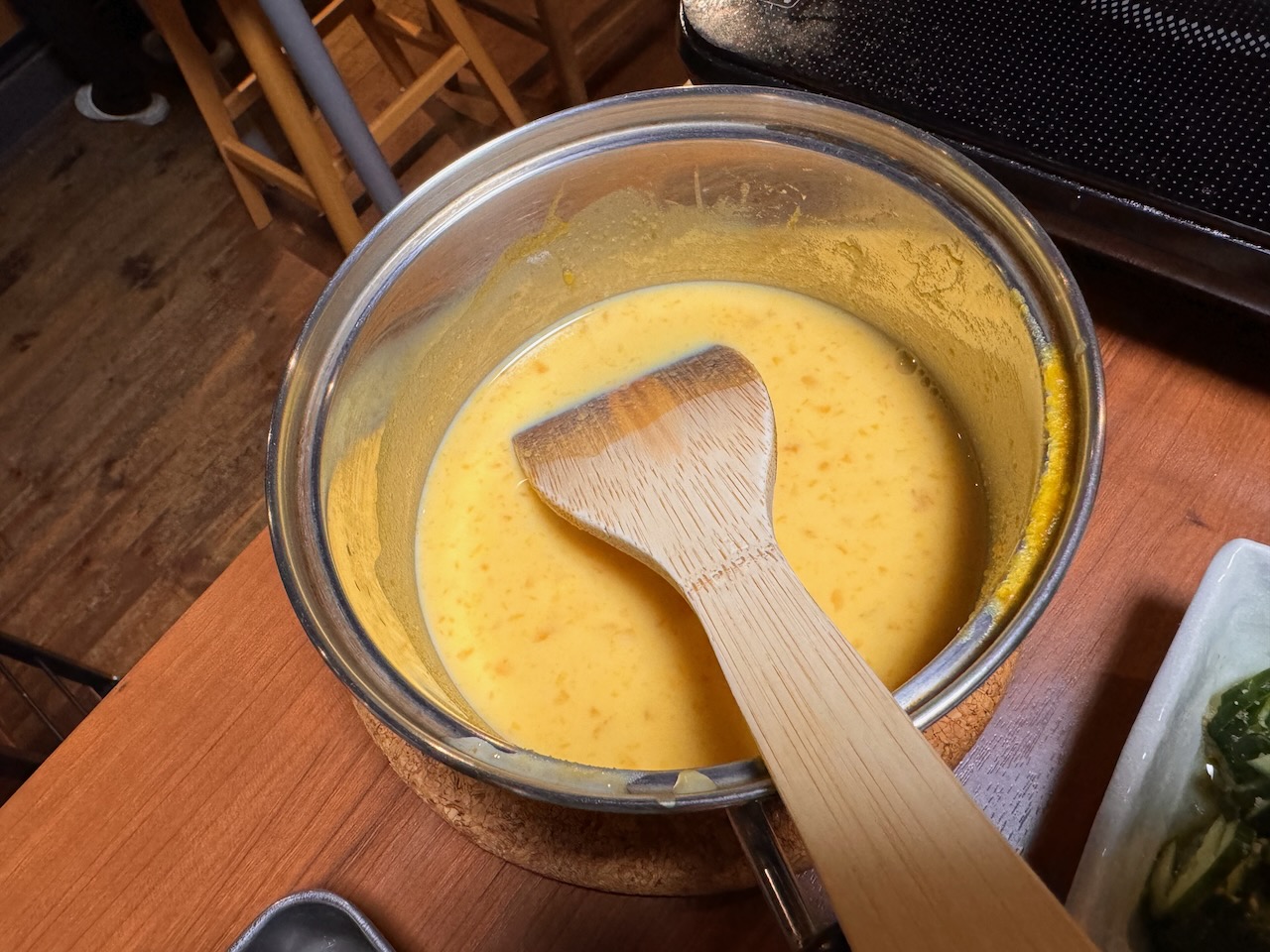
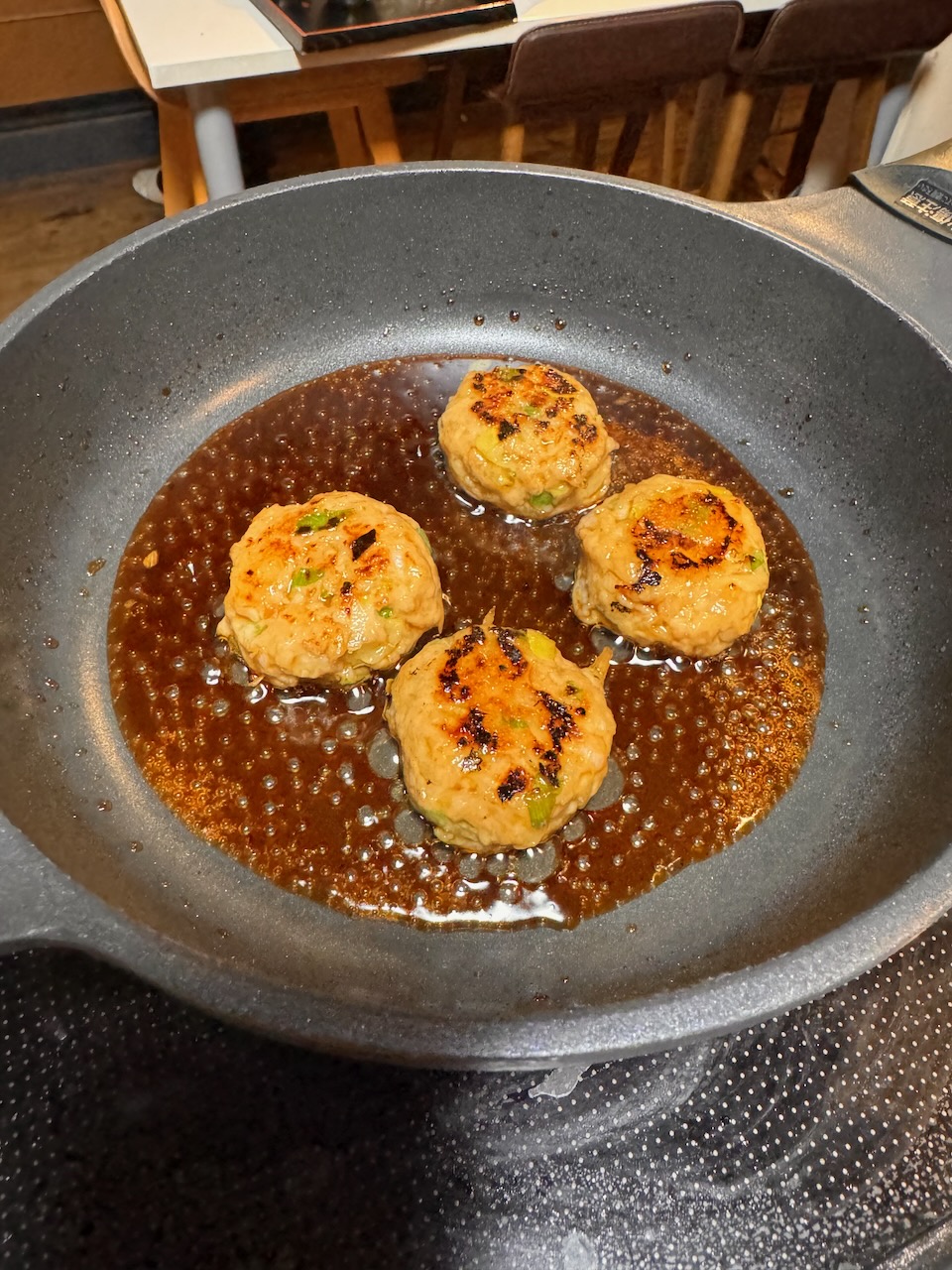
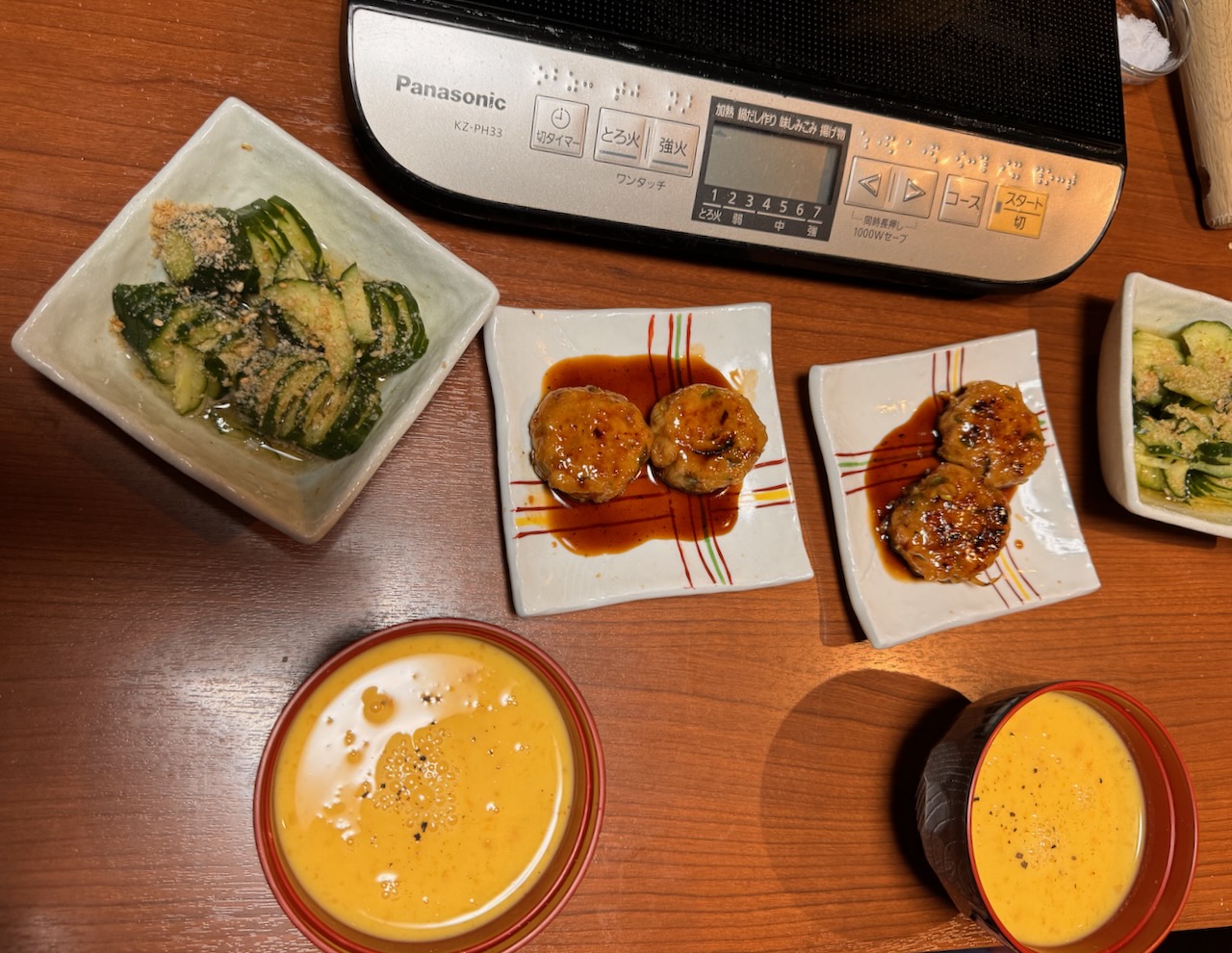
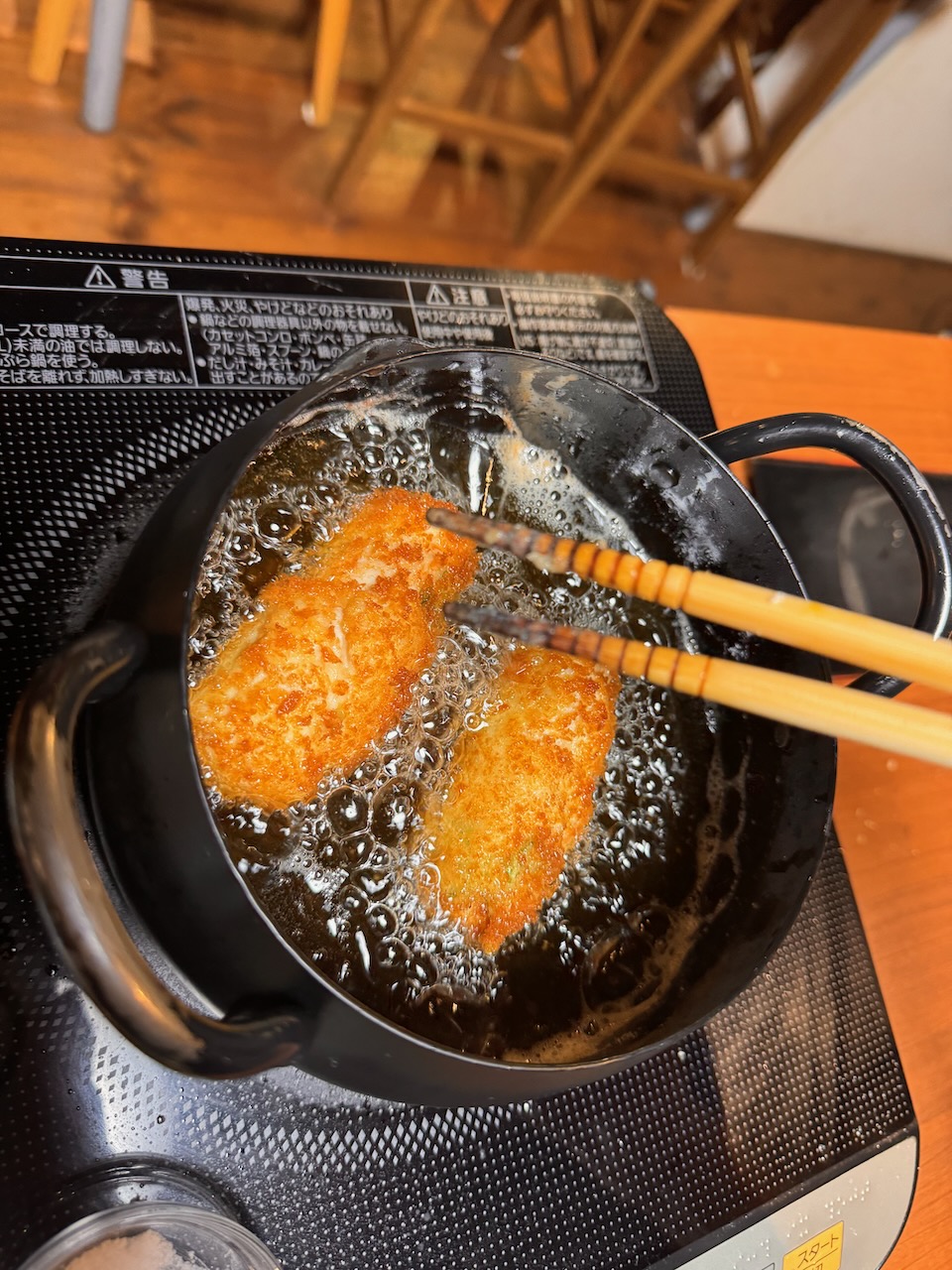
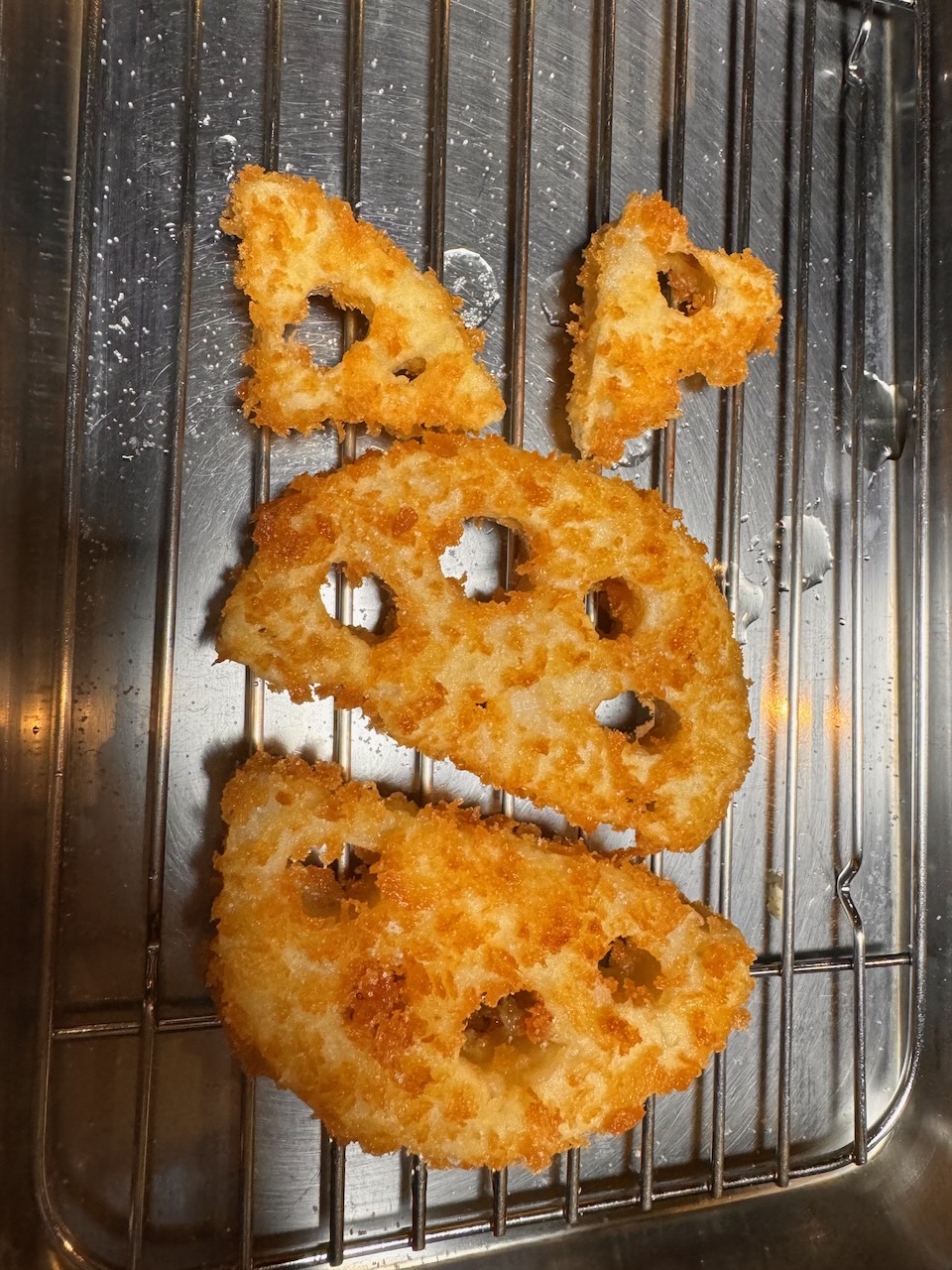
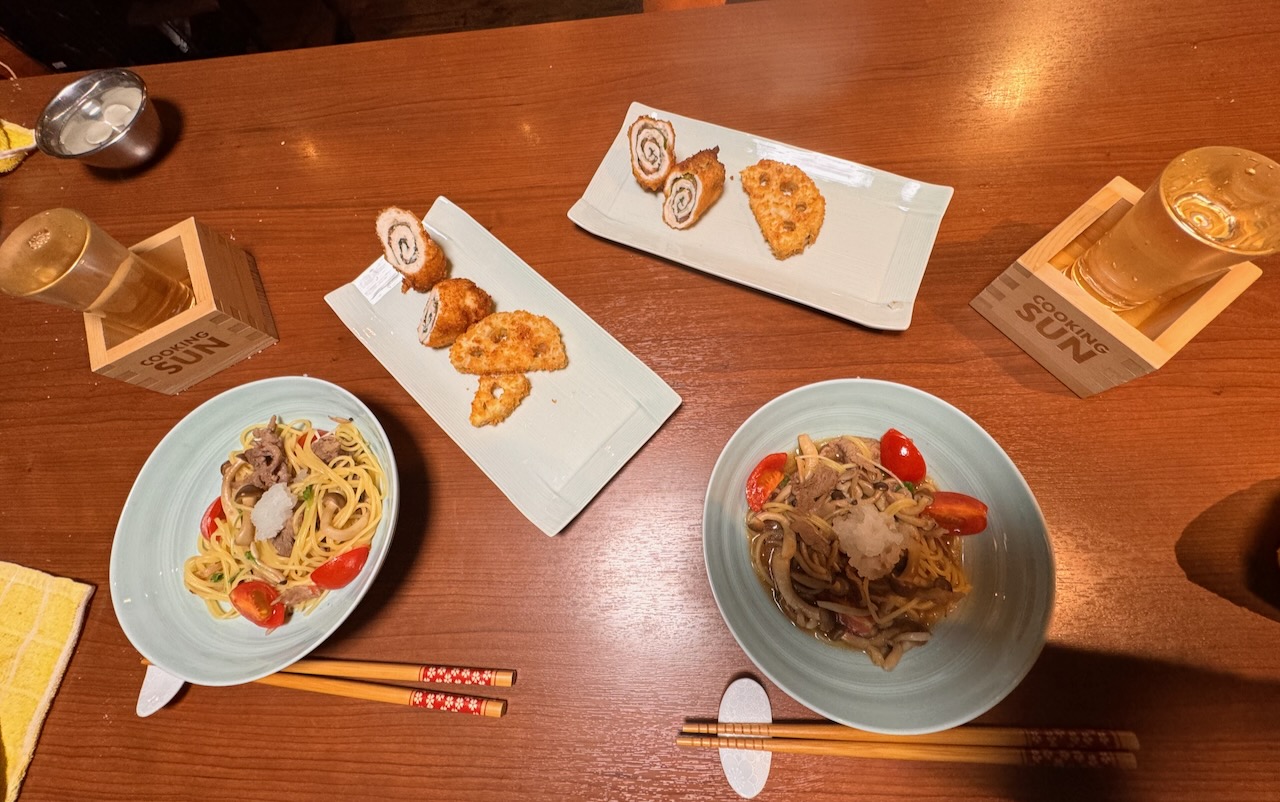
We signed up for an Izakaya cooking class in the afternoon. At Cooking Sun we were tutored under three professional chefs. In addition to a basic Japanese soup stock, known as dashi, we made pickled cucumbers, grilled chicken and burdock meatballs, pumpkin soup with white miso and soy milk, deep fried chicken fillet with salted plum and shiso leaf, pasta with beef and a matcha parfait.
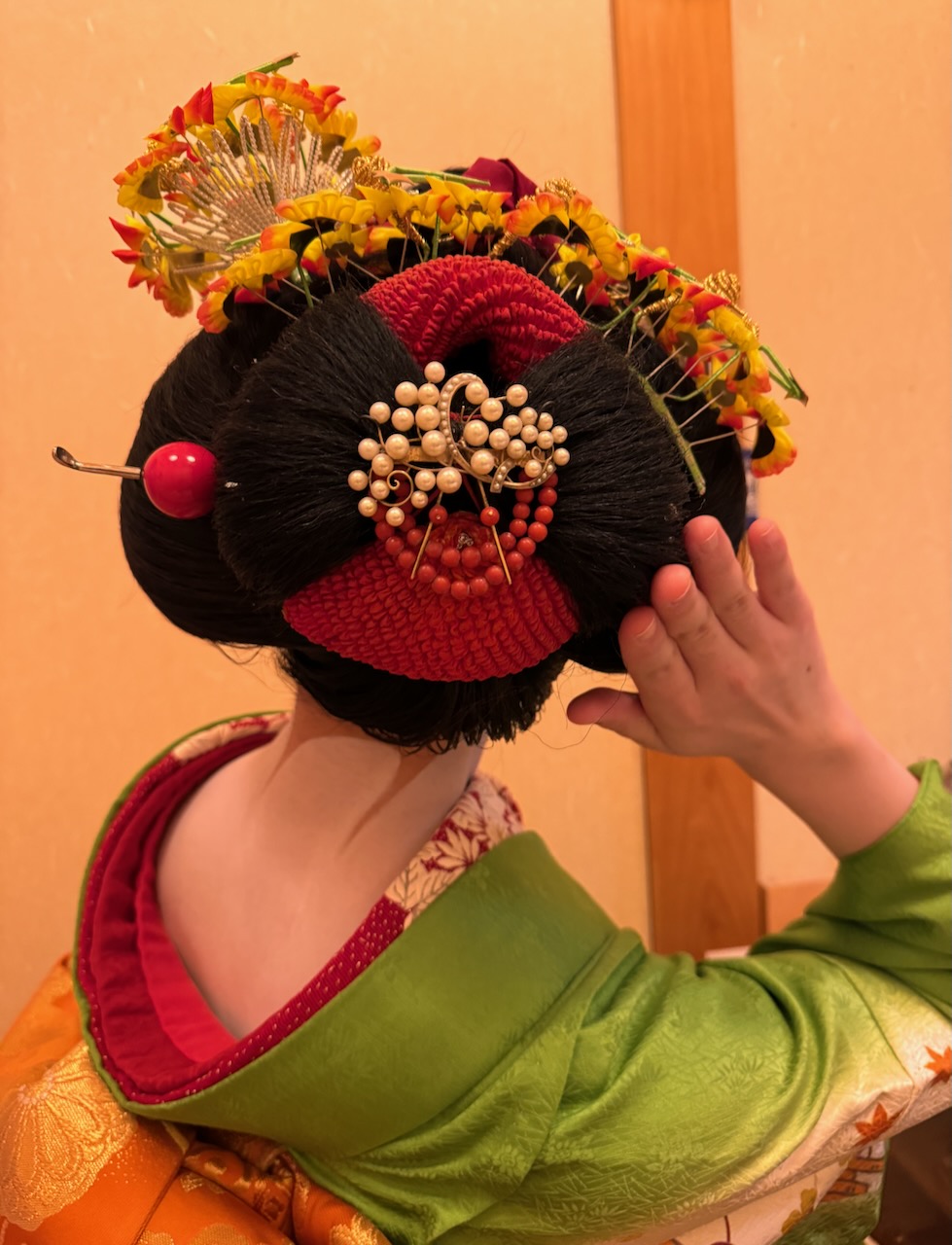
One evening we spent with a guide, a former Canadian, Peter, who is intimately familiar with the Geisha world having been married to one and now married to a retired geisha. On the evening, we strolled to the home of a former geisha, now a “mother” to maikos. We met with “Lucky Pine” a third-year apprentice who conversed with us, with Peter translating. She was quite willing to answer questions about her training, education and trade as a Maiko. She was a fascinating, almost childlike 19-year-old, very tiny in stature and sweet and innocent in demeanor.
Maiko are hired by women and men alike for conversation and entertainment. They are educated in the arts, are agreeable and very polite. Peter and his current wife, a former geisha, enjoy the regular company of a maiko or geisha for dinner.
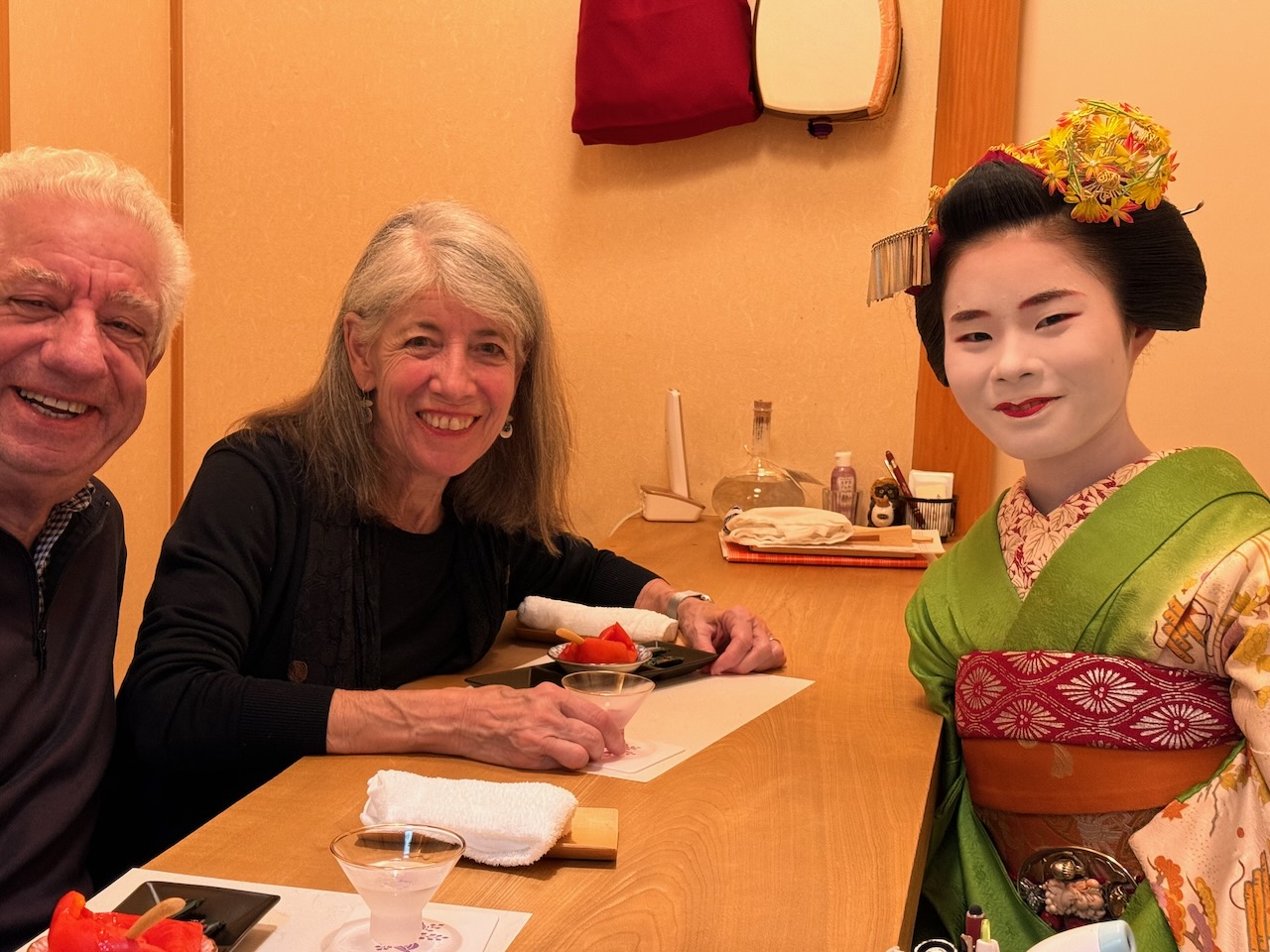
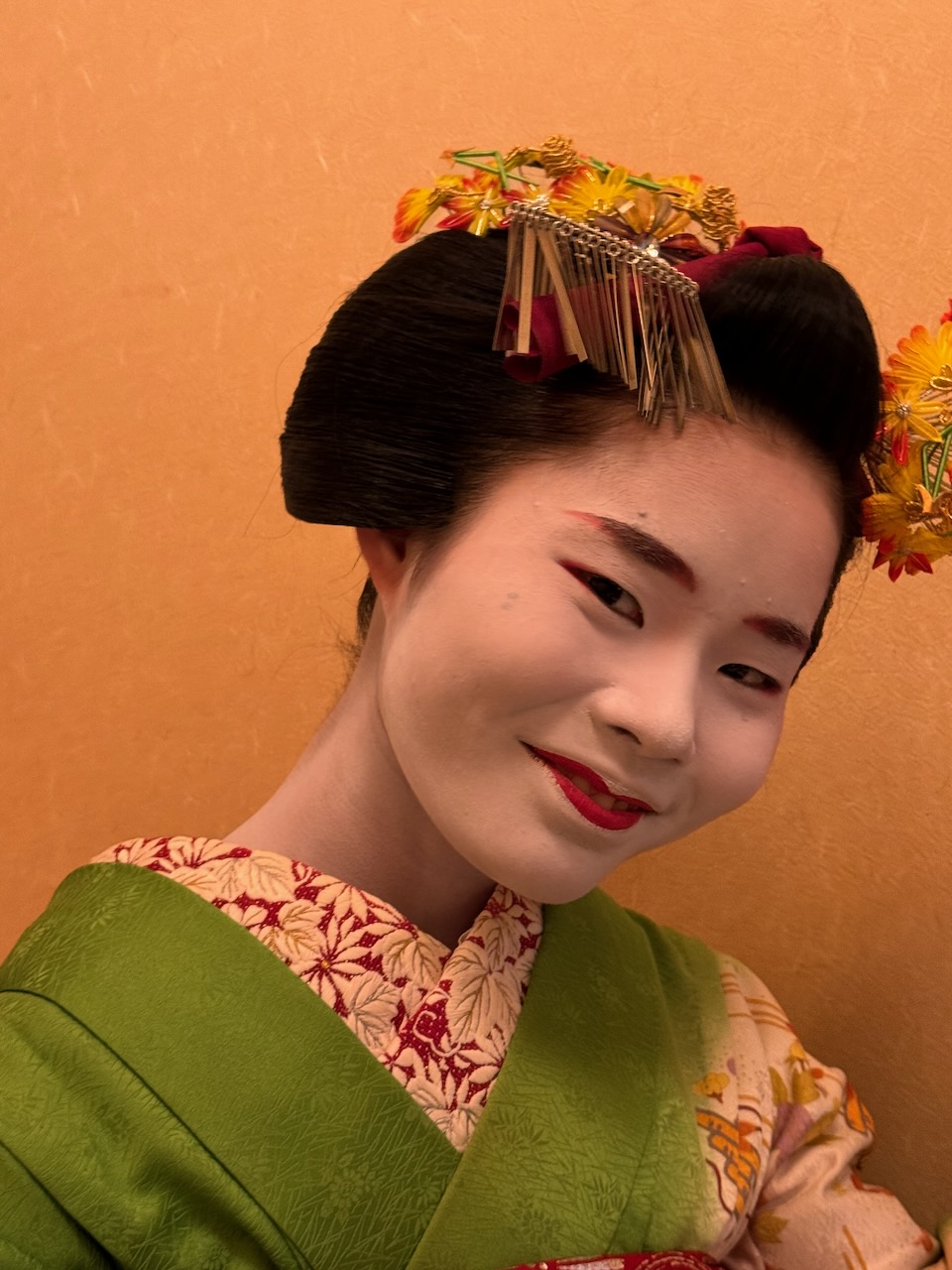
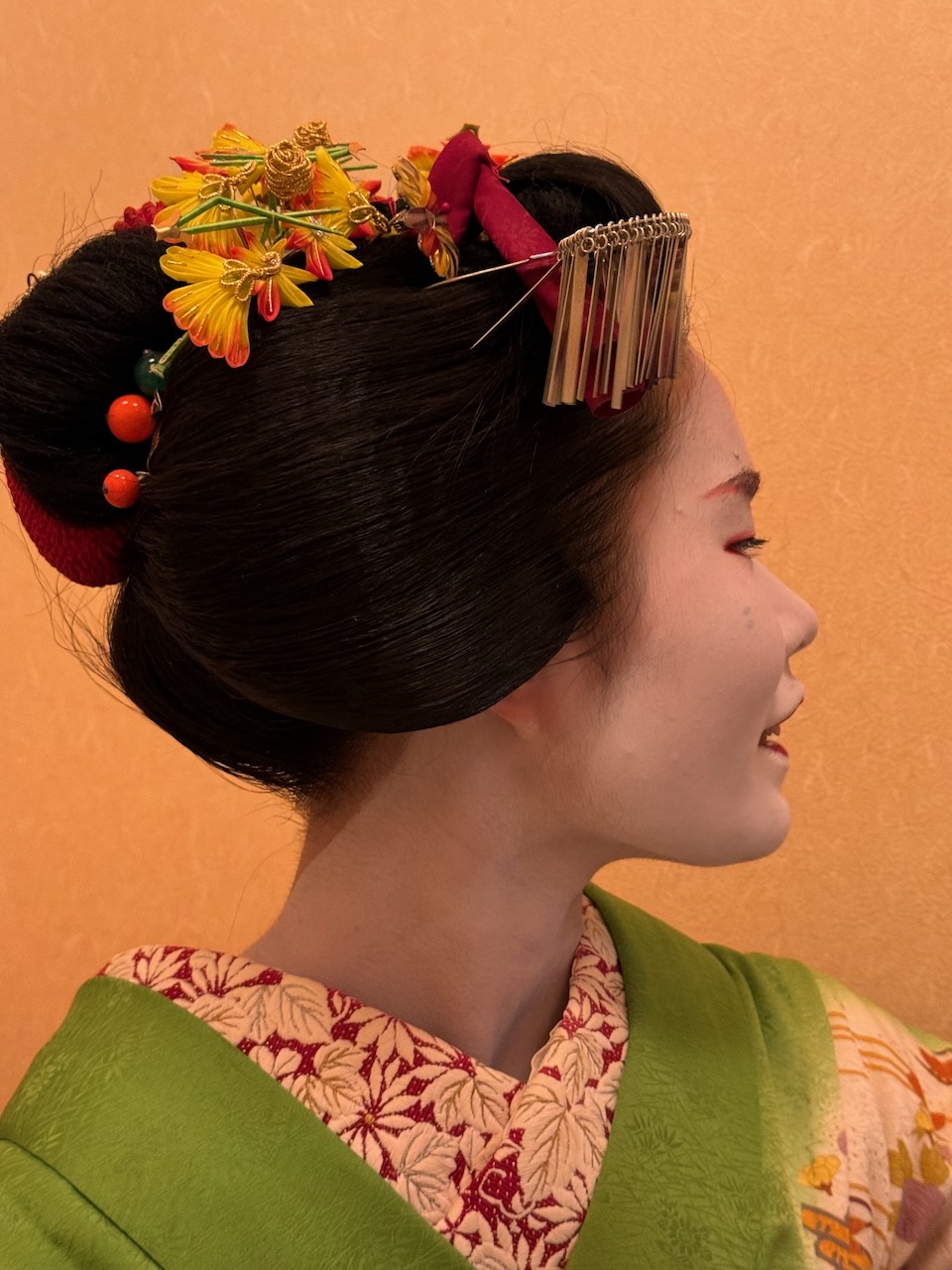
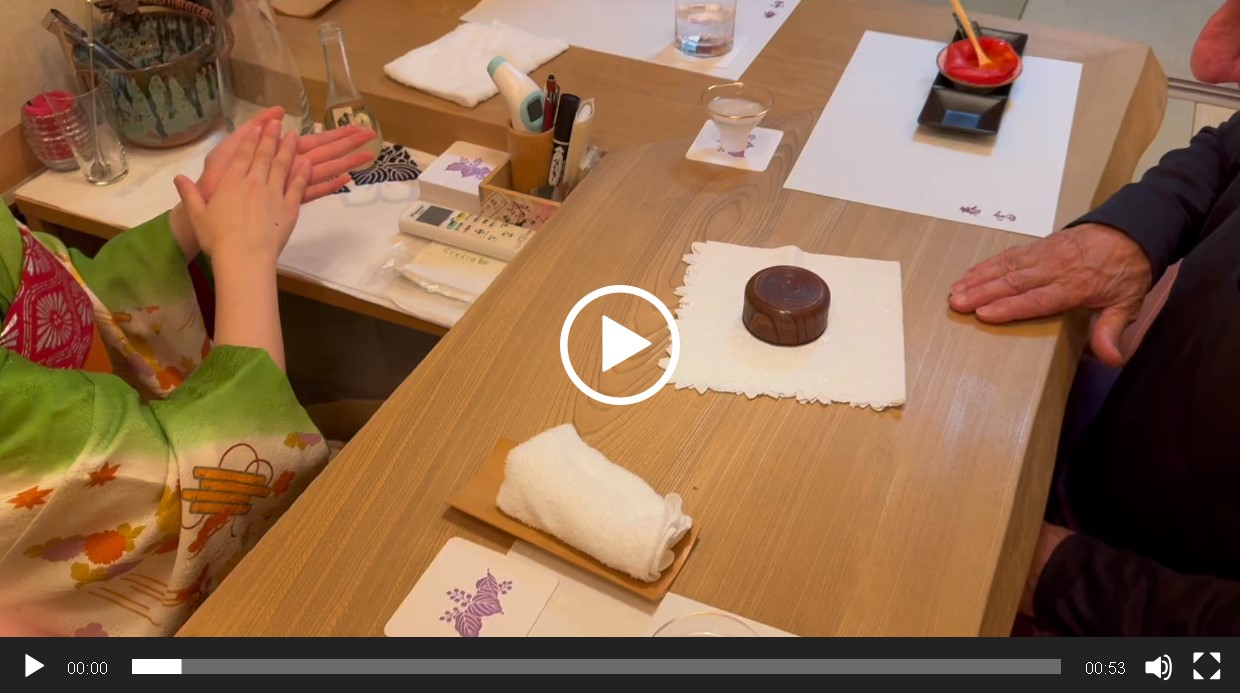
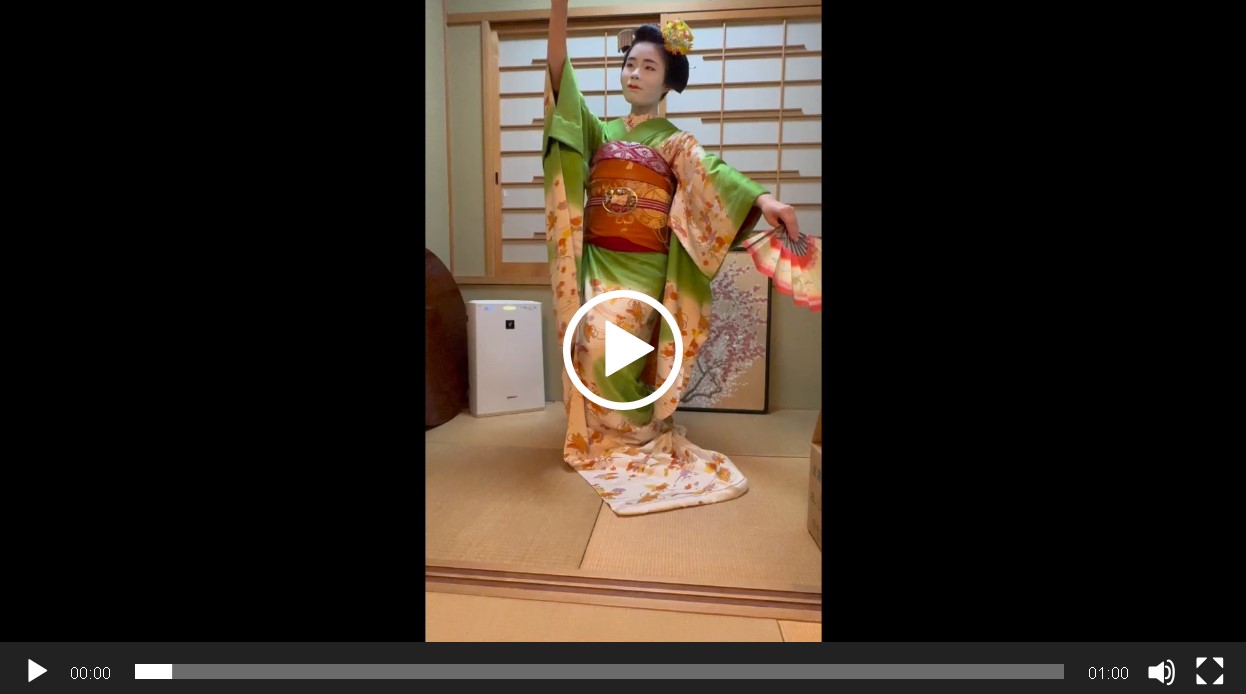
As part of Lucky Pine’s entertainment she introduced us to a Japanese game similar to rock, paper, scissors, except this game involved a puck and sake. We both had a try at playing much to her amusement. She also performed a classic Japanese dance for us, accompanied by her “mother”. Her talent seemed a bit weak in this area.
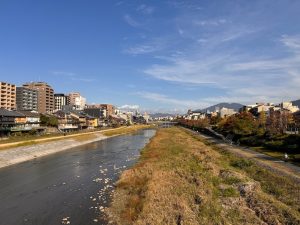
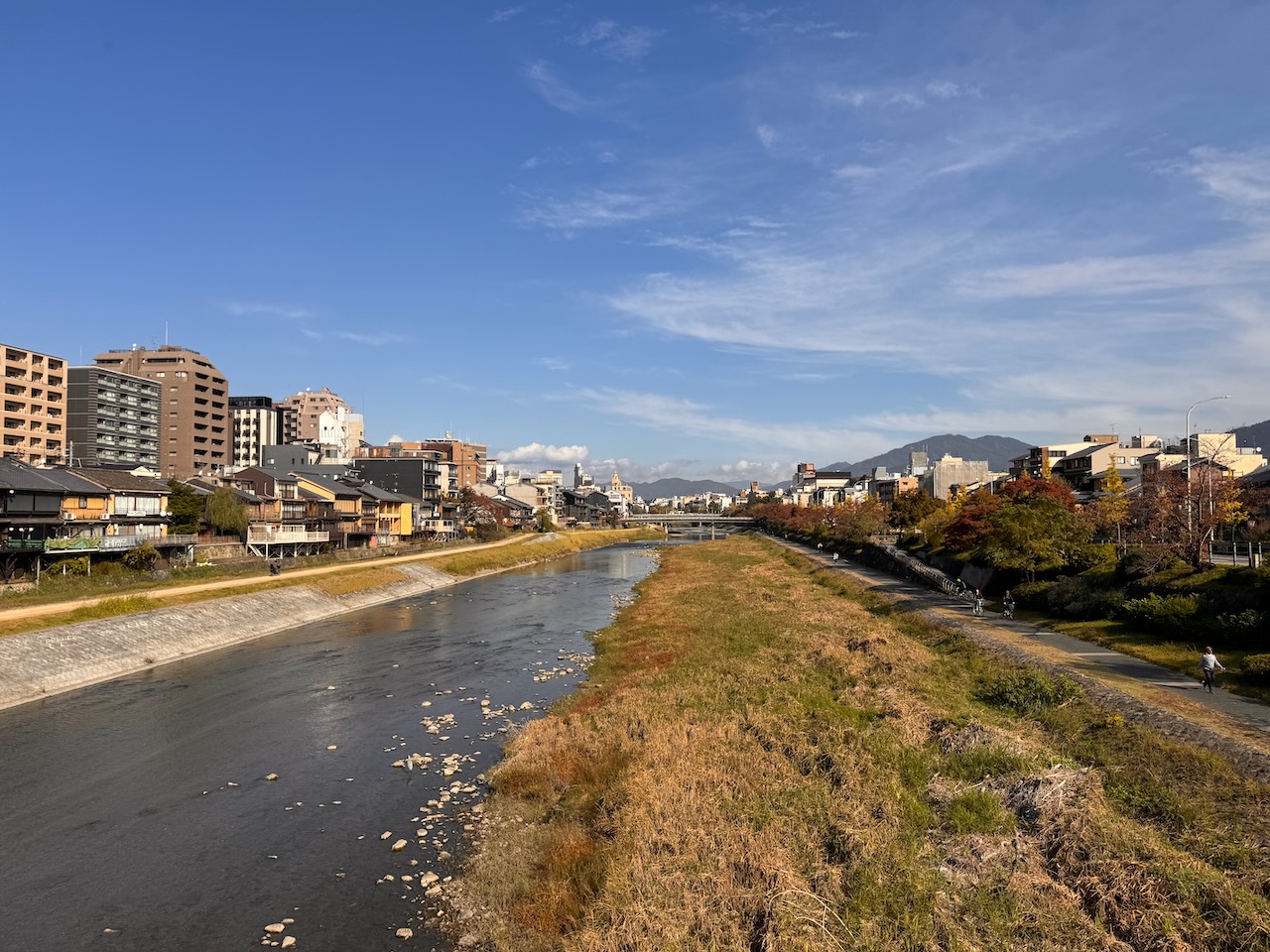
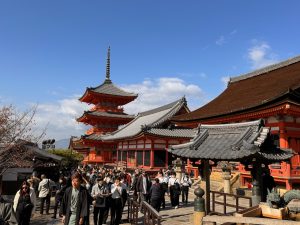
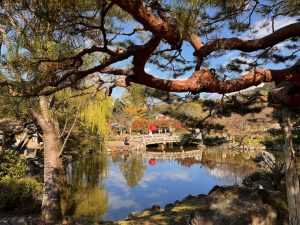
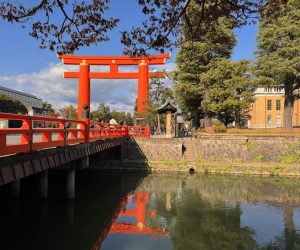
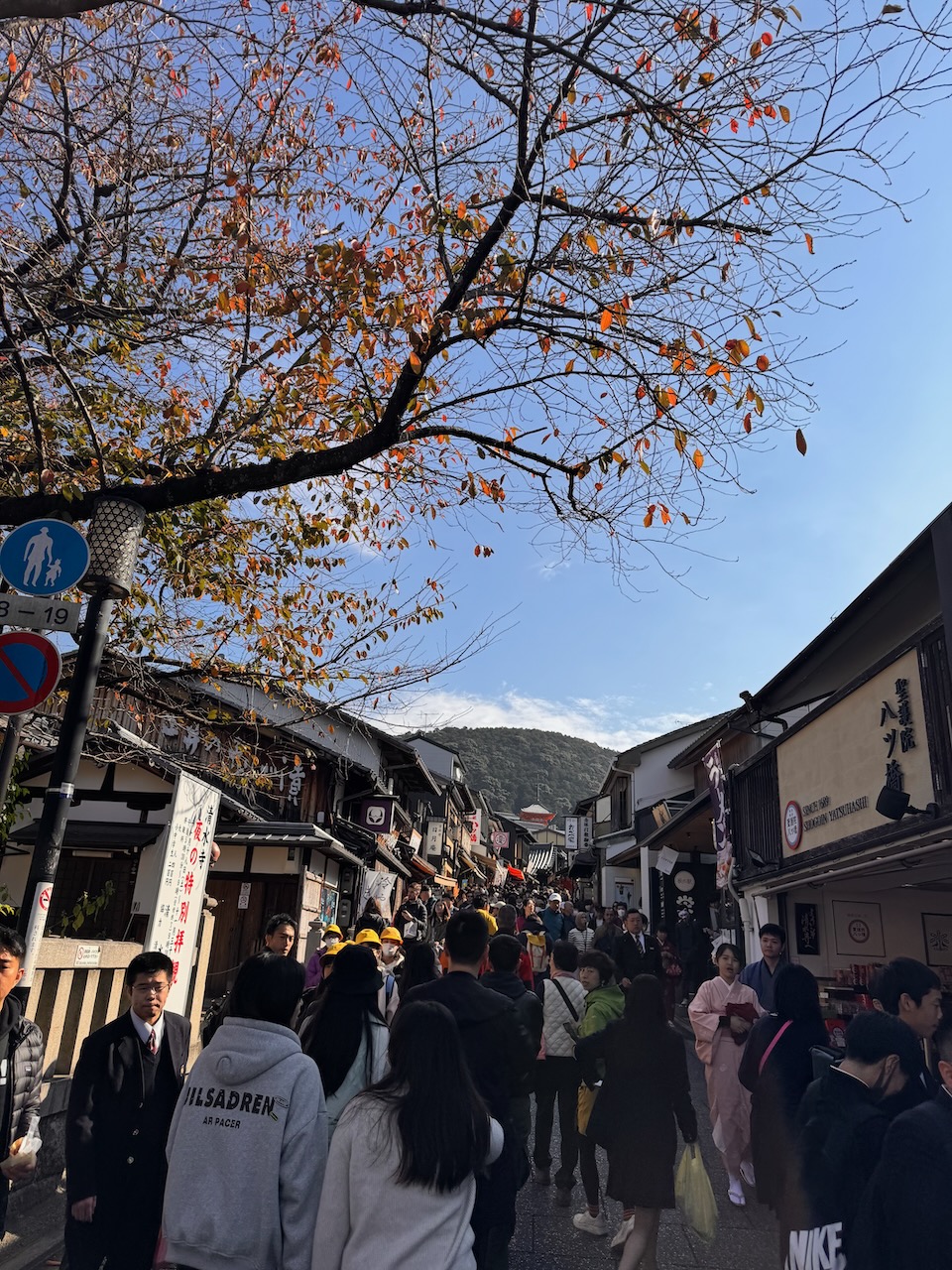
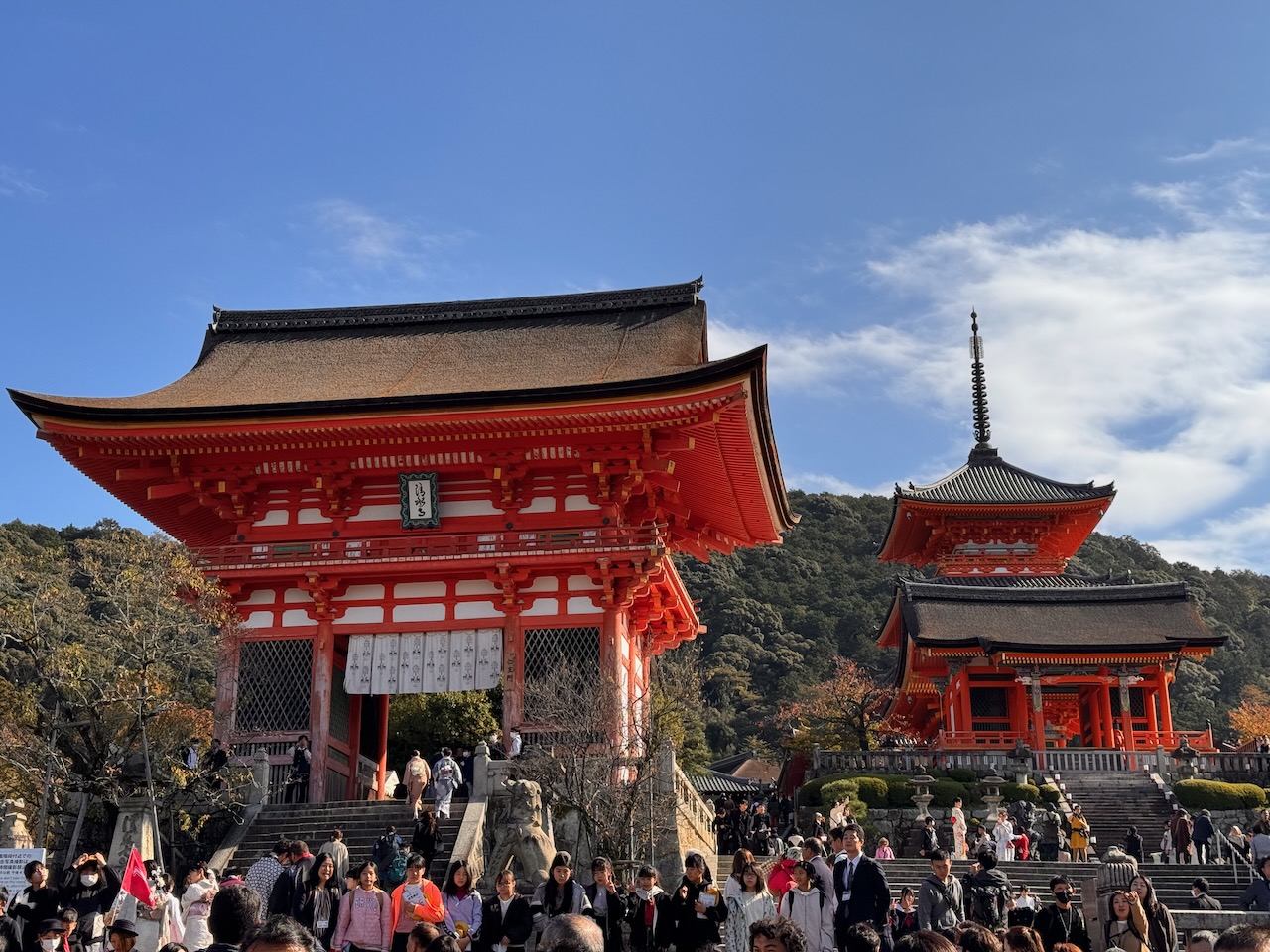
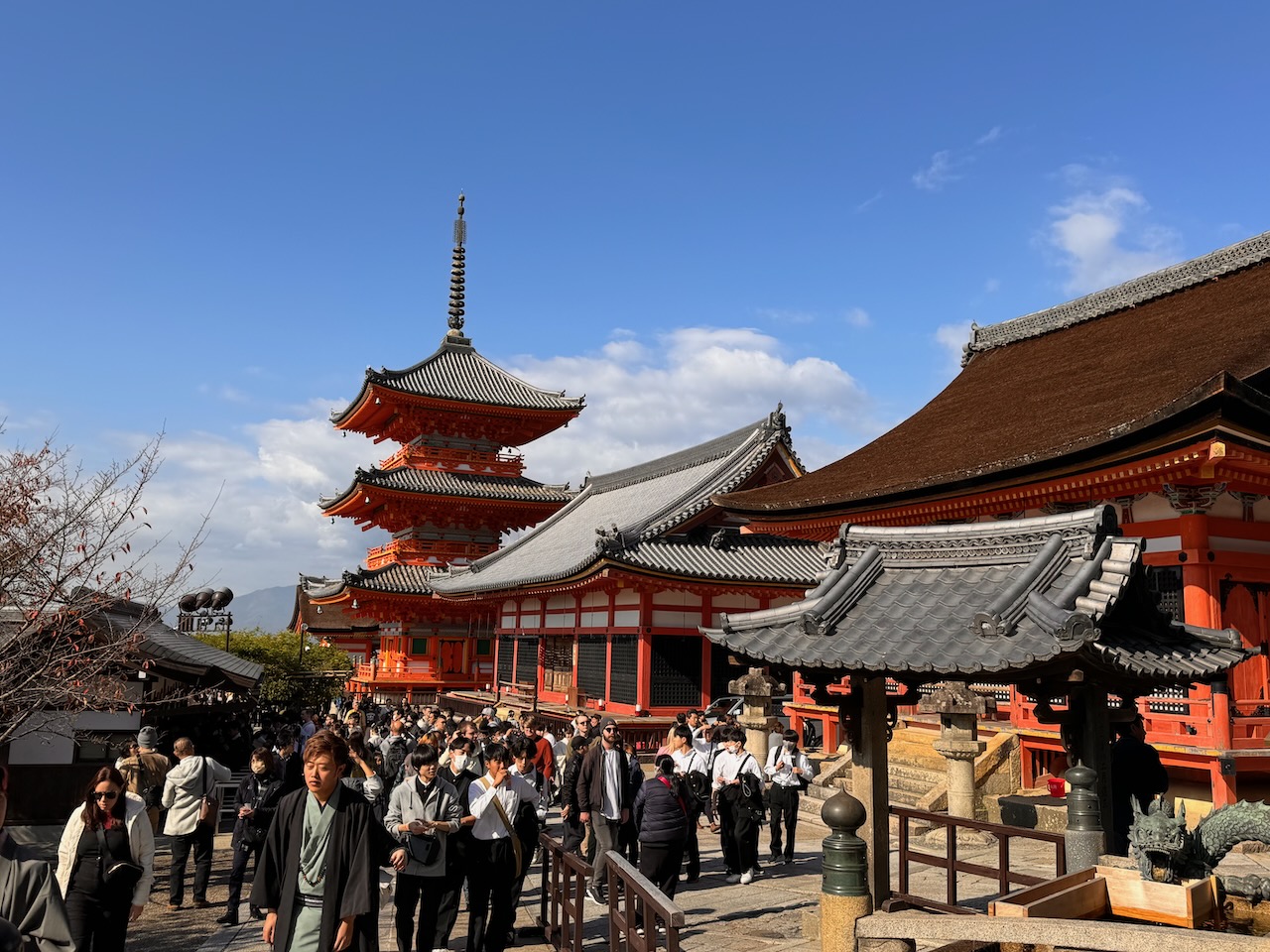
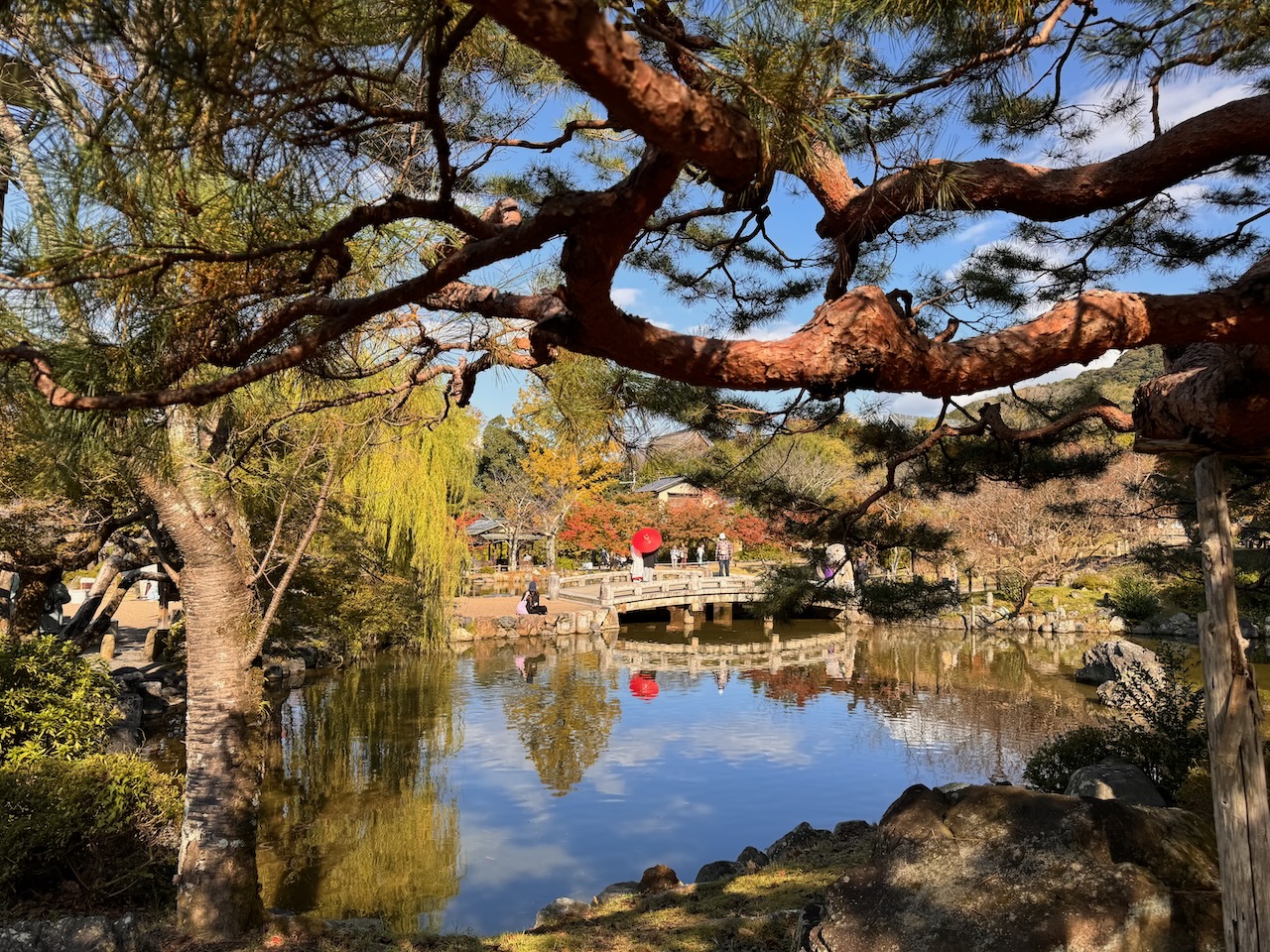
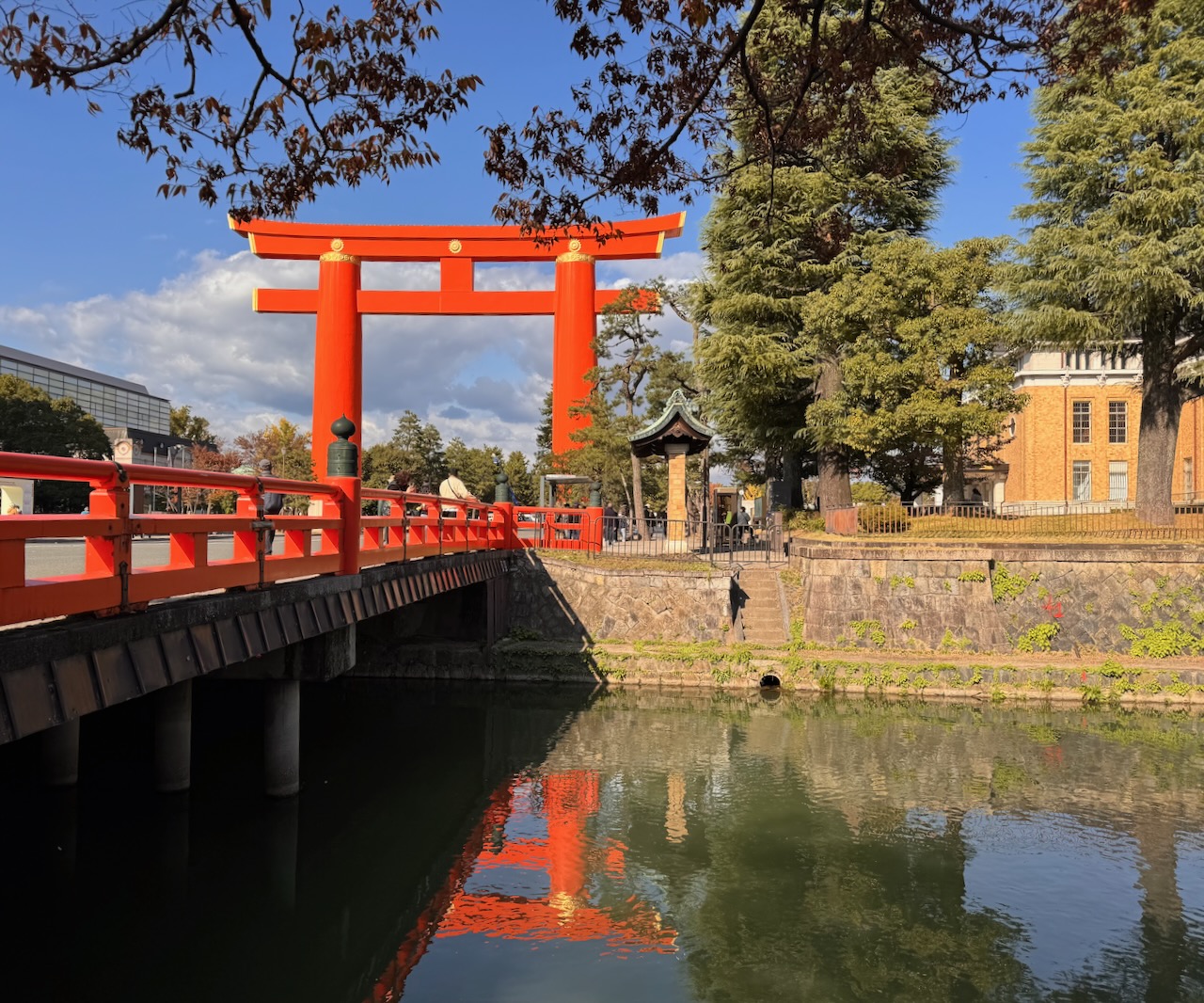
Matsubara-dori is a long uphill street lined with unique shops, eateries and crowds that lead to Kiyomizu Temple. Kiyomizudera Temple was founded in 778. It was destroyed by fire more than 10 times but most recently rebuilt in 1633. There are more than 30 sub-temples on the site. Most rivers we saw in Japan were not developed like they are in many parts of the world. The Kamogawa River is no exception. From there we ventured to Maruyama Park which is a popular city park that draws picnickers and photo opportunists. Yasaka Pagoda is a Buddhist pagoda and the last remaining structure of a 6th-century temple complex. The massive torii gate at the entrance to Heian-Jingu Shrine is one of the largest of its kind in Japan.
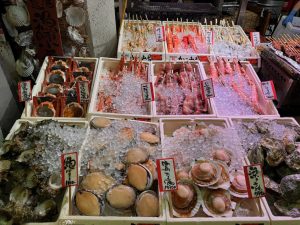
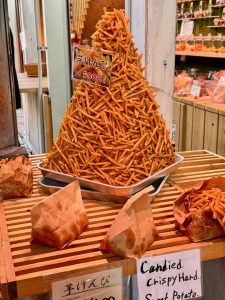
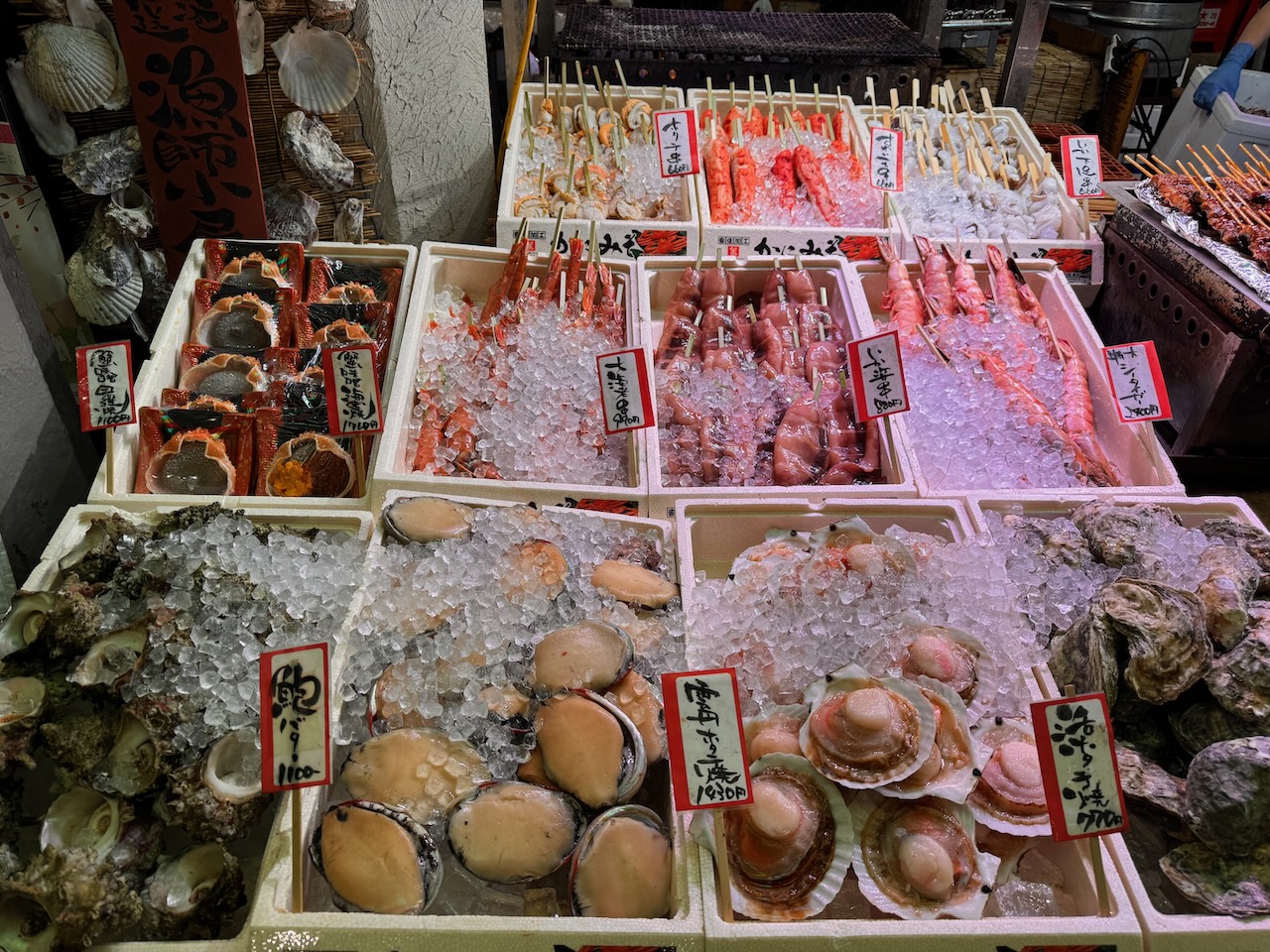
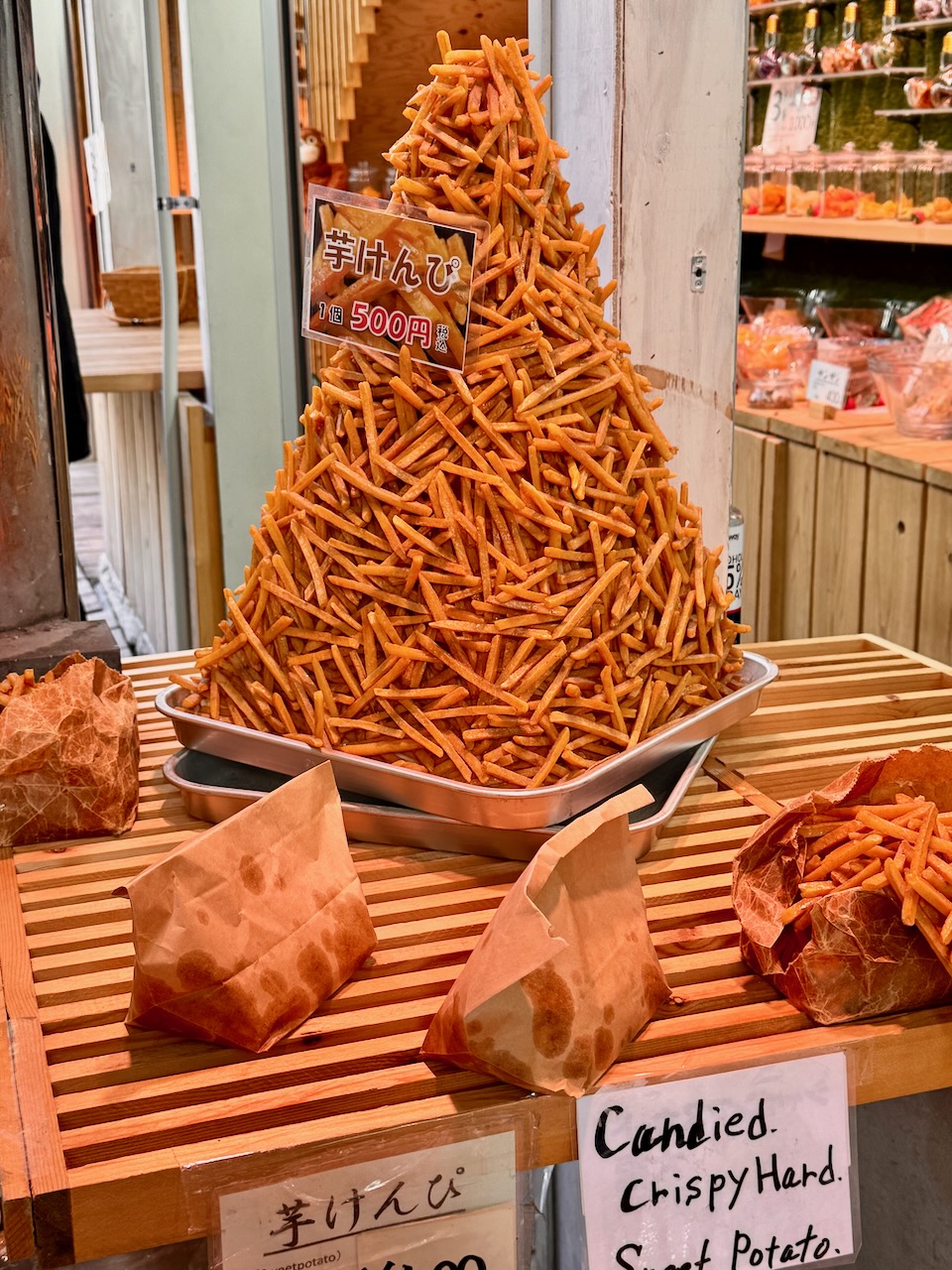
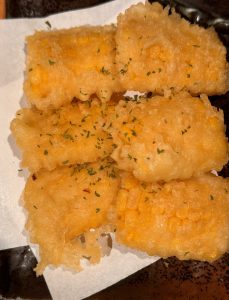
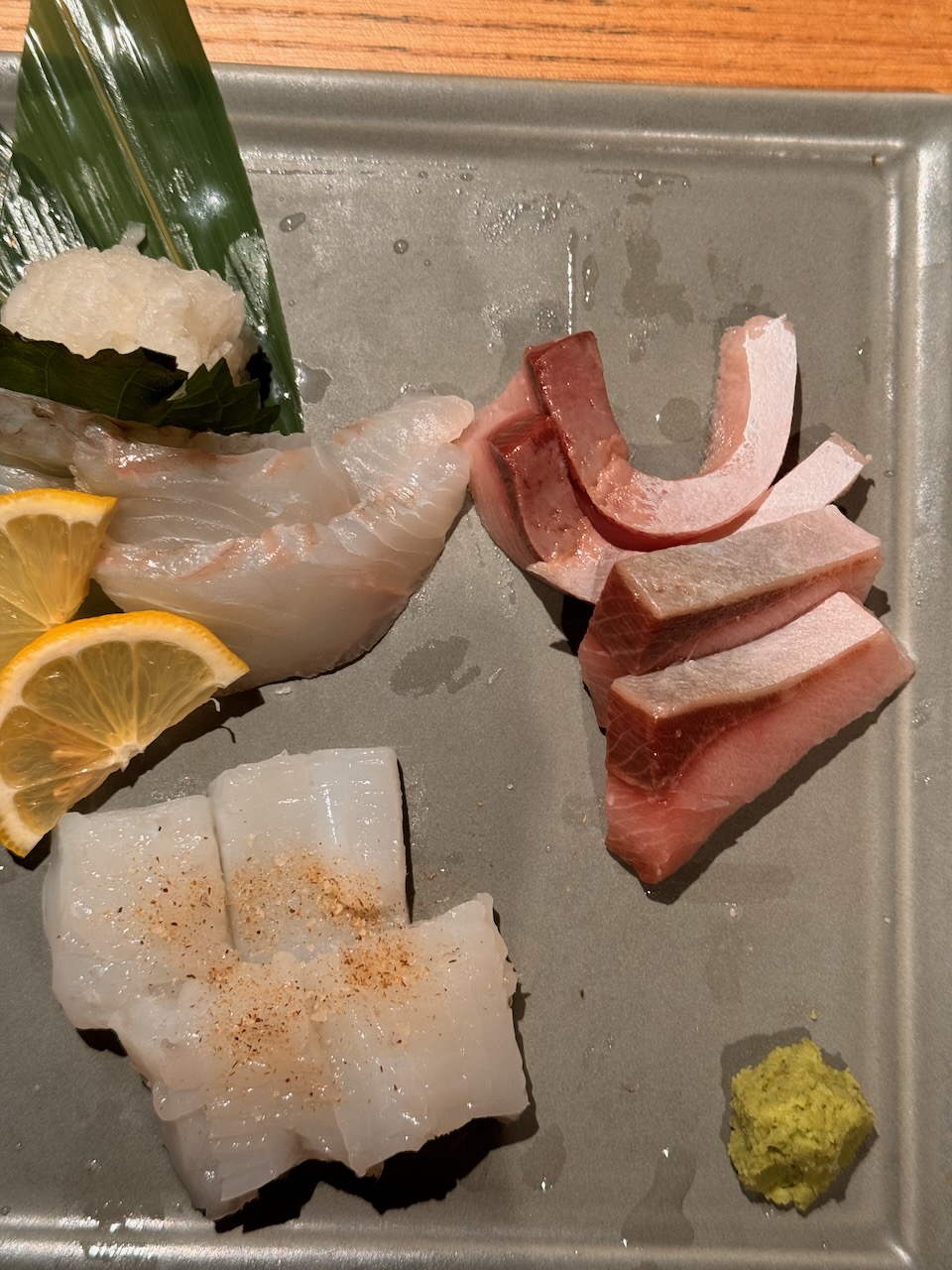
Obanzai is a traditional style of Japanese cuisine native to Kyoto. In order for food to be considered obanzai, at least half of its ingredients must be produced or processed in Kyoto. Ingredients in obanzai cooking must also be in season. Cooking heavily relies on vegetables and seafood, prepared simply. Consistent with the concept of mottainai (a sense of regret concerning waste), another characteristic of obanzai is the incorporation of ingredients which are usually discarded as garbage.
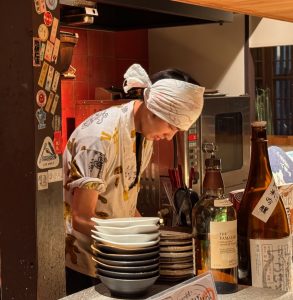
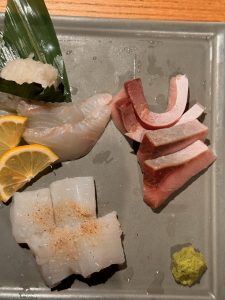
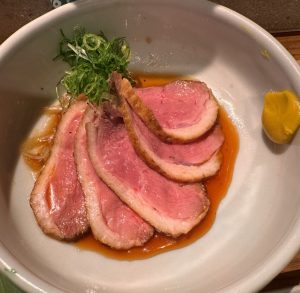
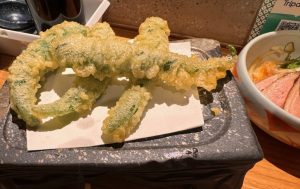
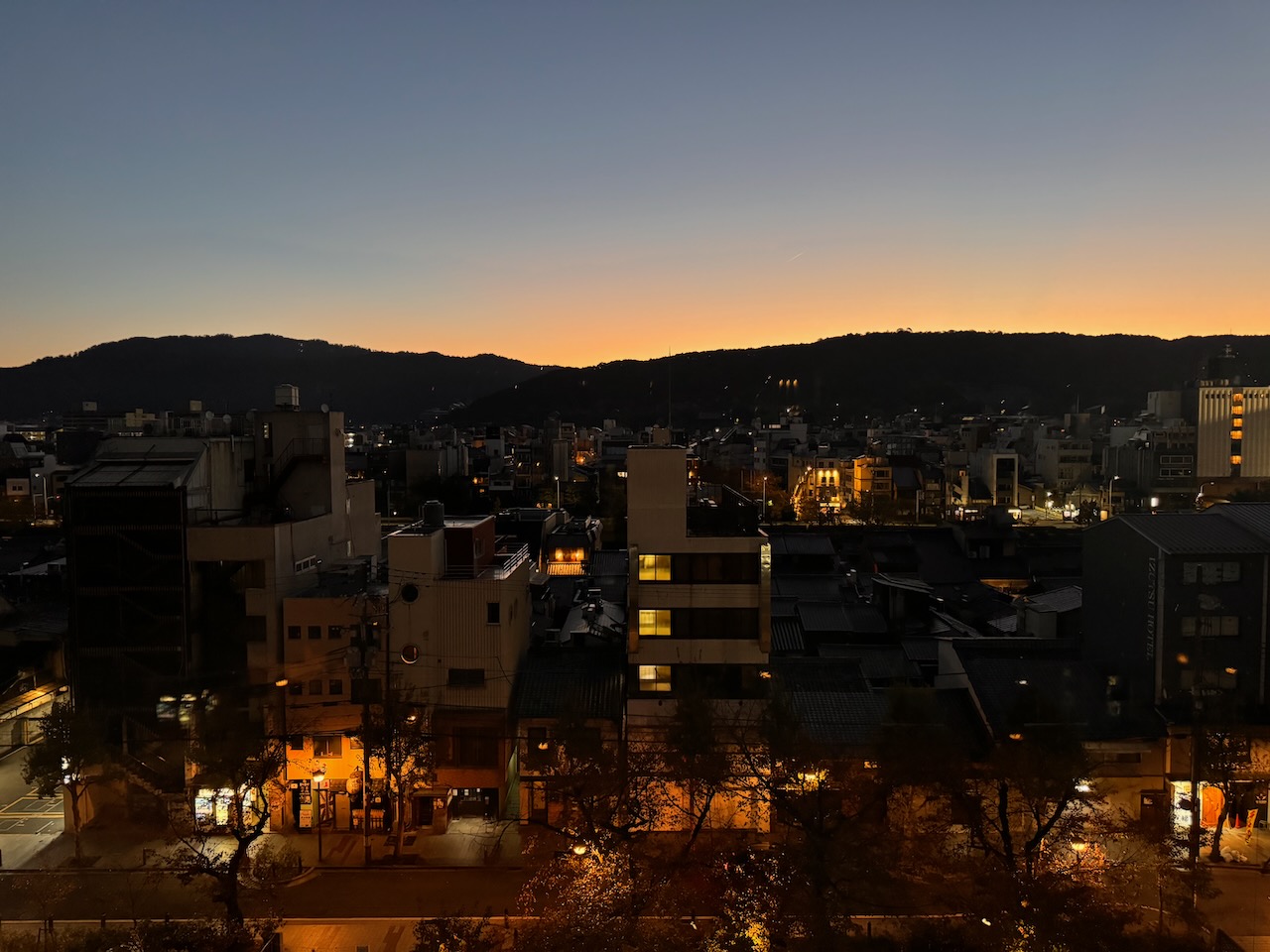
Dawn over Kyoto as we breakfast before our departure for our Kumano Koda walking tour. The night before we arranged for most of our luggage to be transferred to Osaka where we would end our hike. This way we would be encumbered only with our small backpacks for the 3 nights.
5 thoughts on “Historic Kyoto”
Really fascinating pictures. Kyoto was always in my mind. We had to sing a song at school. Long time ago…
So you can cook some Japanese food, looks yummie. Geisha girl was cute.
Well done Mary and Joe xx
Love this new format Joe & Mary! You’re very clever!
You certainly didn’t miss any experiences in Kyoto and obviously the locals appreciated your efforts to embrace their culture.
You two are in wonderful shape to do so much walking, bike riding, etc. More power to you.
I felt like I was in Kansas until I did some scrolling and suddenly I was in the Japanese equivalent of Oz! Very arty.
Really beautiful places and lots to see.
The Geisha girls are really artistic, they impress all who see them with their accurate make up and hair.
Nice to see your holiday step by step.
Thanks for sharing dears xxxx
– Loved the new format! Especially liked the B&W version of the photos, which then “morphed” into dramatic full-color, with captions, when one selects them.
Cannot believe we never made it to Kyoto. Kudos to you and Joe.
Loved the trail to the Fushimi Inari Shrine – complete with dramatic toriI gates! The foxes were a magic, spiritual, touch.
How cool that Masa was impressed with your stamina. So are we! You guys left no stone – and no miniature torii gate – unturned!
I think the funniest moment of this video-diary was Joe vs. Lucky Pine, with the puck-and-sake game. Gives new meaning to “get the puck outta here!”
Thanks, as always, for sharing …
jacques and don